
Cartoon Voice Actors Get a Vote on Four More Years. The New Deal Brings Live-Action AI Rules Into the Booth
SAG-AFTRA’s voice actors in TV animation have a new four-year contract in front of them. It raises pay 3% a year, lifts streaming residuals and pulls the AI terms the union won for live-action actors this summer into the booth. Members have until October 29 to vote.
 VoiceEditSuiteClean a session in ninety seconds, not three hours.
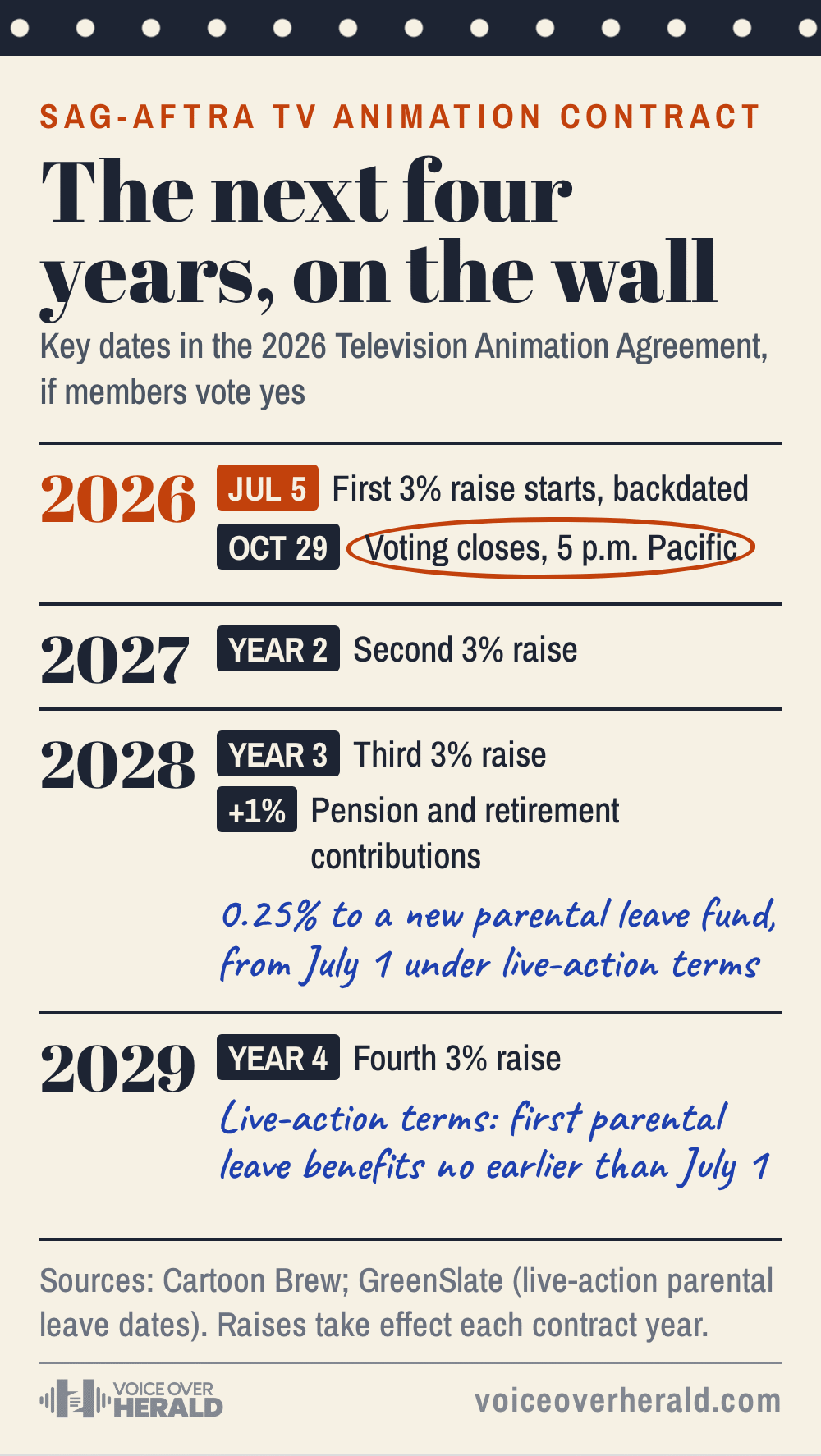
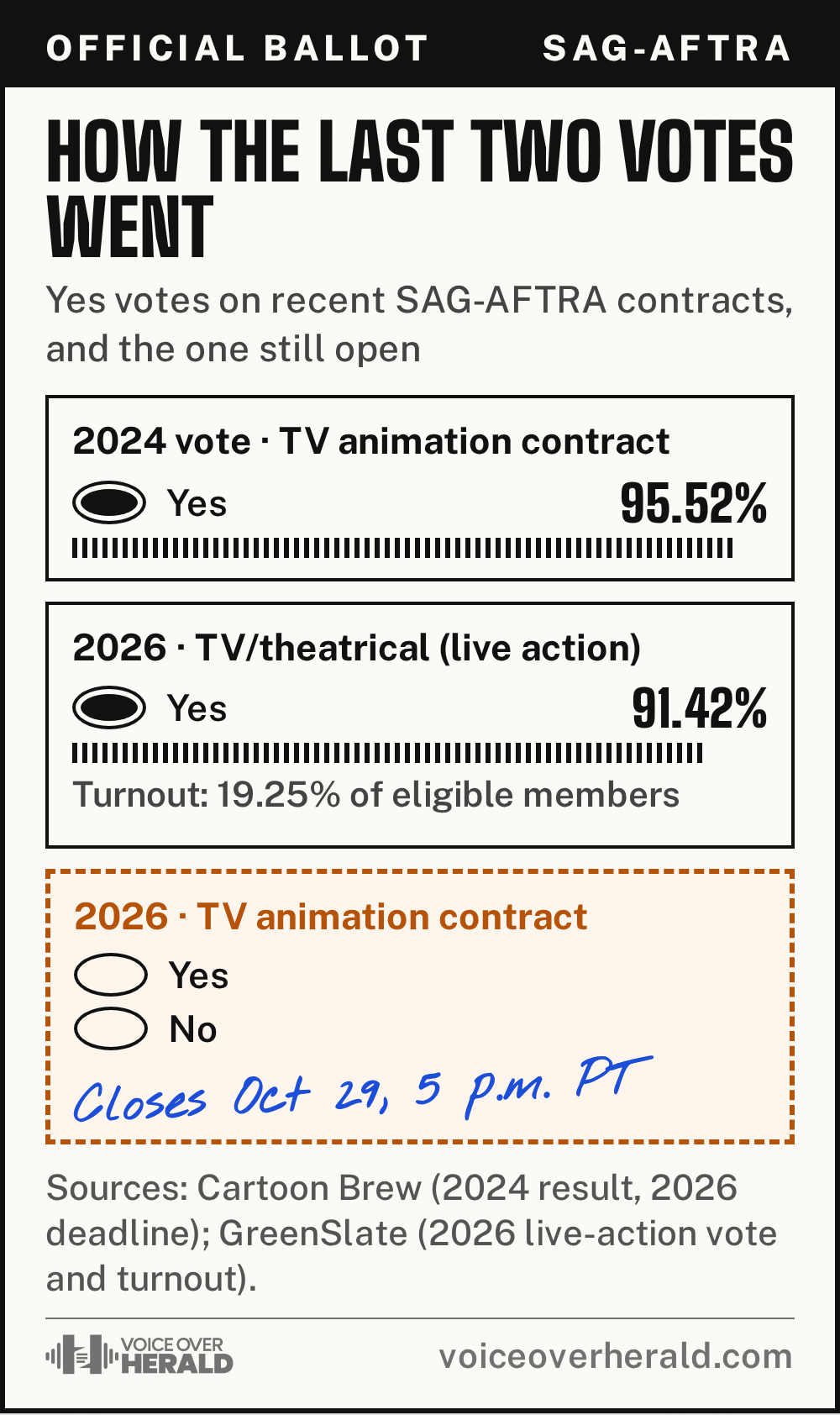
If you voice cartoons under a union contract, there’s a ballot with your name on it. SAG-AFTRA has sent the tentative 2026 Television Animation Agreement out for ratification after its Executive Committee approved it unanimously, according to Cartoon Brew. The deal was negotiated with the Alliance of Motion Picture and Television Producers (AMPTP), the group that bargains for the big studios and streamers. Voting closes on October 29 at 5 p.m. Pacific time.
The union’s chief contracts officer, Ray Rodriguez, put the priorities in one line: “We sought to achieve gains in the areas that matter most to our members: wages, AI protections, better residuals, and contributions to the health and pension plans.”
Three percent, four times
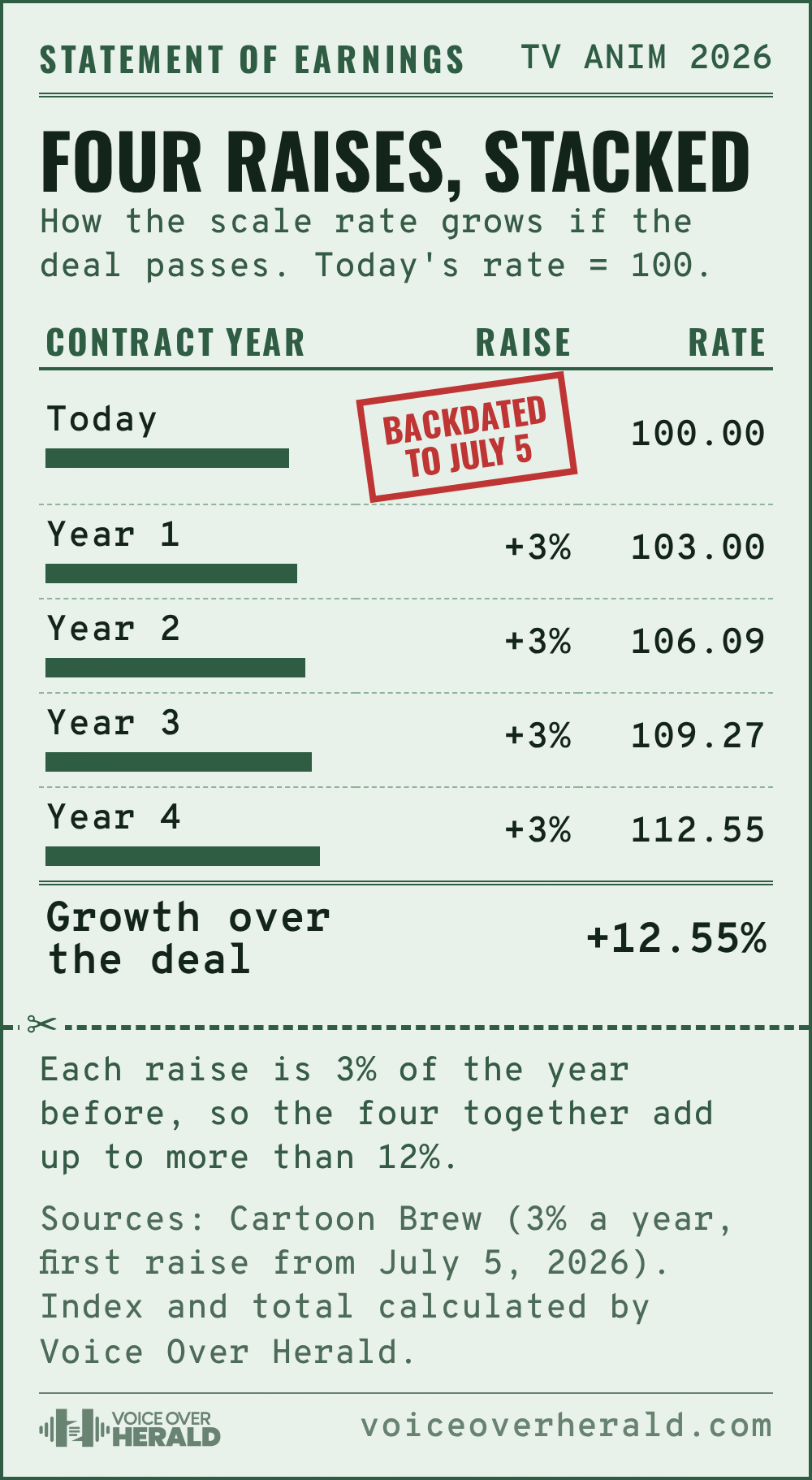
The headline number is simple. Scale goes up 3% in each of the four years, and the first raise is retroactive to July 5, 2026, so sessions recorded since early July are covered.
Three percent on its own doesn’t sound like much. Stack four of them, though, and a rate that starts at 100 ends the deal at about 112.55. That’s roughly 12.6% over the life of the contract, before any residuals.
For comparison, the last animation deal, ratified in March 2024, ran 2.5% in its first year and 3% in each of the next two, Cartoon Brew reported at the time.
Where the streaming money moves
Residuals are where animation actors have felt the move to streaming most, and this deal touches them in three places.
When a program moves to a subscription streaming service, voice actors would get an average 5% increase in residuals. Residual calculations also go up for certain high-budget animated streaming productions. And for qualifying programs on large foreign streaming services, the “subscriber factor” rises from 39% to 41%. That factor is the share of a service’s subscribers the formula counts, so a higher one means a bigger base for the payment.
None of these are flashy. They are, though, the kind of change that keeps paying long after the session is wrapped, which is why actors who work on long-running streaming shows tend to read this part of a contract first.
The AI part, two layers deep
Animation voice actors got their first contract protections against AI in the 2024 deal. Bob Bergen and David Jolliffe, who co-chaired the TV animation negotiating committee, called it “the first SAG-AFTRA animation voiceover contract with protections against the misuse of artificial intelligence.”
That contract, as Cartoon Brew summed it up, said the term voice actor refers only to humans. It protected digital replicas when the replica is recognizable as the performer. It paid foreign residuals when a voice actor’s performance is digitally altered into another language. It required consent before a producer uses a performer’s name as a prompt to generate a synthetic voice. And it removed the “human role” test from the synthetic performer clause, so producers have to notify the union and bargain any time they want a synthetic voice instead of an actor, not only when the character is human.
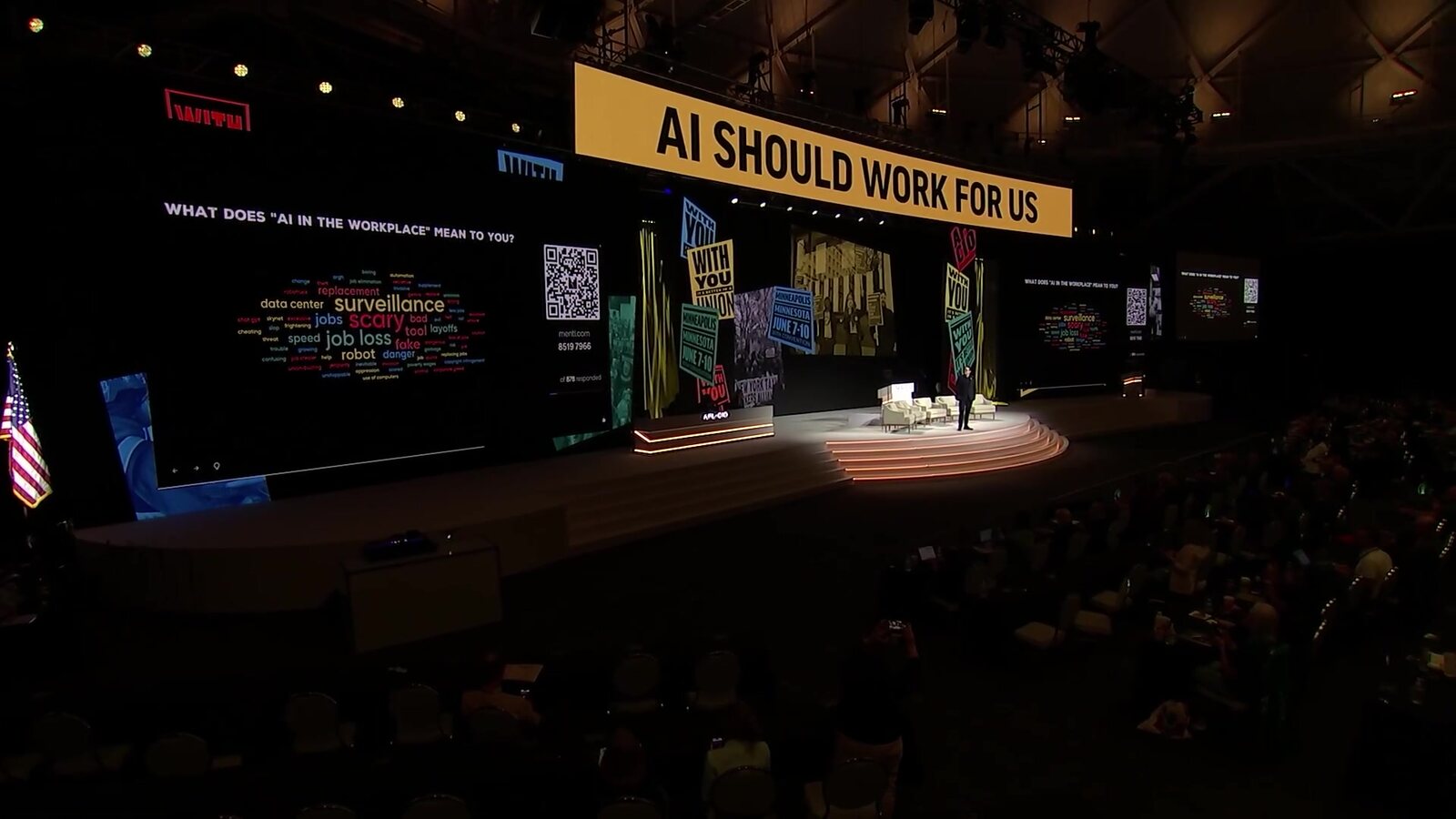
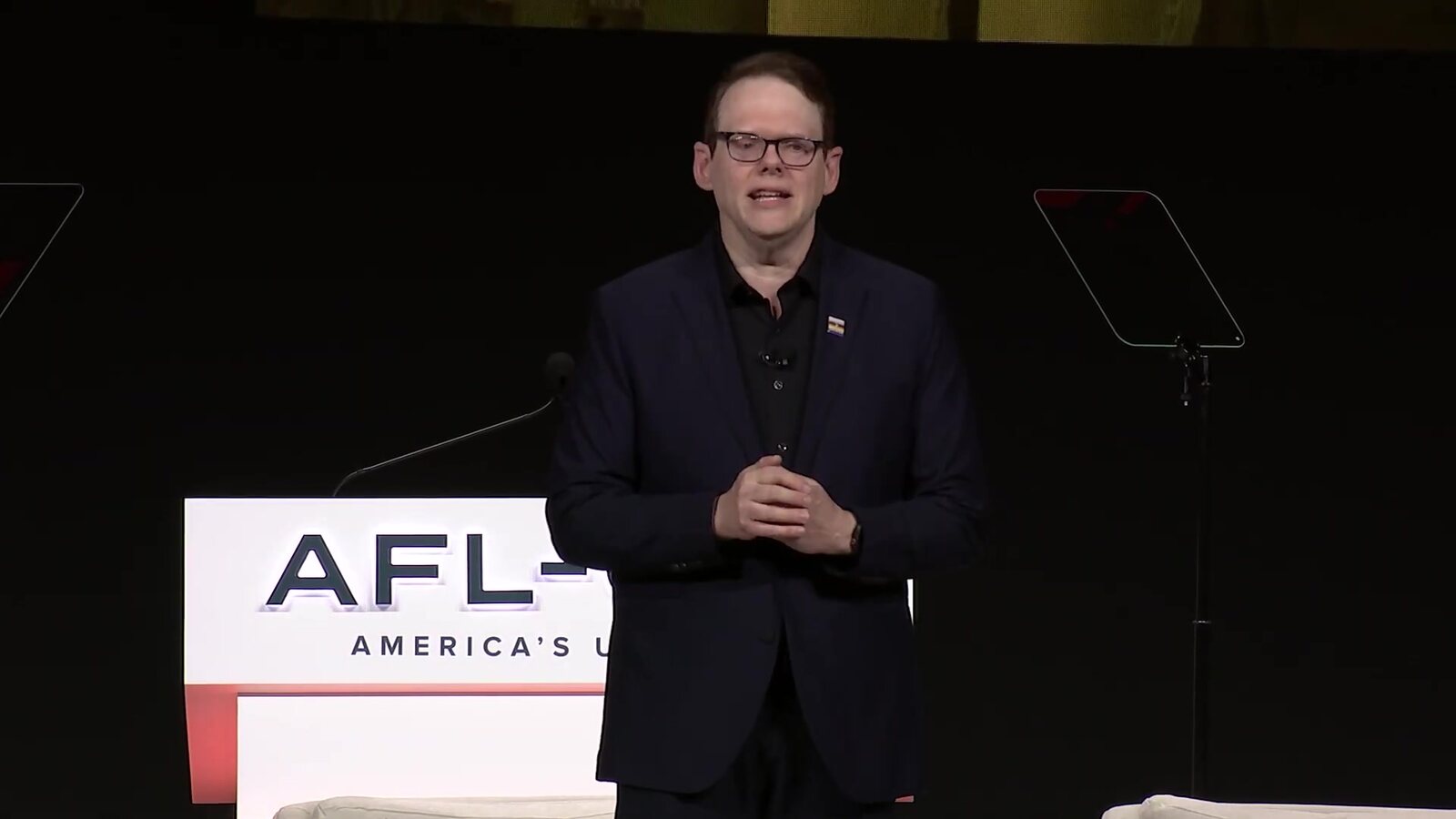
Image: SAG-AFTRA, from Duncan Crabtree-Ireland's talk "A.I. Should Work for Us"
The new deal keeps those animation-specific rules and adds the improvements SAG-AFTRA negotiated in its 2026 live-action agreements, which members ratified in June with 91.42% voting yes. Cartoon Brew’s report doesn’t list the new AI wording clause by clause. SAG-AFTRA’s own pages block automated readers, so Voice Over Herald hasn’t been able to check the union’s full summary, and actors who want the exact language should read it on the union’s site before they vote.
Still, the direction is plain. Last year’s fights over AI in games and audio were about whether a voice could be copied at all. This contract is about the paperwork around it: who has to ask, who gets told, and who gets paid when it happens.
- Who votes. SAG-AFTRA members covered by the TV animation contract with the AMPTP.
- Deadline. October 29, 5 p.m. Pacific time.
- Pay. 3% a year for four years, the first raise backdated to July 5, 2026.
- AI. The improvements won in the 2026 live-action deal, on top of the animation-only rules from 2024.
- Benefits. More for health, more for pension from 2028, and a new paid parental leave fund.
Health, pension and a new fund for parents
The benefits side is quieter but real. Employer contributions to the SAG-AFTRA Health Plan go up by 1%. Starting in 2028, pension and retirement contributions rise by another 1%. And an extra 0.25% goes to a new paid parental leave program.
That last one mirrors the live-action contract, where the parental leave fund was set up in June. Under the live-action terms, as the production payroll firm GreenSlate explains them, the 0.25% contribution begins July 1, 2028, and the first benefits can be paid no earlier than July 1, 2029.
What to do with your ballot
Read the summary, then vote. Turnout for union ratifications is often low; in the June live-action vote, according to GreenSlate, it was 19.25% of eligible members. A contract that sets union pay for TV and streaming animation made for the big studios over the next four years gets decided by whoever bothers to send the ballot back.
Two things the deal doesn’t cover are worth keeping in mind. Video games run on a separate SAG-AFTRA contract, the Interactive Media Agreement, and non-union animation work isn’t touched at all. If most of your cartoon work comes through non-union studios or independent producers, the AI rules here won’t follow you into those sessions unless you write them into your own deal.
For union actors, though, this is the contract that sets the floor. If it passes, the raise is backdated, the residual changes kick in, and the AI rules from the live-action side come into the animation booth for the first time.
Sources: Cartoon Brew (6 October 2026 and 26 March 2024), GreenSlate’s guide to the 2026 SAG-AFTRA TV/Theatrical Agreement. The pay figure of about 12.6% over four years is Voice Over Herald’s own calculation from the 3% annual raises. Images: SAG-AFTRA (frames from the union’s official video of Duncan Crabtree-Ireland’s talk).
Lee este artículo en español: Los actores de voz de caricaturas votan un contrato de cuatro años. Lleva a la cabina las reglas de IA de la imagen real
Know something about this story, or spotted an error? Tell the newsroom.