Spotify’s Free AI Audiobook Maker Reaches the UK, Australia and Latin America. Its New Spanish Voices Come From ElevenLabs
Spotify’s free tool that turns a self-published book into an audiobook with a licensed digital voice is now open to authors in 21 more markets, from the UK and Australia to Mexico, Chile and Uruguay. It can now make Spanish-language audiobooks too, with new Spanish voices from ElevenLabs. Here’s what changed, what the company says about narrators, and why publishers aren’t all cheering.
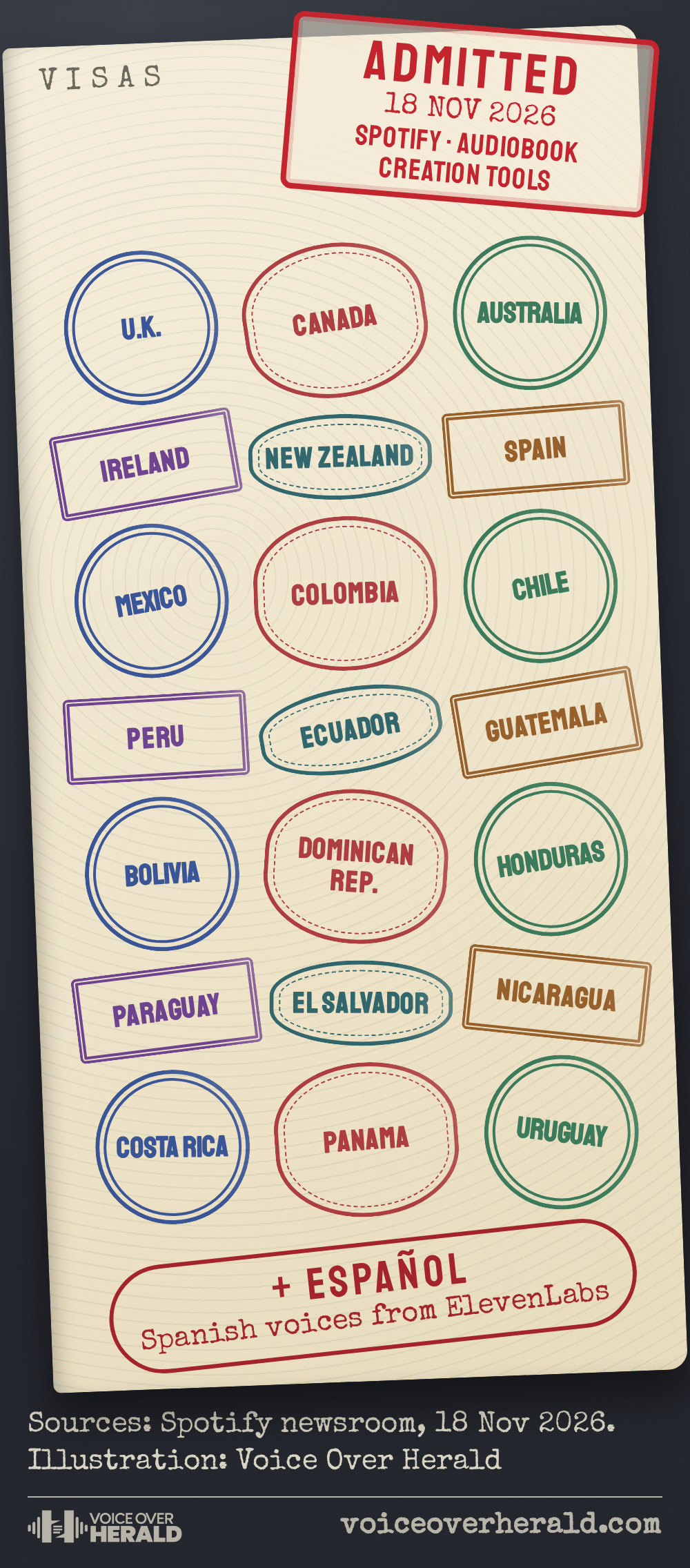
Spotify launched Audiobook Creation Tools in the United States in September. On 18 November it switched them on for self-published authors in the UK, Canada, Australia, Ireland, New Zealand, Spain and fifteen countries across Latin America and the Caribbean.
The process is short. An author uploads a finished manuscript as an .epub file, picks a voice, checks how names and tricky words are said, listens back chapter by chapter, and approves it. Spotify’s own demo video shows the voice step, and two of the voices on offer.
Hear the voices: two of Spotify’s digital voices give a short sample at 0:33, after the voice picker opens. Video: Spotify for Authors, on YouTube
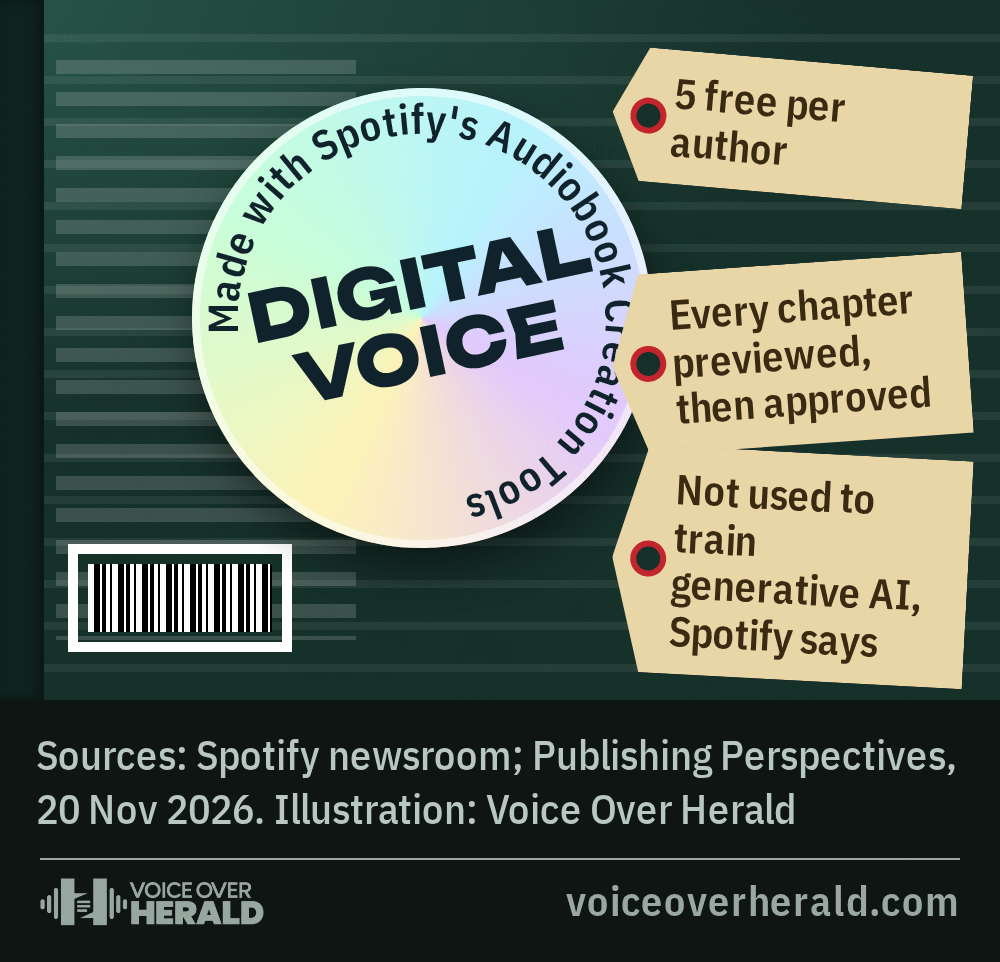
Each eligible author can make up to five audiobooks this way at no cost, and the finished titles can go out in 180 markets. There’s one condition: the author needs a validated payment profile on file before the tools unlock.
Where it’s switched on now
The new list is long, and it leans heavily Spanish-speaking. Alongside the five English-speaking markets and Spain, the tools now reach Mexico, Colombia, Chile, Peru, Ecuador, Guatemala, Bolivia, the Dominican Republic, Honduras, Paraguay, El Salvador, Nicaragua, Costa Rica, Panama and Uruguay.
 VoiceEditSuiteNewIt edits like you would, and it gets better every file.Learns from numbers, never your audio. Never used to train AI.See how it works
That’s deliberate. Chester Lau, who leads Author Growth at Spotify, put the Spanish side at the centre of the announcement. “And we’re particularly excited about Spanish-language support for more local-language audio creation, something we know there is untapped demand for,” he said.
His case for the tools is about books that never get recorded at all. Spotify says there are about 100 million books in the world, and only about 1 million of them are also audiobooks. “These tools are meant to democratize audio creation for books that would never have made it into audio,” Lau said, as quoted by Publishing Perspectives.
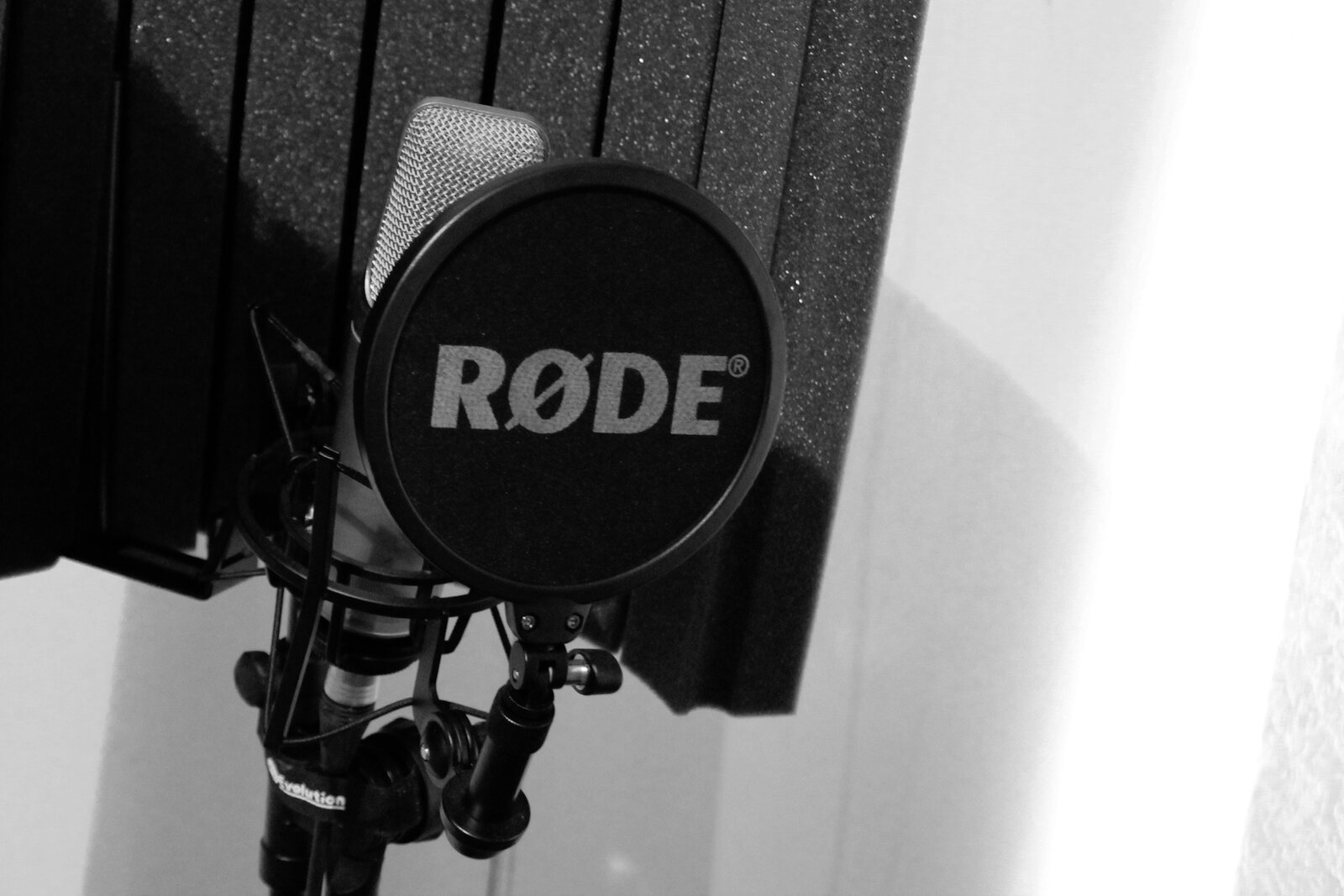
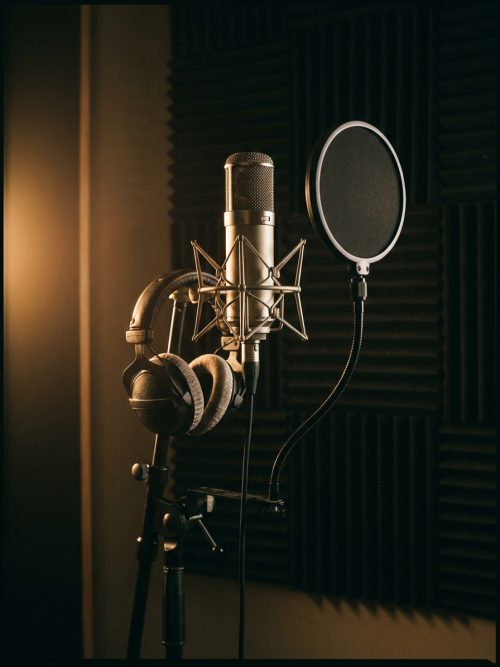
The kind of setup a human narrator records at home. Photo: Tim Sheerman-Chase, CC BY 2.0, via Wikimedia Commons
Whose voices are these?
Spotify describes the voices as “a curated library of licensed digital voices.” The company’s announcement says that library “now includes new Spanish voices from ElevenLabs.” Publishing Perspectives goes further and reports that the service converts manuscripts using AI voices from ElevenLabs, including the new Spanish ones. Spotify’s own post names ElevenLabs only for the Spanish voices.
Two promises come with the product. Every audiobook made with the tools carries a “Digital Voice” label, so listeners can see how it was made. And in an FAQ, Spotify says it doesn’t use submitted manuscripts or audiobooks “to train generative AI models,” according to Publishing Perspectives.
Authors can still upload audiobooks read by human narrators through Spotify for Authors. Nothing about the new tools stops that.
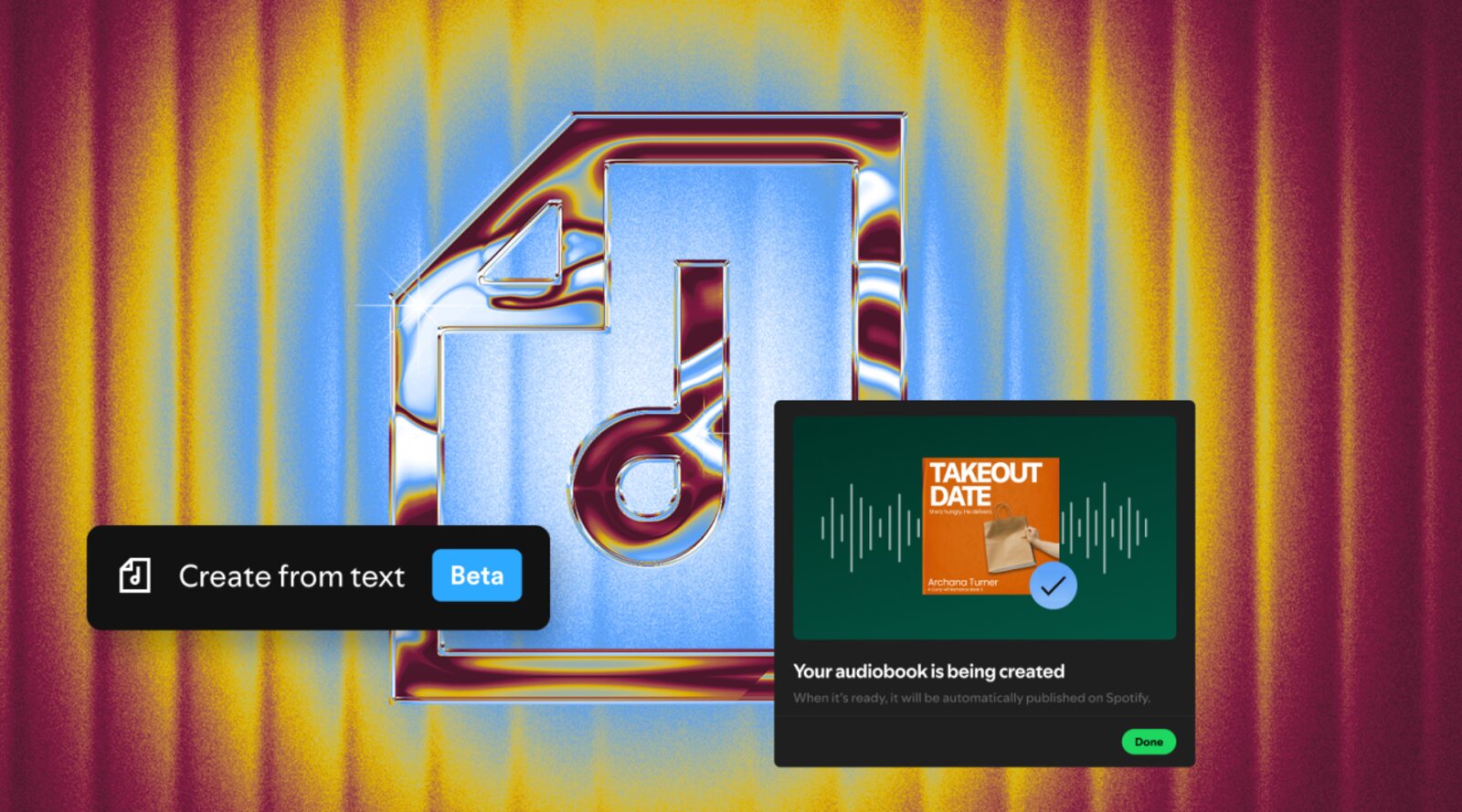
Spotify's artwork for taking audiobooks to more markets. Image: Spotify
What Spotify says about narrators
The announcement includes a paragraph aimed squarely at people who read books for a living. “Professional narration is a craft, and an essential part of the audiobook ecosystem,” Spotify wrote. “These tools are designed to give emerging authors a pathway to audio, as well as provide support to those with backlist titles that might not otherwise be made into audiobooks.”
The company also shared early numbers from the US. Since launch, sign-ups to Spotify for Authors have more than doubled, nearly two in three new authors have tried the tools, and more than 60% of uploaded manuscripts have gone on to be published. Spotify says listeners come back to these titles at the same rate as other self-published audiobooks on the service.
That last line is the one narrators will read twice. If listeners can’t tell the difference in how often they return, the label is doing a lot of the work.
Publishers aren’t all on board
The same week, The Bookseller asked publishers and platforms where audio goes next. The answers split neatly down the middle.
Audible’s chief content officer, Rachel Ghiazza, described doing both. “We’re investing more than ever in professional narration,” she said. “Alongside that, AI text-to-speech and translation tools let us create audio editions of books that would otherwise never have been made.” Videl Bar-Kar of the distributor Bookwire took a similar middle line: “Digital narration has a useful role, while nothing will replace human creativity.”
Spain’s Grupo Planeta was much sharper. Its director Raúl Perez named AI as the biggest hurdle facing audio publishing, and he didn’t soften it.
Planeta is one of the biggest publishers in the Spanish-speaking world. When a platform turns on Spanish digital voices across Latin America in the same month that Planeta’s director warns about “pseudo-creations,” it’s worth noticing who’s talking past whom.
What it means if you narrate for a living
For narrators in the new markets, the honest answer is that the change lands at the bottom of the market first. The tools are free for five books, built for self-published authors, and pitched at backlists nobody was going to fund. That’s also where many newer narrators find their first titles, especially in Spanish, where Lau himself says the demand is untapped.
There are a few things worth doing now. Read the label on what you’re competing with: if a title says “Digital Voice,” that’s the product, not a rival narrator. Talk to self-published authors about what a human read adds that a voice picker can’t, like character work, pacing across a long book and the judgment calls an author never thought to make. And keep an eye on Spotify’s promise not to train on what authors upload. It covers manuscripts and audiobooks sent through the tools, and it’s the kind of line worth holding a company to.
Spotify says it will “keep listening to authors, narrators, and listeners” and change the tools based on their feedback. Narrators in 21 more markets now have a reason to give some.
Sources: Spotify newsroom, 18 November 2026; Publishing Perspectives, 20 November 2026; The Bookseller, 20 November 2026; Spotify for Authors, demo video on YouTube. Images: Spotify; Tim Sheerman-Chase, CC BY 2.0, via Wikimedia Commons.
Lee este artículo en español: La herramienta gratuita de audiolibros con IA de Spotify llega al Reino Unido, Australia y América Latina. Sus nuevas voces en español son de ElevenLabs
Know something about this story, or spotted an error? Tell the newsroom.