



Press Play Before They Leave: What a Voice Actor’s Website Needs, and What Google Actually Reads
A producer with a shortlist opens your website on a phone between meetings. Research on how people read the web says you’ve got about ten seconds to show them a voice they can play and a way to book it. Here’s what working voice actors and Google’s own documentation say a voiceover website needs, and which old SEO habits you can quietly drop.
Lots of voice actor websites open with a big photo and a welcome message, with the demos somewhere further in. The people who hire voices don’t browse like guests. They triage.
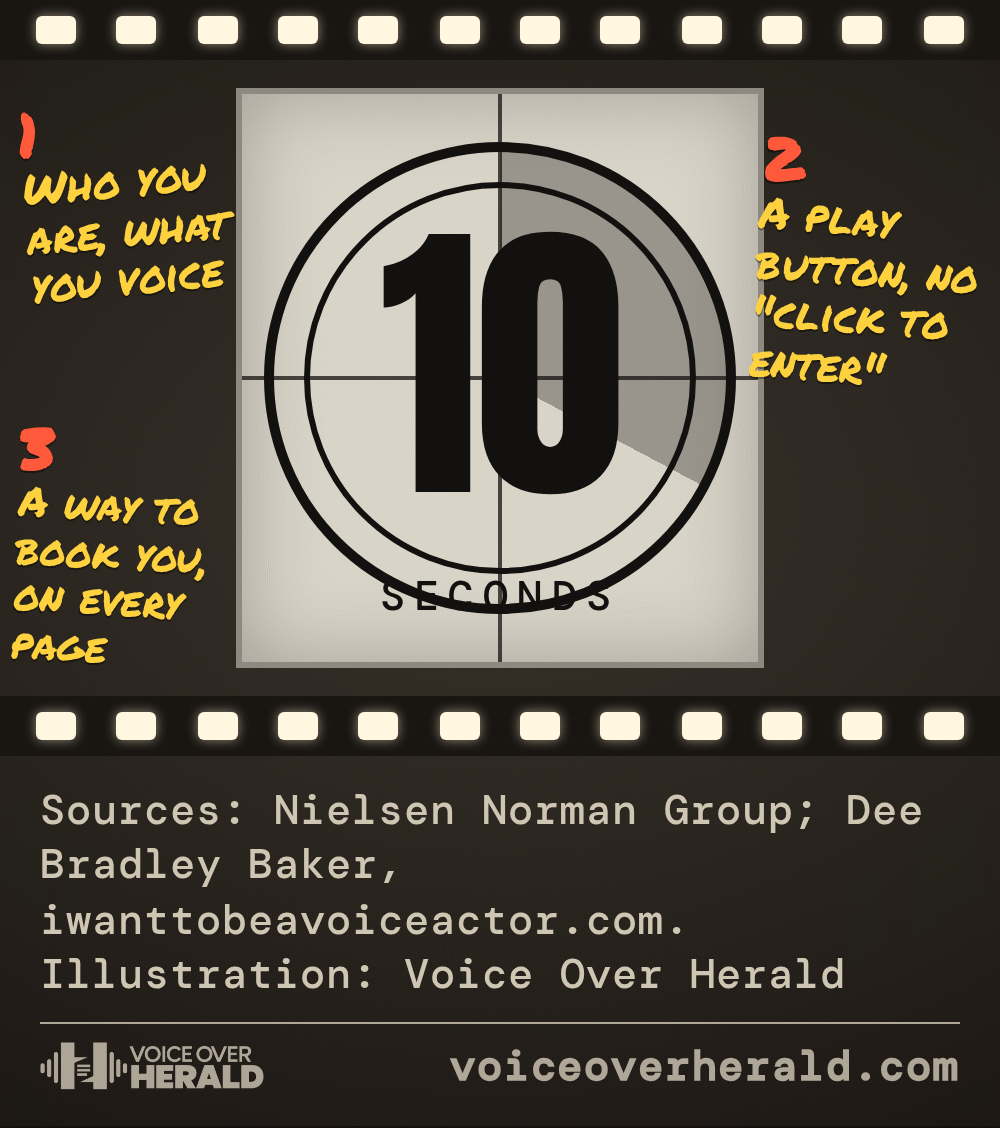
Nielsen Norman Group, the user experience research firm, looked at a Microsoft Research study of more than two billion page visits and found that “the first 10 seconds of the page visit are critical for users’ decision to stay or leave.” Its advice is blunt: “To gain several minutes of user attention, you must clearly communicate your value proposition within 10 seconds.” Hold someone for half a minute, the firm found, and there’s a fair chance they’ll stay much longer.
For a voice actor, the value proposition is simple. It’s your voice. So the first job of the site is to get it playing.
The first screen is the audition
Dee Bradley Baker, the voice of the clone troopers in Star Wars: The Clone Wars and Perry the Platypus in Phineas and Ferb, keeps a free advice site for people going pro, and his page on websites is short and specific. “Your demo(s) should sit on your homepage, ready to play, not hidden further back on some deeper page,” he writes. Then, for every splash page: “Please don’t have your homepage start out with some cute image that wastes my time telling me to ‘click to enter.'”
He’s writing as someone who knows the other side of the table. “This person’s time is precious and their patience is probably thin,” he says of the casting director or producer on your site. “Show them the goods!” He wants “contact info on every page,” and as little scrolling as possible between a visitor and your demo.
That doesn’t mean a dull page. It means your name, the kind of work you do and a play button, all visible before anyone scrolls, and a way to book you that’s never more than a thumb’s reach away.
Built for the person hiring, not for your fans
Baker’s test for every element is who it’s for. A buyer is probably looking for “an easily findable site with your demo, credits, short bio and contact info,” he writes, and the site should deliver that for prospective employers. “Not for fans, family, friends or casually interested visitors.” If you want a fan page or a blog, he suggests, give it its own page or its own site. On his advice page he sums it up in one sentence: “The overriding goal for your website is to bring work your way.”
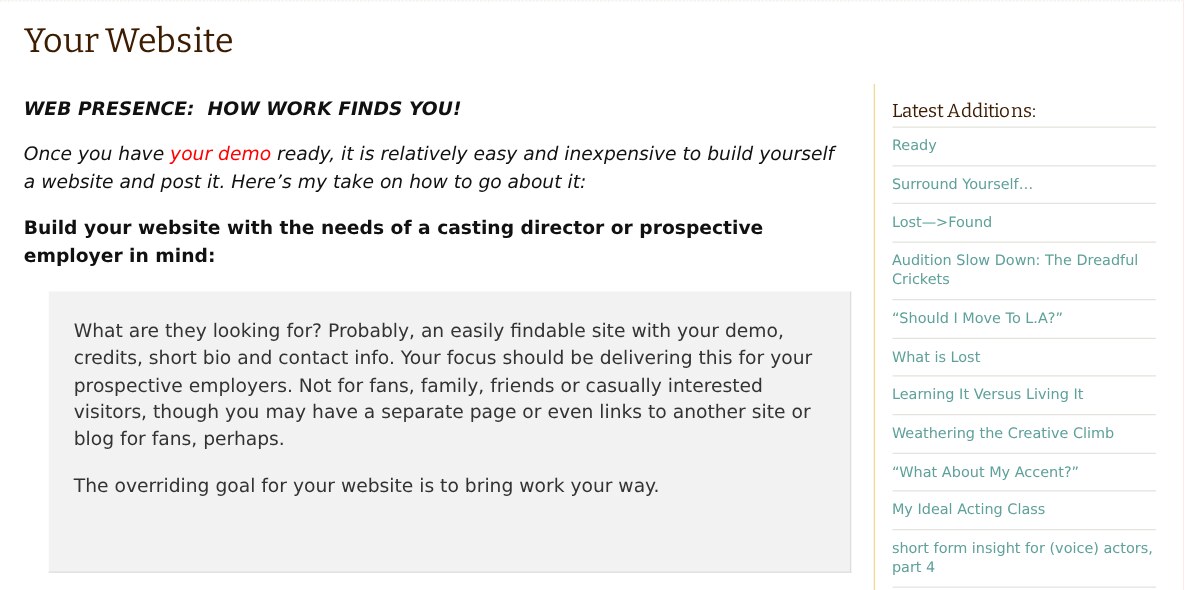
Screenshot: iwanttobeavoiceactor.com, 20 November 2026
Paul Schmidt, a voice actor who now sells voiceover marketing courses through his VO Pro business, says the demos themselves need the same buyer-first thinking. Label each one with the name a client would use, like “Commercials” or “Corporate Narration,” and keep them tight. “Don’t overwhelm visitors with a 10-minute demo covering every style you can do,” he writes. He also wants them easy to keep: “Make them downloadable and include your name and the genre in the file name, for example, PaulSchmidt_CommercialDemo.mp3.”
Schmidt credits a change in his own site with changing his career. “I was grinding part-time for 20 years, juggling gigs, hoping for a break,” he writes. After he built pages aimed at the clients he wanted, “I was getting calls and emails. I went full-time within a year.” That’s one person’s account, and he has courses to sell, but the idea matches Baker’s: speak to one kind of buyer at a time.
Most of them are holding a phone
In October 2026, phones accounted for 59.9% of web browsing worldwide, against 38.51% for desktop and 1.59% for tablets, according to StatCounter Global Stats. Baker made the same point from experience. “Most in the entertainment industry have iPhones and they may be out of the office away from their desktop or laptop browser when they access your site,” he writes. “It had better play for them. Even if this is one in a hundred, that one could be a big gig.”
Two details trip up a lot of voiceover sites on phones. The first is autoplay. Plenty of actors want the demo to start the moment the page opens, but Chrome won’t let it, at least not with sound. Google’s Chrome team spells out the rule: “Muted autoplay is always allowed,” while sound plays on its own only once the visitor has interacted with the site or met a few other conditions. A muted demo is no demo, so give people a big play button instead.
The second is weight. Every demo file a page loads up front slows the first screen down. The HTML audio player has a setting for this called preload, and Mozilla’s developer documentation notes that the web standard “advises it to be set to metadata,” which fetches only details like the clip’s length until someone presses play.
Google publishes the speed targets it considers a good experience, the Core Web Vitals. The main content should appear within 2.5 seconds, the page should respond to a tap within 200 milliseconds, and the layout shouldn’t jump around as it loads. Google’s free PageSpeed Insights tool will test your own homepage against them.
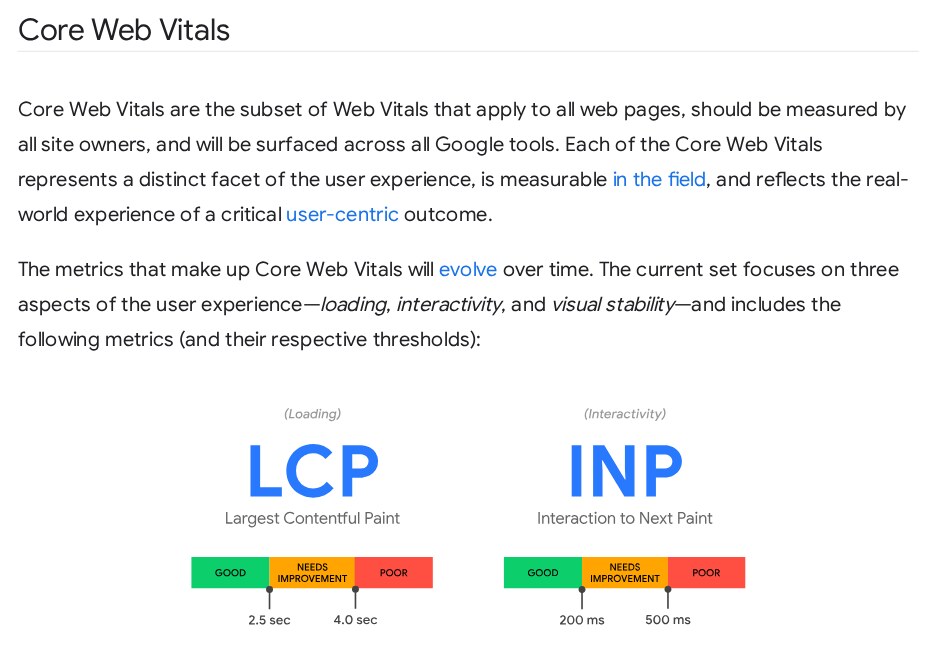
Screenshot: web.dev, 20 November 2026
What Google actually reads
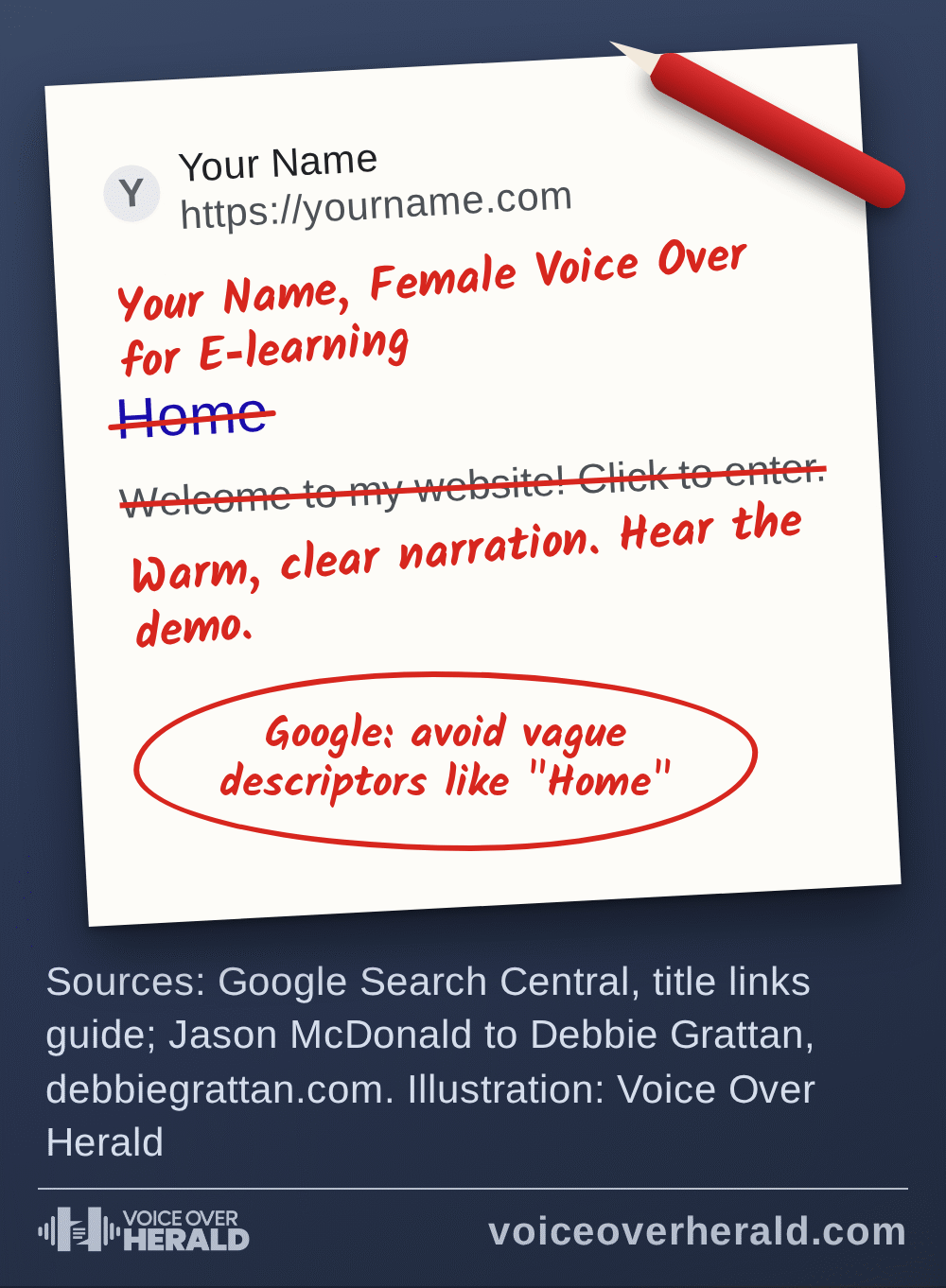
Debbie Grattan, a voice actor with more than 25 years of commercial and narration work, once interviewed SEO consultant Jason McDonald for her own blog, and his first fix still applies to plenty of voiceover sites. “Probably the most common mistake that businesses make is that they don’t have good title tags on their website,” he told her. “They’re trying to show up for ‘female voice over talent’, but their title tag says something like ‘Home’ or ‘John Smith’. You’ve got to get those title tags working for you.”

 VoiceEditSuiteAuto Clean Up now learns how you breathe.A 30-second setup teaches it your breath, and you can teach it any breath it misses.See how it worksLearns from numbers, never your audio. Never used to train AI.
Google says the same thing in its own guide to title links in search results: “Avoid vague descriptors like ‘Home’ for your home page, or ‘Profile’ for a specific person’s profile.” A good title, it adds, “is unique to the page, clear and concise, and accurately describes the contents of the page.” Your name plus the work you do, written for a person, does the job.
Some older advice doesn’t hold up as well. Plenty of guides suggest working keywords into your domain name. Google’s SEO Starter Guide says “the keywords in the name of the domain (or URL path) alone have hardly any effect beyond appearing in breadcrumbs,” and recommends picking the name that’s best for your business. That’s usually the name clients will type, which is yours. The same guide says plainly that “Google Search doesn’t use the keywords meta tag,” so that box in your website builder can stay empty.
McDonald’s other tip in that interview was volume, with “a goal of a thousand pages indexed by Google” for his students. Google’s current guide disagrees on length for its own sake: “there’s no magical word count target, minimum or maximum, though you probably want to have at least one word.” It asks for pages that are genuinely useful to the person searching. For a voice actor, Schmidt’s idea beats a thousand blog posts: one page for each kind of work you want, written for that buyer. “A generic demo landing page that tries to appeal to everyone will appeal to no one,” he writes on his VO Pro blog.
And be patient. Google says some changes to a site “might take effect in a few hours, others could take several months,” and suggests waiting a few weeks before judging whether a change worked. Baker’s own check is simpler: once your site is up, search your own name and make sure it comes up.
The map listing you probably can’t have
A common tip for small businesses is to set up a Google Business Profile, the listing that shows up on Google Maps with reviews and opening hours. For most home-studio voice actors, Google’s rules say no. Its eligibility guidelines state: “To qualify for a Business Profile, a business must make in-person contact with customers during its stated hours.” Among the examples of ineligible businesses, the same page lists “Brands, organizations, artists, and other online-only businesses.”
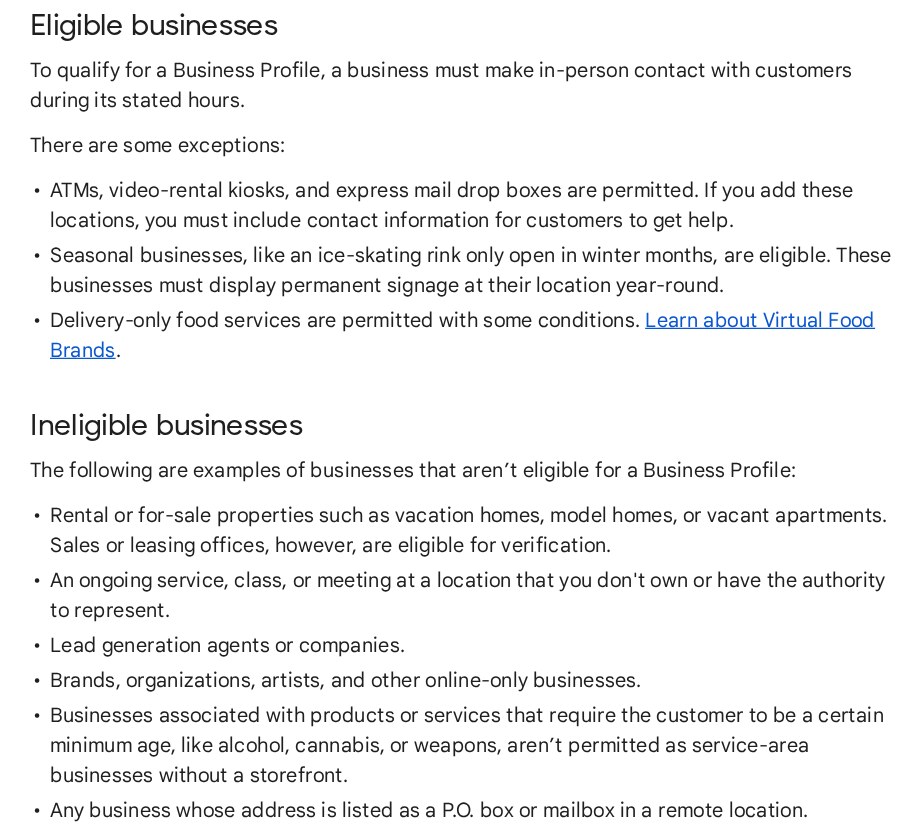
Screenshot: Google Business Profile Help, 20 November 2026
A studio that clients actually walk into during set hours is a different case. If your clients only ever meet you over email and remote sessions, spend that energy on your own site. Google says it reserves the right to suspend profiles that break its guidelines.
Before you hit publish
None of this needs a big budget, and most website builders handle the technical parts. Run through this list on your phone, not your laptop, because that’s where your next client will probably see it first.
- Play first. Your name, your kind of work and a play button are visible before anyone scrolls.
- No front door. No splash page, no “click to enter,” no autoplay.
- Labelled demos. Named the way buyers search, downloadable, with your name and the genre in the file name.
- A real title. Not “Home.” Your name and the work you do.
- Booking everywhere. An email or contact button on every page.
- Fast on a phone. Run PageSpeed Insights and search your own name once a month.
A site won’t book the job on its own. It’s where your cold emails send people, and where a new client decides in a few seconds whether to keep listening. Put your best demo in front of them and make it easy to say yes.
Sources: Dee Bradley Baker, “Your Website,” iwanttobeavoiceactor.com; Paul Schmidt, “The Secret to a High-Converting VO Demo Landing Page,” VO Pro; Jason McDonald interviewed by Debbie Grattan, debbiegrattan.com; Nielsen Norman Group, “How Long Do Users Stay on Web Pages?”; Google Search Central, SEO Starter Guide and “Influencing your title links in search results”; Google Business Profile Help, business eligibility and ownership guidelines; web.dev, “Web Vitals”; Chrome for Developers, “Autoplay policy in Chrome”; MDN Web Docs, the audio element; StatCounter Global Stats, desktop vs mobile vs tablet market share, October 2026. Hero image © Voice Over Herald.
Lee este artículo en español: Dale play antes de que se vayan: lo que necesita el sitio web de un locutor y lo que Google realmente lee
Know something about this story, or spotted an error? Tell the newsroom.