

Ramayana’s Hindi Sita and Ravana Are Two Dubbing Artists. Sharad Kelkar Wishes More Producers Respected the Craft
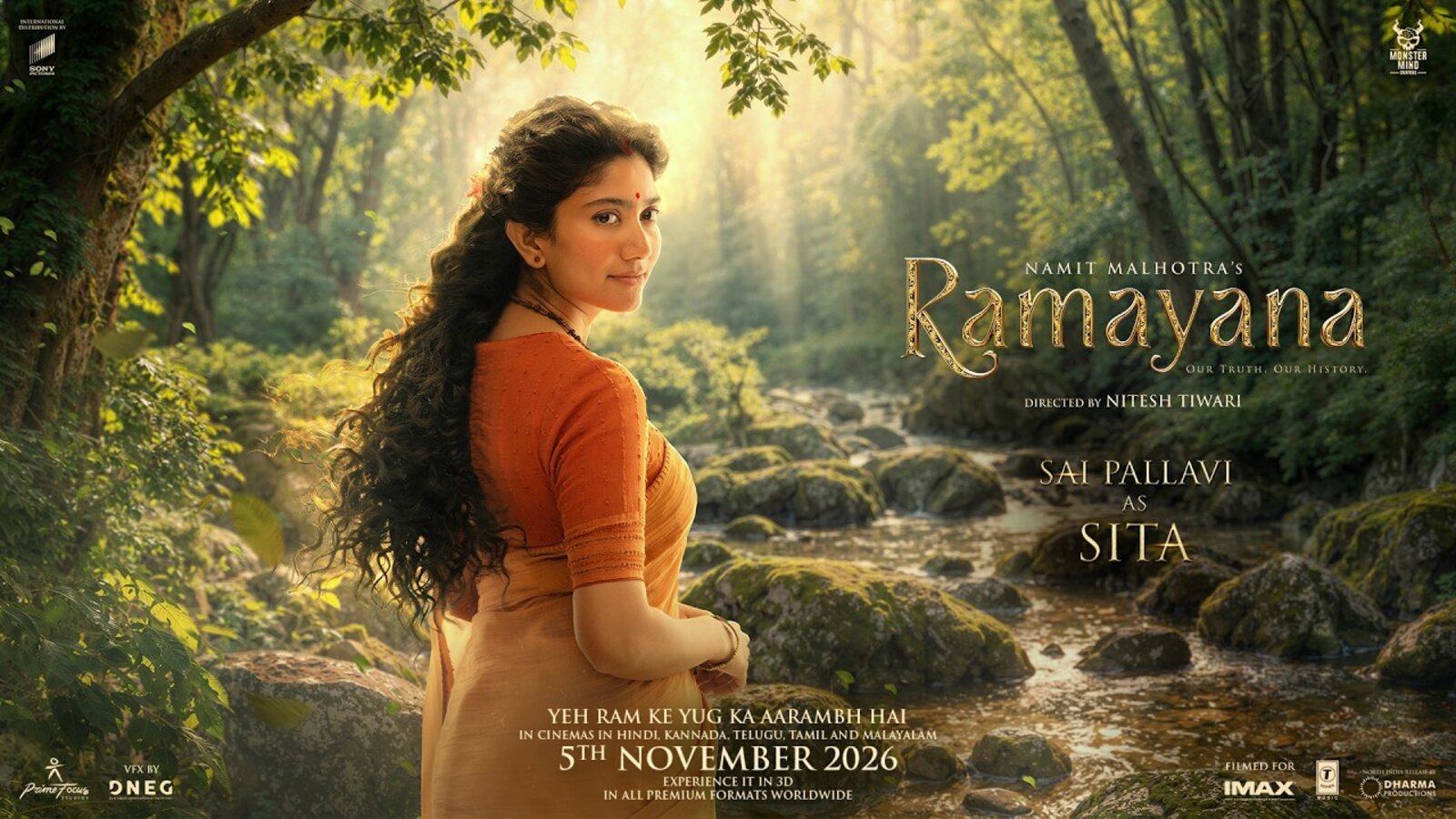
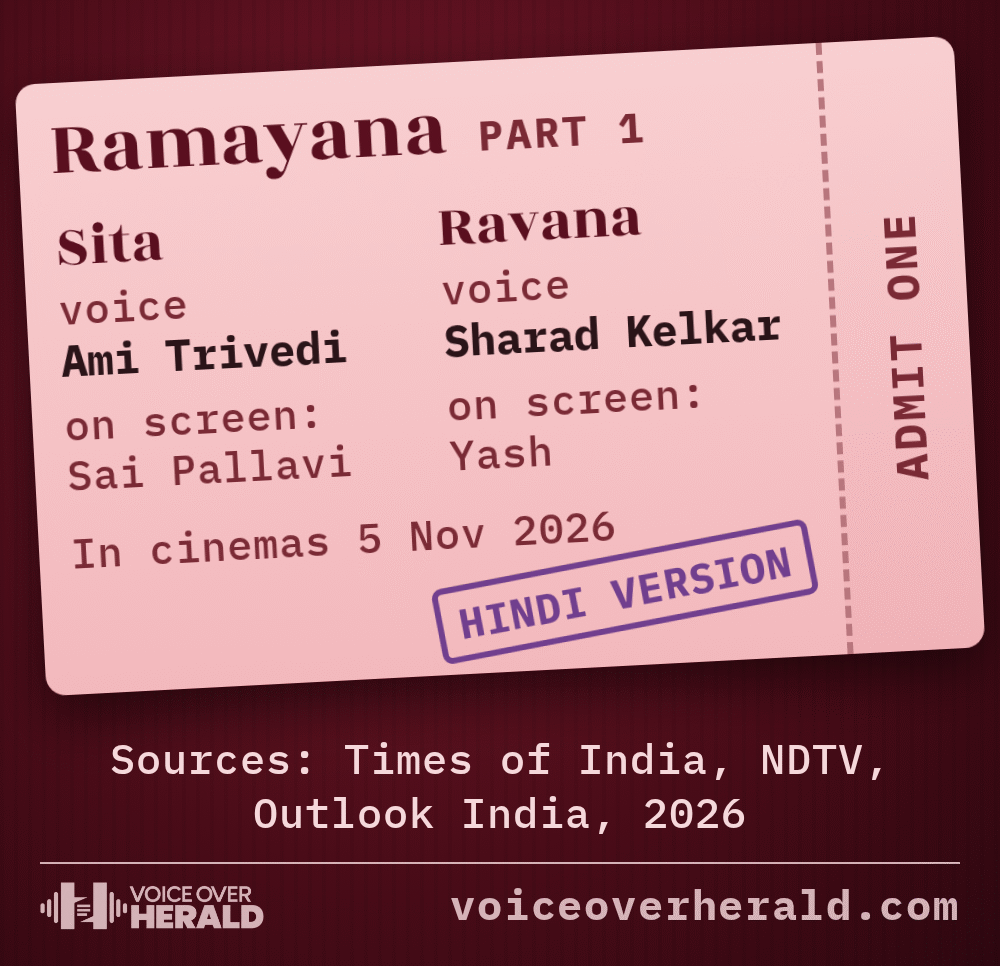
Ramayana: Part 1 opened in cinemas on 5 November, and in its Hindi version two of its biggest characters speak with someone else’s voice. Sita, played by Sai Pallavi, is voiced by Ami Trivedi. Ravana, played by Yash, is voiced by Sharad Kelkar. Both are working dubbing artists, and both have been talking about how they did it.
Nitesh Tiwari’s film is one of the biggest Indian releases of the year. It went out in Hindi, Tamil, Telugu, Kannada and Malayalam, Outlook India reports, and it passed ₹200 crore at the worldwide box office in its first two days. In the Hindi cut, though, the lines audiences hear from Sita and Ravana were recorded in a dubbing studio by two people who don’t appear on screen.
That’s normal in Indian cinema, where a star working outside their first language is often dubbed. What’s less normal is how much attention the voices are getting this week. Trivedi and Kelkar have both given interviews to Variety India, picked up by NDTV, the Times of India and others, and both talk about the job the way working voice actors do: matching someone else’s performance without leaving fingerprints on it.
Hear the voice: the Hindi trailer, cued to Ravana’s one spoken line at 0:50, which translates as “There will be one rule across the three worlds”. The trailer carries no voice credits. Video: T-Series, on YouTube
Why a blockbuster brought in two voices
The film’s first trailer got a mixed reaction, WION reports, and some viewers criticised Yash’s and Sai Pallavi’s accents in their Hindi dialogue. The makers decided to dub both actors for the Hindi release.
Kelkar is careful to say this isn’t a knock on Yash, a Kannada star making his Hindi debut. “Yash has given an outstanding performance. He is the best choice for the role and he understood the character perfectly. Dubbing for him was not at all easy,” he told Variety India, as reported by NDTV. “I would describe it as interesting because Yash speaks Hindi quite well. But as someone who speaks mostly in Kannada, he has an accent and his rhythm with Hindi words was a bit of an issue.”
He added that the whole team felt the Hindi version needed a different voice, and that the original holds up in its own language: “In Kannada, he has done a brilliant job. He has a fantastic voice.”
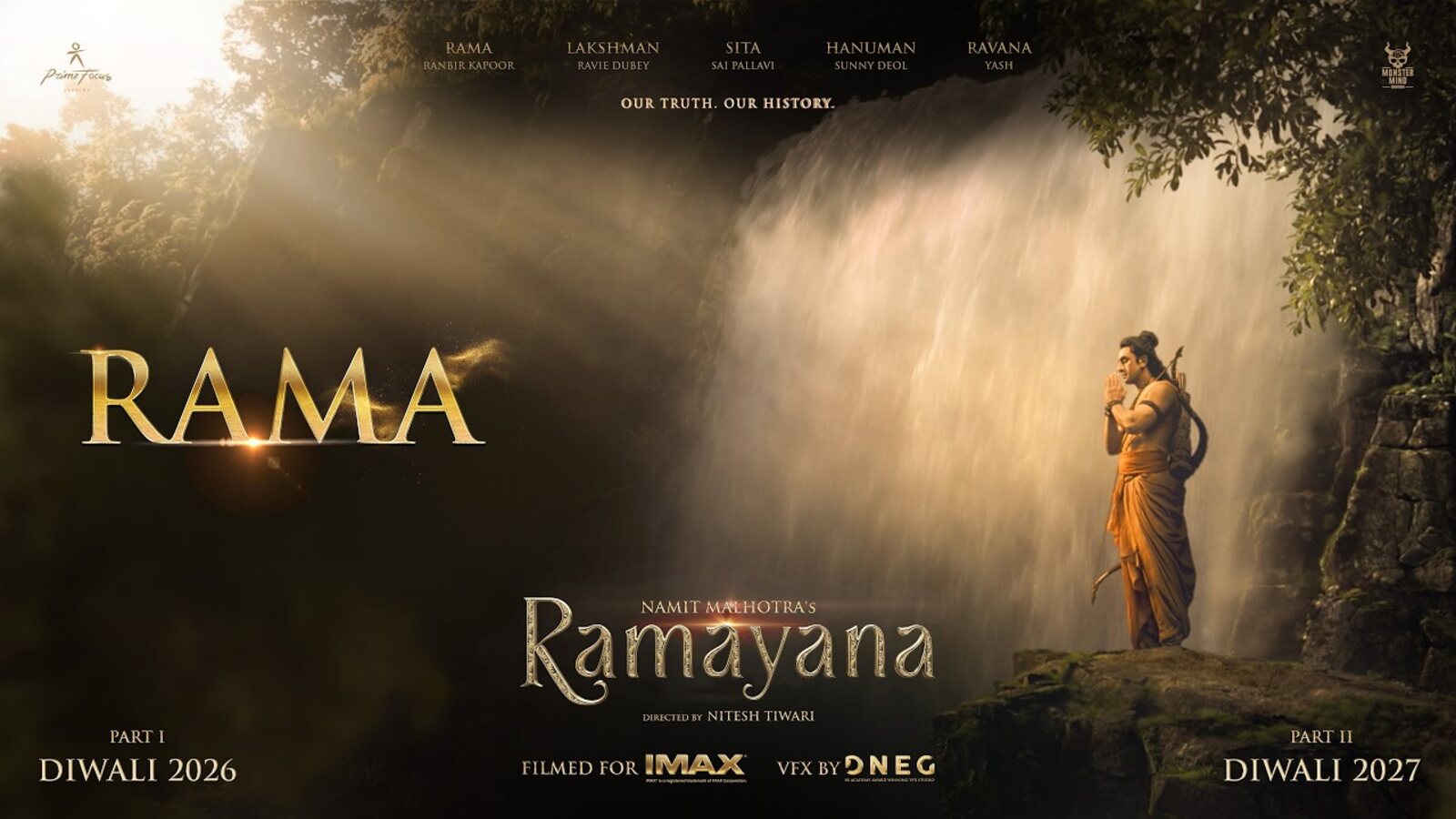
Ranbir Kapoor as Rama in the official promo. Image: World Of Ramayana
Ami Trivedi: watch it as the audience first
Trivedi started dubbing at 17. Her Hindi credits include Yelena Belova in Black Widow, Mulan and Lois Lane in the 2025 Superman, NDTV reports, and she told ETimes she has voiced characters in Harry Potter and Eva Green’s Artemisia in 300: Rise of an Empire. She’s also a familiar face on Indian television and in Gujarati theatre.
She describes landing Sita as “a divine placement”, telling Variety India, as reported by NDTV: “Somehow, the voice matched on the mic. Nitesh Tiwari and Namit Malhotra said the same to me.”
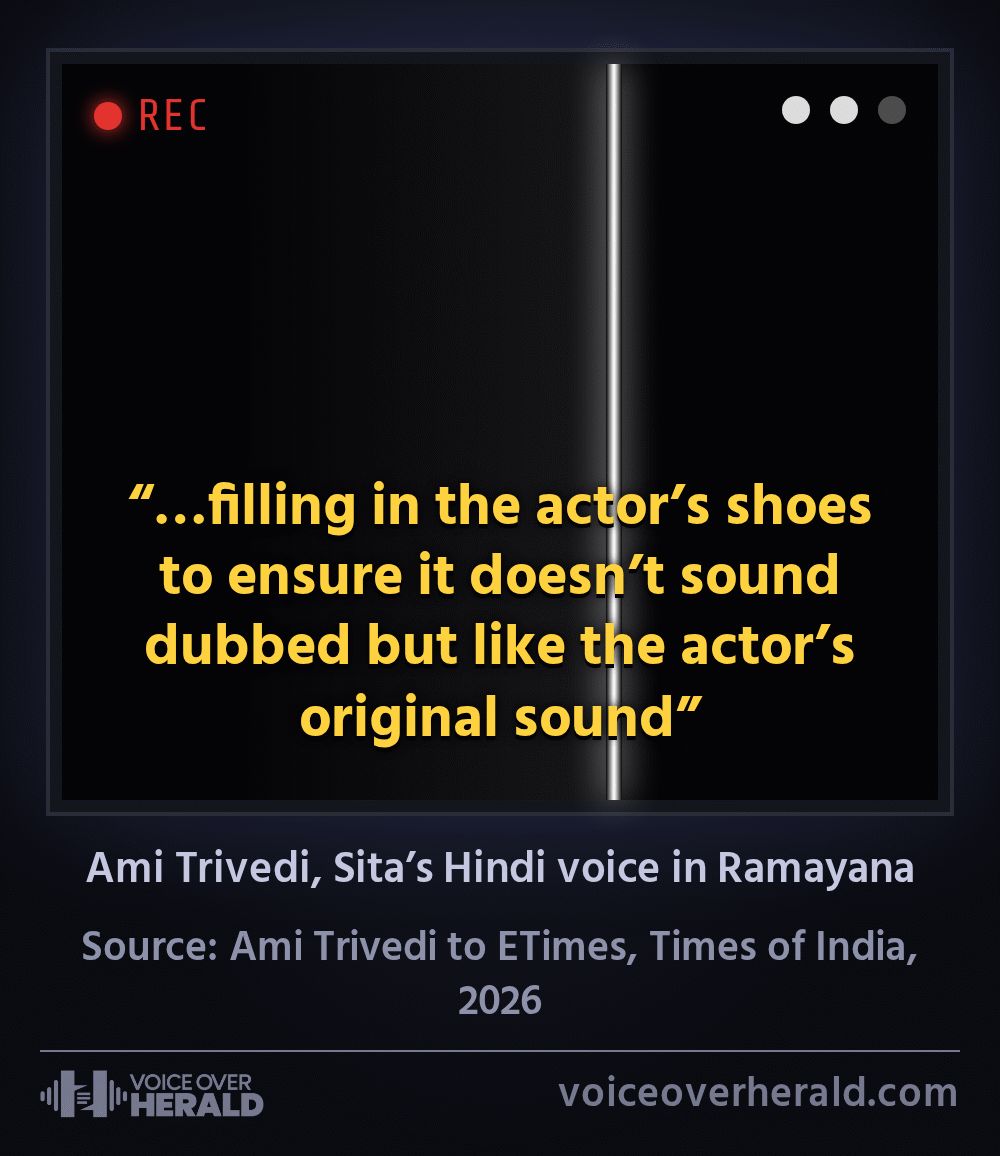
Her method, as she explained it to ETimes, starts in the audience’s seat. She watches a sequence as a viewer first, then studies how the actor played it, before she says a word. The goal is to disappear. “This is the main challenge, as I said before; it is always filling in the actor’s shoes to ensure it doesn’t sound dubbed but like the actor’s original sound; else it ruins the viewers’ experience,” she said.
 VoiceEditSuiteIt edits like you would, and it gets better every file.Every fix you make in the editor teaches Auto Clean Up more, so each file comes back sounding like you edited it yourself.See how it worksLearns from numbers, never your audio. Never used to train AI.
She gives the credit for how smoothly it went to the woman on screen. “For Sita’s dubbing, it was honestly the smoothest job that I have done, as the work was done majorly by Sai ma’am and the way she portrayed the emotions and expressions made it very smooth sailing; also, Nitesh sir’s guidance throughout made my job much easier,” she told ETimes.
The hardest part was holding the level. “I didn’t want to go up or down on the level of my performance. I didn’t want to sound wrong while portraying the character,” she told Variety India, according to NDTV. She picked out two scenes that needed the most care: Sita addressing the crowd as she and Ram leave Ayodhya for the forest, and her abduction by Ravana. As for the weight of voicing a figure every Indian viewer already knows, her advice is blunt: “when you are performing, it’s best to silence the noise, or else you can’t perform your best.”
Sharad Kelkar: Ravana cannot sound confused
IWMBuzz calls Kelkar India’s most sought-after voice artist. He’s the Hindi voice of Prabhas in the Baahubali films, IWMBuzz notes, and NDTV adds Salaar to the list. He also had a severe stammer that he overcame, according to IWMBuzz. He says the Ravana job came after he told Tiwari, at a meeting at actor Ravie Dubey’s home, that he wanted to work with him, and he credits his work as Lankesh in the animated series The Legend of Hanuman. “I credit bagging the dubbing role for Ravana to The Legend of Hanuman,” he told IWMBuzz.
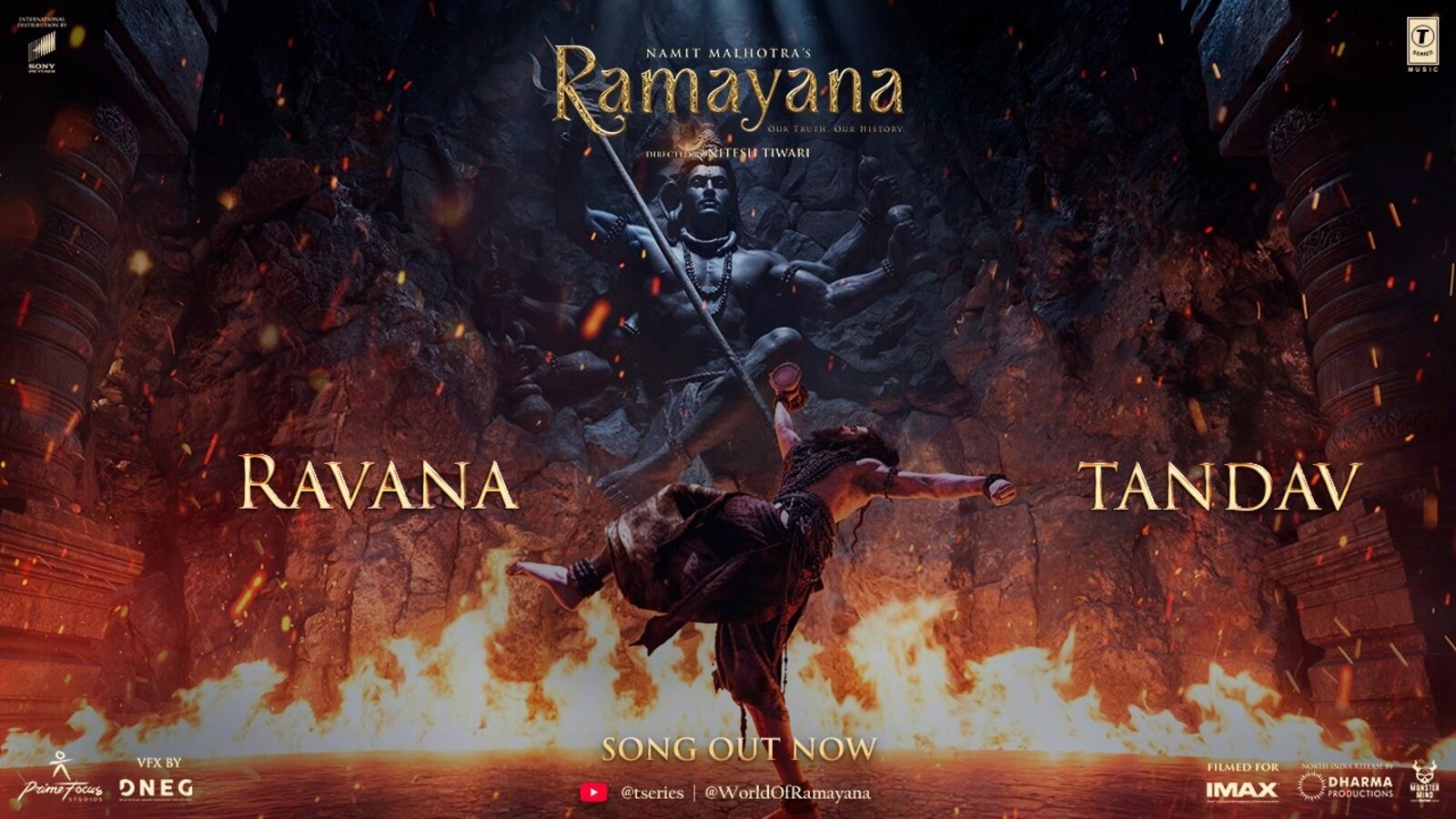
Yash as Ravana, in the artwork for the Ravana Tandav song. Kelkar is his voice in Hindi. Image: T-Series
He called it “one of my most tiring dubbing experiences”. His approach to the character comes down to one note he held throughout. “Ravan is a very intelligent, well-read man and he has a command on things. While dubbing, I had to keep in mind that he cannot come across as confused or doubtful,” he told Variety India, as reported by the Times of India. The single exception is the scene where Ravana argues with his own ten heads about whether to go to war, which Kelkar names as a favourite.
Yash stayed involved. “Yash is a sweet guy. We had long chats and he would come up with suggestions. He was always striving for the best outcome, asking me if I could improve some of the scenes. We were all in sync,” Kelkar said, in NDTV’s report.
The voices still waiting for their credit
For all the praise, Kelkar isn’t entirely happy with how his trade is treated. Asked by IWMBuzz whether he had wanted to stop dubbing after Baahubali, he said he was unhappy with the dubbing industry, then clarified: “I am not unhappy with the industry itself, but rather with how many producers view the craft of voice acting.” IWMBuzz says he’s disappointed that filmmakers still treat voice work as an afterthought, as if anyone could step into a booth and carry a lead character.
That will sound familiar to voice actors well outside India. The Hindi Ramayana is a useful counterexample: a production that dubbed its leads on purpose, cast experienced dubbing artists, and had the stars and the director in the room with them. Trivedi says Sai Pallavi would explain what she was thinking in particular scenes. Kelkar says Yash asked him to push some scenes further.
What working voice actors can take from it
Strip away the size of the film and the lessons are the ones any voice actor doing ADR, dubbing or replacement work will recognise. Watch the scene before you perform it. Work out what the original actor was doing, and serve that, not your own idea of the line. Keep your level steady across a long job so scene 80 matches scene 3. And find the one note that defines the character, as Kelkar did with Ravana’s certainty, then only break it where the story does.
It also shows how much of a “star” performance can belong to someone the audience never sees. This week, Indian outlets gave the two voices headlines of their own, which is a nice change. Trivedi, for one, says every genre is fun “as long as I can do justice to the actor’s work.”
Sources: Times of India / ETimes, interviews with Ami Trivedi and Sharad Kelkar (7 and 8 November 2026); NDTV, reports on Ami Trivedi and Sharad Kelkar citing Variety India (7 November 2026); Outlook India (7 November 2026); WION (7 November 2026); IWMBuzz (6 November 2026); T-Series and World Of Ramayana on YouTube. All quotations are from English-language reports; the trailer line is translated from Hindi by Voice Over Herald. Images: World Of Ramayana, T-Series.
Lee este artículo en español: La Sita y el Ravana de Ramayana en hindi son dos artistas de doblaje. Sharad Kelkar quisiera que más productores respetaran el oficio
Know something about this story, or spotted an error? Tell the newsroom.