
Two in Three UK Adults Wouldn’t Listen to an AI-Narrated Audiobook. The Poll Comes From a Library That Has Used Human Narrators Since 1935
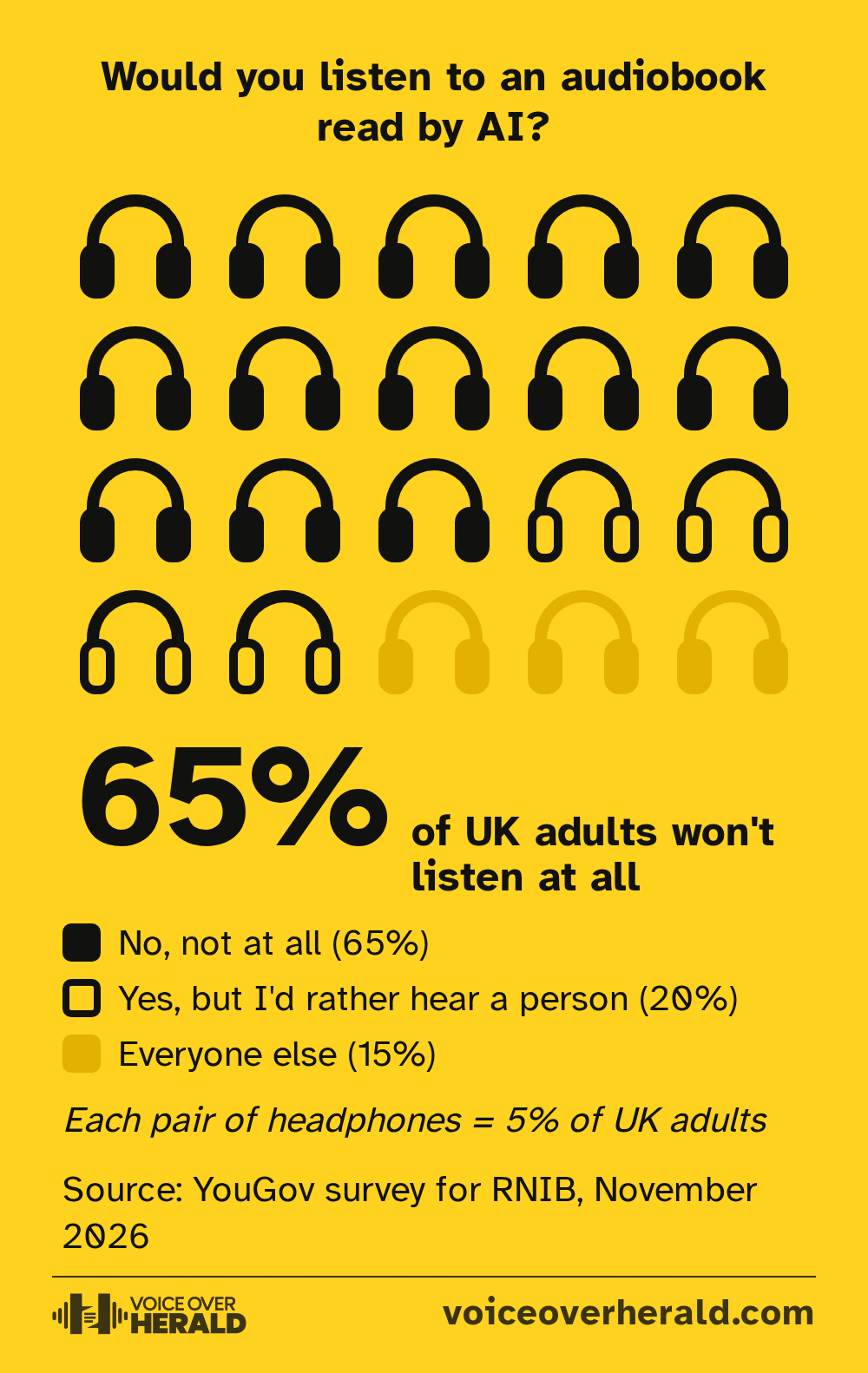
Ask people in the UK whether they’d listen to an audiobook read by AI, and two in three say no. That’s the headline from a YouGov survey for the Royal National Institute of Blind People (RNIB), out this week as the charity marks 90 years of its Talking Books library. Another one in five said they’d listen but would rather hear a person. For working narrators, the more useful numbers are further down: what makes a listener give up on a voice.
RNIB released the research alongside a set of short recordings by actors from the Disney+ drama Rivals, led by the charity’s president, Victoria Smurfit. The poll found 65% of UK adults would not listen to an AI-narrated audiobook at all, and 20% would listen but prefer a human voice.
The charity didn’t publish the sample size or fieldwork dates in its release, so treat the figures as one survey, not a census. Still, it’s a clear answer to a question the audiobook business keeps asking out loud.
What makes a listener switch off
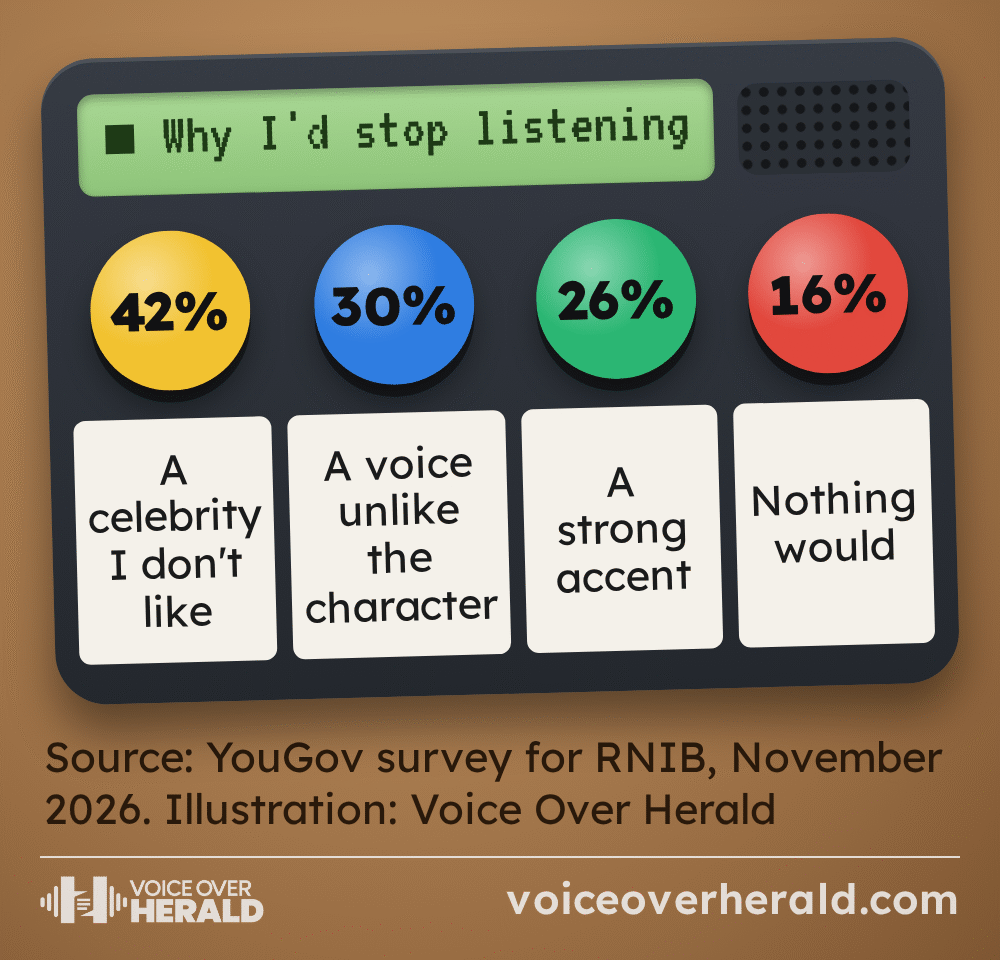
The survey also asked what would make people stop listening. RNIB says 42% would quit if the narrator was a celebrity they didn’t like, 30% if the voice was very different from how they’d imagined the character, and 26% if the narrator had a strong accent. Only 16% said nothing about a narrator would make them stop.
When people were asked to pick from English, Scottish, Irish, Welsh and Northern Irish accents, the English accent came out as the favourite. That’s a preference about a voice, not a rule about who should read what, and plenty of books are written to be heard in the accent of the place they’re set.
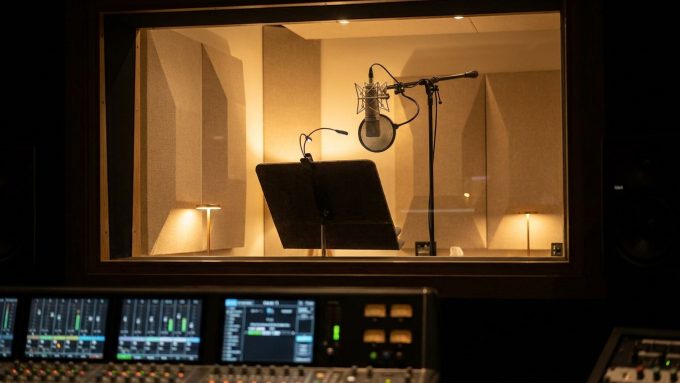
Here’s what RNIB’s own narrators sound like when they take turns on one poem, recorded in a studio booth for the charity’s Read for RNIB Day.
Hear the voices: RNIB’s Talking Book narrators take turns reading Rudyard Kipling’s If. Video: RNIB, on YouTube
The stars in this week’s campaign picked their own favourites. According to the Evening Standard, David Tennant read from Stephen Hawking’s A Brief History of Time, Danny Dyer from Ian Fleming’s Casino Royale, Katherine Parkinson from Jilly Cooper’s Rivals and Smurfit from 101 Dalmatians. Twenty actors took part in all, RNIB says, including Alex Hassell, Bobby Lockwood, Bryony Hannah, Denise Black, Eliot Salt, Oliver Chris and Rufus Jones.
Why a charity library cares who’s reading
For most listeners an audiobook is a treat. For RNIB’s readers it’s often the only way into a book at all. Smurfit put it this way: “Audiobooks are a popular escape for many of us, but they’re also an essential accessibility aid which allow blind and partially sighted people to access literature on a par with sighted peers.”
Debbie Miller, RNIB’s interim chief operations officer, uses the service herself. “RNIB’s Talking Books service is a companion and without it, there would be a huge hole for me where books, imagination and discovery should be,” she said in the charity’s release.
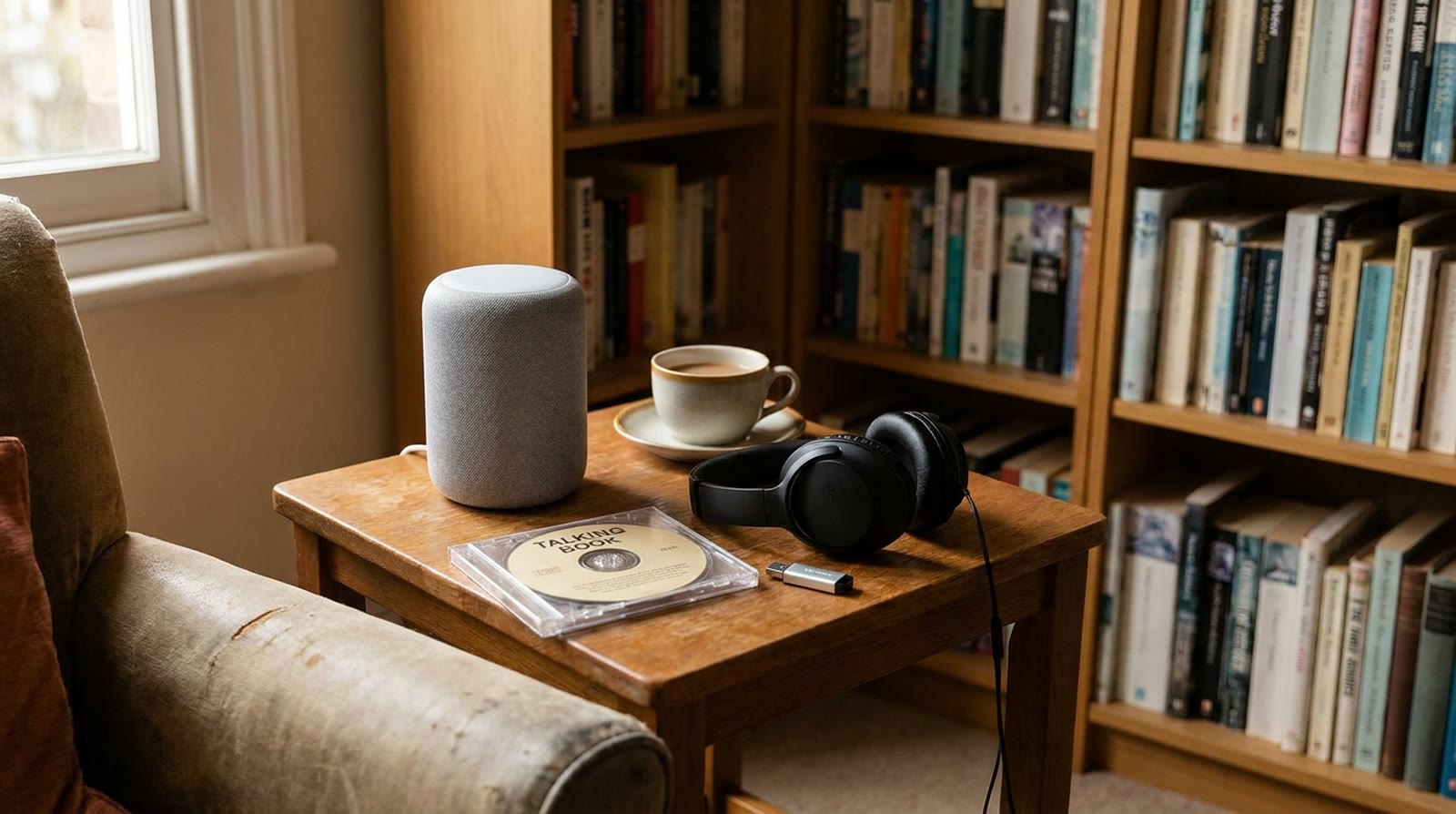
The library says it holds 56,000 titles, free to anyone with a sight condition, sent out on DAISY CD and USB stick, by download, or read aloud through Alexa. RNIB says books were borrowed more than a million times last year.
Ninety years of human voices
It started with soldiers. RNIB’s history of the service says men blinded in the First World War came home unable to read print, and not all of them could learn braille. Captain Ian Fraser, shot through the eyes at the Somme in 1916, is said to have cried out, “If books could only talk!” RNIB opened its own recording studio in London in 1934, and the first Talking Books went out on 7 November 1935, on shellac records that played for 25 minutes a side. An average novel took ten discs.
Tape arrived in 1960, digital DAISY CDs in 2002, USB sticks and downloads in 2014, and Alexa in 2021. Every format change kept one thing the same: someone reading.
Today most new titles come from commercial publishers, many donated free. HarperCollins has supplied every new audiobook since 2015, RNIB says. But the charity still records books itself, in its Talking Book studios in Camden, choosing titles each month from reader requests, prize winners, bestsellers and gaps in the shelves.
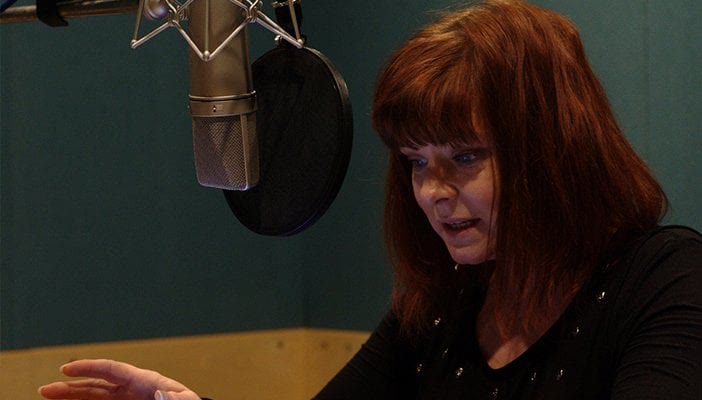
Recording a Talking Book for RNIB. Image: RNIB
Casting is done the old way. “RNIB has many talented narrators available, and after a speed-read of the book, we pick the person who can best bring it to life,” the library explains. A Talking Book can run ten hours or more, so a narrator books several sessions to finish one.
The narrators who do the reading
Gordon Griffin, who has recorded more than 900 audiobooks for commercial publishers, received an MBE for services to people with sight loss. He started in the mid-1980s, picturing a listener beside a cassette machine, and says the audience has since become everyone. “But when I am recording I still imagine that blind person listening,” he told RNIB.
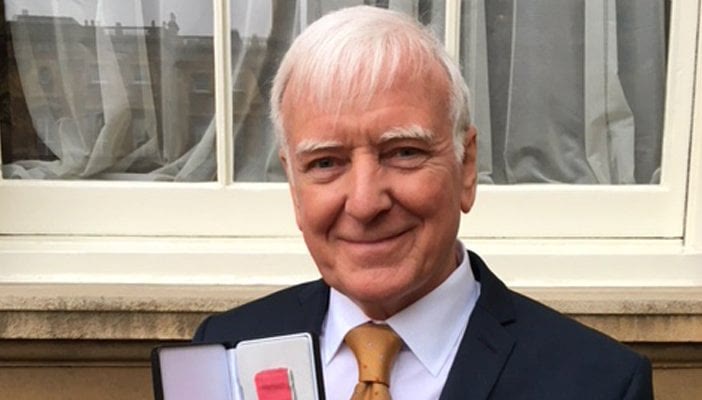
Gordon Griffin with his MBE. Image: RNIB
Claire Morgan, who narrated Amanda Berriman’s novel Home for the library, faced a book told by a four-year-old. She decided against putting on a child’s voice. “Instead, we decided to apply the phrasing and intonations that a young child might use,” she said, crediting RNIB’s producers, who engineer and direct in the same session.
Her prep is the part any working narrator will recognise. “The long sentences were a logistical nightmare (where does one breathe?!) so I set about diligently highlighting, scribbling and underlining for days on end, to not only save time in the booth while recording but also to save on editing time in post-production,” she wrote. A seven-hour book, she added, takes much longer to record, in three-hour sessions “fuelled by a croissant, water and a bucket of caffeine.”
The American actor Stephanie Ellyne read Lucy Ellmann’s Booker-shortlisted Ducks, Newburyport for the library: 1,030 pages, most of it a single sentence. “Forty-five recorded hours later, I feel I’ve been yanked from a dizzying and delicious dream,” she said.
What it means if you narrate for a living
None of this will stop AI narration from spreading, and the same poll shows some listeners don’t mind it. But a poll where two thirds refuse outright, and only 16% say nothing about a narrator would put them off, says listeners are paying close attention to the voice.
 VoiceEditSuiteNewAuto Clean Up now learns how you breathe.Learns from numbers, never your audio. Never used to train AI.See how it works
The switch-off list reads like a casting brief. A voice that doesn’t fit the character loses nearly a third of listeners. A strong accent loses about a quarter, which is a reason to match accent to book rather than to flatten everyone into one sound. And a famous name is no guarantee: the celebrity they don’t like was the biggest single reason to stop.
For narrators, that’s an argument for the things a machine still struggles to fake: reading the room of a book, choosing where to breathe, and deciding, as Claire Morgan did, that a four-year-old’s story needs a child’s rhythm and not a cartoon voice. RNIB has been betting on that for 90 years, and its readers are still borrowing.
Sources: RNIB, “Two thirds of Brits would not listen to an AI narrated audiobook” (5 November 2026, research conducted by YouGov); The Evening Standard, “Rivals stars David Tennant and Danny Dyer lend voices to audiobooks for blind” (6 November 2026); RNIB, History of Talking Books; RNIB, How Talking Books are added to RNIB Library; RNIB, Meet some of our Talking Book narrators; RNIB, RNIB celebrates 90 years of our beloved Talking Books service; RNIB on YouTube. Images: RNIB.
Lee este artículo en español: Dos de cada tres adultos del Reino Unido no escucharían un audiolibro narrado por IA. La encuesta viene de una biblioteca que usa narradores humanos desde 1935
Know something about this story, or spotted an error? Tell the newsroom.