

Indonesia Makes Voice Over an Official Creative Industry. Its Voice Actors Are Still Waiting on Royalties and AI Rules
Indonesia has put voice over on its official list of creative industries, beside film, music, games and fashion. The minister told a hall full of students in Bandung on Thursday. For the country’s voice actors, who have been asking for royalties and rules on AI since early 2025, it’s the first time the state has written their job into a 20-year plan.
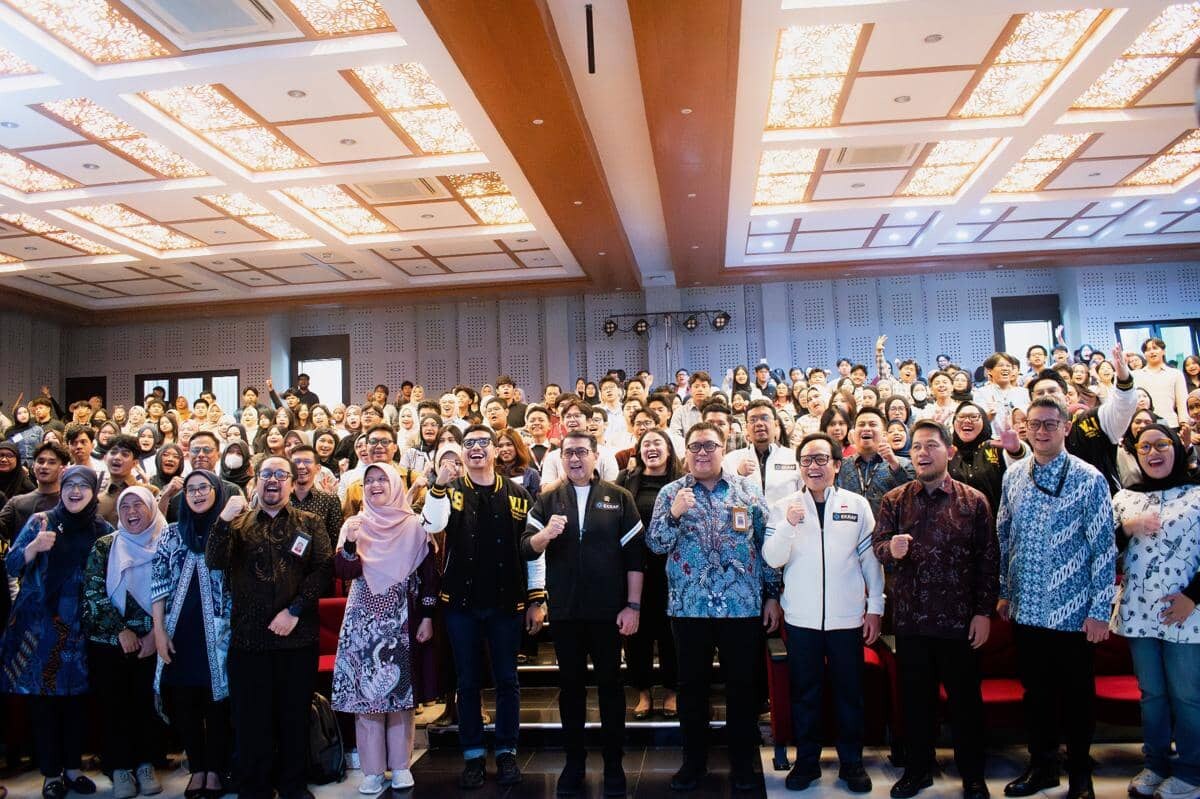
Teuku Riefky Harsya, Indonesia’s Minister of Creative Economy, made the point at the kick-off of Wonder Voice of Indonesia 2026, a talent programme run by Voice Institute Indonesia with his ministry. For the first time the kick-off was held on a university campus, in the Damar Auditorium at Telkom University, and the minister opened it by striking a gong.
“There are subsectors starting with fashion, culinary, crafts, games, apps, music, film, and now there’s an addition, which is voice over,” he said, as reported by the state news agency Antara.
What changed, and when
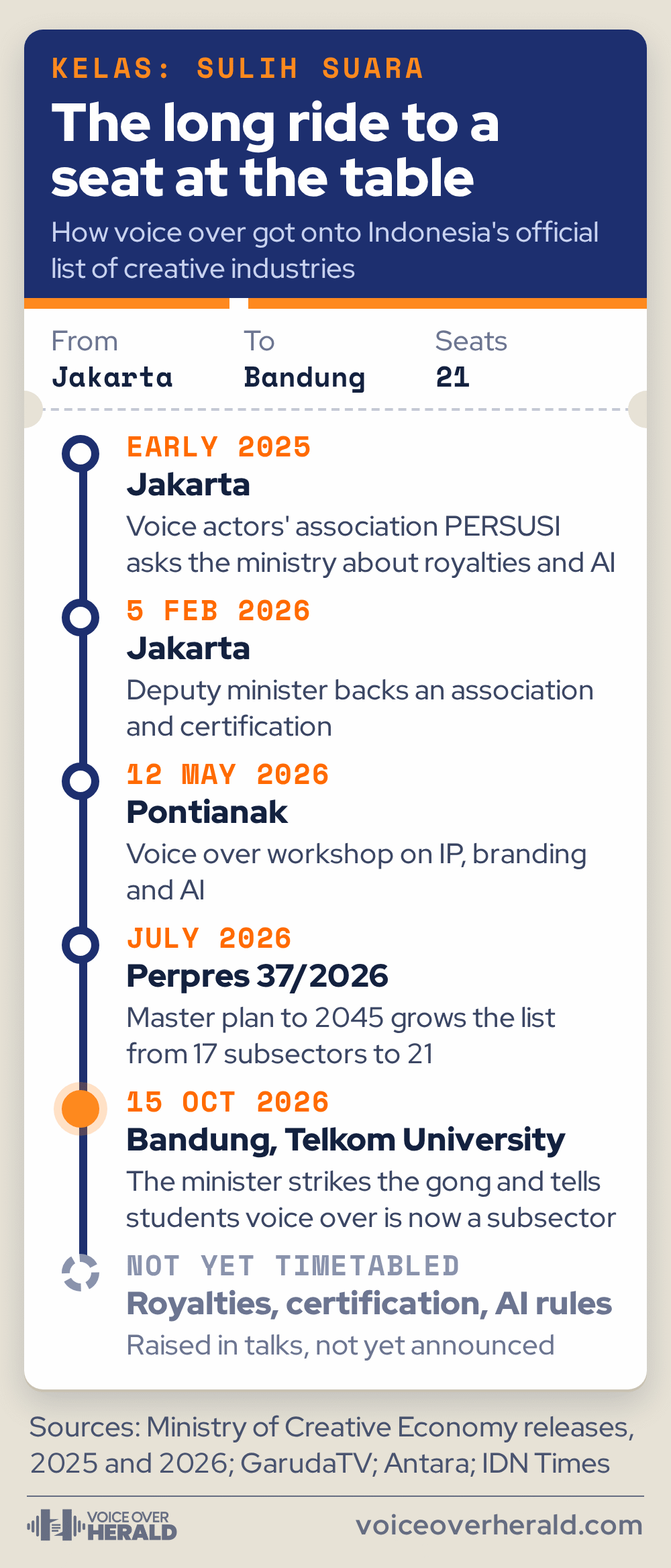
The change itself sits in a presidential regulation, Perpres No. 37 of 2026, which sets out Indonesia’s Creative Economy Master Plan, known as Rindekraf, for 2026 to 2045. The plan grows the official list of creative subsectors from 17 to 21. The four newcomers are new technology (AI, blockchain, big data and cybersecurity), digital content (content creators, affiliates and live commerce), automotive modification, and sulih suara: voice over and dubbing.
Voice over lands in a cluster called technology and digital content, next to games, apps, AI and digital content. Film, animation, advertising, TV and radio sit in a separate media cluster. So the plan treats the voice as a craft in its own right.
The plan went public in July. When it did, the minister called the longer list “the foundation for drawing up more targeted policy to strengthen the creative economy ecosystem,” according to GarudaTV. On Thursday he stood in front of a room of would-be voice actors and spelled out what it means for them.
“And the aim of this is to widen the voice over profession’s opportunities in industry, so it’s really downstreaming,” he told Antara. Downstreaming, or hilirisasi, is a favourite word in Indonesian economic policy. It usually means turning raw nickel or palm oil into finished goods at home. Here the raw material is a voice.
A talent programme that now feeds more than 300 companies
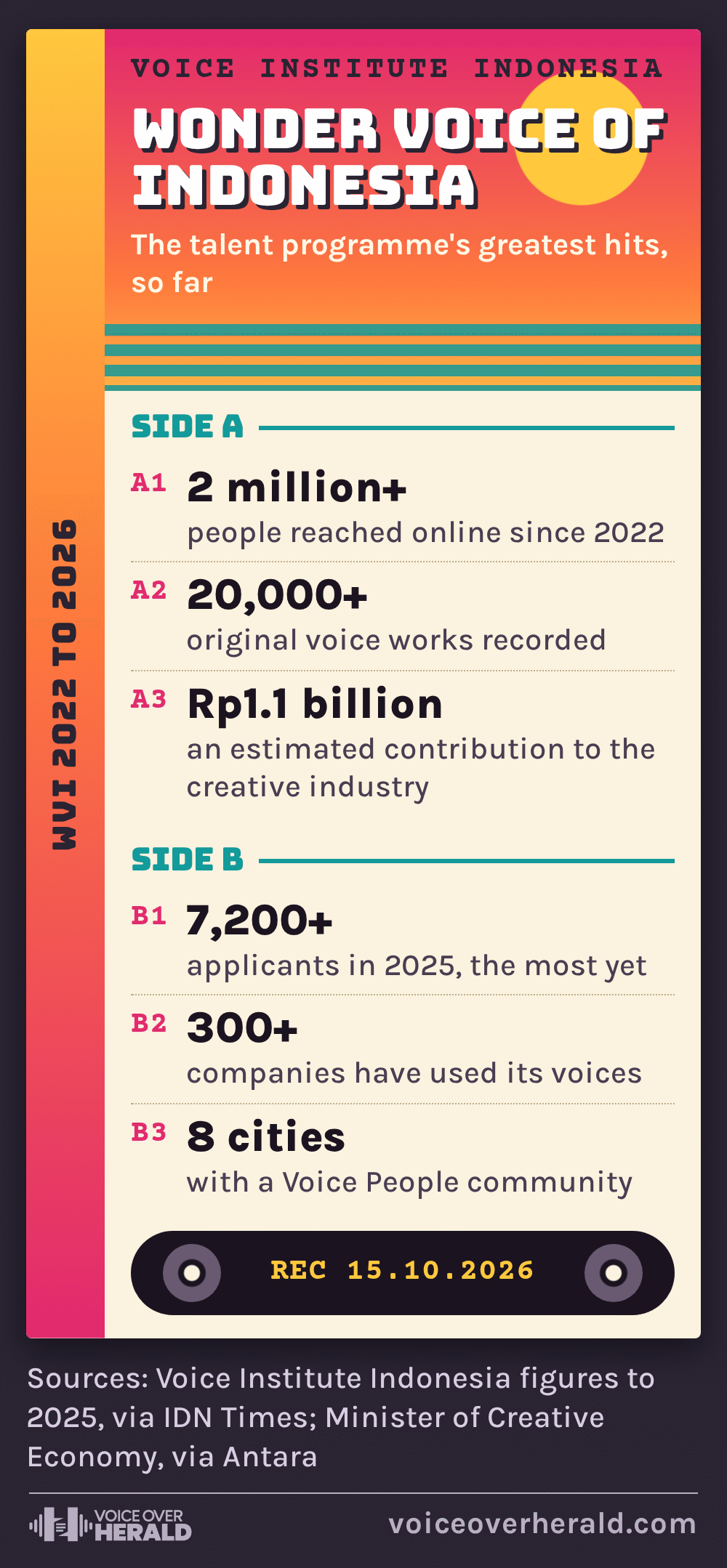
The ministry has worked with Voice Institute Indonesia since 2022. Its Wonder Voice of Indonesia programme scouts and trains newcomers, then puts them in front of clients. The minister said talent from the programme has been used by more than 300 companies for their products and services. In 2025 it drew about 7,200 applicants, the most since it began.
The institute’s own figures, published with Thursday’s event, say the programme has reached more than two million people online and produced more than 20,000 original voice works since 2022. The ministry has named some of the employers: alumni have been taken on by the Ministry of Trade, the state insurer Jasa Raharja and AirAsia.
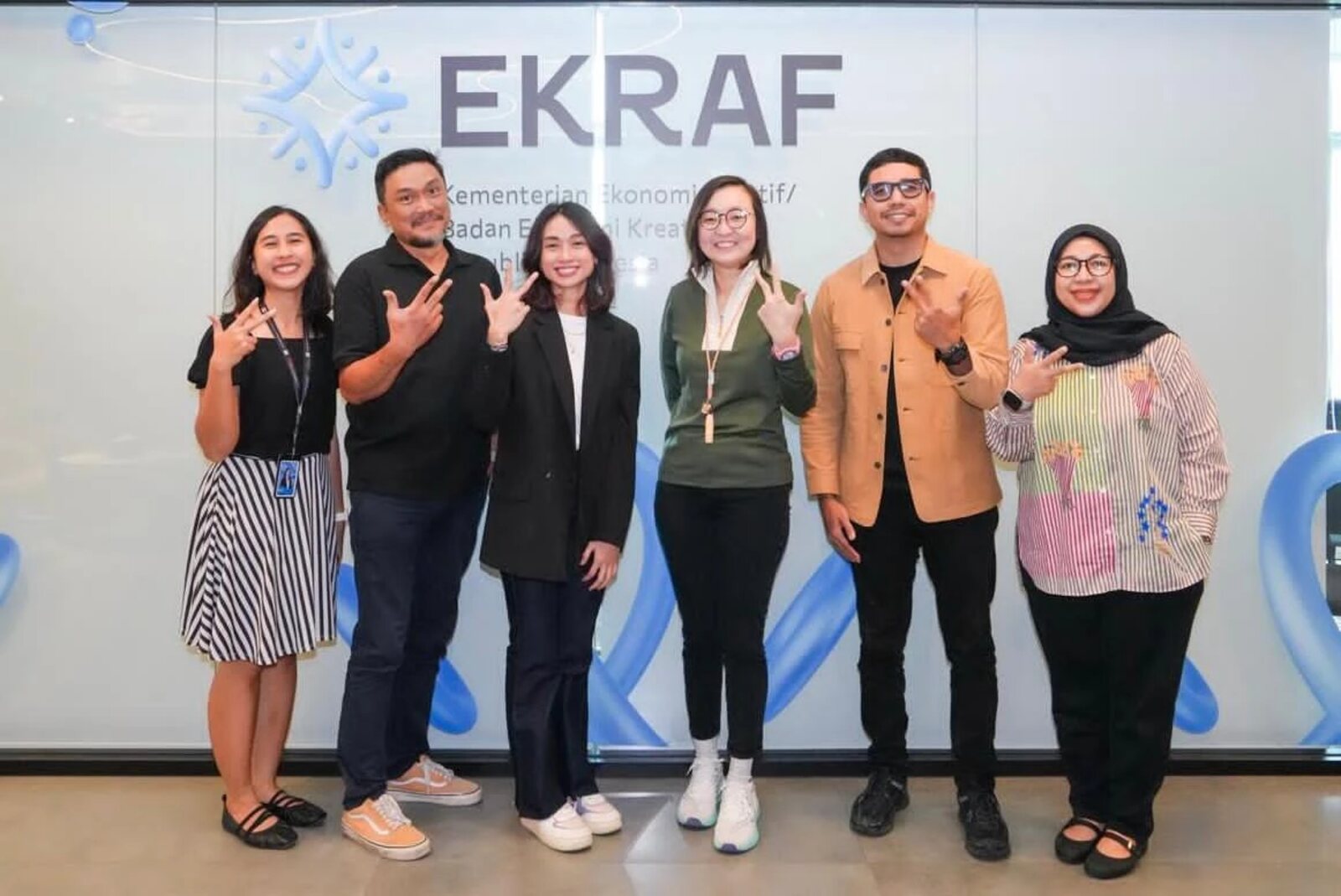
Voice Institute Indonesia at the ministry, February 2026. Image: Ministry of Creative Economy
Bimo Kusumo, the institute’s founder and a working voice actor, was blunt about what the new status means. “Voice over is now seen as a profession and as part of Indonesia’s creative economy ecosystem,” he said. “Voice over has become one of the 21 creative economy subsectors in the Creative Economy Master Plan for the next 20 years.”
He also spread the credit around. “Government, campuses, industry, associations, communities and brands need to move together to create talent, open up opportunities and build a sustainable ecosystem,” he told IDN Times. This year’s programme has a brand partner for the first time, the herbal remedy maker Tolak Angin.
The Bandung session was a class as much as a ceremony. Kusumo and Binta Nadhila ran a basic voice over workshop on script reading, articulation, intonation and delivery. Euis Handayani and Jason Tenggara took the voice acting session on character, emotion and situation, then walked students through this year’s timeline and challenges.
The money questions are still open
None of that answers the question working voice actors in Indonesia have been asking loudest: who pays them when their voice is used again. In early 2025 the Indonesian voice over association, PERSUSI, met Deputy Minister Irene Umar in Jakarta to talk about royalties and protection.

 VoiceEditSuiteHit the broadcast spec first time.Pick ACX, EBU R128, Spotify or podcast, drop in your file, and Loudness Normalizer hands back a version that passes.See how it worksYour recordings are never used to train AI.
“We want to ensure that voice-over artists receive their rightful compensation, including fair royalties,” Umar said after that meeting. “Dubbers play a crucial role in the film and music industries, and they should be treated equally, just like background music or soundtracks in a production.”
Agustini Rahayu, then the ministry’s deputy for media creativity, put AI on the same list. “We will establish regulations on dubber earnings and anticipate the impact of AI in the industry,” she said, in a statement on the ministry’s own site. PERSUSI’s Antero sounded patient. “Although it will be a long process, we are optimistic about the direction given,” he said.
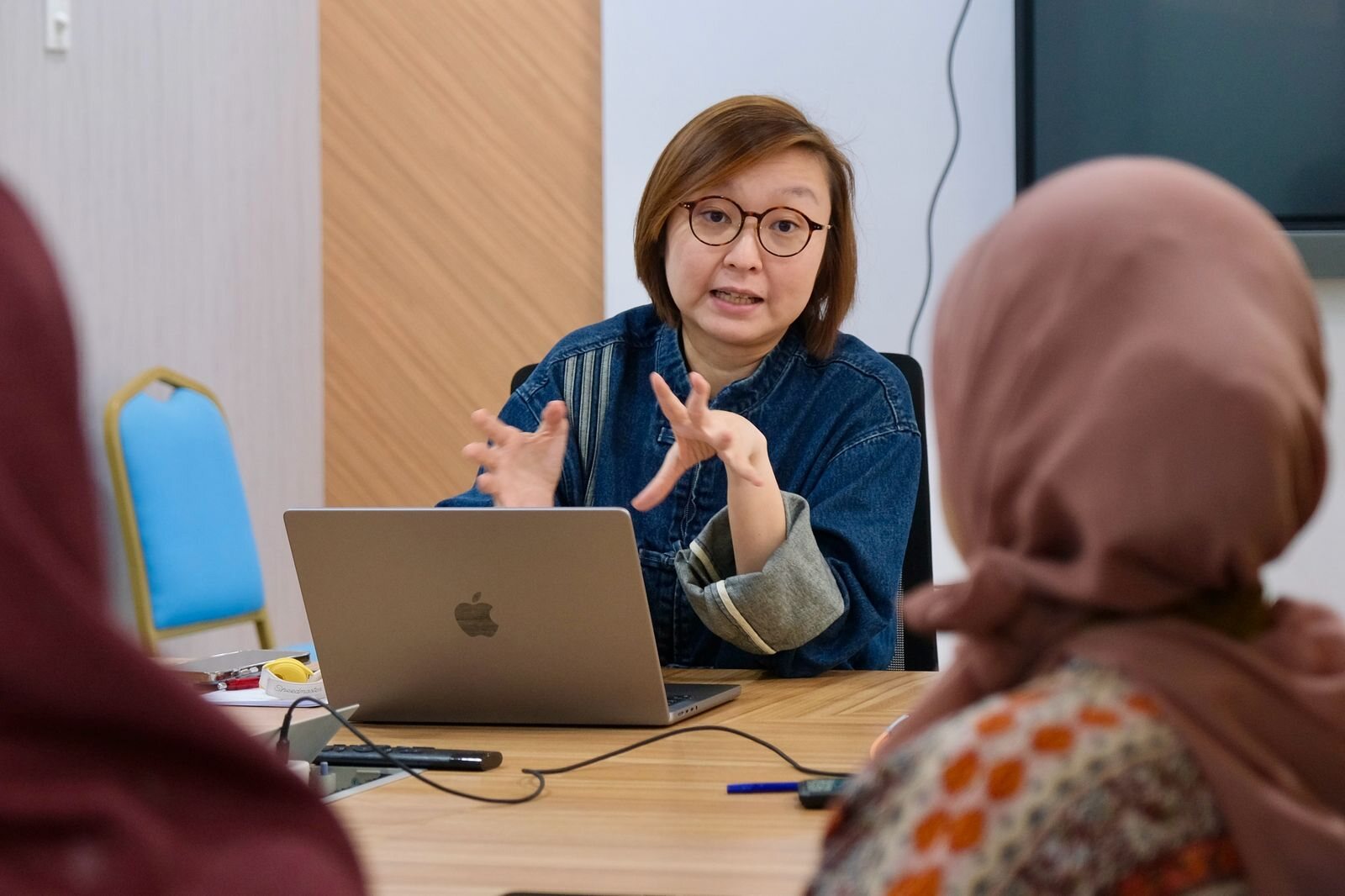
PERSUSI's meeting at the ministry, 2025. Image: Ministry of Creative Economy
In February this year Umar met the institute and pushed for a proper voice over association, with professional certification and access to markets at home and abroad. Appreciation for voiceover work, she said, “remains limited.” An association of voice actors, Aspesnesia, was started at the close of last year’s programme.
Thursday’s reports from Bandung don’t mention a royalty scheme, a certification standard or AI rules arriving with the new status. Being named in the master plan is the step that comes before those, not a substitute for them.
What the ministry wants young voices to learn
The ministry has been running voice over workshops outside Java too. At one in Pontianak, West Kalimantan, in May, its deputy for media creativity, Cecep Rukendi, said the point was more than a good read. “We want young talent not only to be great at selling their voices, but also to understand the business side, intellectual property and how to build a personal brand on global platforms,” he said.
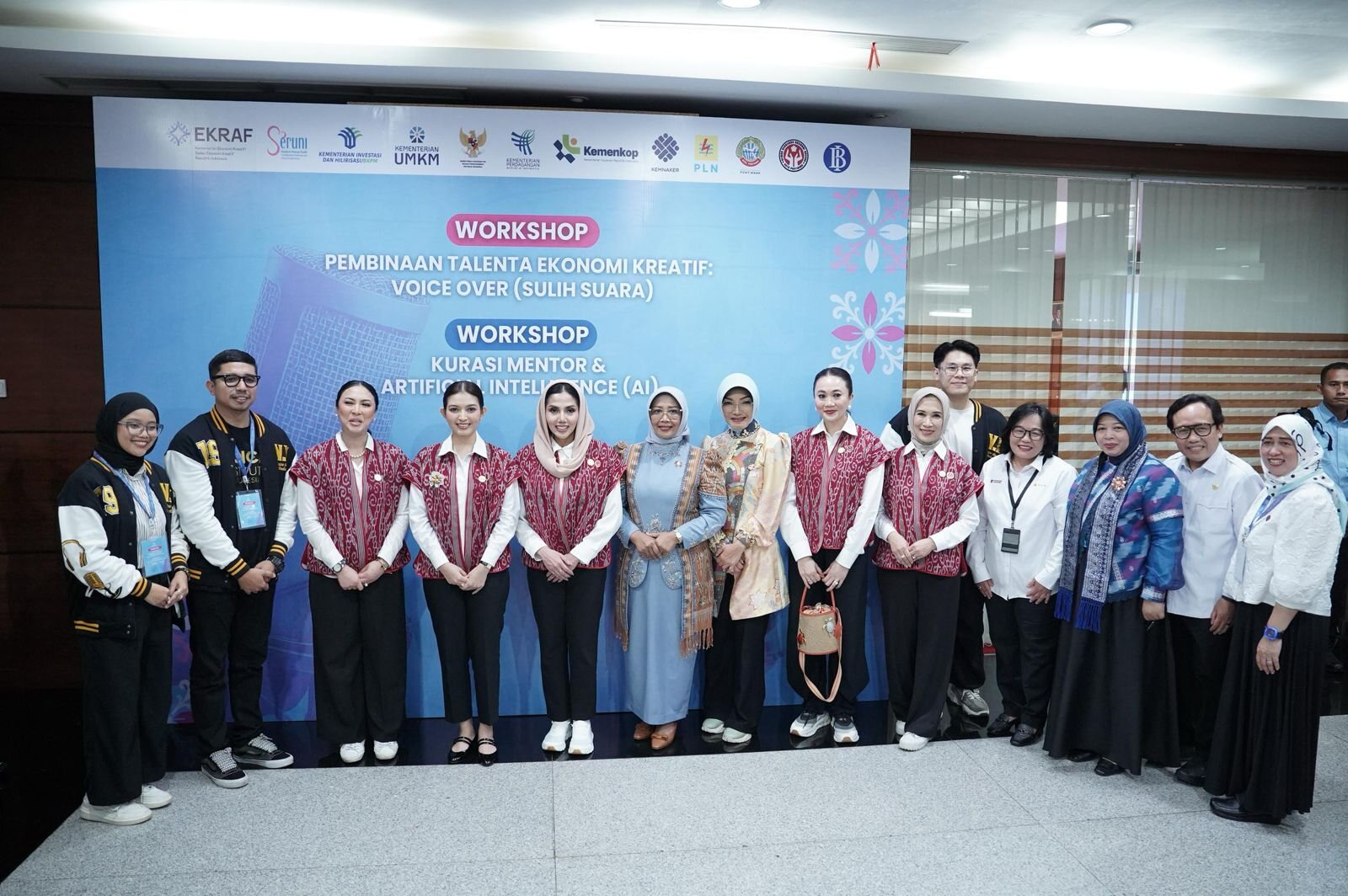
The voice over workshop in Pontianak, May 2026. Image: Ministry of Creative Economy
Kusumo, who mentored there too, took on the AI question directly. “It’s true that AI can imitate tone, but AI will never be able to replace empathy and storytelling that touches the heart,” he said. “In voice over, we’re not just making sound. We’re building an emotional connection with the listener.”
The minister’s numbers explain why the government cares. He said the creative economy employed 27.4 million people in 2025 and grows by one to 1.5 million workers a year. Sixty-three percent of them are Gen Z or millennials, and 58 percent are women.
For voice actors anywhere else, the order of events is the interesting part. Indonesia trained the talent first, built a community and an association second, and got the job written into national policy third. The pay and AI rules come next, if they come at all. Indonesia’s voice actors will be listening for what follows the gong.
Sources: Antara (Ilham Nugraha), 15 October 2026; JPNN, 15 October 2026; IDN Times (Wahyu Kurniawan), 17 October 2026, figures from Voice Institute Indonesia; Ministry of Creative Economy news releases of 4 March 2025, 5 February 2026 and 12 May 2026; GarudaTV, 22 July 2026; TVRI News, 13 July 2026; Periskop, 20 July 2026. Quotations from Indonesian sources are translated by Voice Over Herald; the ministry’s 2025 and February 2026 quotations are its own English. Images: Wonder Voice of Indonesia; Ministry of Creative Economy.
Lee este artículo en español: Indonesia convierte la locución en industria creativa oficial. Sus actores de voz aún esperan regalías y reglas sobre IA
Know something about this story, or spotted an error? Tell the newsroom.