




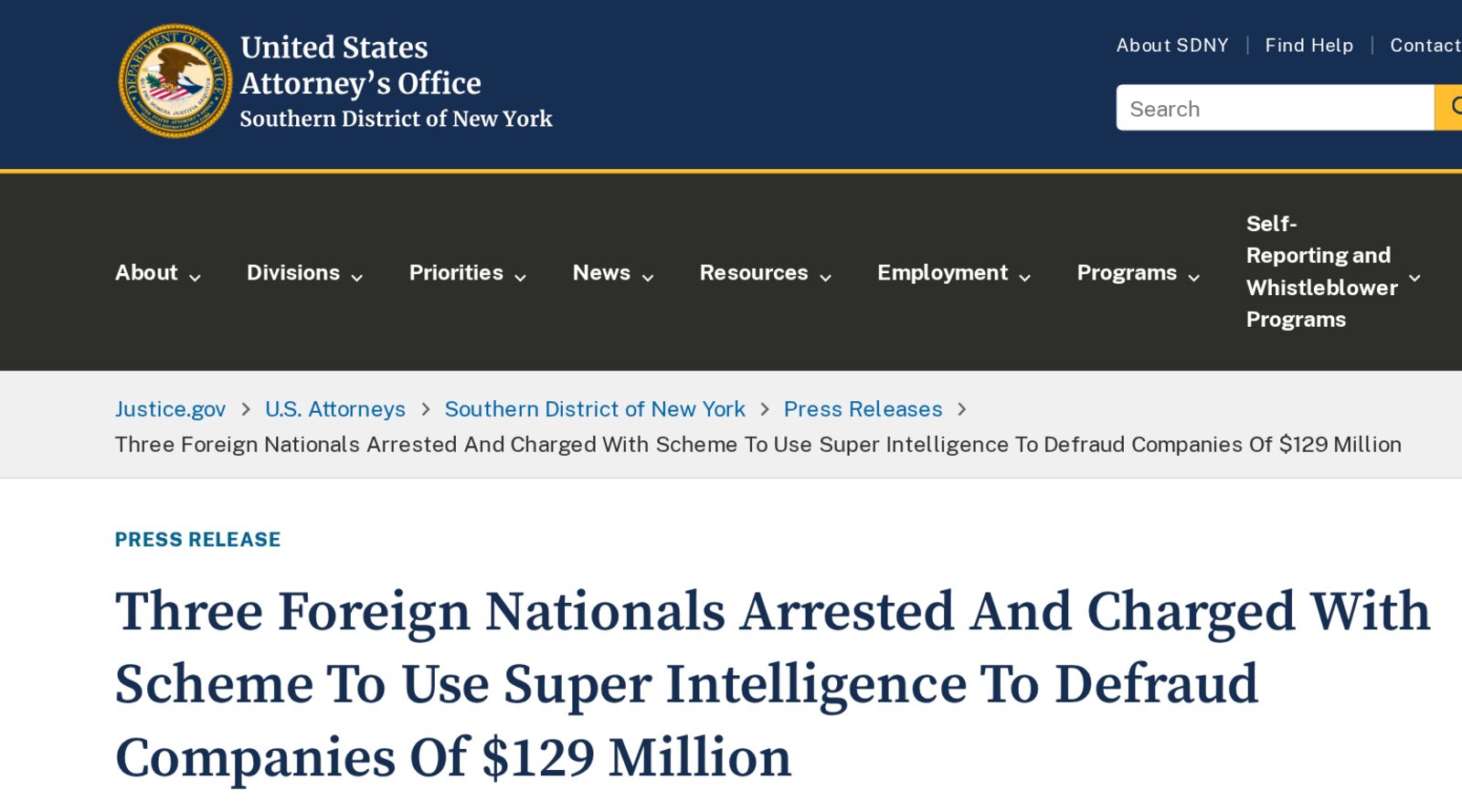
Three Men Are Charged With Faking CEOs’ Voices to Order Wire Transfers. The Charges Include Identity Theft
Federal prosecutors in New York say three men used AI to copy the voices of company bosses on the phone, then posed as their lawyers, and talked staff into wiring away about $129 million. The charges include aggravated identity theft. If your voice is your living, this is the case that shows what a copied voice can be made to say.
The call comes from the chief executive. It sounds like the chief executive. There’s a confidential deal, a lawyer in London will explain, and please don’t mention it to anyone. That, according to an indictment unsealed in Manhattan on Thursday, 5 November, is how a ring of fraudsters took companies on three continents for more than $129 million between 2024 and 2026.
The US Attorney’s Office for the Southern District of New York has charged Jacob Soall, 41, of Marbella, Spain, and the United Kingdom; Sharon Hazan, 54, of Israel; and Guy Sheetrit, 42, of Israel and the United Arab Emirates. Soall was arrested in Spain in June, Hazan in Spain in August and Sheetrit in the UK in September. Extradition requests for all three are pending, and the charges are allegations. Each man is presumed innocent unless and until proven guilty.
A voice on the phone, then a lawyer who wasn’t
The pattern prosecutors describe starts with an employee who can move money, usually someone in accounts. The conspirators would pretend to be that company’s CEO, explain that they needed help with a confidential financial transaction, and, in the words of the US Attorney’s press release, “would use SI to mimic the CEO’s voice and/or image in calls with the employee.”

 VoiceEditSuiteRate CalculatorKnow what to charge before you reply.Low, mid and high pricing in a ready-to-send quote.See how it works
Then came the second act. The fake CEO would point the employee to lawyers at big international firms who were supposedly working on the same deal, and the conspirators would play those lawyers too. One of them would finally tell the employee which account to wire the money to. The accounts were controlled by the ring, prosecutors say, and the money was turned into cryptocurrency to hide where it went.
Soall’s job, according to the release, was mostly to play British lawyers. He kept a handwritten script titled “Lawyer Call” that he “utilized to make himself seem like a real attorney when speaking with and defrauding victims.” Prosecutors say it included lines meant to stop staff from talking to their colleagues about the calls.
The Associated Press, reporting from court papers, says the trio targeted thousands of companies over more than a year and a half, with an email from the “CEO” first and the call after. AP says lawyers for Soall and Sheetrit didn’t immediately respond to a request for comment, and it wasn’t clear whether Hazan had one.

Thousands of targets, one kind of call
The victims named in the release range from hospital systems in Missouri and California to a bank in Rhode Island, a fintech company in the UK, a mutual fund company in Massachusetts and a pet food company in Florida. The money went out to accounts in nine countries.
Hazan, prosecutors say, laundered money from the scheme and bragged about it. According to the release, he claimed he’d been laundering money since 1994 and that among professional launderers he was “number one all over the world.”
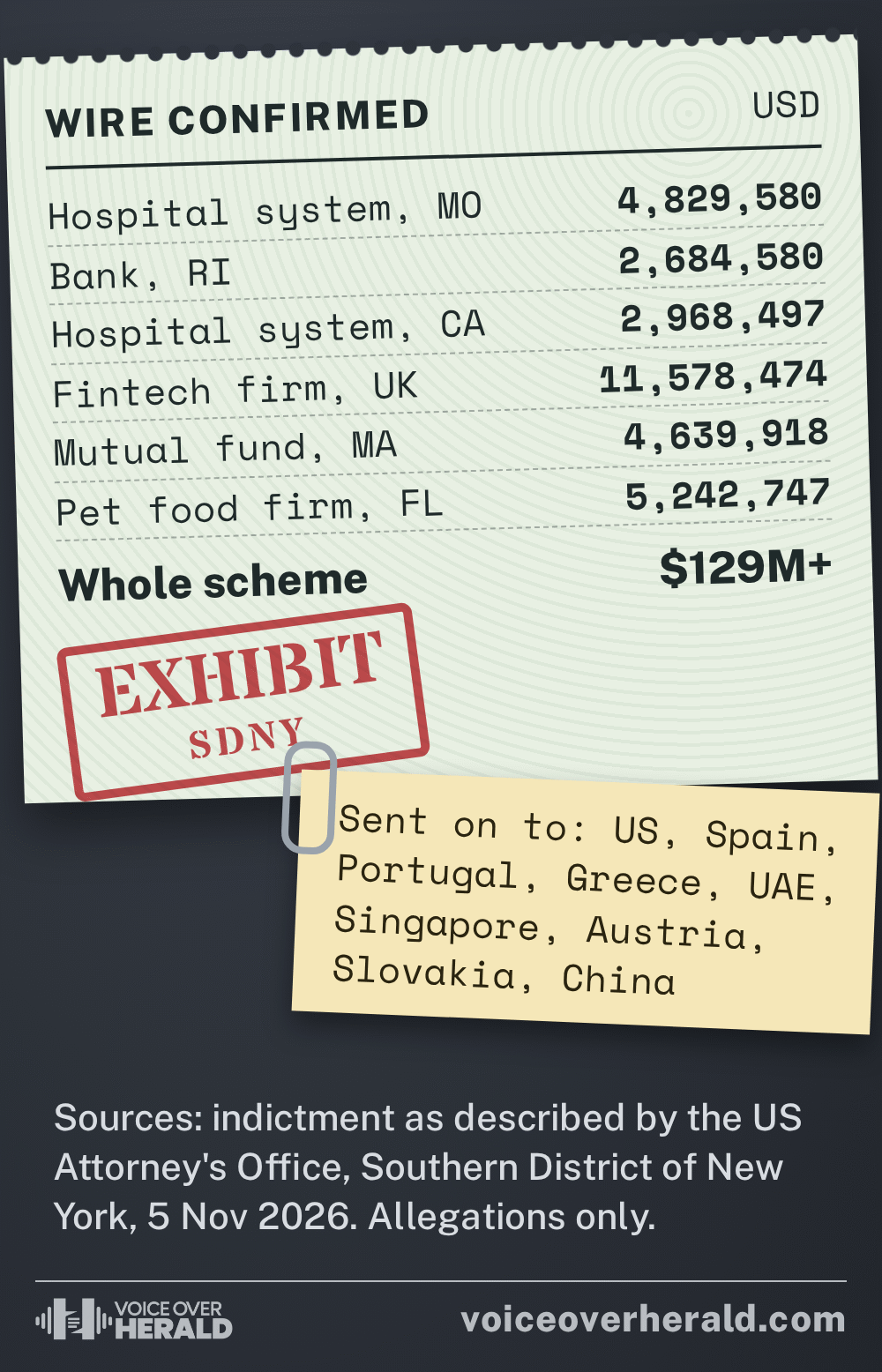
Each man faces seven counts, from wire fraud to money laundering. Two of them are for aggravated identity theft, which carries up to two years; the wire fraud and laundering counts carry up to 20 years each.
Why the government calls it “super intelligence”
Read the release and you’ll notice it never says AI. It says “super intelligence,” shortened to “SI,” all the way through, while the AP and every outlet that followed called it artificial intelligence. Whatever the label, the claim at the heart of the case is plain: software copied real people’s voices well enough that trained finance staff acted on them.
US Attorney Jamie McDonald put it this way: “SI technology offers tremendous potential. But the public should recognize that there are some who seek to use this emerging technology to pursue criminal goals.” He said the three men “abused groundbreaking super intelligence technology to impersonate real people,” and added: “I encourage individuals and the business community to consider how to best protect themselves from the emerging threat of SI-enabled crime.”
The FBI’s James C. Barnacle, Jr. said the case “demonstrates how the use of advanced technology can be exploited to commit large scale fraud.”
What this has to do with voice actors
Nobody in this indictment is a voice actor. But look at what the case says about voices. Prosecutors are charging aggravated identity theft in a scheme whose main tool, by their account, was a copy of somebody’s voice. A voice, in other words, is being treated as part of who you are, and copying it to deceive people is being treated as a crime against the person whose voice it was, not only against the people who were fooled.
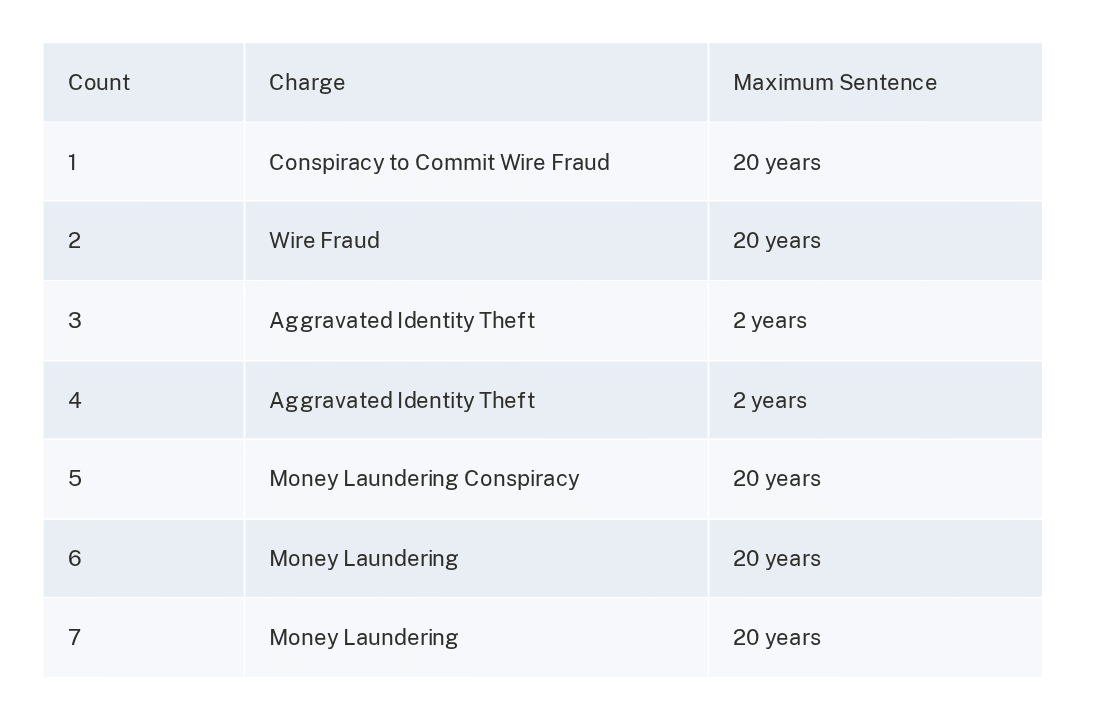
Image: US Attorney's Office, Southern District of New York
The release doesn’t say where the fraudsters got the audio of each CEO. It doesn’t need to. Chief executives give interviews, speak on earnings calls and appear in conference videos. Voice actors publish something far more useful to a copier: clean, studio-quality demos, labelled with their name, on public pages, often in several styles.
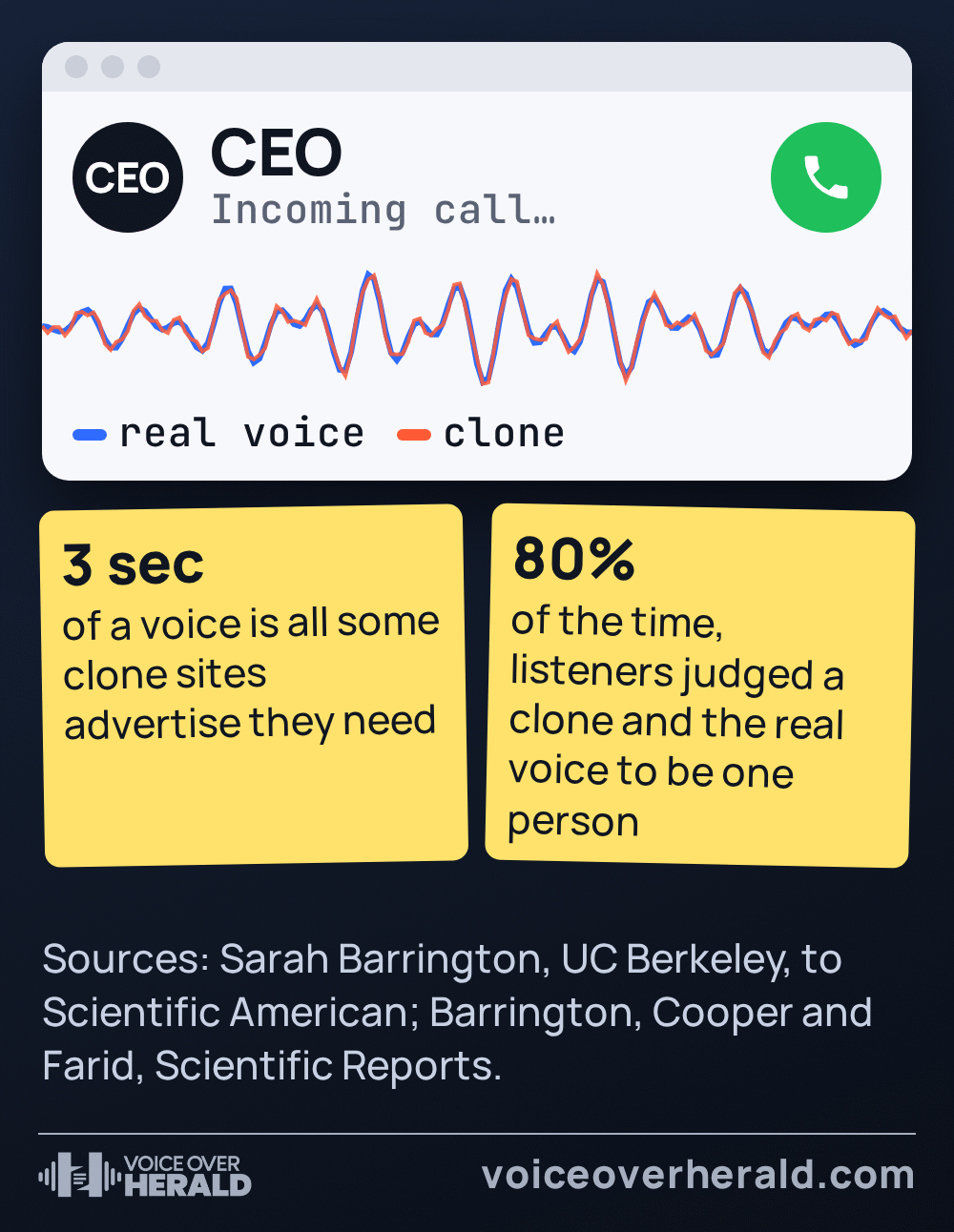
Voice Over Herald has reported how little audio cloning tools now ask for, and how badly ordinary listeners do at telling a copy from the real thing in a Berkeley study on cloned voices. We’ve also covered a podcast that kept publishing in its host’s cloned voice long after he’d stopped making it.
Proof of which recordings are yours
When a voice turns up somewhere it shouldn’t, the hardest part is often proving which recordings were really yours in the first place. That’s where watermarking comes in. In October The Voice Realm launched Voice Lock: once a voice actor switches it on, a signature nobody can hear goes inside the demos on their profile, and it stays in even if a demo is trimmed or edited. A copied demo can be traced back to the voice actor it came from, with a dated certificate anyone can check online. The Voice Realm says it’s the world’s first voiceover marketplace to protect voice actors’ demos with an invisible watermark.
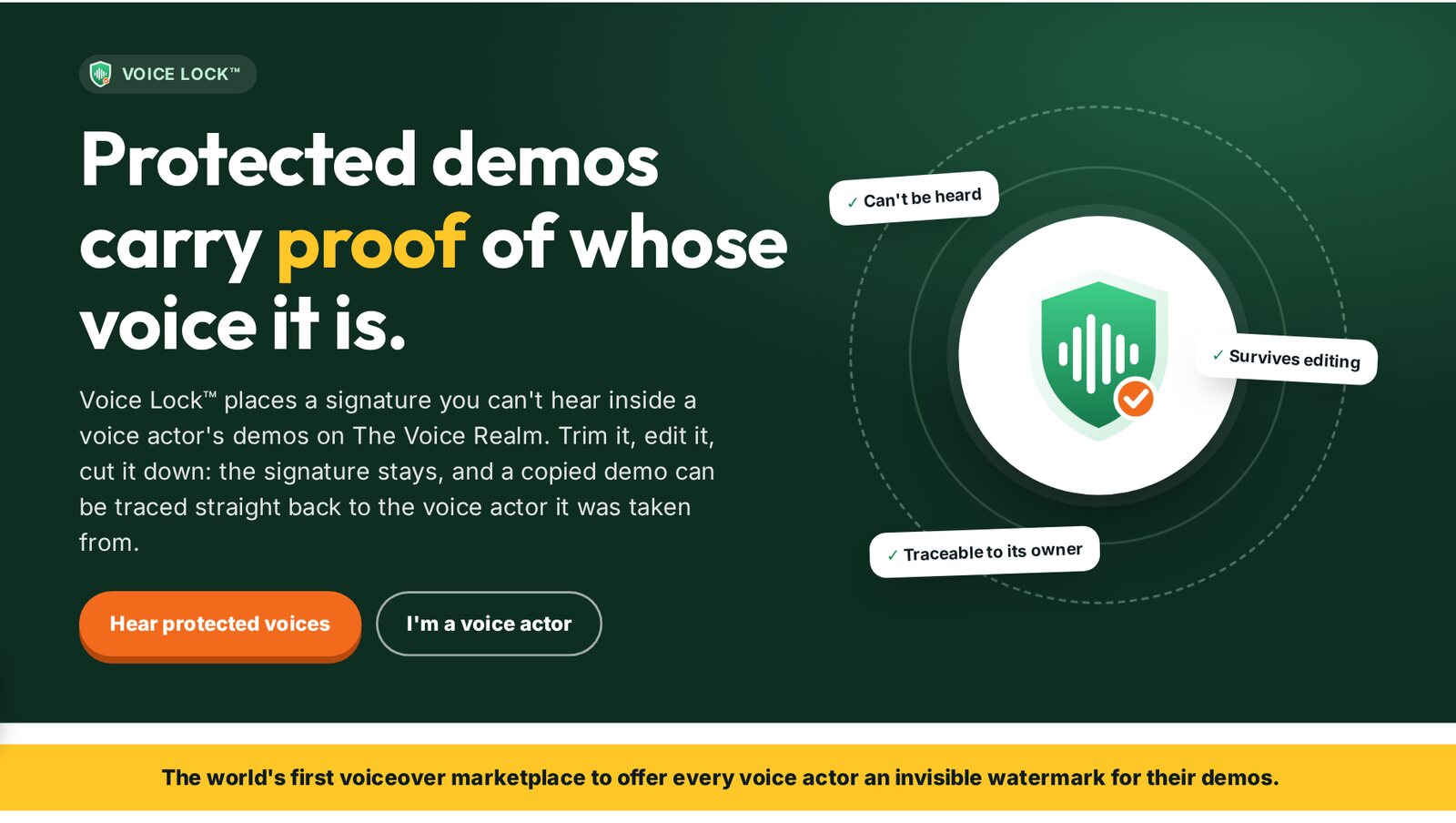
Image: The Voice Realm
It doesn’t detect clones, and it won’t stop someone imitating you on a phone call. What it gives you is proof that a recording is yours, which is the first thing anyone asks for when something goes wrong.
Small habits that make a fake call harder
The scheme in this case worked because people were told to keep it quiet and act fast. The same pressure turns up in scams aimed at freelancers: a “regular client” who calls from a new number, a rush job that needs your bank details changed, a producer who wants raw files sent somewhere new.
A few habits cost nothing. If a client asks for something unusual by phone or voice note, call back on the number you already have. Keep a dated record of what you recorded and for whom. Read the AI and usage lines in every contract, because a handful of clauses decide what happens to your voice after the session. And if you think you’ve been targeted by a scheme like this one, prosecutors ask victims to use the FBI’s tips page.
With extradition requests still pending in Spain and the UK, the case has a long way to go. It’s one to watch, and not only for finance departments.
Sources: US Attorney’s Office, Southern District of New York, press release, 5 November 2026; The Associated Press, 6 November 2026; The Voice Realm, Voice Lock. Image: US Attorney’s Office, Southern District of New York (screenshot).
Lee este artículo en español: Acusan a tres hombres de imitar con IA la voz de directores para ordenar transferencias. Entre los cargos, robo de identidad
Know something about this story, or spotted an error? Tell the newsroom.