Ben Affleck’s German Voice Hears Himself in an Insurer’s AI Ad. A Performers’ Group Says the Library Voice Isn’t Him
Peter Flechtner says a Swiss insurer’s ad uses an AI copy of his voice. The insurer says it bought a licensed voice. A group of voice performers says that voice belongs to one of its own members. Nobody has yet settled where the sound came from.
Flechtner is one of Germany’s best known dubbing actors. He’s the German voice of Ben Affleck, and he speaks for David Harbour in Stranger Things. For years he was Phil Dunphy in Modern Family. So when a social media clip for the insurer Smile went round in mid November, colleagues thought they knew the speaker.
The clip advertised Smile’s digital claims bot. The voice was made with AI. The row was still running on Tuesday night, when the Swiss outlet 20 Minuten returned to it with the same open question: where did the voice come from?
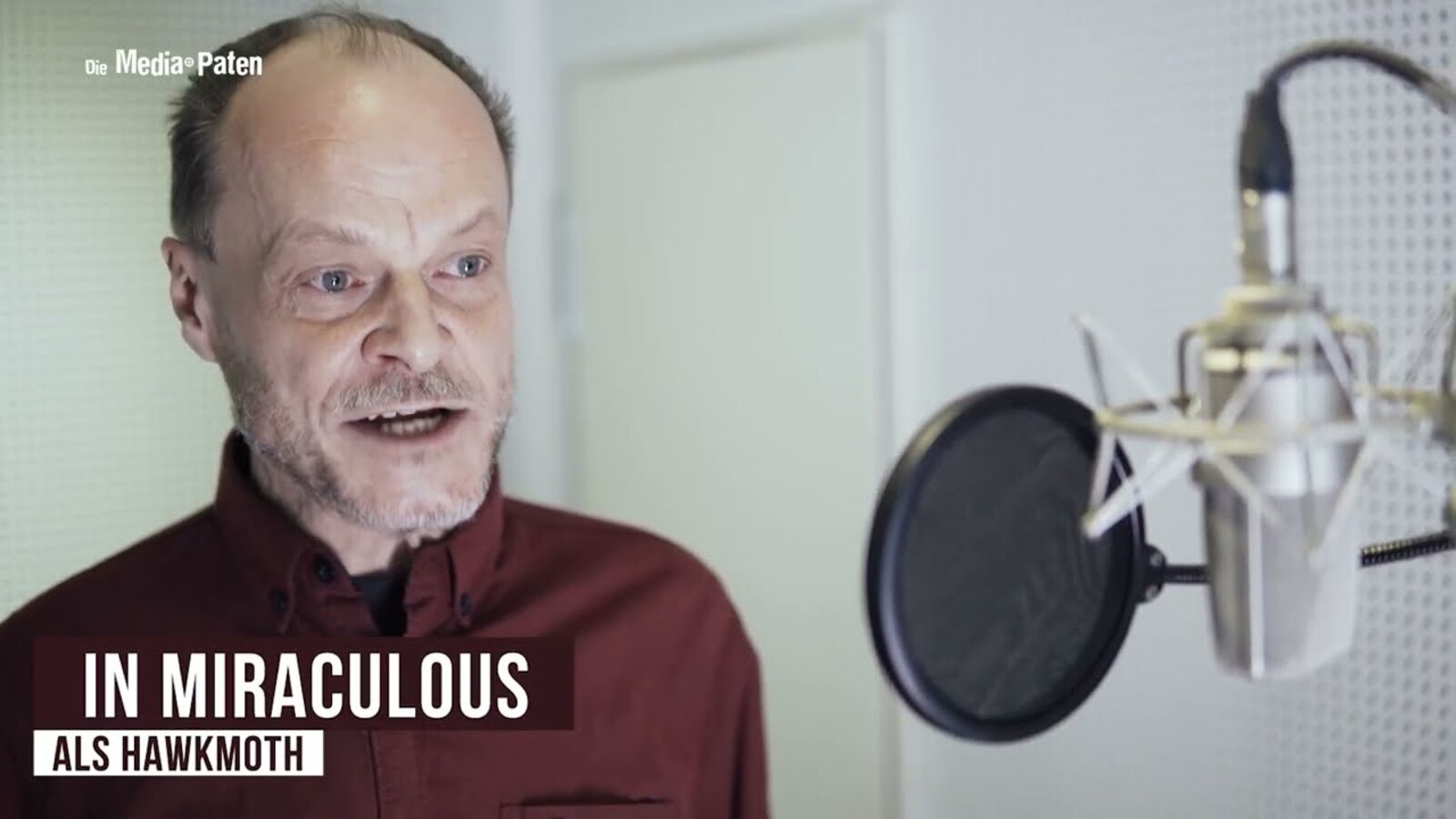
Hear the voice: Peter Flechtner talks about the people who believed in him (in German). Video: Die Media-Paten, on YouTube
“Simply call Peter Flechtner”
The alarm was raised by another actor. Sven Plate, the German voice of Bugs Bunny, put the clip on Instagram and said he recognized the voice at once as Flechtner’s.
 VoiceEditSuiteIt edits like you would, and it gets better every file.Every fix you make in the editor teaches Auto Clean Up more, so each file comes back sounding like you edited it yourself.See how it worksLearns from numbers, never your audio. Never used to train AI.
“Where’s the problem, dear insurance company, in simply calling Peter Flechtner, agreeing something with him and paying him?” Plate asked, as quoted by 20 Minuten. An insurer’s business rests on trust, he argued, so he couldn’t see why a known voice would be used without asking.
Flechtner answered under the video. “Well, a Swiss insurance company tried to save money and helped itself to an AI version of my voice,” he wrote. He said legal steps were on the way and that Smile had restricted him, so that nobody could see his comments under its posts. “Help me in the fight against illegal AI use,” he asked his followers.
We haven’t found any report that a lawsuit has been filed. The reports we read say legal action has been announced.
What the insurer says
Smile rejects the accusation. It confirmed to 20 Minuten that the voice was AI-generated, and said it came from the professional voice library of ElevenLabs, where it’s offered for commercial use.
“Neither Smile nor our social media agency recreated Mr Flechtner’s voice ourselves or commissioned such a recreation,” the company wrote. It said it hadn’t used or supplied any training data, samples or voice model of his. The agency, it said, obtained the voice under an existing license.
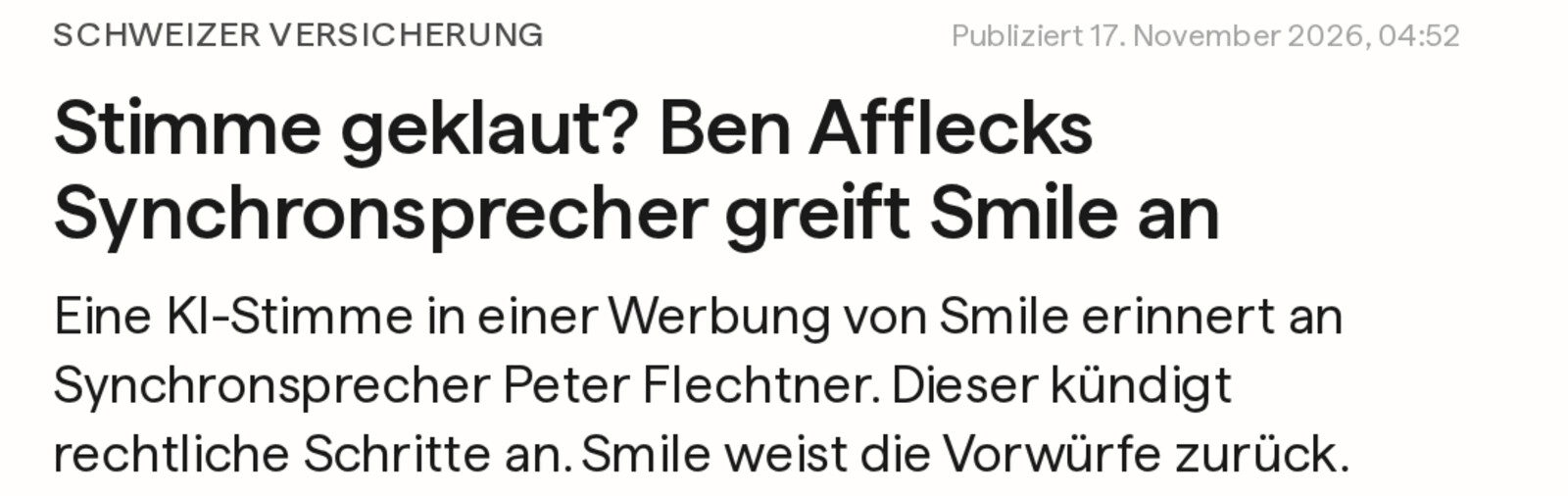
"Voice stolen? Ben Affleck's dubbing actor attacks Smile." Screenshot: 20 Minuten, 17 November 2026
It also denies silencing him. Single comments were hidden only where they were insulting, the company said, and criticism had nothing to do with it. Smile has archived the videos as a precaution, says it’s in contact with Flechtner, and has asked ElevenLabs for “an official review of the origin and usage rights” of the voice.
Grandpa Johann walks in
Flechtner then went looking himself. He found more ads with a voice he says is his, sometimes pitched down. “It’s unbelievable. ElevenLabs seems to be busily selling my AI voice, without my knowledge or any payment,” he wrote in an Instagram story. “This will be a long fight.”
According to PC Games Hardware, he tried the software and picked a library voice called “Opa Johann”, or Grandpa Johann. He had it read a text as Phil Dunphy. “You can’t tell me you didn’t steal from me,” he said. The magazine’s writer thought the result sounded strikingly like a tinny Peter Flechtner.
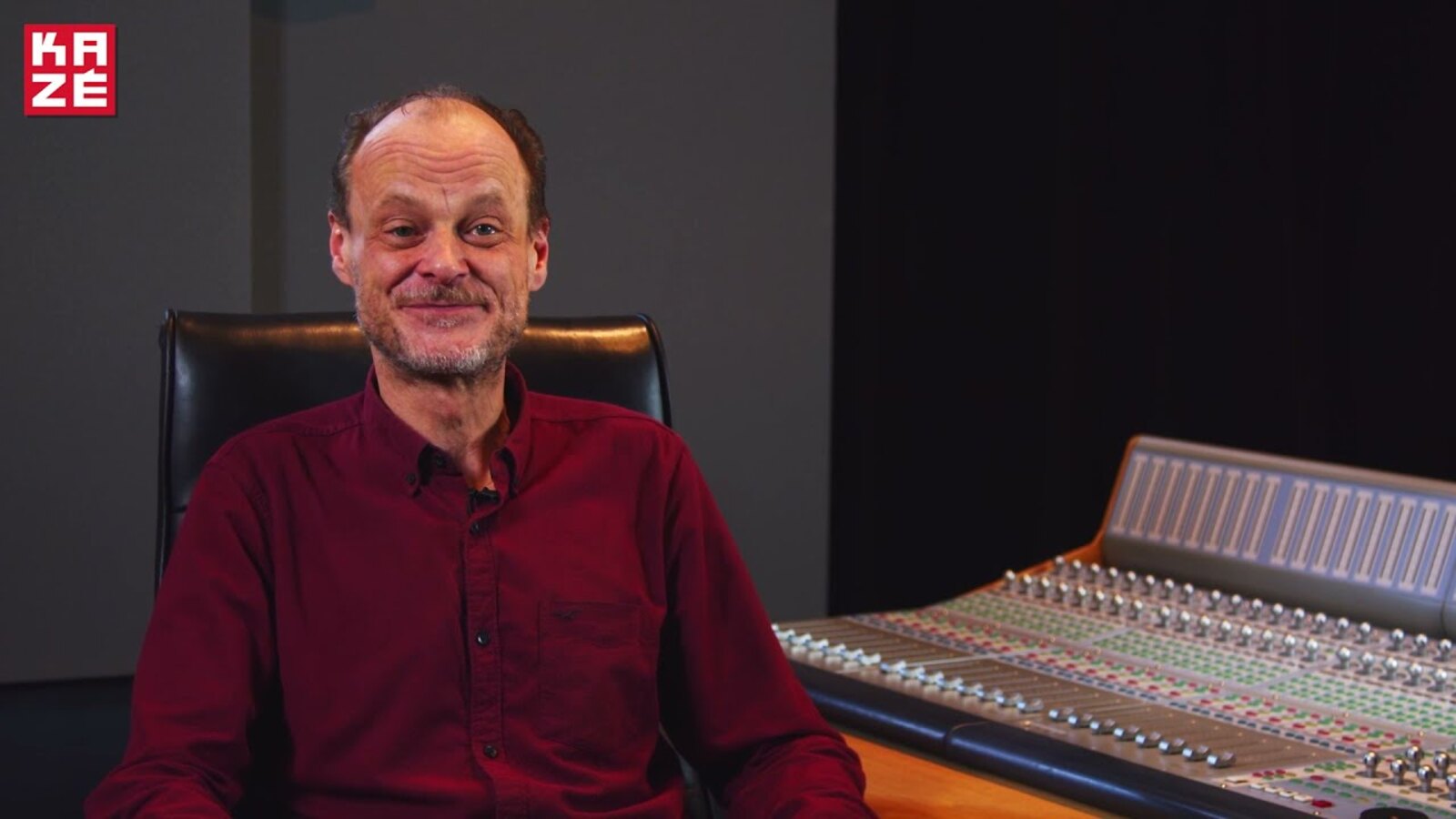
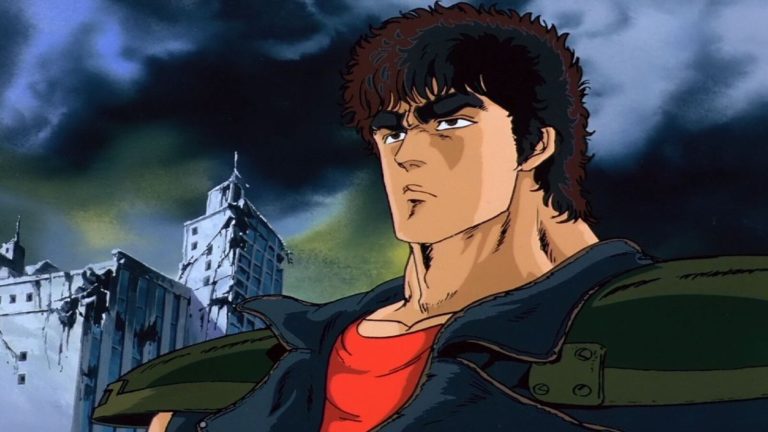
Peter Flechtner greets fans of Lupin III. Image: Kazé / Crunchyroll Extras Deutschland, on YouTube
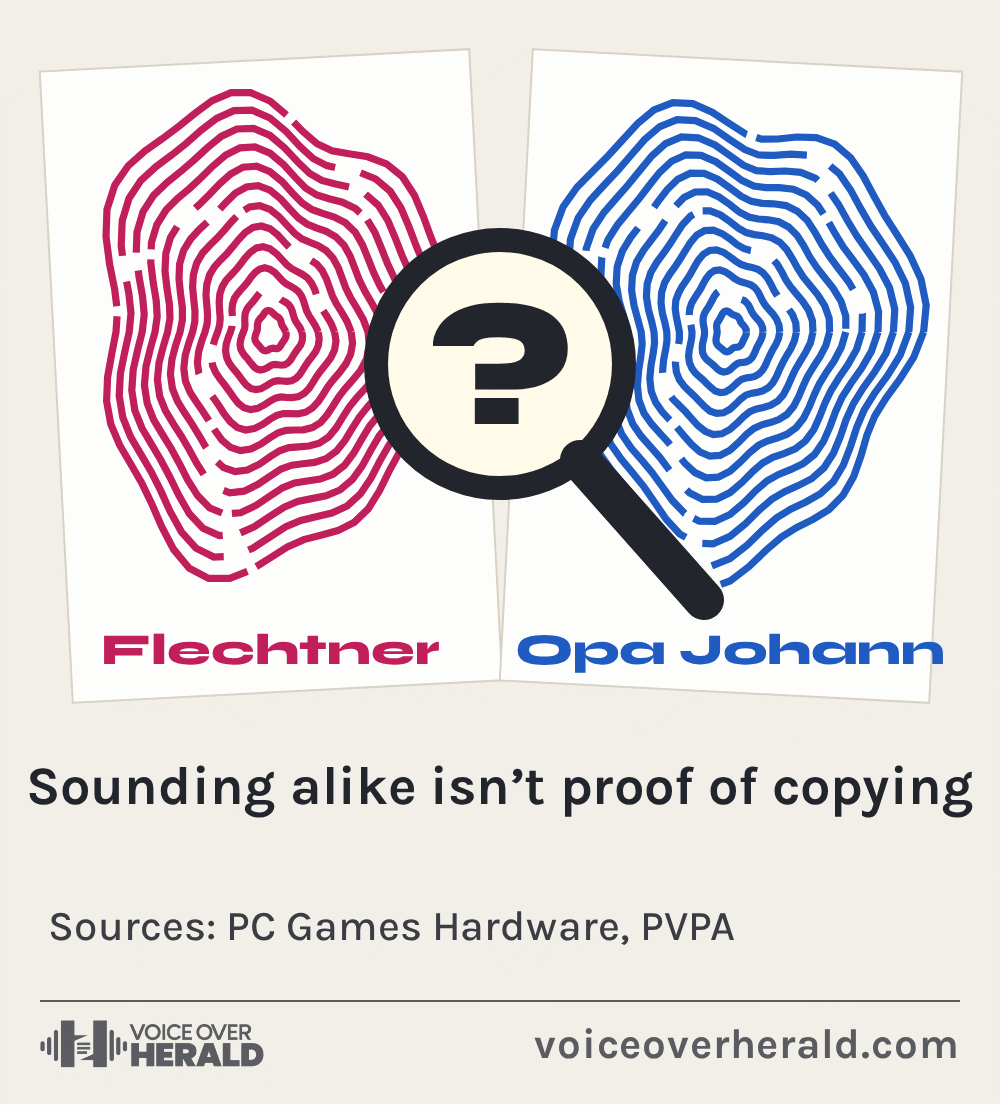
That’s where a third party stepped in. On 18 November the magazine added a statement from the Professional Voice Performers Association, or PVPA. The man behind the Opa Johann model, it said, is one of its members. The model was built from his own recordings and went through the verification ElevenLabs requires. No recordings of Flechtner were used, it said, so it isn’t a clone of him.
“To our knowledge there is no indication whatsoever of such use in this case,” the association wrote of unauthorized cloning. It also said it hasn’t been settled whether the voice in Smile’s ad is Opa Johann at all.
Two fears, and both are fair
Read the PVPA’s last line slowly, because it’s the one that makes this more than another stolen voice story. “We expressly share the aim of protecting professional speakers from unauthorized use of their voices,” it said. “At the same time we consider it just as important that lawfully created and licensed voices don’t come under suspicion of being unauthorized copies because of similarity in sound alone.”
A famous voice was sold without him
Anyone with hours of film dubbing online could turn up in a library, under a new name, and find out from a colleague’s Instagram.
A working actor is being called a copy
Someone recorded his own voice, passed the checks and licensed it, and now has to defend sounding a bit like a star.
Voice actors have always resembled each other. Casting briefs ask for it: a “Ben Affleck type” is an ordinary note. A human soundalike at least arrives with a name, a session and an invoice. A library voice arrives with a nickname.
What the checks do, and what they can’t settle
ElevenLabs’ own documentation says its Voice Library accepts only Professional Voice Clones, and that you may clone only your own voice. “Even with their consent, you cannot clone someone else’s voice,” its help page says. The person has to read a short prompt aloud within a set time, so the system can match the reading to the samples.
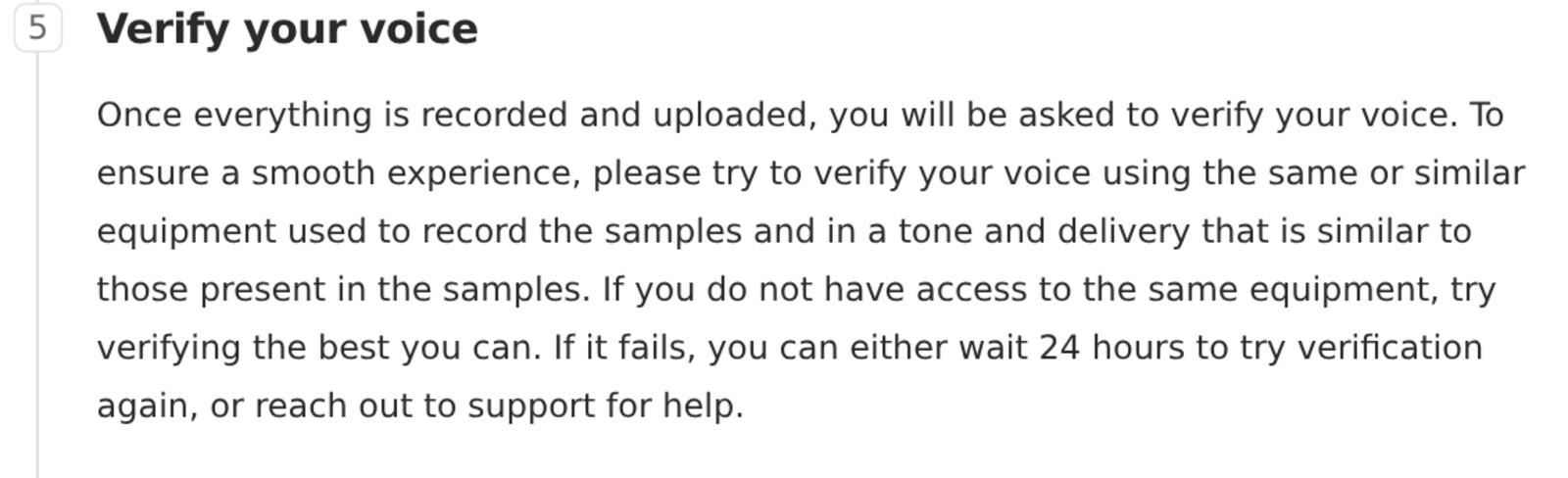
The verification step in the help pages. Screenshot: ElevenLabs, 25 November 2026
That check asks one thing: is the person at the microphone the person in the recordings? It doesn’t ask whether the finished voice sounds like somebody else. A resemblance can pass every test and still be a real problem for the person it resembles, especially in advertising, where the familiarity is worth money.
PC Games Hardware made the same point in its report: an offered voice may simply be very close to Flechtner’s without resting on his recordings. If it reaches a court, the judge won’t be the first this month. In Warsaw, narrator Jarosław Łukomski won a ruling on 13 November over adverts with an AI copy of his voice, a decision that isn’t final.
Keep proof of what’s yours
Whoever turns out to be right, both sides of this dispute need the same thing: evidence of who recorded what, and when. The PVPA can point to its member’s verified samples. A dubbing actor whose voice lives in other people’s films has a harder job.
For your own demos, there are ways to start that trail now. The Voice Realm’s Voice Lock puts an inaudible watermark in a voice actor’s demos once they switch it on, with a dated certificate anyone can check online. It doesn’t detect clones. It shows which recordings are yours, which is the first question anyone will ask. The Voice Realm says it’s the world’s first voiceover marketplace to protect voice actors’ demos with an invisible watermark.
Keep session files and contracts as well, and when a licensed clone of you is out there, keep the verification emails. The actor behind Grandpa Johann, whoever he is, is probably glad he has his.
Sources: 20 Minuten (17 and 25 November 2026), PC Games Hardware (17 November 2026, updated 18 November with the PVPA statement), ElevenLabs documentation, German Wikipedia for credits. Quotations from German sources are translated by Voice Over Herald. ElevenLabs’ answer to Smile’s request hasn’t been published as far as we can find. Hero image: Die Media-Paten.
Lee este artículo en español: La voz alemana de Ben Affleck se reconoce en un anuncio con IA. Una asociación dice que la voz de la biblioteca no es la suya
Know something about this story, or spotted an error? Tell the newsroom.