
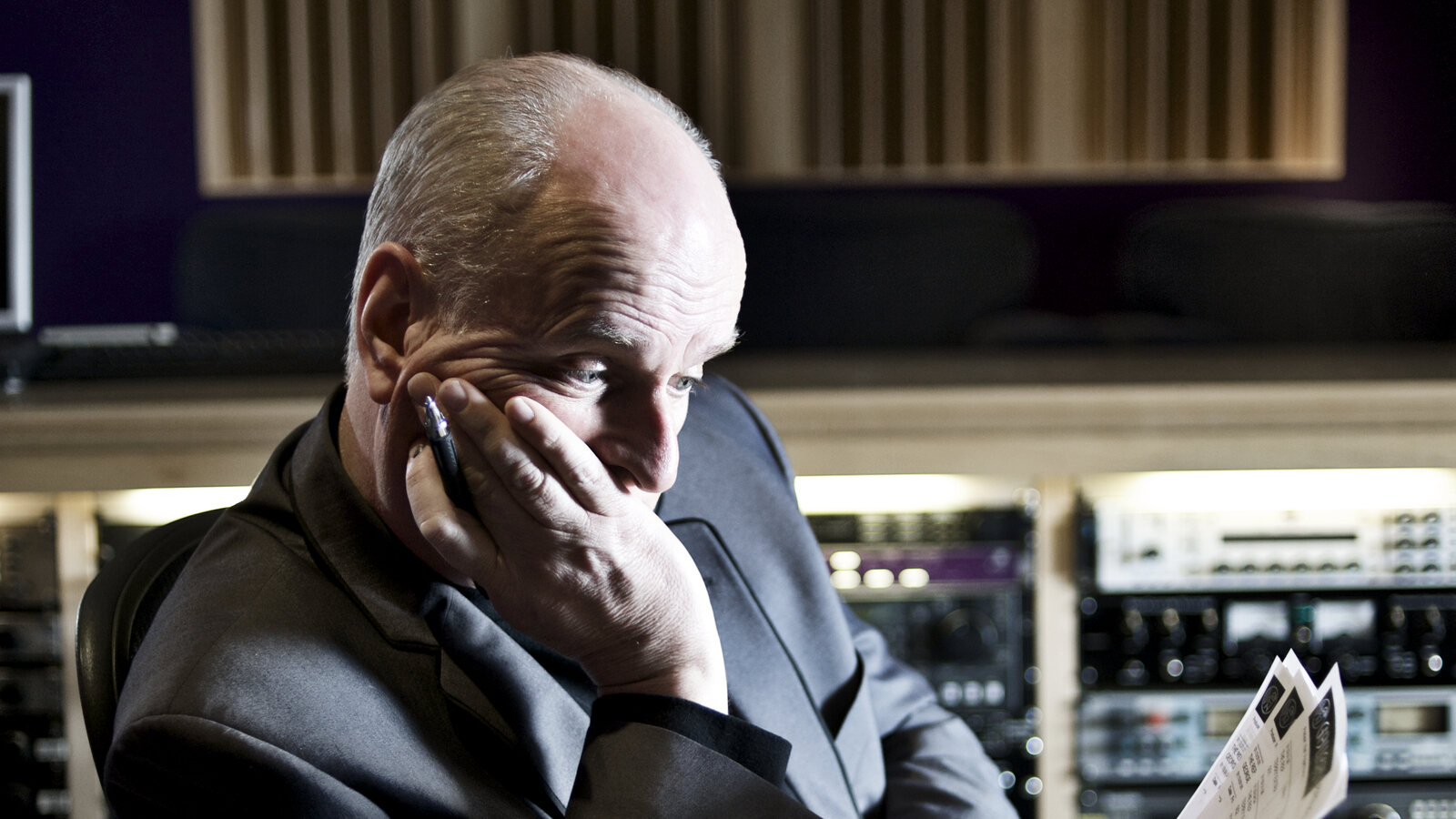
The Voice of Britain’s Got Talent Also Voiced Phone Lines and Training Courses. Peter Dickson on the Work Behind the Boom
Peter Dickson is the booming voice that shouts contestants onto the stage on Britain’s Got Talent, and for years did the same on The X Factor. His own credit list tells a quieter story: training programmes, phone lines, language courses and airline audio, recorded by a man who keeps his home studio as simple as he can and thinks of auditions as the job itself.
Most people in Britain could do a bad impression of him before they could tell you his name. That’s the odd thing about a career in voiceover, even at the very top. The voice gets famous. The person behind it gets to walk around the supermarket in peace.
Dickson, a Belfast-born announcer, has spent more than 40 years building a voice business, and he’s been unusually open about how it works. In interviews he talks less like a TV personality and more like any working voice actor with a booth, a laptop and an inbox full of scripts. Which, as it turns out, is exactly what he is.
From farm prices at dawn to “face the music”
“Ever since the age of ten, I wanted to be a radio announcer,” he told Scotland’s student magazine Source. He took a four-year honours degree in psychology at Queen’s University Belfast first, just in case, and then went into the BBC in Belfast as a trainee journalist. His own website says he’s still the BBC’s youngest ever TV news presenter, at 17. One of his first radio jobs was reading the livestock prices to farmers at six in the morning.
In 1982 he moved to BBC Radio 2 in London as a staff announcer. He also wrote and voiced comic characters for Steve Wright’s show on Radio 1, and one of them, “Voice Over Man”, stuck to him so firmly that it became his nickname and, later, the title of his autobiography. “In the early nineties I went completely freelance, first of all as a radio presenter and then into voiceovers,” he told Source.
Television game shows followed: seven series of Bruce Forsyth’s Price is Right, Family Fortunes, and then The X Factor from its first series in 2004, with Britain’s Got Talent from 2007. That over-the-top delivery was a choice, not an accident. When he first saw the pilot, he said, he thought: “This is big, almost like a pantomime of a show.” He also admitted: “To be honest with you, doing the voice is absolutely exhausting!”
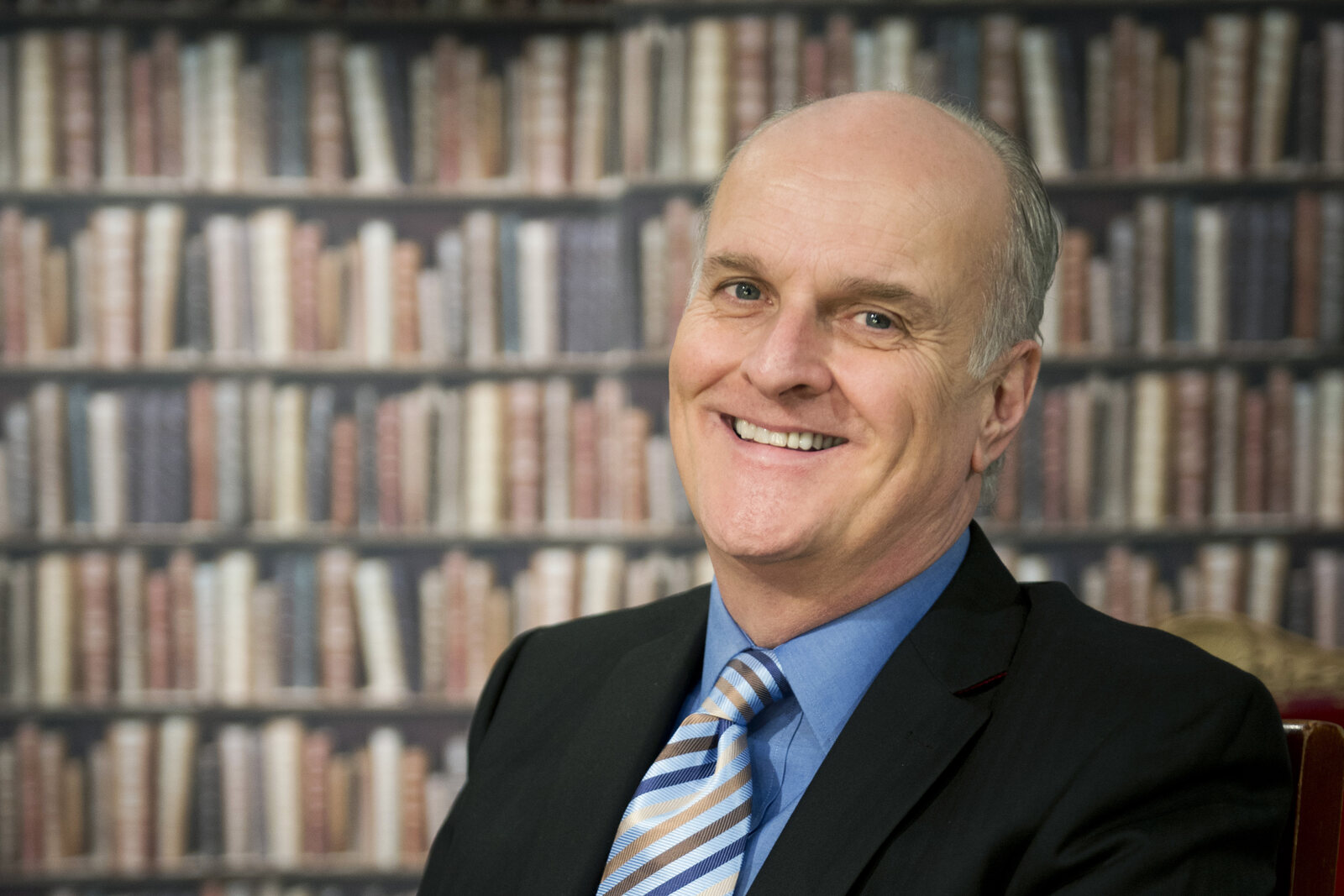
Image: Peter Dickson media pack
The credits nobody claps for
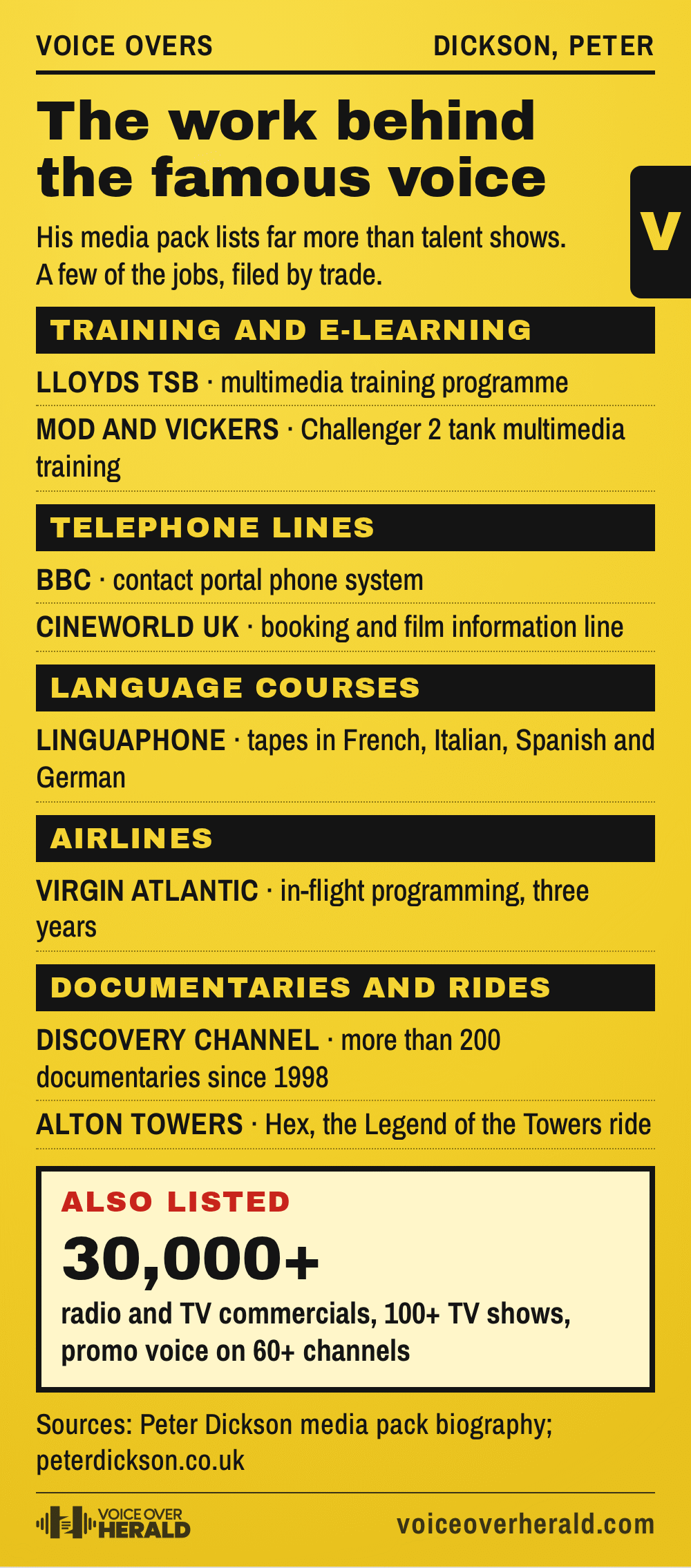
Here’s the part working voice actors should notice. The shows are what people know, but they’re a slice of the work. The biography in his own media pack is full of jobs that would sit happily on any home-studio voice actor’s invoice book, the kind of work nobody ever hums along to.
“I’m up at seven o’clock every morning, in the studio at about eight, and I work on a whole range of stuff. No two days are the same for me,” he said. “I can work on a whole variety of things, like corporate video for large companies to documentary narration for channels like Discovery, Channel 4 and the BBC.”
Put plainly, one of the most recognisable announcers in the UK built his career the way most voice actors do: by saying yes to a wide spread of everyday work and doing it well enough that clients came back. The famous jobs sit on top of that base, not instead of it.
A laptop, a shotgun mic and the occasional tractor
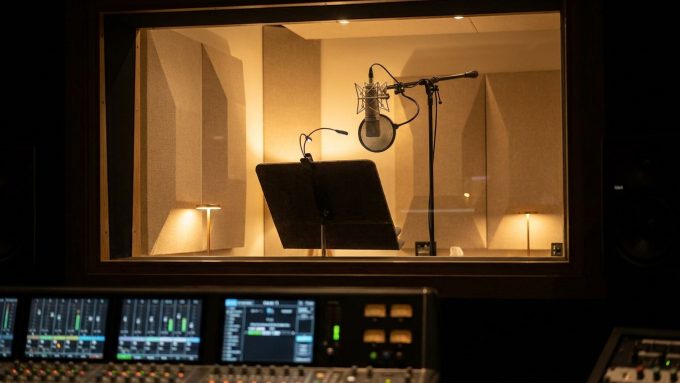
Dickson records from home, in the countryside outside London. “I’m about 35 minutes from the West End of London,” he told New Zealand voice actor Toby Ricketts in a long interview in 2021, and “my nearest neighbor is probably a half a mile away from me.” His studio is well insulated, so the only things he listens out for are “the occasional tractor goes by, or maybe an aircraft or a helicopter or something, but it’s very short lived.”
 VoiceEditSuiteNewAuto Clean Up now learns how you breathe.Learns from numbers, never your audio. Never used to train AI.See how it works
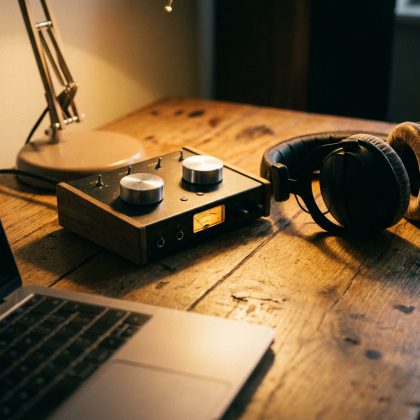
The kit is deliberately plain. “I like to keep things as simple as possible,” he said. He described a MacBook Air, a small two-channel Focusrite interface and a Sennheiser 416 shotgun mic, the same rig he packs when he travels, so that “I can create the same audio quality as I do in the studio here as anywhere in the world.”
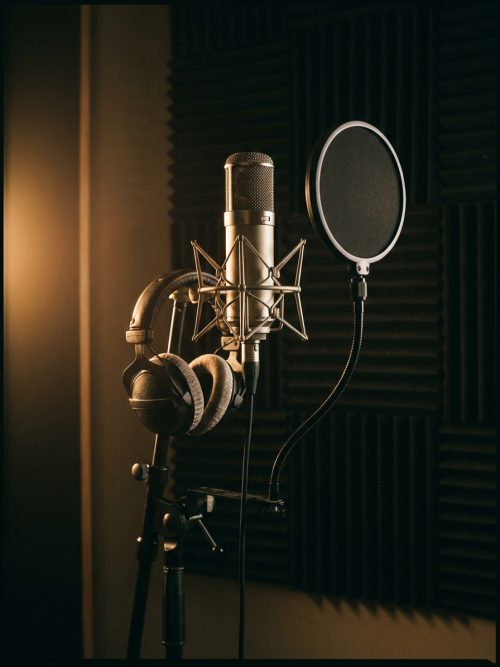
His advice on microphones will save beginners some money. Past a modest spend, he said, “nobody’s going to be able to tell the difference unless you’re really good.” A top-shelf studio mic in an untreated room with shaky technique “isn’t going to make you sound any better, in fact, is going to magnify any of the issues you have with your … space or with your technique.”
Remote work, he thinks, has been good for everyone. Producers who once wanted him in a London studio are now happy to record him at home, and the same door is open to voice actors anywhere. As he put it, “it’s leveled the playing field for all of us. And I don’t think that’s a bad thing.”
The hardest read of his life was his own book
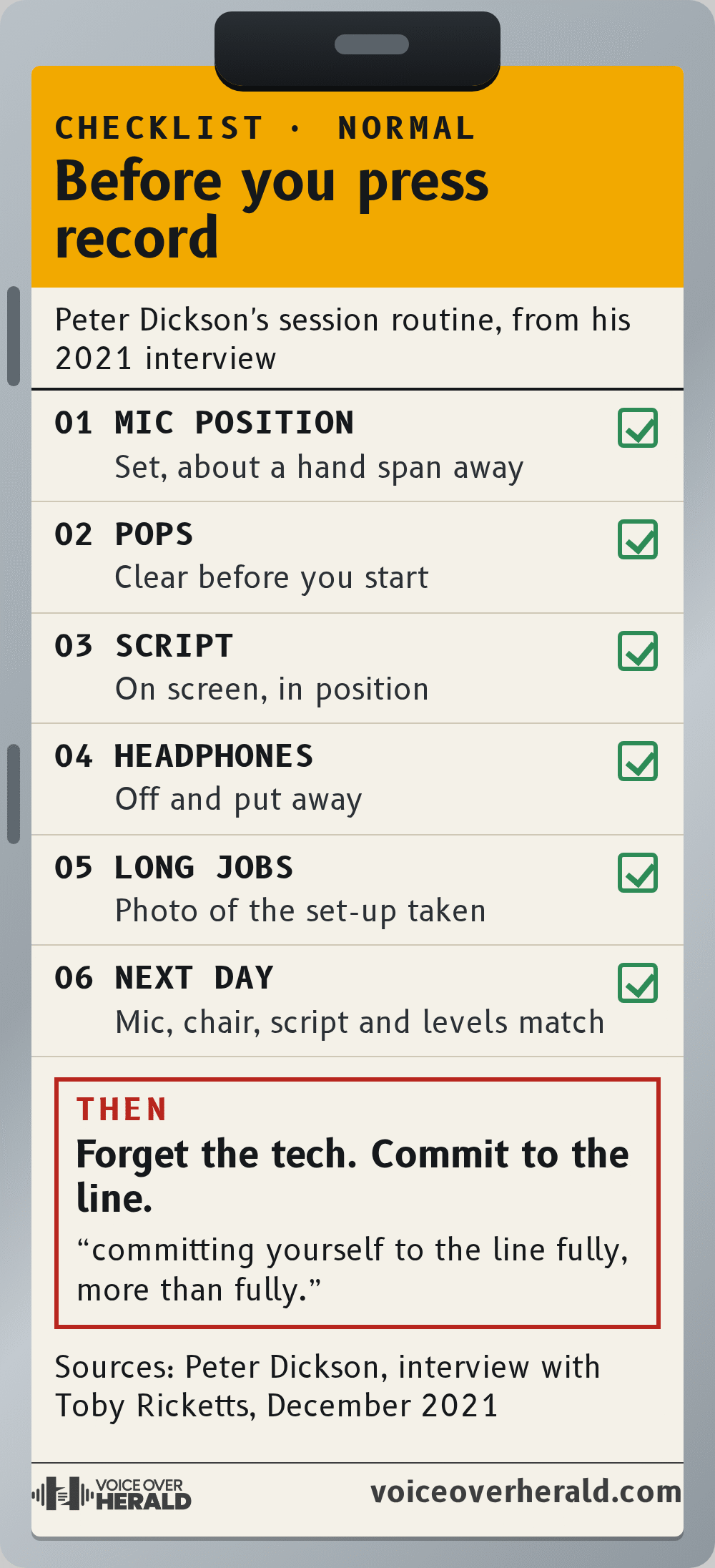
For all those years of short scripts, Dickson said long-form narration was new to him when he read his own autobiography, Voiceover Man. He called it “one of the most challenging things I think I ever did.” The difficulty wasn’t the words. It was matching his sound from one day to the next, because a listener can jump from chapter one to chapter two in seconds while he’d had a 24-hour gap.
His fix was practical and anyone can copy it: he marked his position, “I took a photograph of the studio,” and kept the mic, the chair, the script and the levels in exactly the same place for the whole recording. Once the technical side was fixed, he stopped thinking about it. As he put it, “what I’m then focused on is the content of what I’m reading, rather than worrying about the technology.”
“My job is to audition”
Dickson has an agent in the UK and two in the US, and he says the two markets behave differently. “The UK agent never ever asked me to audition,” he told Ricketts; British work, in his experience, is booked from demo reels. American work means auditioning, and plenty of it.
He’s honest about the hit rate. “90% of the time in those American auditions, I never get the gig. But that doesn’t bother me so much,” he said. “I think I’ve kind of conditioned myself to believe and think that my job is to audition. And that’s what the job is. And while you’re auditioning, you’re also practicing and getting better.”
Image: Peter Dickson media pack
He did grumble about one trend: clients asking for a full long script as an audition so they can cut it to picture before choosing. In his words, “it’s like walking to a restaurant and saying, I want to taste everything on your menu.” His answer is to make each audition count, because “your auditions need to be more daring.” As he put it: “So you need to find something in the copy that will enable you to stand out. And be yourself.”
Commit, don’t shout
The word he comes back to is commitment: “commitment is the word,” he said, meaning “committing yourself to the line fully, more than fully.” That can sound like a licence to go big, coming from the man who made “face the music” sound like a royal proclamation, and he heads that off. “I think people may misinterpret this by thinking, like, we need to go over the top. And that’s not what it’s about. It’s about being in flow with the copy in sympathy with the copy, understanding your audience.”
For commercial work, knowing the audience means sounding like one of them: “you have to sound like you come from their world. And getting into that is the absolute key to success.” Before he reads, he wants to know the music, the room and what the producer is after, because without that “you’re just shooting in the dark.”
And check the name before you say it on live TV
Even the best get caught out. Dickson told Source about announcing X Factor finalist Joe McElderry week after week as “McEl-dree”. “I didn’t question how you say his name,” he said. It went on through fifteen-odd shows, right up to the final, until the singer’s father found him at the after-show party and put him right. “I was mortified! Nobody told me, Joe was probably too scared to have it changed. I renamed the boy!”
It’s a funny story and a useful one. Names, brands and place names are where clients notice mistakes first, and they’re the easiest thing to check before you press record. If a voice that famous can get one wrong for a whole series, the rest of us can afford to send one quick email to ask.
You can hear his showreels and read his full credit list on Peter Dickson’s own website, and his conversation with Toby Ricketts goes much deeper into the studio side.
Sources: Peter Dickson, interview with Toby Ricketts (tobyrickettsvoiceover.com, December 2021); Peter Dickson, interview with Lindsay Cochrane, Source magazine (2012); peterdickson.co.uk biography and media pack; Wikipedia. Photographs: Peter Dickson media pack.
Lee este artículo en español: La voz de Britain's Got Talent también grabó líneas telefónicas y cursos de capacitación. Peter Dickson y el trabajo detrás del vozarrón
Know something about this story, or spotted an error? Tell the newsroom.