

Luffy’s Latin American Voice Found Her Voice in an AI Ad for an Adult Film. It Was Gone by the Afternoon
Breaking news
Desireé González, the Latin American Spanish voice of Monkey D. Luffy in One Piece, found an AI-made ad using her voice to promote an adult film. She laughed, asked for her royalties in the comments, then told her followers. By the afternoon the video was gone.
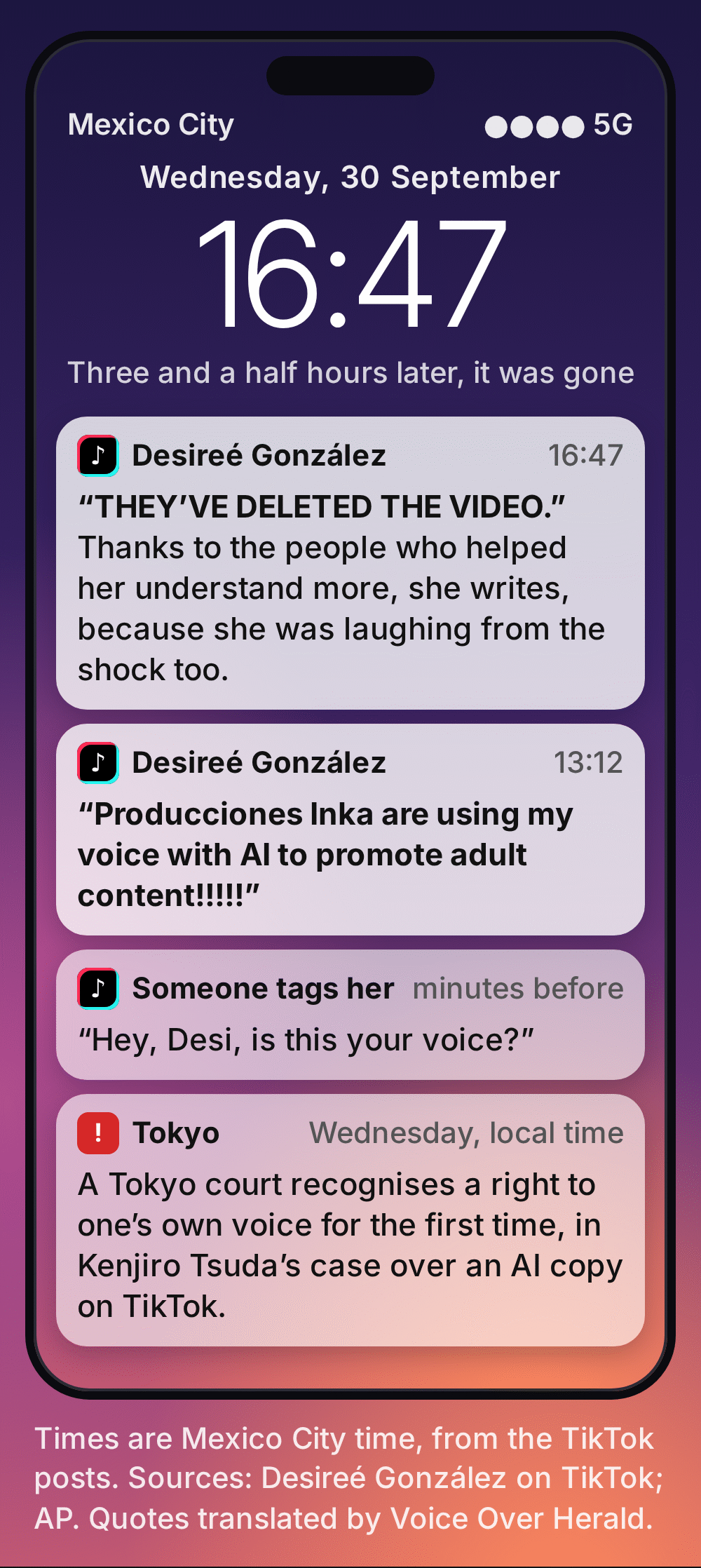
It started the way these things start now: with a tag. On Wednesday, September 30, someone sent the Mexican voice actress a video and asked whether the voice in it was hers. It sounded like her. She hadn’t recorded it.
The video was an ad, and the business behind it, which she named as Producciones Inka, makes adult content. Within a few hours of her speaking up, the ad was deleted. The story reached the press on October 3, when Informado Caribe reported it.
“Hey, Desi, is this your voice?”
González told the whole story in a TikTok video posted at lunchtime in Mexico City, still half laughing. A few minutes earlier, she said, someone had tagged her with a simple question: “Hey, Desi, is this your voice?”
What she found was an ad “made with AI with my voice,” in her words. Her first thought was that it was just a parody account. Then she saw that it was making money, and she left what she called a nice comment under it: “Hi, at the very least pay me my royalties, please, from the earnings of that video.”
Nobody had answered by the time she hit record. So she searched for the name on the video, landed on an adult website, assumed it couldn’t be the same people, checked the video again and found the company’s account on X. It was them.
She was clear about one thing, joke or no joke. She couldn’t sell them the voice even if she wanted to. “Obviously I can’t record audio for them, I mean, offer them my voice-over services,” she said, “and even less with Luffy’s voice, because that is only done for the company.” The character’s voice, she explained, gets used for the dub and for the odd personal greeting to fans, never for commercials.
Gone by the afternoon
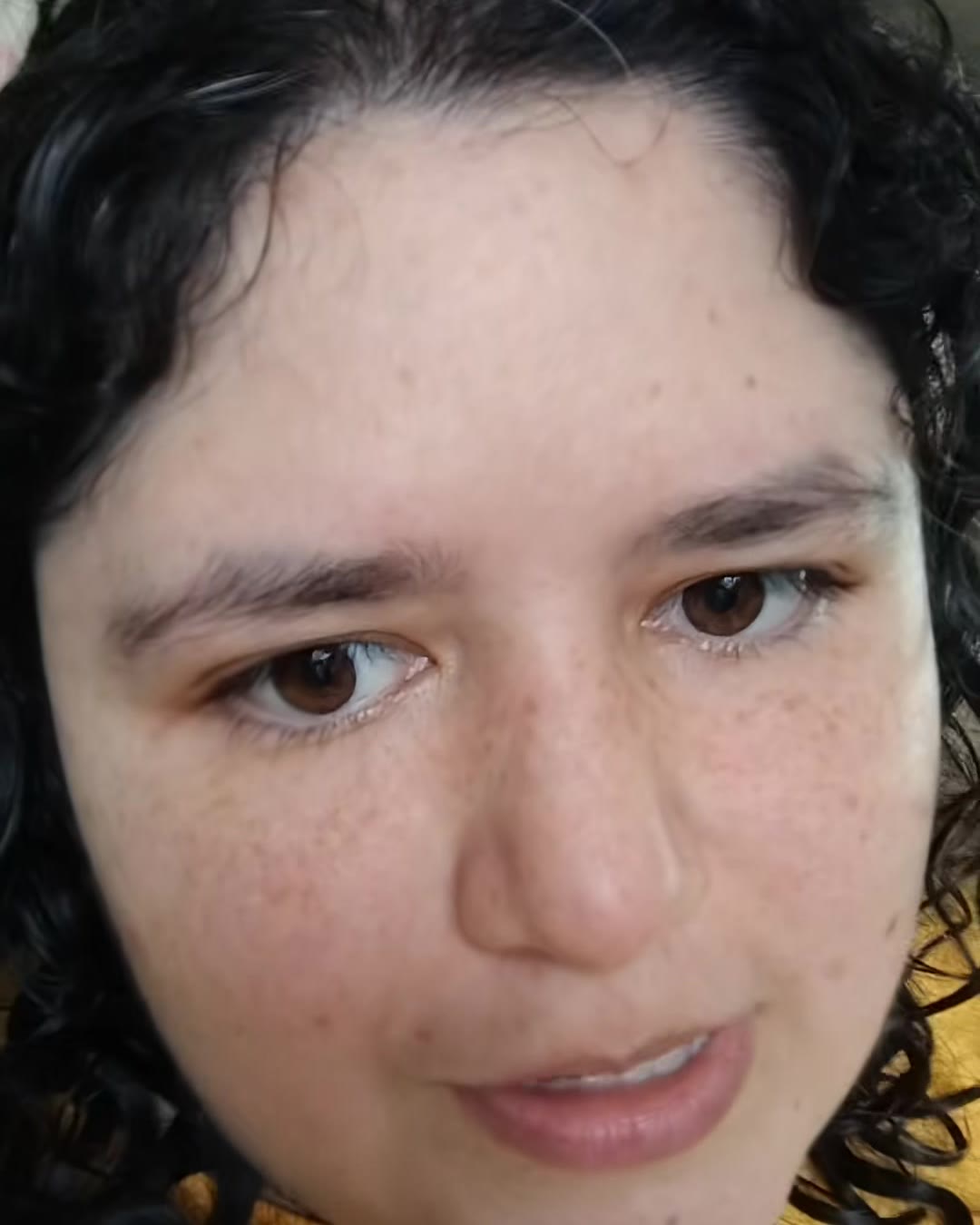
About three and a half hours later she was back with an update. “They’ve already deleted the video,” she said. “So it’s already been sorted out.”
The laughing, she admitted, had been the shock talking. “It was all laughs until I started to analyze what the hell had happened,” she said. Then she thought about what an ad like that could do to her: “all the problems it could cause me at work, legal, moral, because those aren’t values I promote on my channel.”
The bigger worry was her audience. “Unfortunately, a lot of kids watch me,” she said. Luffy is a hero to children across Latin America, and, she says, many children follow her own channel too.
She also asked her followers to stand down. “Please don’t go attacking them, don’t go saying more things to them,” she said. “It was resolved well, with peace, harmony and respect.”
Here is that second video, in Spanish. She explains how she felt, why children were her first concern, and thanks the people who told her to take it seriously.
@inuydesi YA BORRARON EL VIDEO. Gracias a las personas que me ayudaron a comprender más cosas porque estaba yo riendo también del shock.
In her caption she thanks the people who helped her understand what had happened, because, she writes, she was laughing from the shock too.
Luffy, Retsuko, Maomao and a lot more
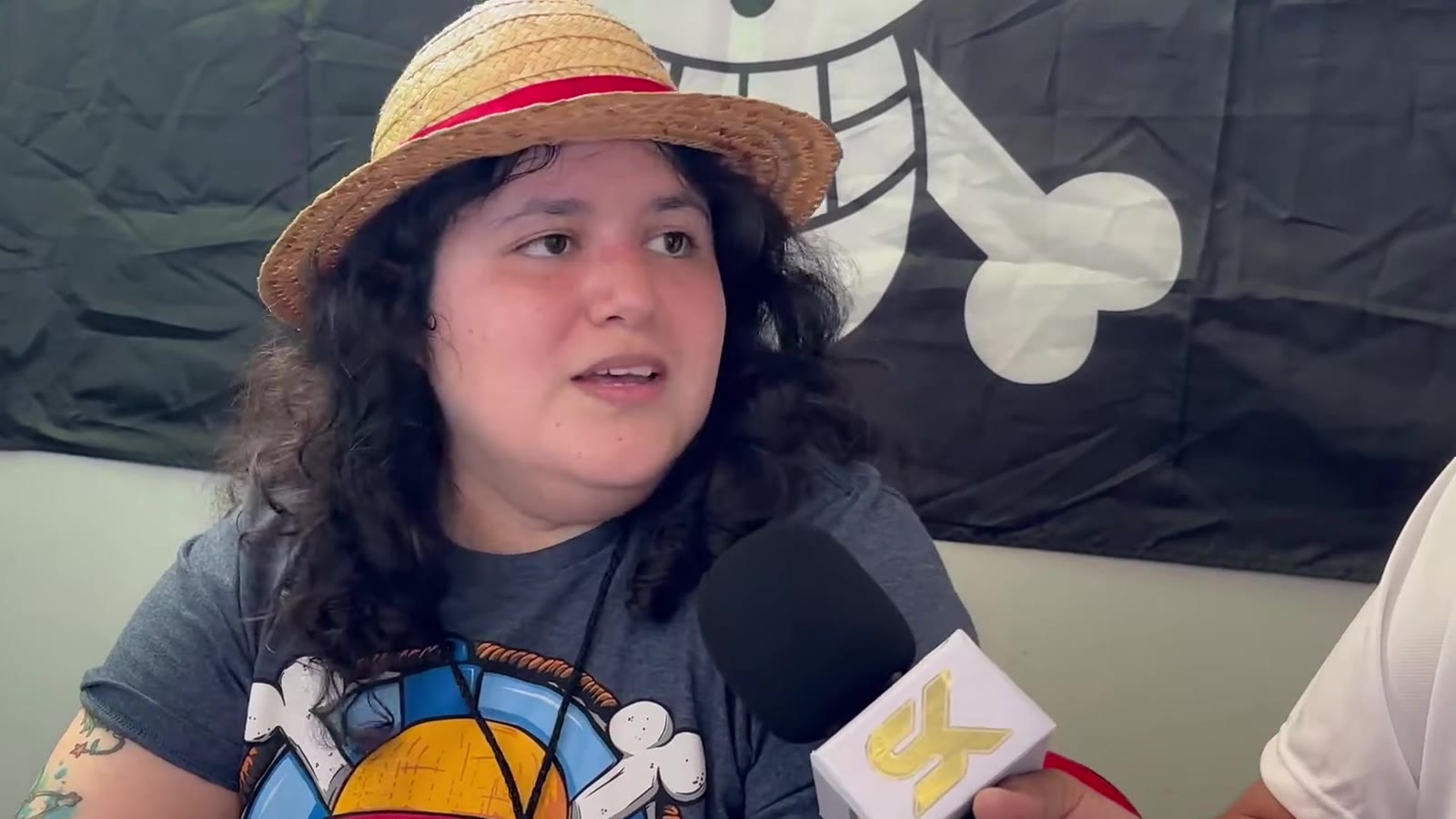
González is one of the busiest voices in Mexican dubbing. According to the Doblaje Wiki, she started in 2011 and has been the Latin American voice of Luffy since episode 326 of the series, taking over from Mireya Mendoza. Her credits also include Retsuko in Aggretsuko, Maomao in The Apothecary Diaries, Zen’o in Dragon Ball Super, Hello Kitty and Juno in Overwatch 2.
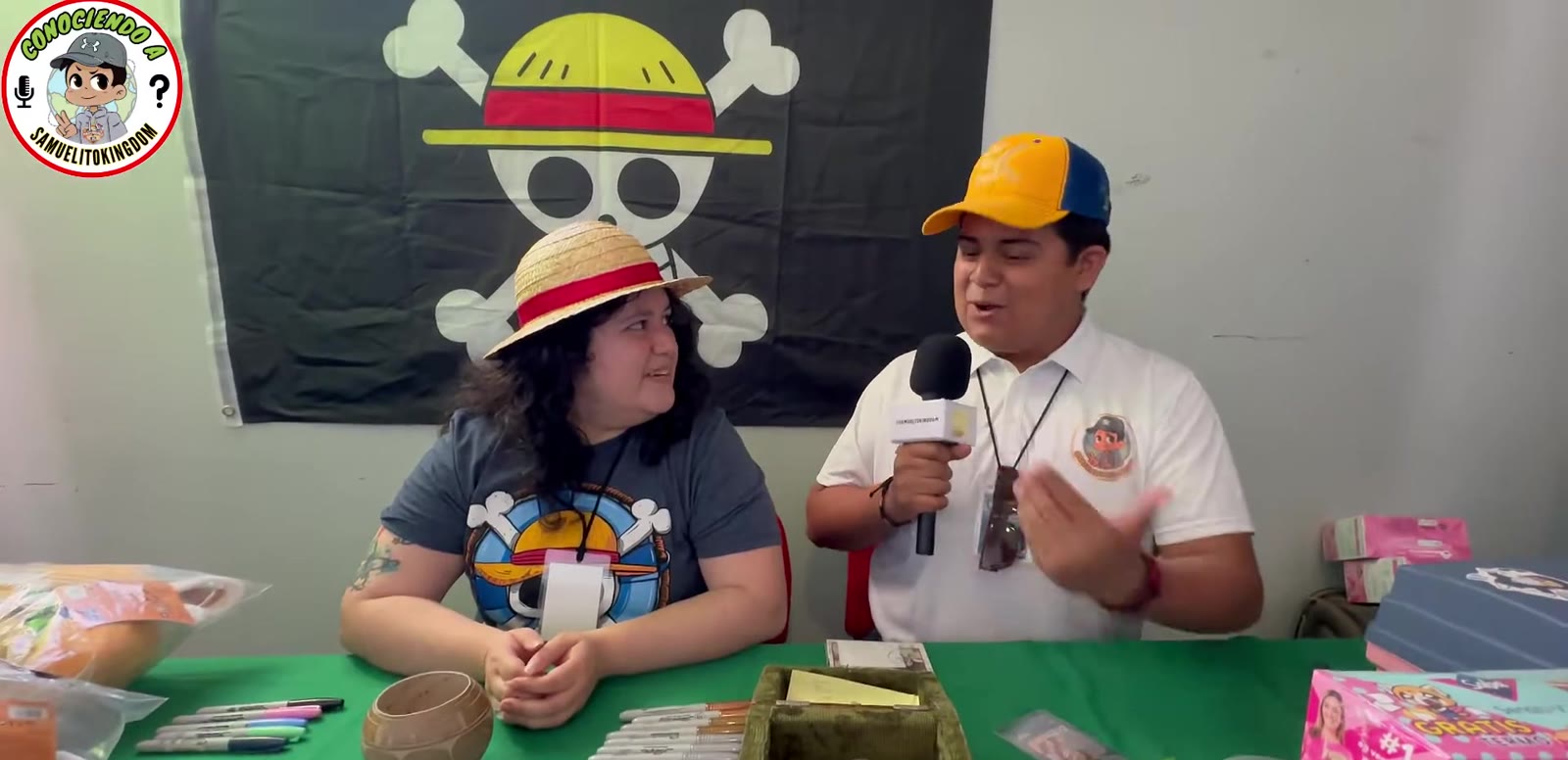
Image: SamuelitoKingdom, Conociendo a interview, 2023
She is also a big presence online in her own right, with a TikTok audience built on behind-the-scenes clips, character voices and a lot of jokes. That is exactly why a fake ad in her voice landed in front of people who know it well, and why it was spotted so fast.
What Mexico’s law already says
Informado Caribe made the legal point plainly: Mexican law backs her. In its words, she has the right to the use of her image and voice, “so third parties cannot use it without her consent, even less for commercial purposes and even less using AI to modify it.”
 VoiceEditSuitePro audio tools built for working voice actors.Auto Clean UpACX Audiobook PrepAudition Director
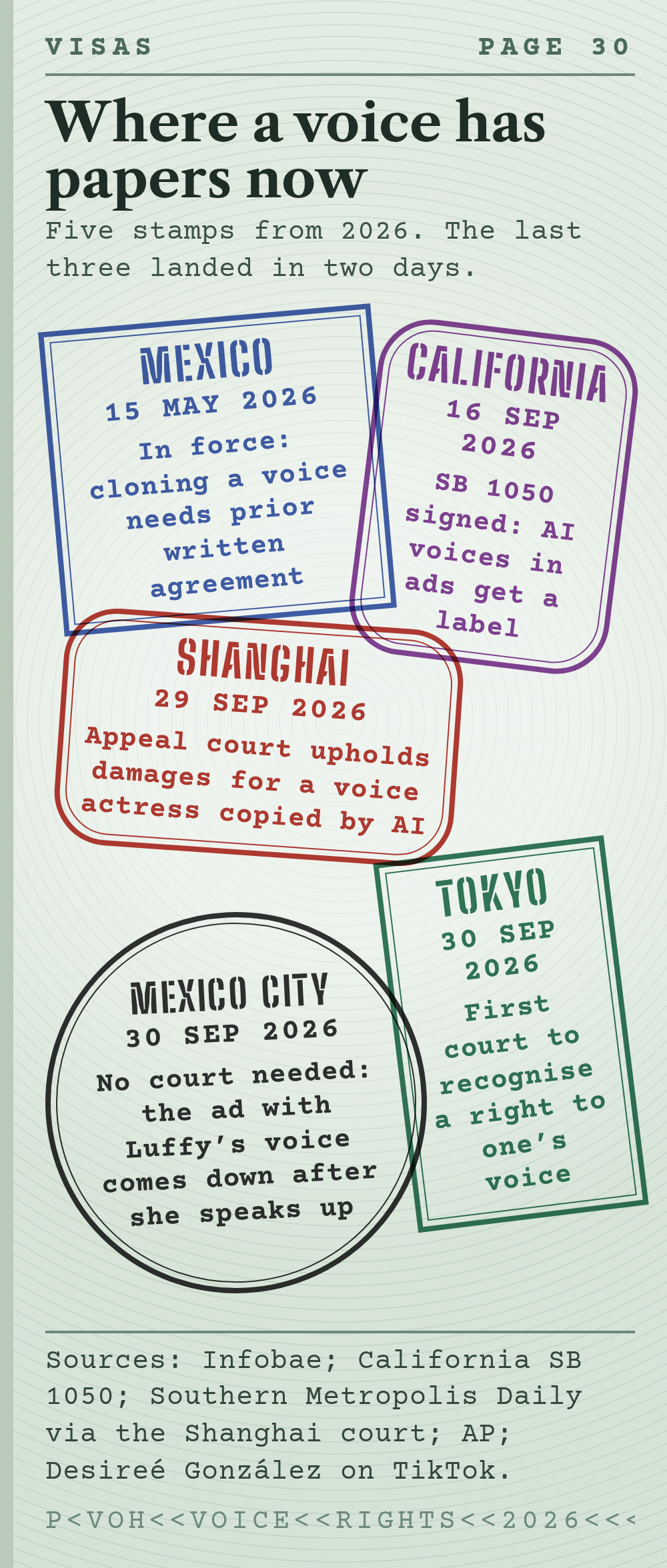
That right got a lot sharper this year. As Voice Over Herald reported in September, Mexico now requires written consent to clone a voice. The copyright reform published on May 14, 2026, which took effect the next day, demands express consent to use a person’s voice and extends that protection to AI-generated results. Its Article 121 says cloning a voice or an image “requires a prior written agreement between the parties,” as Infobae reported.
Nobody here went to court, and González hasn’t said she plans to. She hasn’t said whether anyone from the company contacted her, either. What she has said is that it is settled, and she has asked fans to leave it there.
The same Wednesday in Tokyo
Her story landed on a busy day for voices. Earlier that same Wednesday, Tokyo time, the Tokyo District Court ruled in the case Kenjiro Tsuda brought over an AI copy of his voice on TikTok. It was the first time a Japanese court acknowledged a right to one’s own voice. “The human voice is symbolic of individual personality, just like one’s portrait,” Presiding Judge Aya Takahashi said, according to the Associated Press. We covered what the Tsuda ruling does and doesn’t do the same day.
The day before, in Shanghai, an appeal court upheld damages for a voice actress whose voice had turned up, copied by AI, in a company’s online promotion.
A loud voice is not a plan
The fake ad came down fast for one reason: the person it copied has a big following, a sense of humour and a platform of her own. Most working voice actors have none of those things when a stranger’s video turns up wearing their voice.
For them, the useful parts of this story are practical. Save the link and a screen recording before anything gets deleted. Note the date and the account. Then report it to the platform as impersonation and, if it is selling something, say so. In Mexico, the law is now on your side in writing. In a growing list of other places, the courts are catching up.
And if a friend ever sends you a clip and asks whether it’s you, believe them. González did, and it took one afternoon.
Read the original report on Informado Caribe, or watch her first video on her TikTok.
Sources: Desireé González on TikTok (two videos, September 30, 2026); Informado Caribe (October 3, 2026); the Associated Press via U.S. News (October 1, 2026); Infobae (April 7, 2026); Doblaje Wiki. Hero image: SamuelitoKingdom, “Conociendo a” interview, December 2023. Quotations from Spanish-language sources are translated by Voice Over Herald; the originals are in the Spanish edition of this article.
Lee este artículo en español: La voz latina de Luffy encontró su voz en un anuncio con IA de una película para adultos. Por la tarde ya no estaba
Know something about this story, or spotted an error? Tell the newsroom.