
Google Must Face the Ex-NPR Host’s Voice Case After All. From January, California Law Says a Digital Replica Counts as Your Voice
It’s no longer a signal, it’s an order. A California judge has ruled that all four of David Greene’s claims against Google over the male voice in its AI podcast tool can go ahead. And tucked inside her ruling is a date every voice actor working in California should circle: from 1 January 2027, the state’s likeness law says a voice includes a digital replica.
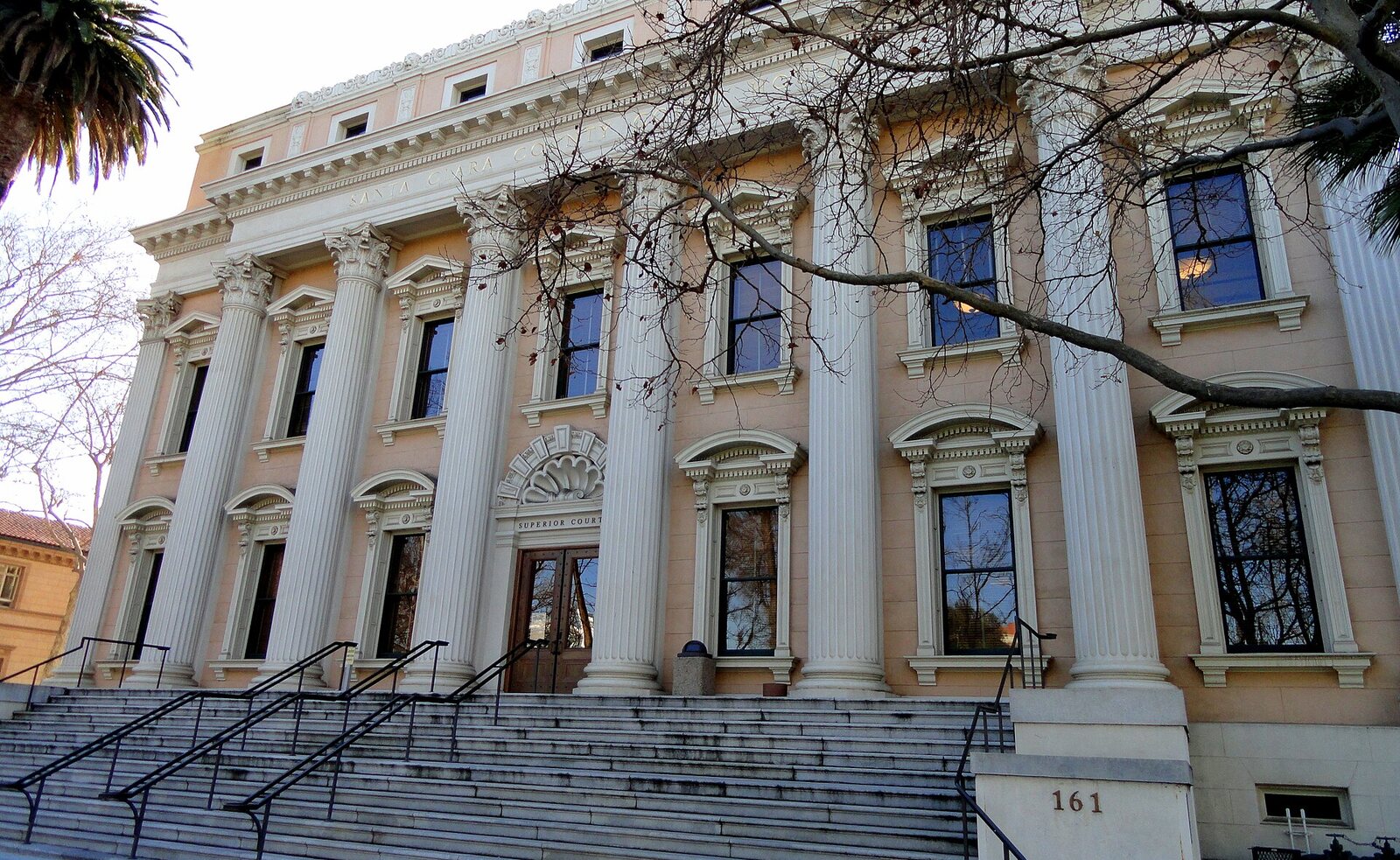
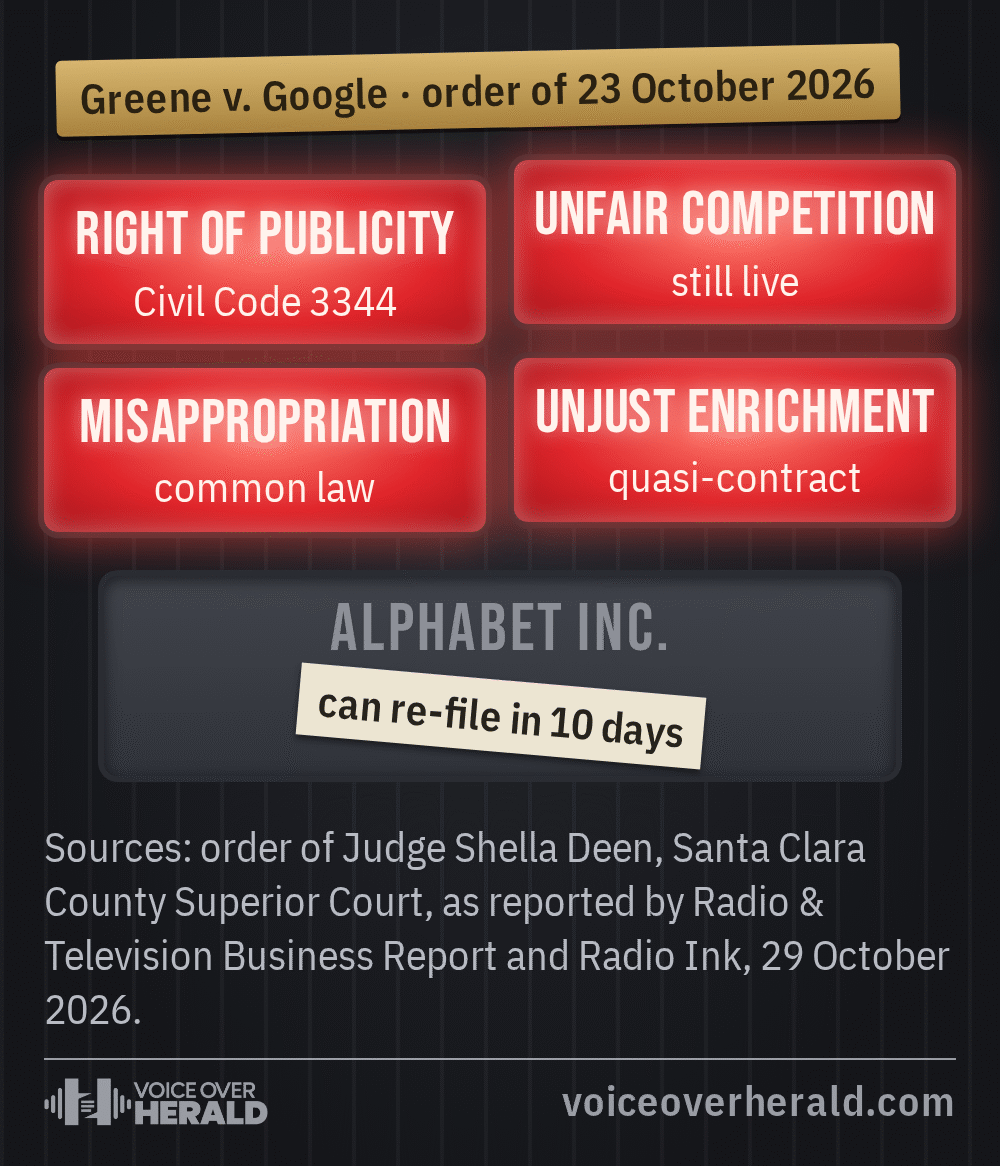
Judge Shella Deen of Santa Clara County Superior Court filed the order on 23 October, overruling Google’s demurrer on every cause of action in the former Morning Edition co-host’s complaint. A demurrer asks a court to throw a case out before any evidence is heard. Google’s didn’t work. A separate demurrer from Google’s parent company, Alphabet, did succeed for now, but with leave to amend: Greene has 10 days from notice of the order to file an amended complaint limited to what Alphabet itself is said to have done.
Voice Over Herald reported earlier this month that the judge had signalled the case could carry on. The written order confirms it, and it adds two things that matter in the booth: how a court reads a voice that people know, and a new law that takes effect in nine weeks.
A voice the audience knows is a voice the law can protect
Greene says Google used recordings of his voice to build the default male host in NotebookLM’s Audio Overviews, the feature that turns uploaded documents into a two-host chat. Google denies it and has said the voice came from a professional actor it paid, as Hoodline summarised the company’s position.
 VoiceEditSuiteSave the take. Lose the noise.Studio Rescue strips hiss, mains hum, fan wash and room noise out of a recording and leaves your voice untouched, with the noise floor measured before and after.See how it worksYour recordings are never used to train AI.
In court, Google argued that the complaint showed only that Greene’s journalism was well known, not his voice. The judge didn’t buy it. “That distinction is difficult to maintain for a radio broadcaster,” she wrote. “A radio host reaches the audience through the voice, and it is reasonable to infer that the voice is widely known.”
That’s a short line with a long reach. A broadcaster, an announcer, a narrator or a voice actor builds a career on being heard rather than seen. If a court accepts that a voice can be famous in its own right, a performer doesn’t need a famous face to argue their sound is part of their identity.
The judge also threw out Google’s copyright defence: a voice can’t be copyrighted, and Greene’s claims are about what the program puts out, not what went into it.
What the order doesn’t decide
None of this means Greene is right. At this stage the court takes the complaint’s allegations as true and asks only whether they add up to a legal claim. The complaint cites listeners who wrote that the male voice “sounds exactly like” Greene, and a forensic voice-recognition firm that found “relatively high” evidence of a match. Google hasn’t had to answer any of that on the evidence yet.
Judge Deen was careful to say so. “Whether Google actually made the male host’s voice from Greene’s recordings or from another source that merely resembles him is a factual question,” she wrote. She also called the case a new kind of test for an old law, one written long before anybody could build a voice from training data.
No statement from either side came with the order, Radio & Television Business Report noted when it reported the ruling on 29 October, as Radio Ink did the same day. Greene is asking for damages, restitution, disgorgement of profits and an injunction. The complaint doesn’t name a figure.
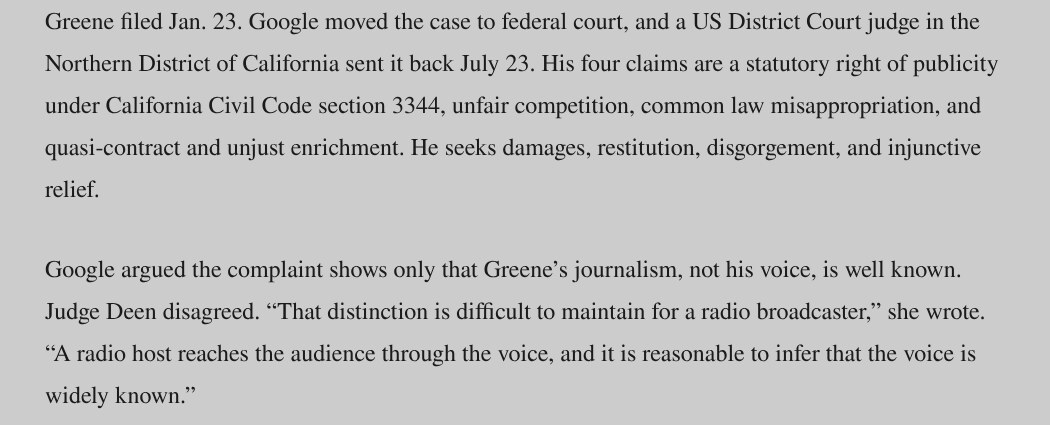
Screenshot: Radio & Television Business Report, 1 November 2026
Google now has 10 days to respond after any amended complaint is served, or 10 days after the window to amend closes if Greene doesn’t use it. After that the case moves towards evidence: the forensic report, the hired actor’s sessions and how the voice was actually built.
The law that changes on 1 January
The order mentions a bill that most voice actors outside California won’t have heard of. Senate Bill 1111, by Senator Angelique Ashby, passed the state Senate 36 to 0 and the Assembly 77 to 1, and the governor signed it on 30 September as Chapter 862 of the Statutes of 2026. It takes effect on 1 January 2027.
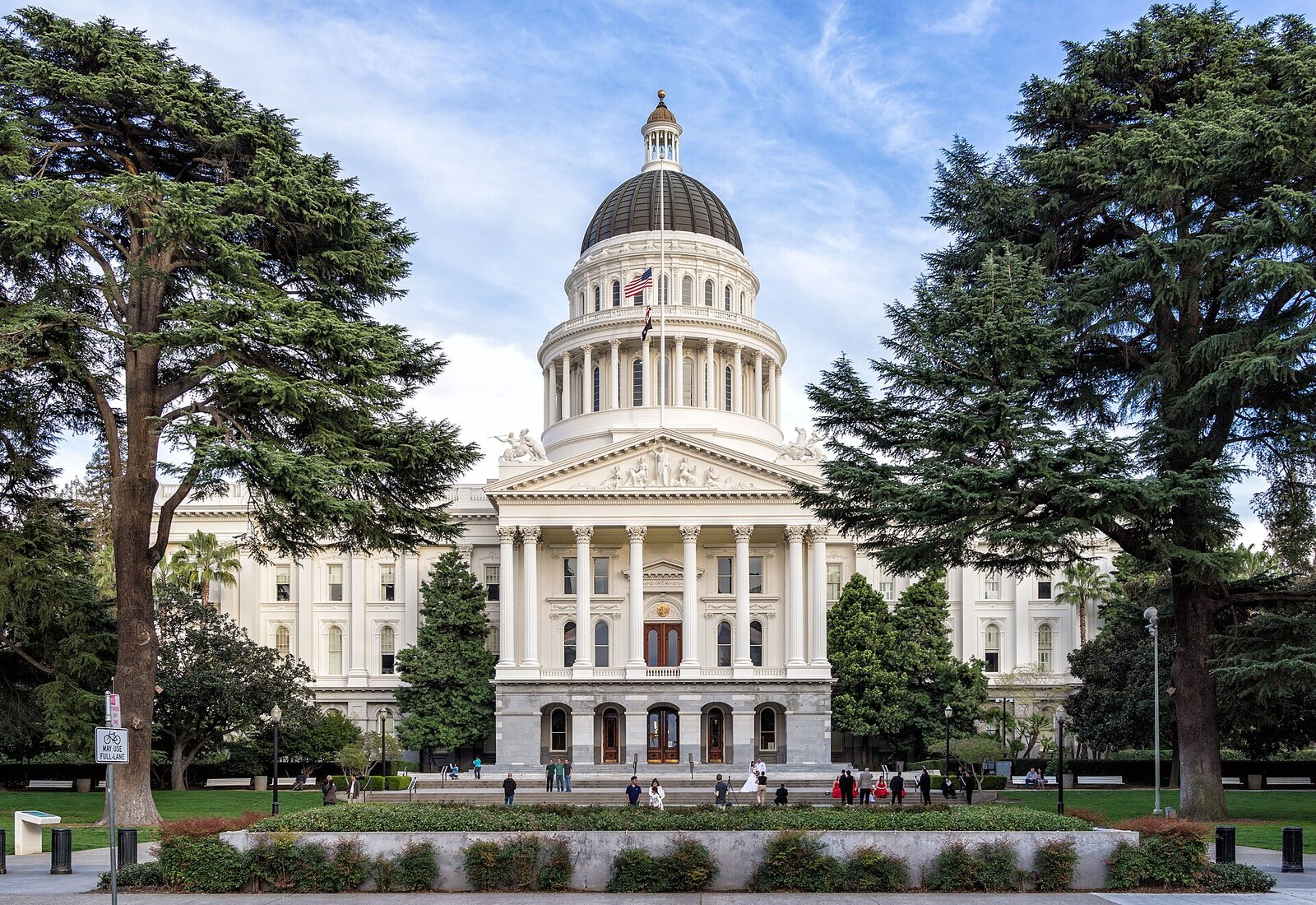
California State Capitol, Sacramento. Image: Andre m, Wikimedia Commons, CC BY-SA 3.0
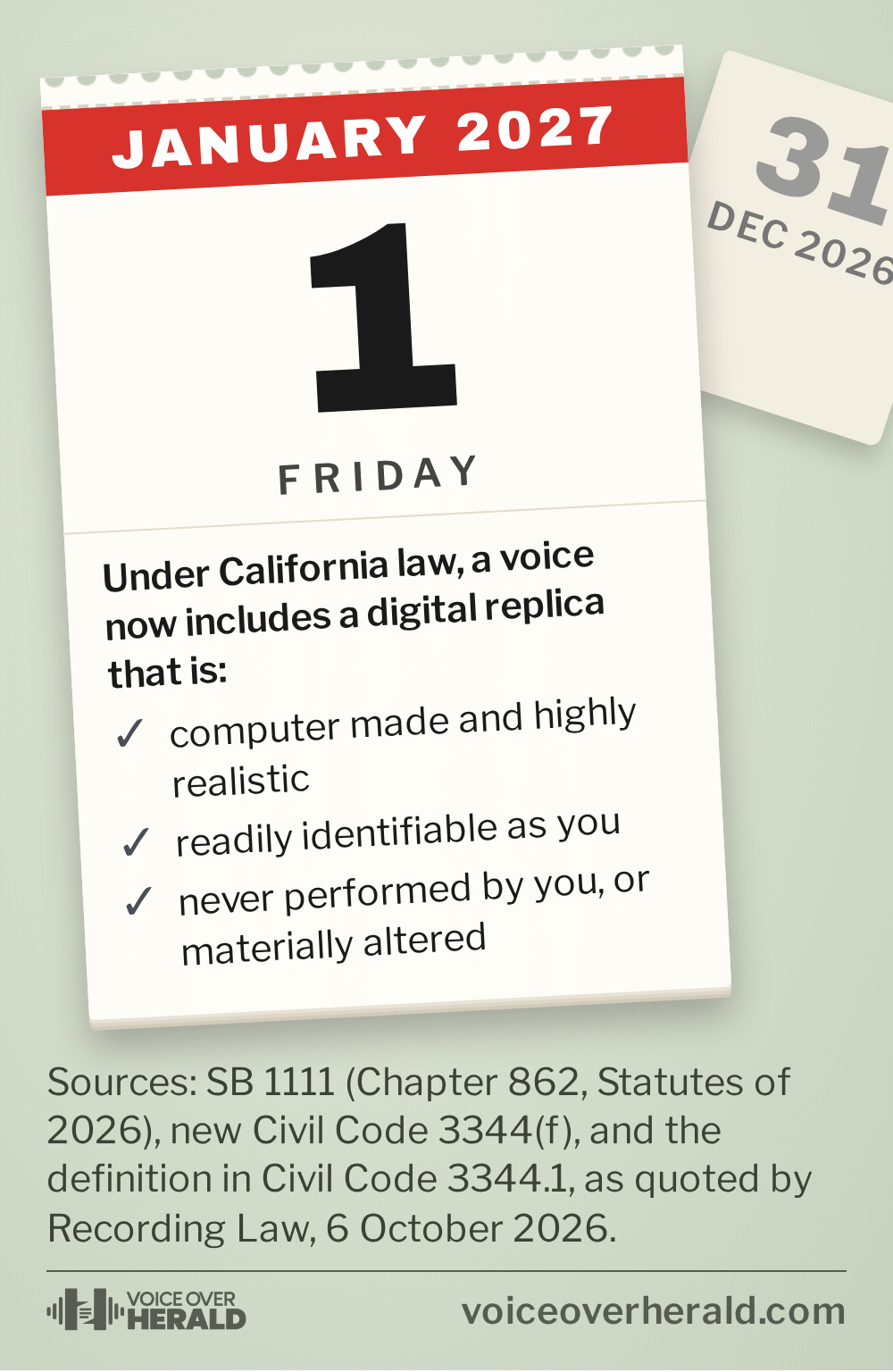
It adds one sentence to Civil Code section 3344, California’s right of publicity for living people, the same law Greene is suing under. The new subdivision reads: “For the purposes of this section, a voice or likeness includes a digital replica, as defined in Section 3344.1,” as Recording Law set out in its breakdown of the bill.
The definition it borrows was written in 2024 to protect performers who have died. It covers “a computer-generated, highly realistic electronic representation that is readily identifiable as the voice or visual likeness of an individual,” in a recording or broadcast the person never actually performed, or one where their performance has been materially altered.
Judge Deen noted the change but said her ruling doesn’t depend on it, and she didn’t decide whether it reaches anything that happened before January. Greene’s case runs on the law as it already stands.
There are limits worth knowing. Section 3344 still needs a knowing commercial use: in advertising, on products or to sell something. It doesn’t reach a non-commercial deepfake. News, public affairs, sports and political campaigns stay exempt. Statutory damages remain the greater of $750 or actual losses, with legal fees to the winner. The same bill adds a Penal Code section saying false impersonation includes using a digital replica with intent to impersonate someone.
What a working voice actor can take from this
Most voice actors will never sue a tech giant. But this case and this law change the questions worth asking about any job that involves AI, and the answers sit in paperwork you already have.
First, your recordings and your credits are your evidence. Greene’s case leans on people who know his voice recognising it. A performer who can show where their voice has been heard, and when, is in a much stronger spot than one who can’t. Keep your session files, your contracts and a dated record of where your work aired.
Second, the definition cuts both ways. A replica only counts if it’s readily identifiable as a particular person. If you license your voice to build an AI model, ask the company what it plans to do if the finished voice ends up sounding like someone else, and who carries the risk if it does. Google says it paid an actor. That actor hasn’t been named and hasn’t spoken, but their sessions are now at the centre of somebody else’s lawsuit.
Third, California already limits what a contract can take. A 2024 law, Labor Code section 927, makes some contract terms that allow a digital replica of a performer unenforceable in personal services agreements. Our guide to the four clauses that decide what happens to your voice after the session goes through what to look for before you sign.
What happens next
Greene’s lawyers have 10 days to decide whether to go after Alphabet again. A trial, if it comes, is a long way off.
Federal protection isn’t coming soon. Hoodline reported that the NO FAKES Act of 2026 has stalled in Congress and isn’t expected to move until after the midterm elections. Until then, state law is doing the work, and California’s version gets a lot more specific on 1 January.
Elsewhere, some performers already have a head start. Argentina’s Civil and Commercial Code requires consent to reproduce a person’s voice, as the legal site Derecho en Zapatillas noted in its coverage of the ruling, though the same question applies there: does a voice that only sounds like yours count?
Sources: Radio & Television Business Report, “Judge Won’t Toss Former NPR Host’s AI Challenge Against Google” (29 October 2026); Radio Ink, “Google Must Answer Former NPR Host’s AI Voice Claims In Court” (29 October 2026); Hoodline (29 October 2026); Recording Law, “California SB 1111 Adds AI Digital Replicas to Likeness Law” (6 October 2026); Derecho en Zapatillas (30 October 2026, in Spanish). Hero image: Daderot, Wikimedia Commons, CC0. California State Capitol: Andre m, Wikimedia Commons, CC BY-SA 3.0.
Lee este artículo en español: Google tendrá que enfrentar el caso por la voz del expresentador de NPR. Desde enero, la ley de California cuenta una réplica digital como tu voz
Know something about this story, or spotted an error? Tell the newsroom.