

A Judge Signals the Ex-NPR Host’s Voice Case Against Google Can Go On. Google Says the Voice Belongs to an Actor It Hired
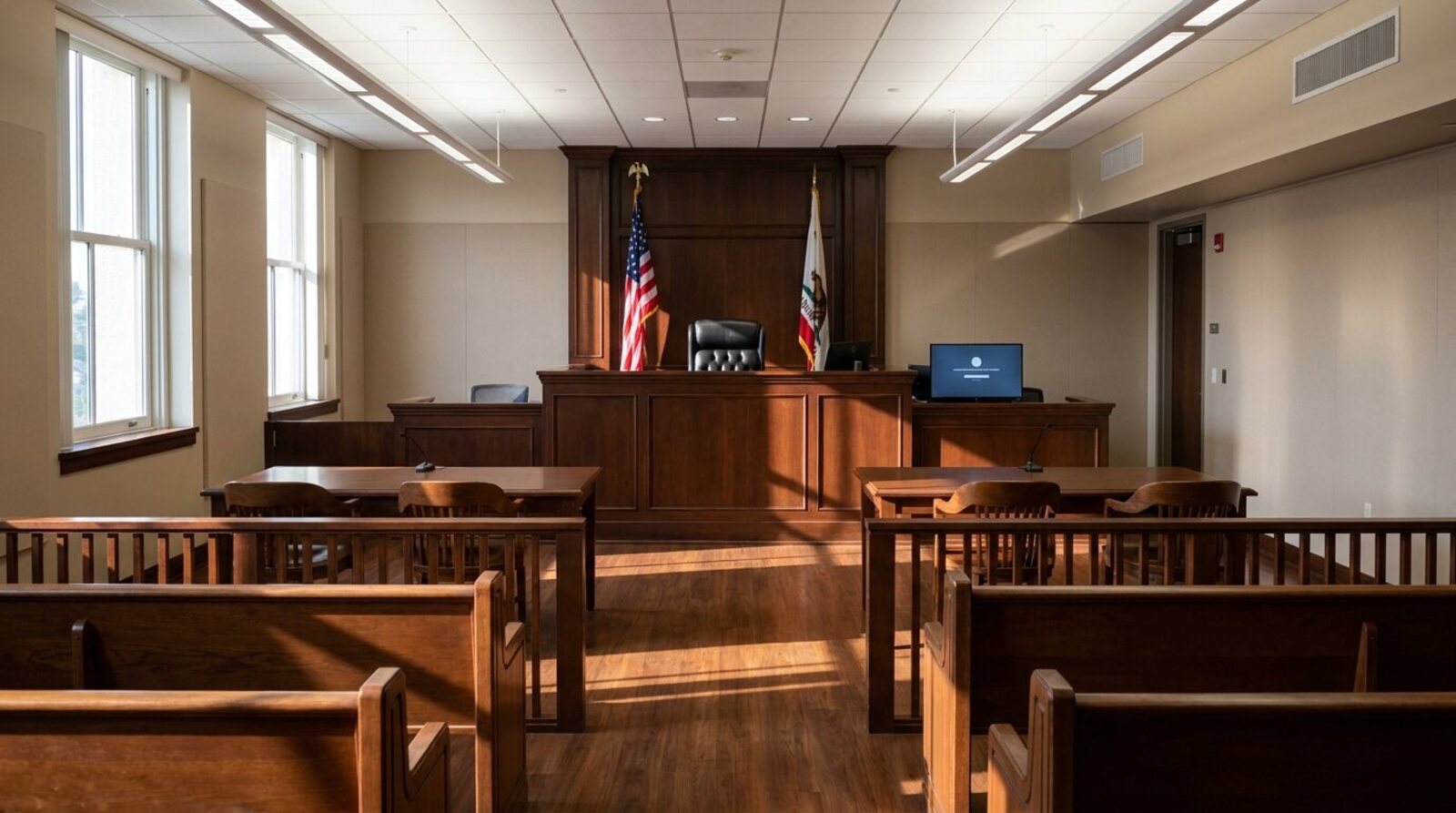
A California judge has signalled that David Greene’s lawsuit over the male voice in Google’s AI podcast tool can go ahead. Greene, the former co-host of NPR’s Morning Edition, says the voice copies his. Google says it hired a professional actor and built the voice around him, which puts a working voice actor at the centre of a case about who owns a sound.
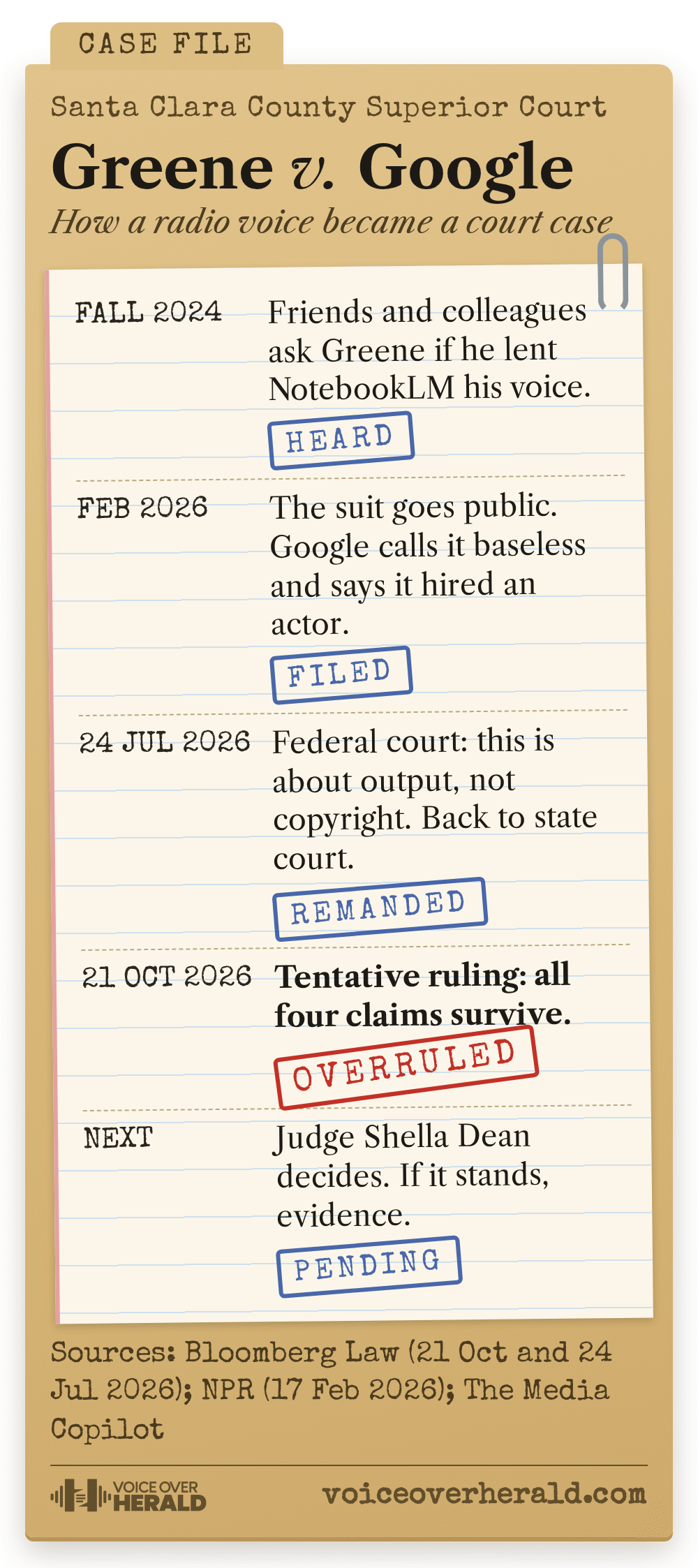
Judge Shella Dean of Santa Clara County Superior Court issued a tentative ruling overruling Google’s demurrer on all four of Greene’s claims, Bloomberg Law reported on Wednesday. A demurrer is a request to throw a case out before anyone looks at the evidence, on the grounds that even if everything the plaintiff says is true, it still isn’t a legal claim. The judge took the matter under submission after a contested hearing, so the ruling isn’t final yet.
Her tentative ruling put it plainly. “Every cause of action also states a claim based on appropriation of Greene’s voice and identity,” it said, according to Bloomberg Law.
A voice his friends recognised first
Greene spent eight years as one of the voices of Morning Edition, leaving the show in 2020. He now hosts podcasts including Left, Right & Center and David Greene Is Obsessed. He says he’d never heard of NotebookLM, Google’s research tool that turns documents into chatty two-host audio summaries, until people he trusted started asking about it.
“It was in the fall of 2024. I had never heard of NotebookLM or used it,” he told NPR’s Leila Fadel in February. “And I just started getting emails and text messages from friends, from colleagues, you know, in our industry who I really trust.”
What struck him wasn’t only the tone. It was the habits. “I said um too much in that conversation. I say like too much (laughter) in that conversation,” he said, describing how he picks apart his own interviews. “Those are the kinds of things I was hearing. It was just those little phrases and little ways to emphasize words in a sentence and put a sentence together, put a question together.”
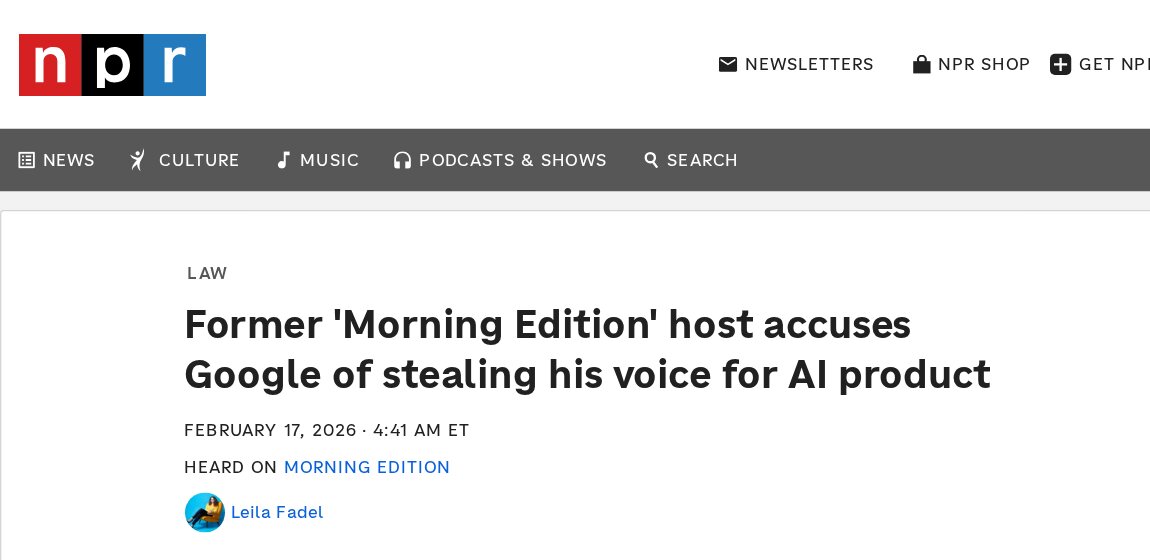
NPR's report on Greene's lawsuit, published 17 February 2026. Screenshot taken 22 October 2026.
His complaint cites an AI forensic firm that compared the tool’s male voice with recordings of Greene and gave a confidence rating of 53 to 60 percent that his voice was used to train it, as The Media Copilot summarised from the Washington Post’s reporting. “My voice is, like, the most important part of who I am,” Greene told the Post.
Google’s answer is a hired actor
Google denies it. A company spokesperson told TheWrap the claims were “baseless” and that Google hired an actor for NotebookLM. NPR put Google’s position to Greene on air: the company says the male voice is not based on him, and that it hired a professional actor and built the voice around that performer.
Greene didn’t argue the point in that interview. “I’m going to let that process play out,” he said. “I’m going to leave that to my lawyers.”
The product itself has moved on since the suit was filed. Google’s own NotebookLM web address now opens a page for Gemini Notebook, and its list of common questions starts with “Is Gemini Notebook the same product as NotebookLM?”
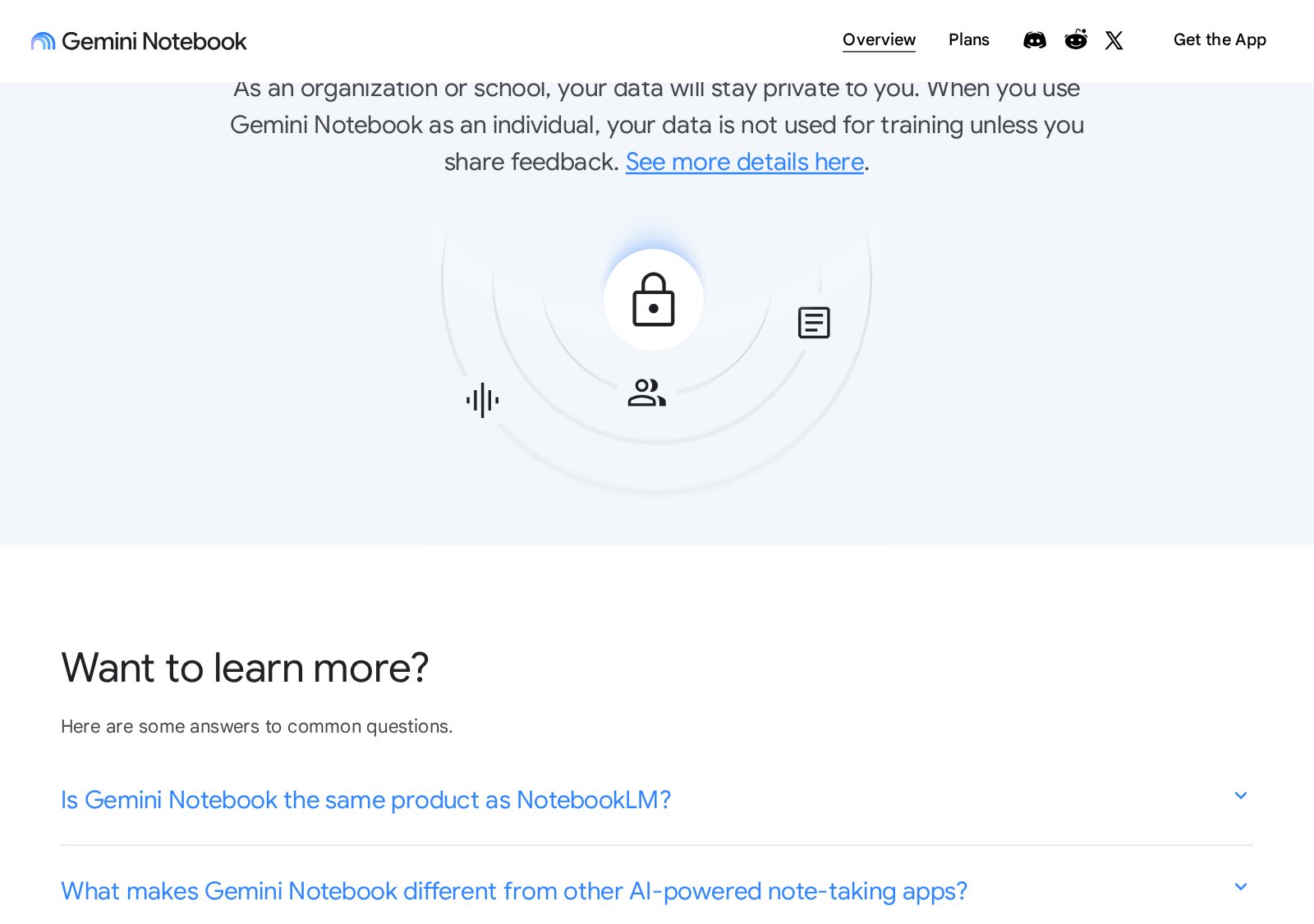
The page at Google's NotebookLM address, now titled Gemini Notebook, on 22 October 2026. Screenshot: Voice Over Herald
Why this matters in the booth
Here’s the part working voice actors should sit up for. Nobody in this case says Greene’s recordings were simply copied and pasted. Google says it paid a real performer. Greene says the result still takes his identity. If a court ends up agreeing with him, then a hired, consenting, properly paid voice can still land a company in trouble when it sounds too much like a famous one.
That isn’t a new idea in California. In 1988 a federal appeals court sided with Bette Midler after Ford used an impersonator in its commercials, ruling that a famous singer’s distinctive voice is part of her identity and can’t be imitated without consent. What’s new is the machine in the middle. When an actor records for an AI model, the finished voice is shaped by training and tuning that the actor never hears, and the actor isn’t the one who decides how close it ends up to anybody else.
 VoiceEditSuiteNewYour breath. Your pace. Your edit.Learns from numbers, never your audio. Never used to train AI.See how it works
The federal court already took one of Google’s defences off the table. In July a US District Court in Northern California ruled that Greene’s claims are about the tool’s output, generating his voice for profit, rather than about copying any recording as an input, so the Copyright Act doesn’t knock them out. That sent the case back to state court, where Wednesday’s hearing took place.
For voice actors who license their voices to AI companies, the case raises two practical questions worth putting into any contract. Who is responsible if the finished voice is said to resemble a real person? And will the company keep the voice close to the actor’s own, or tune it towards someone else? A narrator who signs a clean licence today could still find their sessions at the heart of somebody else’s lawsuit tomorrow.
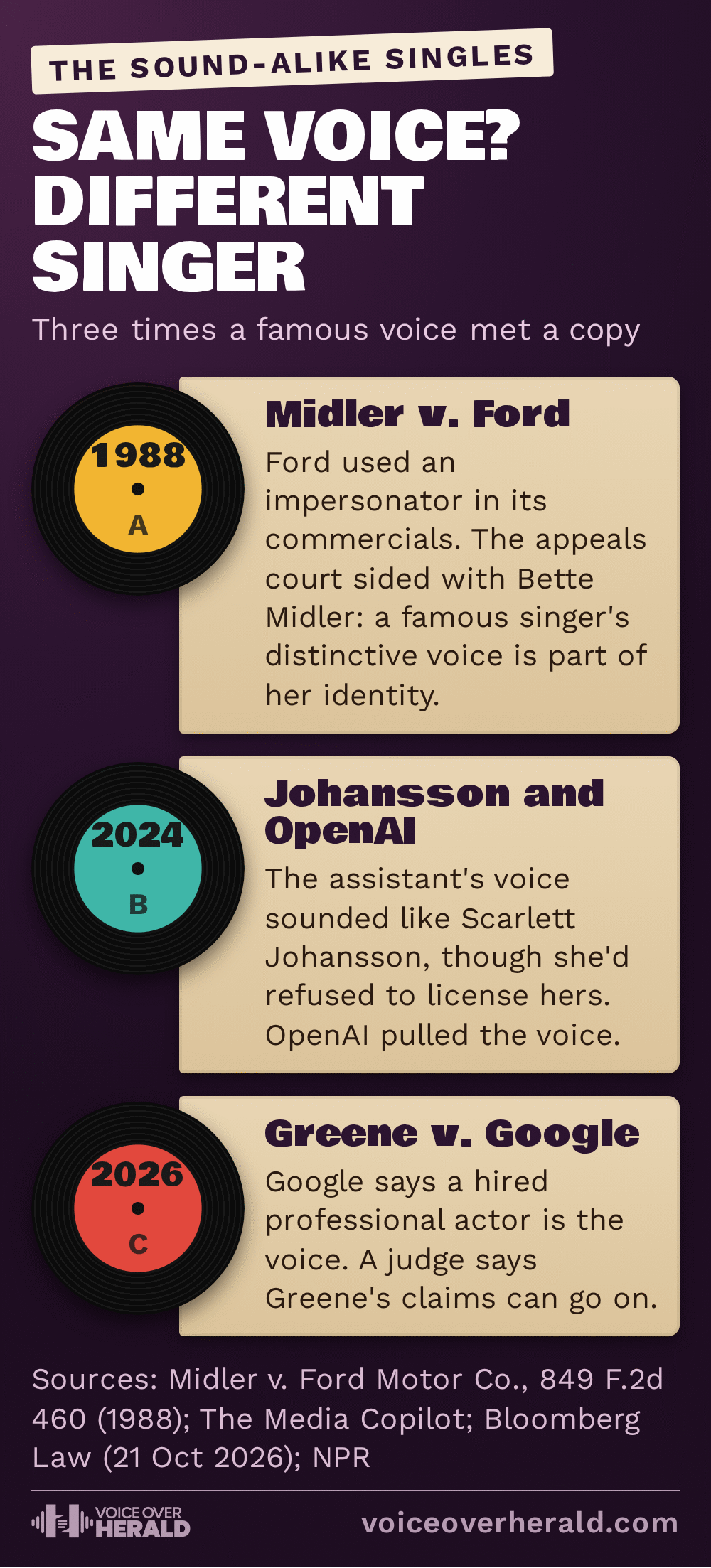
Greene, for his part, frames it as bigger than one product. “The idea that a company could, you know, create a fake version of us was enough to feel like, you know, I had to fight,” he said. He talked about interviewing people in war zones and after disasters. “The only tool that I felt like I brought into the room was myself, you know, expressing empathy, curiosity, respect with my voice. And just the idea that that can somehow be stolen is something that I couldn’t live with if I didn’t at least see where the courts could take this.”
What happens next
Judge Dean took the matter under submission after hearing both sides, so the next step is her written decision. If it stands, the case moves on to evidence, which is where the forensic report, the hired actor’s recordings and Google’s training process would finally be tested. None of that has been aired in court yet, and nothing has been proved either way.
The actor behind the voice hasn’t spoken publicly, and Google hasn’t named them. Whatever the court decides, the case is a reminder for every voice actor working with AI: once your voice goes into a model, you may not control who it ends up sounding like.
Sources: Bloomberg Law, “Google Is Unlikely to Axe Ex-NPR Host’s AI Voice Use Lawsuit” (21 October 2026) and “Google Can’t Block Ex-NPR Host Voice Suit With Copyright Shield” (24 July 2026); NPR, Morning Edition (17 February 2026); The Media Copilot, citing The Washington Post and TheWrap; Gemini Notebook website (viewed 22 October 2026); Midler v. Ford Motor Co., 849 F.2d 460 (9th Cir. 1988).
Lee este artículo en español: Una jueza da señales de que el caso del expresentador de NPR contra Google puede seguir. Google dice que la voz es de un actor que contrató
Know something about this story, or spotted an error? Tell the newsroom.