
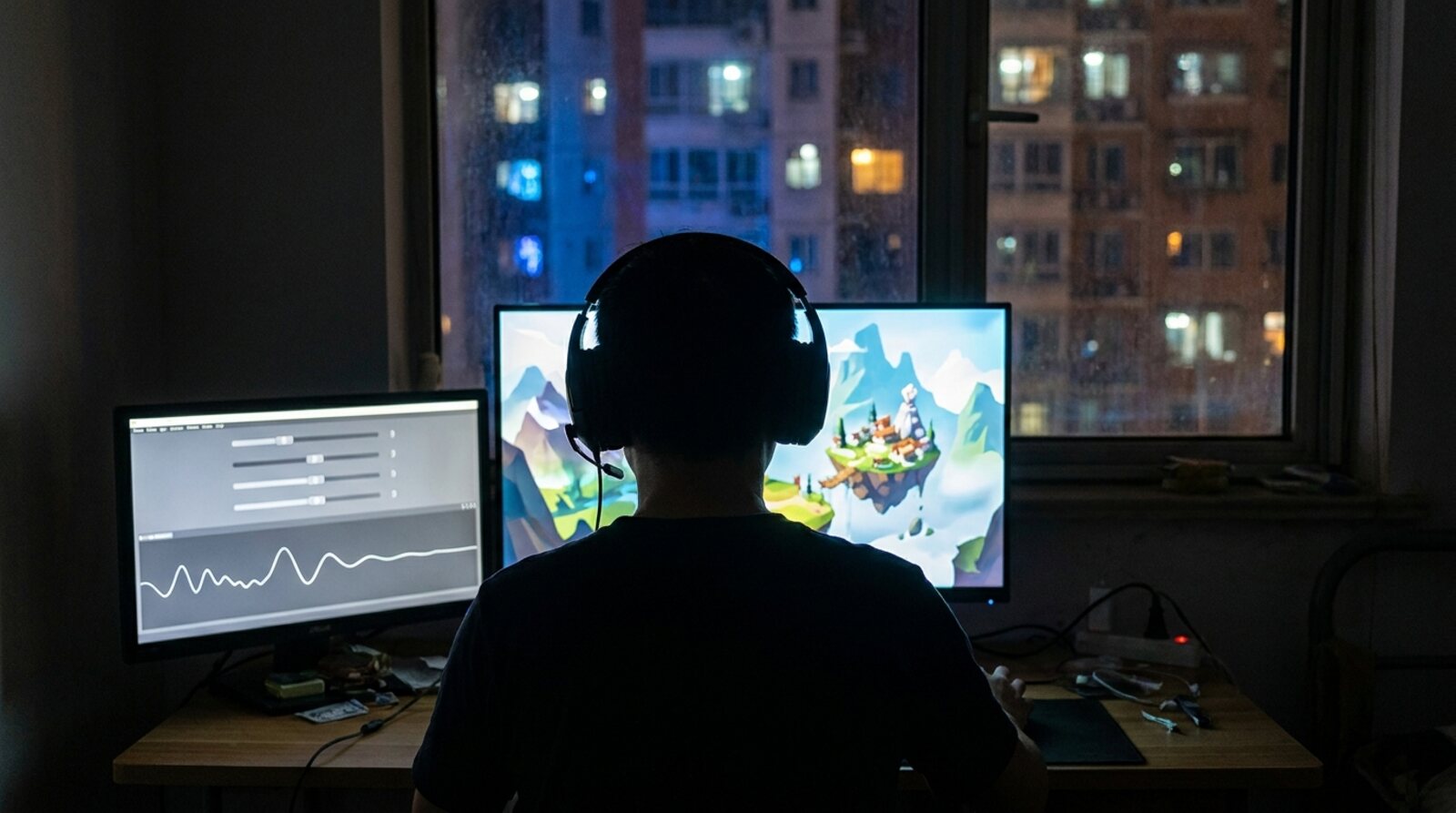
An AI App Sold 63 Genshin Impact Voices. A Shanghai Court Made It Pay the Studio, Not the Actors
An AI voice-changer app in Shanghai sold packs that let users sound like 63 characters from Genshin Impact. The game’s developer, miHoYo, sued and won 750,000 yuan, and the ruling is now final. The app’s defense deserves attention from every voice actor: it argued that if anyone owned those voices, it was the actors, so the studio had no standing to complain. The court ruled for the studio. The actors weren’t in the room.
The case was decided by the Pudong New Area People’s Court in Shanghai, which presented it this month as the city’s first unfair competition case involving an AI copy of a voice. The judgment came on June 30. The app company appealed, then withdrew the appeal, and the decision took effect.
Two days before a Tokyo court rules on Kenjiro Tsuda’s lawsuit against TikTok, the Shanghai case shows another way the question “whose voice is it?” can get answered. The answer here was: the brand’s.
Sixty-three voices in a paid pack
The defendant, a Shanghai information technology company the court didn’t name, runs an AI voice-changing app. Users install it, buy a voice pack, and their voice in live chat is converted in real time into a particular character’s sound.
According to the court, the company used AI voice processing to recreate the voices of 63 Genshin Impact characters without permission and sold them as voice packs. To promote the app, it also made and posted videos using the game’s character images and story animations, used altered character art as avatars for the packs, and let buyers preview the characters’ original recorded lines.
miHoYo, the Shanghai company that runs Genshin Impact, argued that this infringed its copyright and amounted to unfair competition by passing off. It asked for 5 million yuan in damages and costs.
The app company pushed back on two fronts. Its service, it said, ran on large-scale AI models, so the output voice depended on what each user fed in. And it argued that any rights in the voices belonged to the voice actors themselves, so the actors should be the ones to assert them. A voiceprint analysis cut through the first point: the app’s voices and the game characters’ voices showed “nearly identical characteristics,” the gaming site Automaton reported. The company also admitted in court that it had mixed one minute of a Genshin character’s audio with other material to train its conversion model.
What the court protected
The court split its reasoning in two. The character designs are artworks and the game’s continuous footage is an audiovisual work, it found, so using the images and story animations without permission was copyright infringement.
The voices were handled differently. After years of the game running, the court said, the character voices had become the core auditory marker by which the public identifies the game, part of a commercial identity with real influence. Copying them in bulk for a voice-changing business, adding altered character avatars and original-line previews, showed an intent to ride on the game’s fame and was likely to make people think the service was officially linked to miHoYo. That, the court ruled, went beyond the reasonable scope of using AI to copy another’s voice, and was unfair competition.
Look at what’s being protected. It isn’t the performance, and it isn’t the performer. It’s the game’s recognizability. The voices are treated much like a logo you can hear.
 VoiceEditSuitePro audio tools built for working voice actors.Auto Clean UpACX Audiobook PrepAudition Director
The damages were trimmed, too. The app offers more than 500 voice packs, and only the infringing ones counted, so the court refused to treat the company’s whole revenue as profit from infringement. The final figure was 750,000 yuan, which Automaton put at roughly $112,000, plus an order to stop immediately.
Two courts, two kinds of voice right
China has been here before, from the other direction. In April 2024 the Beijing Internet Court decided the country’s first AI voice rights case, brought by a voice-over artist identified only by her surname, Yin.
The actor sues
A voice-over artist finds an AI copy of her voice selling on a dubbing app. The court rules her personal rights were infringed and orders two companies to pay her 250,000 yuan. Her old recordings had never been licensed for AI.
The studio sues
A game developer finds 63 of its characters’ voices sold as AI packs. The court rules on copyright and unfair competition and orders the app maker to pay the studio 750,000 yuan. The actors aren’t parties.
In Yin’s case, a media company that held her recordings passed them to a software firm, which built an AI voice and sold it through a dubbing app. The recordings, the court found, had never been licensed for AI use. Judge Zhao Ruigang found the AI voice “mimicked the plaintiff’s vocal characteristics, intonation and pronunciation style to a high degree,” and that “this level of similarity allowed for the identification of the plaintiff’s voice,” according to the court’s English summary. He warned companies to “exercise caution when using AI to process or generate voices and images.”
Put the two cases side by side and the lesson is plain. A voice can be protected as part of a person, as in Beijing, or as part of a product, as in Shanghai. Which one applies depends on who sues, and the one who sues is usually the one with the money and the lawyers.
The line the court drew, and the gap it left
The Pudong court described the ruling as a boundary line for AI voice cloning, and said it would “effectively curb the erosion of the traditional dubbing industry by AI voice cloning, and protect creators’ voice rights and commercial value.”
The same statement also pointed the other way. The ruling, the court said, makes clear that businesses “may draw on basic vocal traits to imitate a voice,” which preserves “necessary room for technological innovation” in AI voice processing and model training.
That is the part working voice actors should read twice. A famous character’s voice, tied to a big brand, got protection because the public links it to the game. A performer’s natural voice, heard in ads, e-learning and audiobooks, carries no brand for a court to protect under this reasoning. The Beijing case offers that performer a route, but only if the copy is close enough to identify them and they can afford to sue.
What to take from it
- Your contract is the first battleground. Yin won because her recordings were never licensed for AI. Check what your existing agreements allow, and ask for AI use to be excluded or paid separately.
- The studio’s lawsuit isn’t your lawsuit. A publisher can win on its brand while the performer gets nothing. If your character voice is copied, ask whether you’re part of any claim.
- “The actor should sue” is now a defense. The app company tried it in Shanghai. Expect to hear it again, which is one more reason to keep dated proof of your work.
On Wednesday, a Tokyo court gets its turn. Tsuda is suing in his own name, over his own voice, against a platform that calls it a “generic male voice.” Shanghai just showed that when a studio sues over famous characters, the voices can be protected. Tokyo will show whether an individual actor can win the same fight.
Sources: The Paper, report on the Pudong New Area People’s Court press conference (September 10, 2026); Automaton (September 11, 2026); Beijing Internet Court English summary (April 24, 2024). Quotations from Chinese sources are translated by Voice Over Herald.
Lee este artículo en español: Una app vendía 63 voces de Genshin Impact hechas con IA. Un tribunal de Shanghái la hizo pagarle al estudio, no a los actores
Know something about this story, or spotted an error? Tell the newsroom.