
The BBC Is Switching Off Radio 4 Extra. Equity Says Audio Actors Will Lose Their Repeat Fees
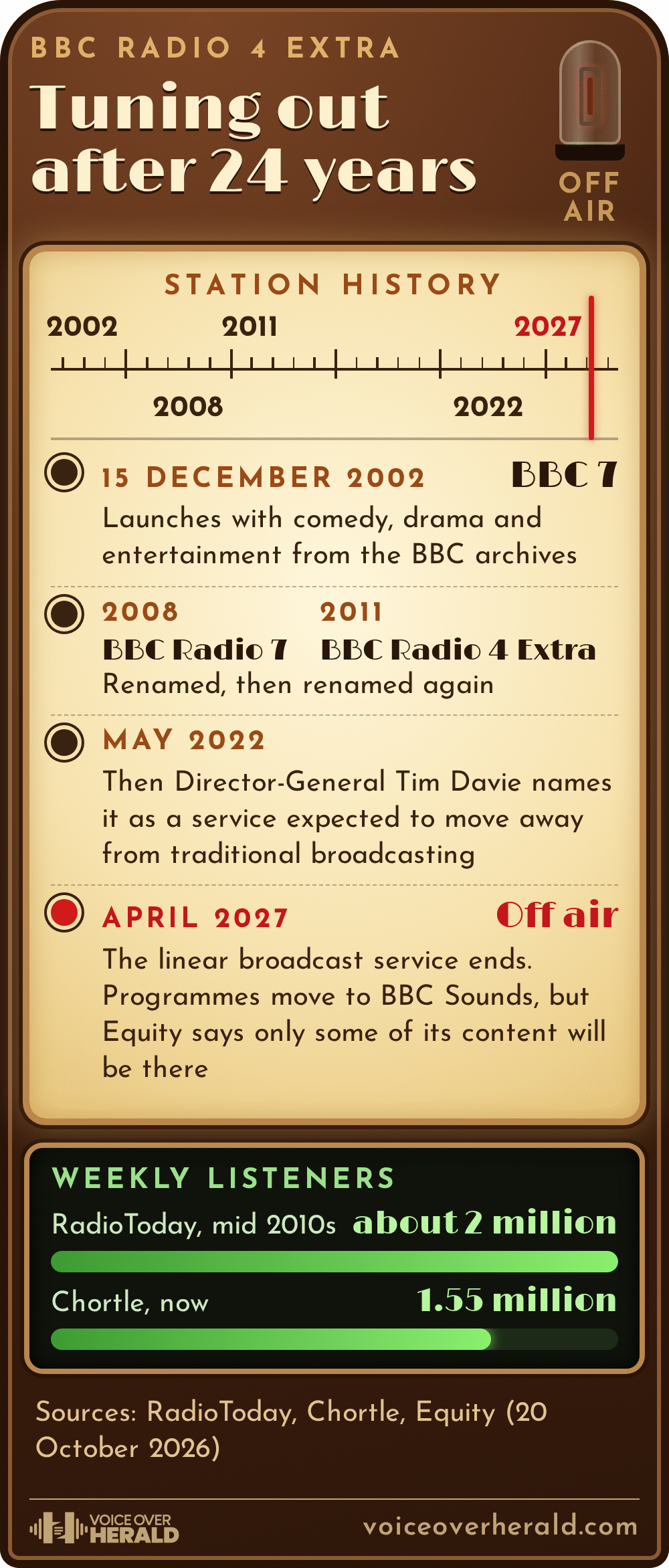
The BBC is switching off Radio 4 Extra as a broadcast station, and the actors’ union Equity says audio performers will feel it in their bank accounts. The station lives on archive comedy and drama, and every repeat pays the people who made it. From April 2027, Equity says, only some of that archive will carry on in BBC Sounds.
The closure came on Tuesday, October 20, as part of a package that also takes BBC Three and BBC Scotland off traditional TV schedules. The corporation is trying to save £500 million over two years. “We need to make every pound work harder for audiences as we respond to the immediate cost pressures and reinvent the BBC for a changing world,” Director-General Matt Brittin said. “We all know that means tough choices.”
He added that “much of the great content they currently carry will still be found where audiences already enjoy them on iPlayer and Sounds,” and that he recognised the news “will be hard for audiences and colleagues.” The BBC says some Radio 4 Extra programmes will move to BBC Sounds, and that the religious programme The Daily Service will go to Sounds and local radio.
Why the union calls it a blow to income
Most of the reaction has been about listeners losing a favourite station. Equity’s statement on the same day pointed at something less visible: the pay packet. “The loss of Radio 4 Extra in its current format will be a significant blow to the income of audio artists,” an Equity spokesperson said. “The channel currently airs archival programmes and our members are paid for these repeats.”
 VoiceEditSuiteACX Audiobook PrepAudible-ready files, graded the way ACX grades.The numbers Audible measures, or the fixed file.See how it works
That’s the part many listeners don’t know. When an old sitcom or serial turns up on Radio 4 Extra, the performers in it are paid for the repeat. Equity says the move to Sounds won’t make up for that. “From April 2027, only some of Radio 4 Extra’s content will be available on BBC Sounds,” the union said. That means, it added, “a reduction in income for audio artists and in the BBC’s overall output of scripted audio.”
The union drew a line between the radio station and the two TV channels. Moving BBC Three and BBC Scotland online “should not affect income for our members,” it said, because Equity’s agreements already cover fees for content on both online and broadcast channels. It is less sure about one plan for BBC Three, which will make some shows specifically for YouTube. It’s “currently unclear how secondary payments will function” when work is repeated there, the union said, and any YouTube repeats “must be properly remunerated.”
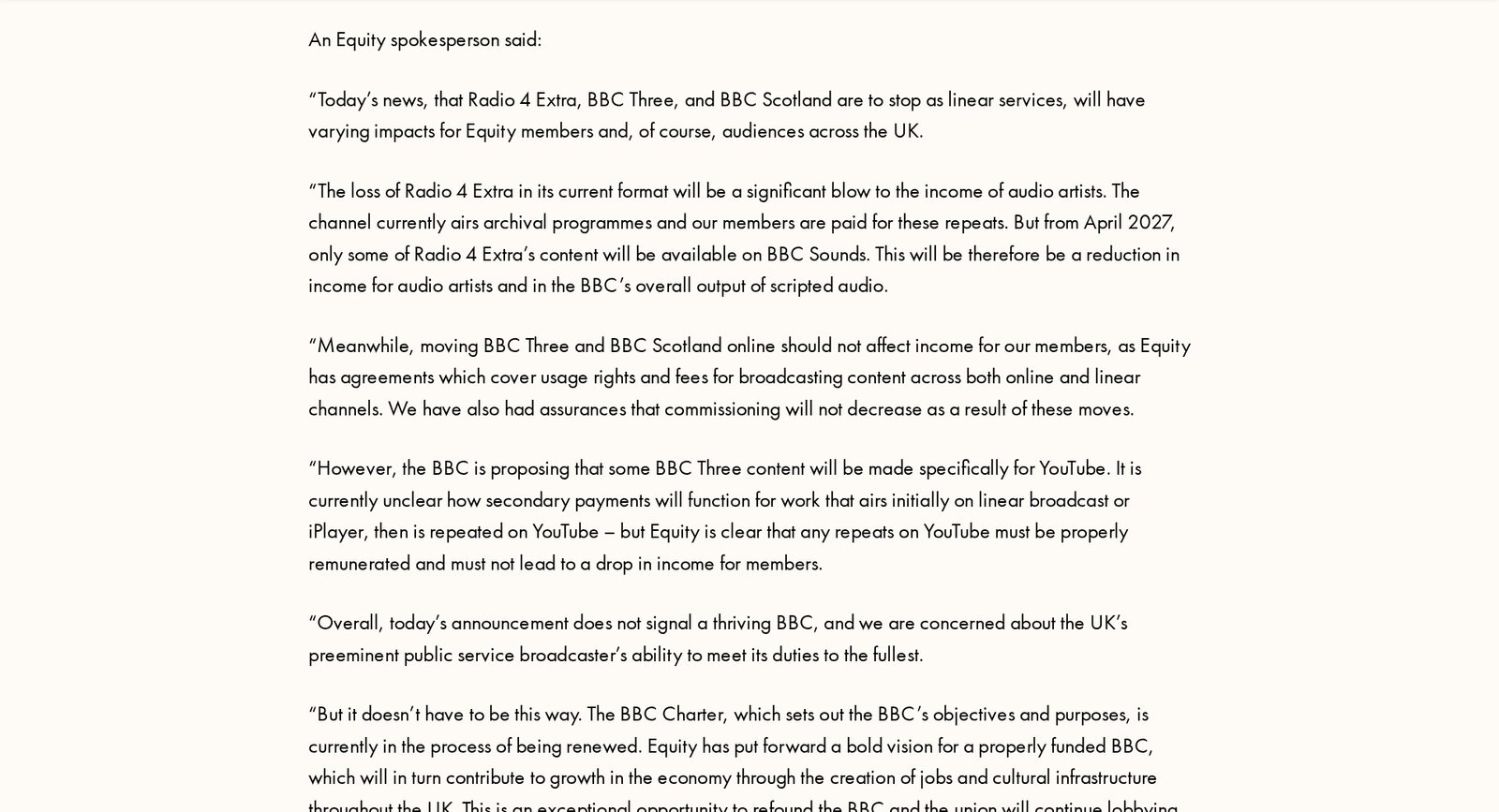
Image: Equity, October 20, 2026
A station built on the archive
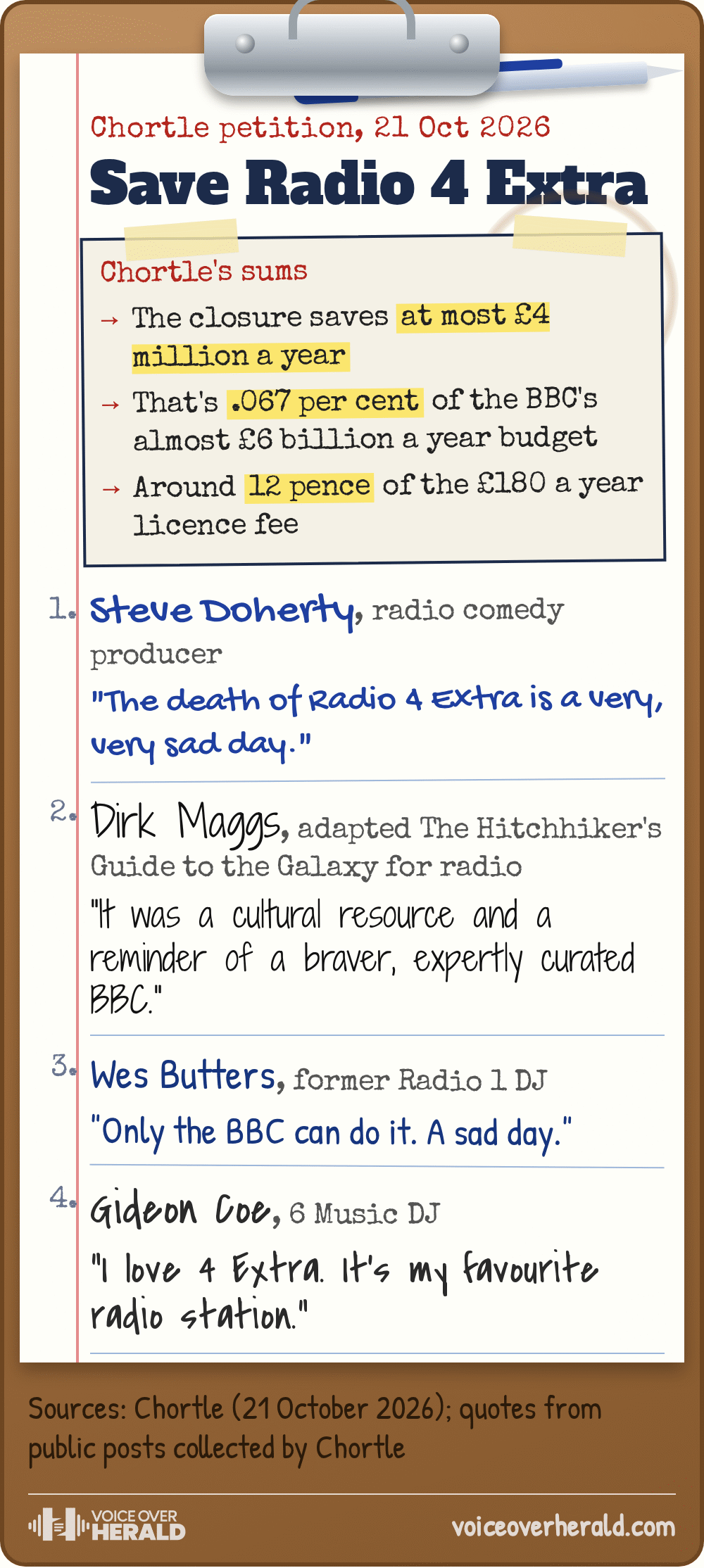
Radio 4 Extra doesn’t make many shows of its own. That is the argument critics of the closure keep making: it costs very little. Chortle, the UK comedy site, worked out that the move saves at most £4 million a year, a tiny slice of a BBC budget of almost £6 billion. The comedian Athena Kugblenu put it bluntly. “Closing Radio 4 Extra will not create savings of note. It commissions no original programmes. It pays modest radio royalties, producers and hosts. That’s it,” she wrote. “So the BBC archive is gonna be left to collect dust?”
On Sunday morning, October 25, the schedule showed exactly what she means. A programme telling the story of the painter Berthe Morisot through her letters was followed by Whack-O!, starring Jimmy Edwards, and then The Clitheroe Kid. All of it archive, all of it voiced by actors, and all of it the kind of repeat Equity’s members are paid for.
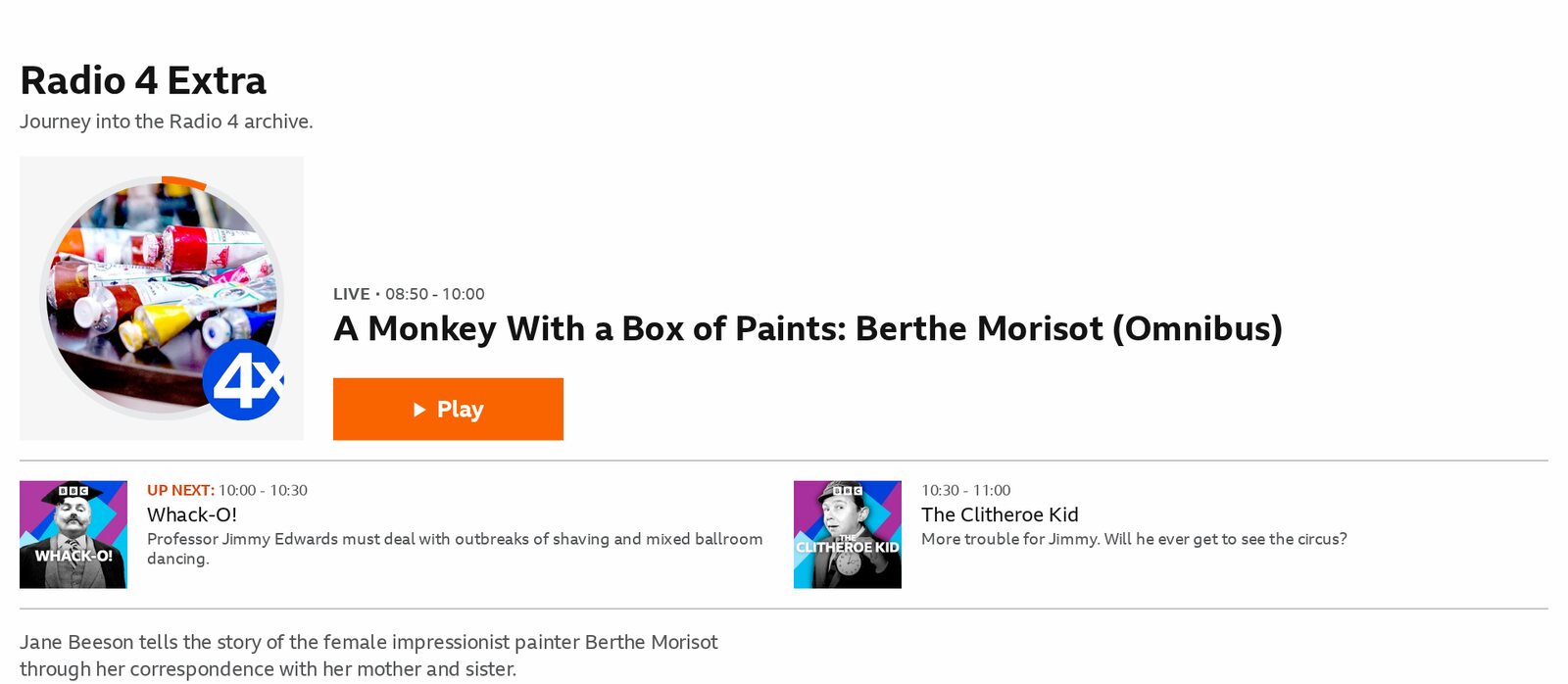
Image: BBC Sounds, October 25, 2026
It has been doing this since 2002, when it opened as BBC 7, and as RadioToday points out, the BBC first flagged a move away from broadcasting four years ago. So this has been coming. It’s still a shock to the people who listen every day.
“Not just a rerun channel”
Toby Hadoke, who presents the station’s science fiction, fantasy and horror block, The 7th Dimension, told Chortle he was “just very sad.” His case is about how people find things. “4 Extra is not just a rerun channel, it is a lovingly curated repository of broadcasting gems,” he said. Putting the archive on demand in Sounds, he added, “may sound like a sensible alternative but it actually strips away the unique bit that a public service broadcaster can provide,” namely “the listener not knowing what’s coming on next but being prepared to be surprised by it.”
That matters for performers too. A repeat only earns money if it’s broadcast, and a show only finds a new audience if someone stumbles on it. Hadoke thinks the station’s audience is the least likely to follow it to an app. “It’s a channel people leave on,” he said. “And its listeners are probably the very last people whom a digital alternative will suit.”
A petition, and the people who rescue lost radio
Chortle has launched a petition to save the station, and producers, writers and broadcasters have lined up behind it on social media. One group with a lot to lose is the Radio Circle, a network of enthusiasts who track down and restore lost episodes of old shows. Radio 4 Extra has been the place their finds get broadcast.
“Not only has the channel been the ideal outlet for the many programmes we have recovered, the staff have always been very encouraging, helpful, and, most importantly, have promoted what we do,” the group said. It’ll keep recovering lost radio, it added, but has “to plan for a future where we don’t have an on-air champion.”
The author Linda Grant summed up the mood in one line. She’d been listening to Alan Bennett read Winnie the Pooh, a 1984 recording, on Radio 4 Extra when the news broke.
Not the only cut to BBC audio
The station isn’t going alone. Earlier this month, RadioToday reported that BBC Speech and Sounds will cut its budget by at least 10 percent and close several long-running Radio 4 programmes from April 2027, including You and Yours, Open Country, Thinking Allowed and Free Thinking. “These are difficult decisions, and they are not based on cost alone,” said Jonathan Wall, the director of BBC Sounds.
And the BBC’s longest-running drama has its own worry. Voice Over Herald reported last week that the BBC has dropped its planned studio for The Archers, meaning the show could be recorded outside Birmingham for the first time since 1951.
Equity’s verdict on the whole package was short. Tuesday’s announcement “does not signal a thriving BBC,” the union said, and it is “concerned about the UK’s preeminent public service broadcaster’s ability to meet its duties to the fullest.” It’s pushing its own plan for a properly funded BBC while the BBC’s Charter is being renewed. For radio actors, the question is simpler. When the station goes quiet in April, how much of their old work will still be playing anywhere, and who’ll be paid when it does?
Sources: Equity statement (October 20, 2026); BBC News report by Steven McIntosh (October 20, 2026); RadioToday (October 8 and October 20, 2026); Chortle (October 21, 2026), including public posts it collected; BBC Sounds Radio 4 Extra page (October 25, 2026).
Lee este artículo en español: La BBC apagará Radio 4 Extra. Equity dice que los actores de audio perderán el pago por repeticiones
Know something about this story, or spotted an error? Tell the newsroom.