
Opinion: France Will Only Fund Dubbing Done by People. The Bigger Door Is Still Wide Open
France’s national film body, the CNC, has stopped paying for dubbing, subtitles and audio description made without people. Its money for a dub now covers the writers, the actors and the studio, and nothing else. The French dubbing world calls it a first step and is already pointing at the much bigger door that’s still wide open. They’re right on both counts, and every public film fund that hands out money for voices should be reading this rule this week.
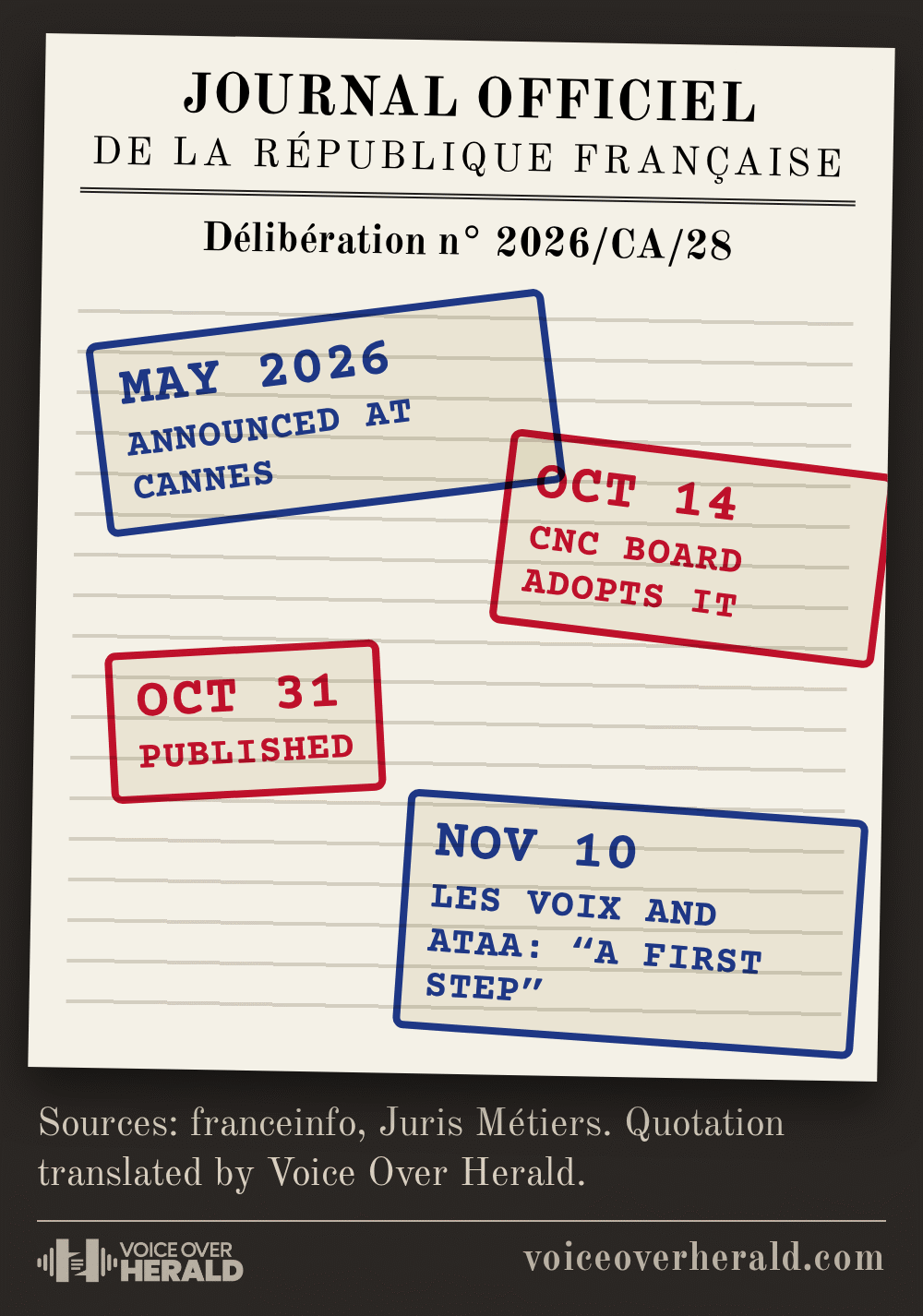
Here’s what happened. The board of the Centre national du cinéma et de l’image animée adopted a change to its rules on October 14, and it was published in France’s Journal officiel on October 31. It had been announced on the sidelines of this year’s Cannes festival, so nobody can say it came out of nowhere.
The rule says the CNC’s aid no longer pays for dubbing, subtitling or audio description done without human intervention. For dubbing and post-synchronization, the costs it will fund are the pay of the people who write the French text, the pay of the performers, and the real technical work of recording and mixing. Voice cloning, synthetic voice generation and machine translation that no human adapter has signed are out, at least where public money is involved.
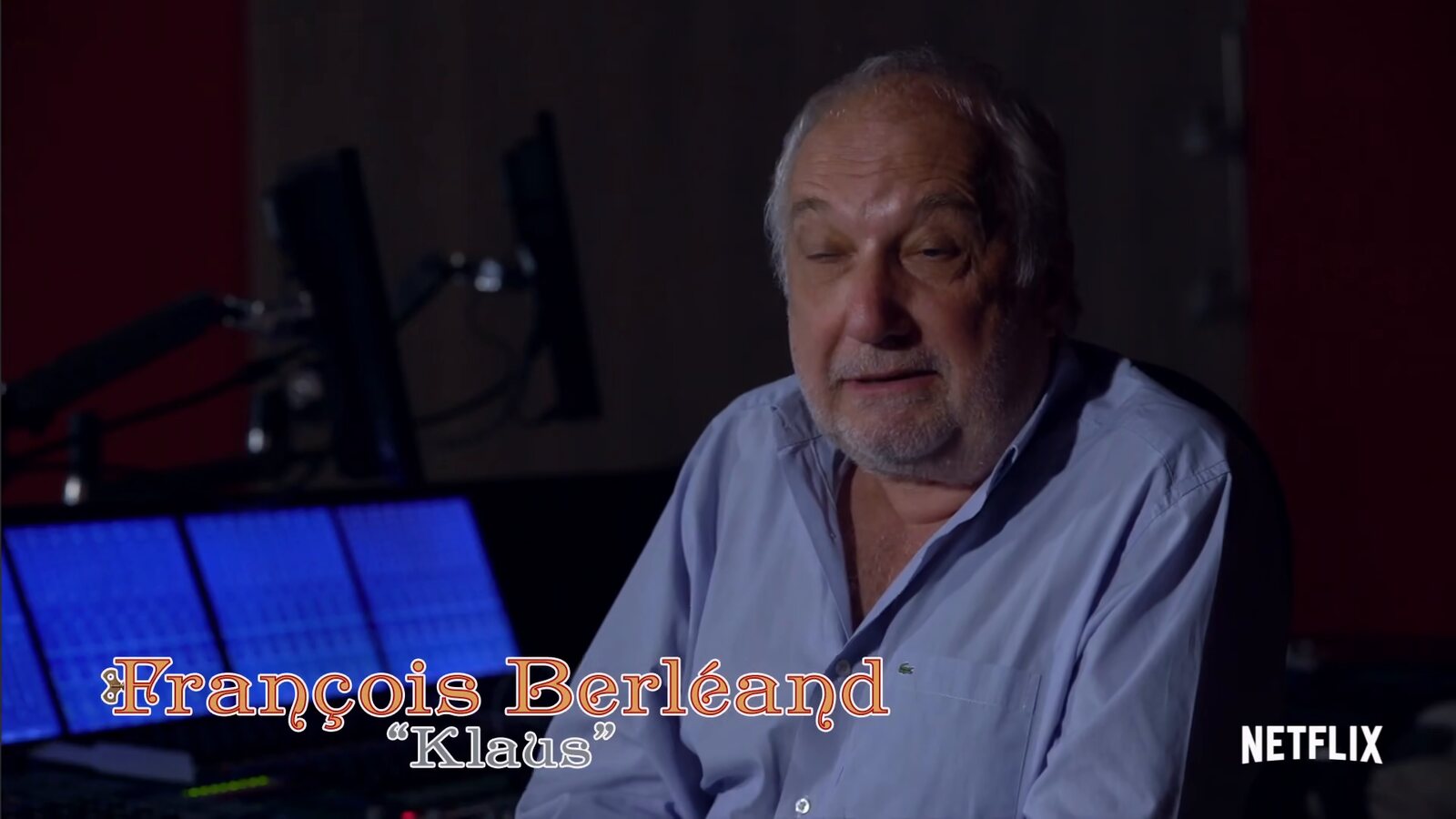
François Berléand, the French voice of Klaus, in Netflix France's making-of for the film's French dub. Image: Netflix France, CC BY 3.0, via Wikimedia Commons
It goes further than voices. To get CNC money for a film or a video game, a project now has to show at least one human author on the key creative jobs. And the people on the CNC’s selection committees are forbidden from feeding the scripts and artwork they’re judging into outside AI tools, which is the sort of rule you only write after someone, somewhere, has been tempted.
A public fund paying for a human voice shouldn’t be news
Let me say the slightly awkward thing first. It’s a bit odd to celebrate a public culture body for agreeing to fund culture made by people. That’s the job. Nobody throws a party when the fire brigade agrees to use water.
But we live in the year we live in. Over the past few weeks Voice Over Herald has covered Equity putting its first film and TV AI protections to a vote, SAG-AFTRA’s chief explaining how he’d test whether a replica sounds like you, and Audible putting a virtual voice beside a narrator’s own sample. Against that background, a funder writing down in plain law that its money pays for human performers is worth a cheer. It costs the CNC nothing to say it, and it costs a producer nothing to comply, unless the plan was always to swap the actors out.
People in the room
The writers who adapt the text, the actors who perform it, and the recording and mixing that turn it into a soundtrack.
Nobody in the room
Dubs, subtitles and audio description made with no human at the wheel, including cloned or synthetic voices and machine translation no adapter has signed.
I also like how specific it is. It doesn’t wring its hands about “responsible innovation”. It says which invoices are eligible. Writers’ fees, yes. Actors’ fees, yes. A licence for a voice generator, no. Anyone who has ever filled in a grant form knows that the line on the eligible costs list is where policy actually lives. Everything else is a speech.
The catch: most French dubbing never touches CNC money
Now the part that stops me buying the champagne. The two associations that have pushed hardest on this, Les Voix, which speaks for dubbing actors, and the ATAA, which represents audiovisual translators and adapters, put out a joint statement. In it they welcome “a first step, which they have been asking for for four years,” and in the same breath urge everyone “not to settle for it.”
 VoiceEditSuiteNewThe audio editor that learns how you breathe.Learns from numbers, never your audio. Never used to train AI.See how it works
Their reason is simple. The CNC mostly funds French and co-produced work. But the bread and butter of a French dubbing actor is the stuff that arrives from abroad: the American series, the Korean drama, the animated film from anywhere. As the associations put it, as franceinfo reported, the dubbing of foreign films and series, “the heart of the work of actors,” essentially “falls under no CNC aid and remains without protection.”
Their next line is the one I’d frame and hang in every dubbing studio in Paris: “Nothing today guarantees that their French version stays human.”
That’s the honest scorecard. A French film paid for with public money can’t go out with a cloned French dub. A big imported series, dubbed by whoever is cheapest, can. The rule protects the part of the market that was already the most protected.
Where the next fight is, and it’s a smart one
The associations aren’t just complaining, they’ve named the lever. They want France’s exploitation visa, the certificate a film needs before it can be shown in French cinemas, to depend on human intervention. That’s clever. A visa isn’t a subsidy you can decline. Anyone who wants to show a film in French cinemas needs one, including the big foreign studios that never ask the CNC for a cent. Streaming series are another matter, which is exactly why the sector is also looking past cinemas.
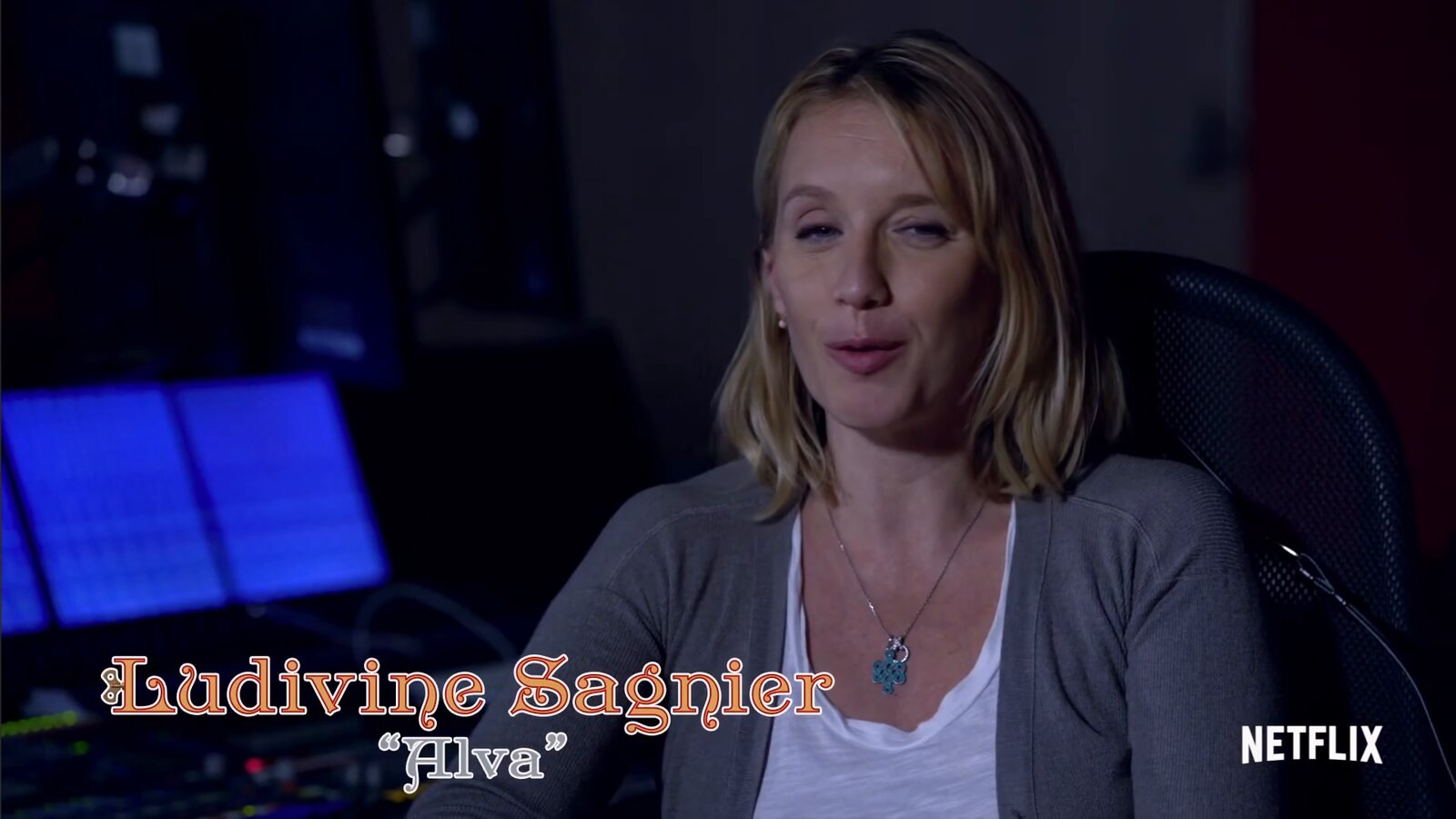
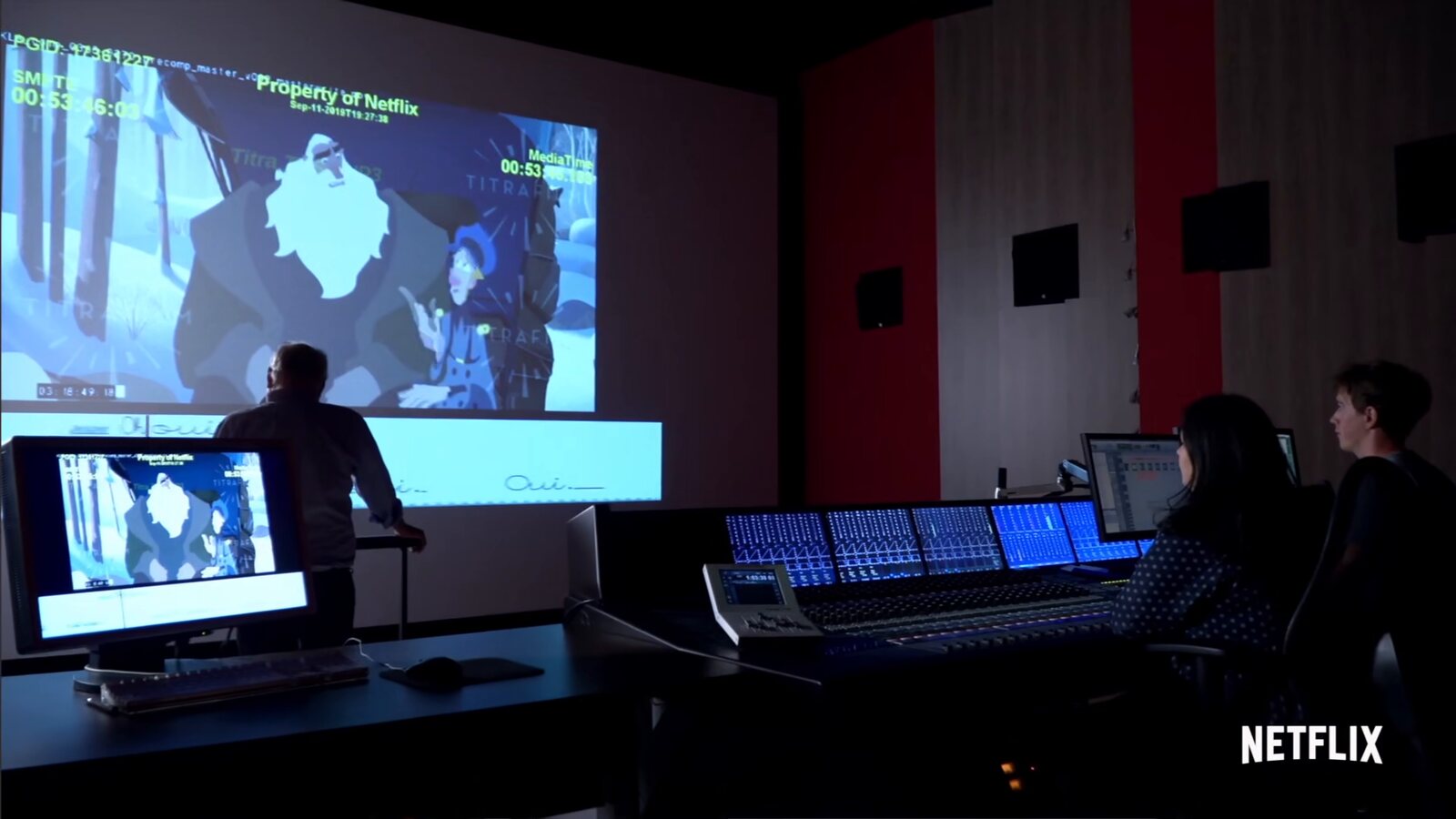
Ludivine Sagnier, the French voice of Alva, in the same making-of. Image: Netflix France, CC BY 3.0, via Wikimedia Commons
Whether that’s legally or politically doable is another matter, and I’m not going to pretend to know how French regulators would weigh it. But it’s the right question. CineAlliance, which tracked the reactions, says the sector also wants the same kind of safeguard extended to private broadcasters and to the international platforms that don’t rely on public money at all. Good luck to them. They’ll need it, and a very patient lawyer.
Why actors outside France should care
If you voice e-learning in Ohio or commercials in Melbourne, this can look like a French family argument. It isn’t. Public film and TV money exists in a lot of countries, and almost all of it pays for sound at some point: dubbing, narration, audio description for blind and partially sighted viewers. Every one of those funds will eventually face the same question the CNC just answered: do we pay for a synthetic voice with taxpayers’ money?
France has shown you can answer it in a sentence or two of rules and an eligible costs list. It didn’t need a commission, a white paper and a three-year consultation. It needed someone to decide that public money buys human work. If you belong to a union or an association, this rule is the easiest thing in the world to forward to whoever writes your country’s grant guidelines, with a short note that says “this, please.”
And for the platforms and distributors who aren’t covered? The French sector’s own phrase is the best summary. It’s a first step. The next one is the one that will actually decide how many French voice actors still have a booth to walk into in five years.
So yes, a cheer for the CNC. A small one, though, because the hard part starts now. Your move, everyone else.
This is an opinion piece. Sources: franceinfo Culture with AFP, November 11, 2026 (statement by Les Voix and ATAA); CineAlliance, November 11, 2026; Juris Métiers on CNC deliberation 2026/CA/28, November 1, 2026; earlier Voice Over Herald reporting. Quotations from French sources are translated by Voice Over Herald. Images: Netflix France, from its making-of of the French dub of Klaus, CC BY 3.0, via Wikimedia Commons.
Lee este artículo en español: Opinión: Francia solo financiará doblajes hechos por personas. La puerta más grande sigue abierta
Know something about this story, or spotted an error? Tell the newsroom.