

She Thought She Was Voicing a Phone Menu. Six Years Later, Susan Bennett Heard Herself as Siri
In July 2005 an Atlanta jingle singer spent a month in her home booth reading sentences that made no sense, for a client who never said what they were for. Six years later a colleague emailed: “Isn’t this you?” Susan Bennett was Siri. Her story is the clearest lesson any working voice actor will get on what a recording contract can do.
You’ve probably heard Susan Bennett without knowing it: at Delta’s gates in Atlanta, on GPS units and on countless company phone menus. For two years she was also the original American voice of Siri, the assistant Apple launched on the iPhone 4S on 4 October 2011.
Apple has never said so. But Bennett went public in 2013, and an audio forensics expert hired by CNN, Ed Primeau, compared her voice with Siri’s and called it “a 100% match.” What makes her worth hearing isn’t the fame. She got there the way most of us get work: a steady run of commercials, jingles and IVR sessions, booked from home, with one contract she didn’t think twice about.
Hear the voice: Susan Bennett explains how she became Siri and how voiceover works. Video: Vox, on YouTube
The jingle singer who read the copy
Bennett grew up in New England, sang her way through Brown University and toured as a backup singer for Burt Bacharach and Roy Orbison. Voiceover wasn’t on the plan. “Growing up, I had no concept that you could actually make a living with your voice,” she told The Hustle.
The break came by accident in the 1970s, at Doppler Studios in Atlanta. She’d just sung a jingle when the voice actor booked for the ad didn’t turn up. The studio owner, she told CNN, looked round and said: “Susan, come over here. You don’t have an accent. Go ahead and read this.” She did, and then she did the sensible thing. “The job went well and I decided to get a voice acting coach and an agent.”
One early job set the tone for the rest of her career. A local bank hired her to sing as Tillie the All-Time Teller, the friendly face it put on one of the first cash machines, because customers didn’t trust a computer. “I began my career as a machine many years ago,” she said. From there it was commercials for Coca-Cola, McDonald’s and IBM, the Delta gates, and a lot of the phone menu work that the industry calls IVR.
A month of nonsense, four hours a day
By the early 2000s IVR had changed. Voice actors were recording raw material for text to speech engines that cut speech into tiny pieces and glued it back together, a process called concatenation. On one job she even wore a laryngograph, a strap that measures the vocal folds, to keep her delivery consistent.
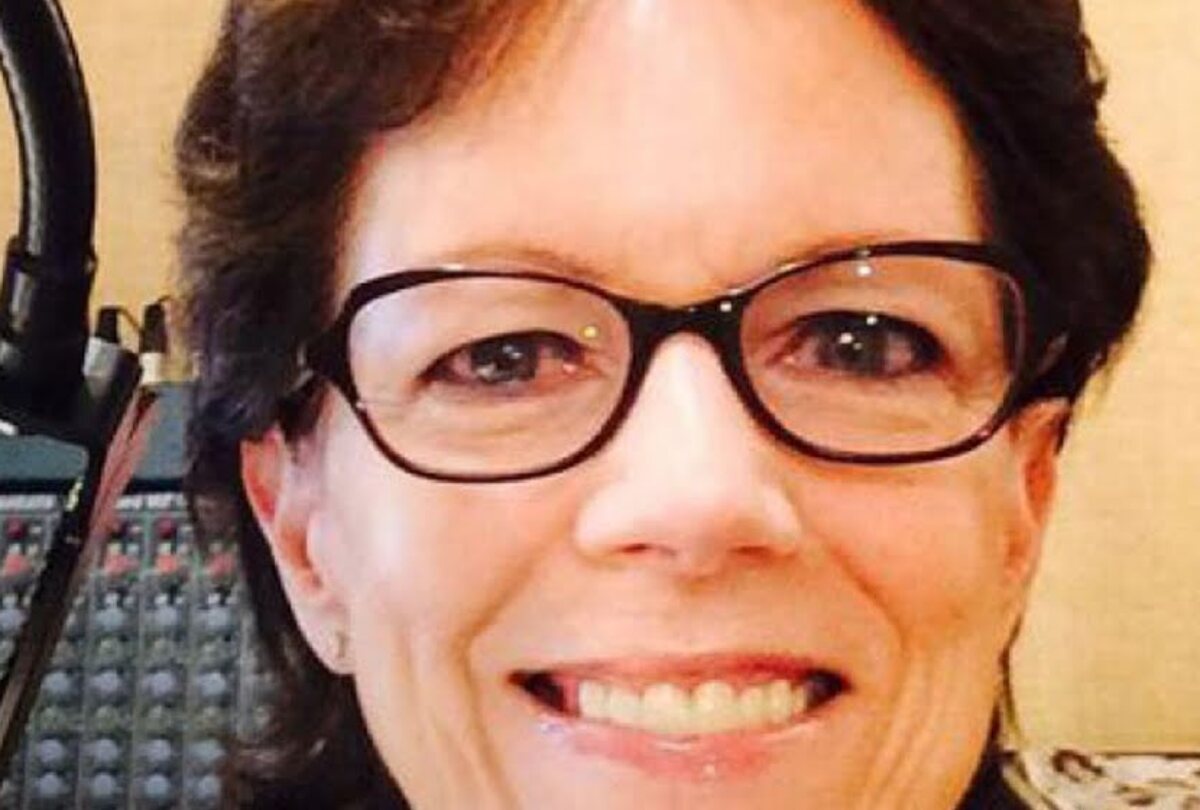
Image: Oprah Winfrey Network, on YouTube
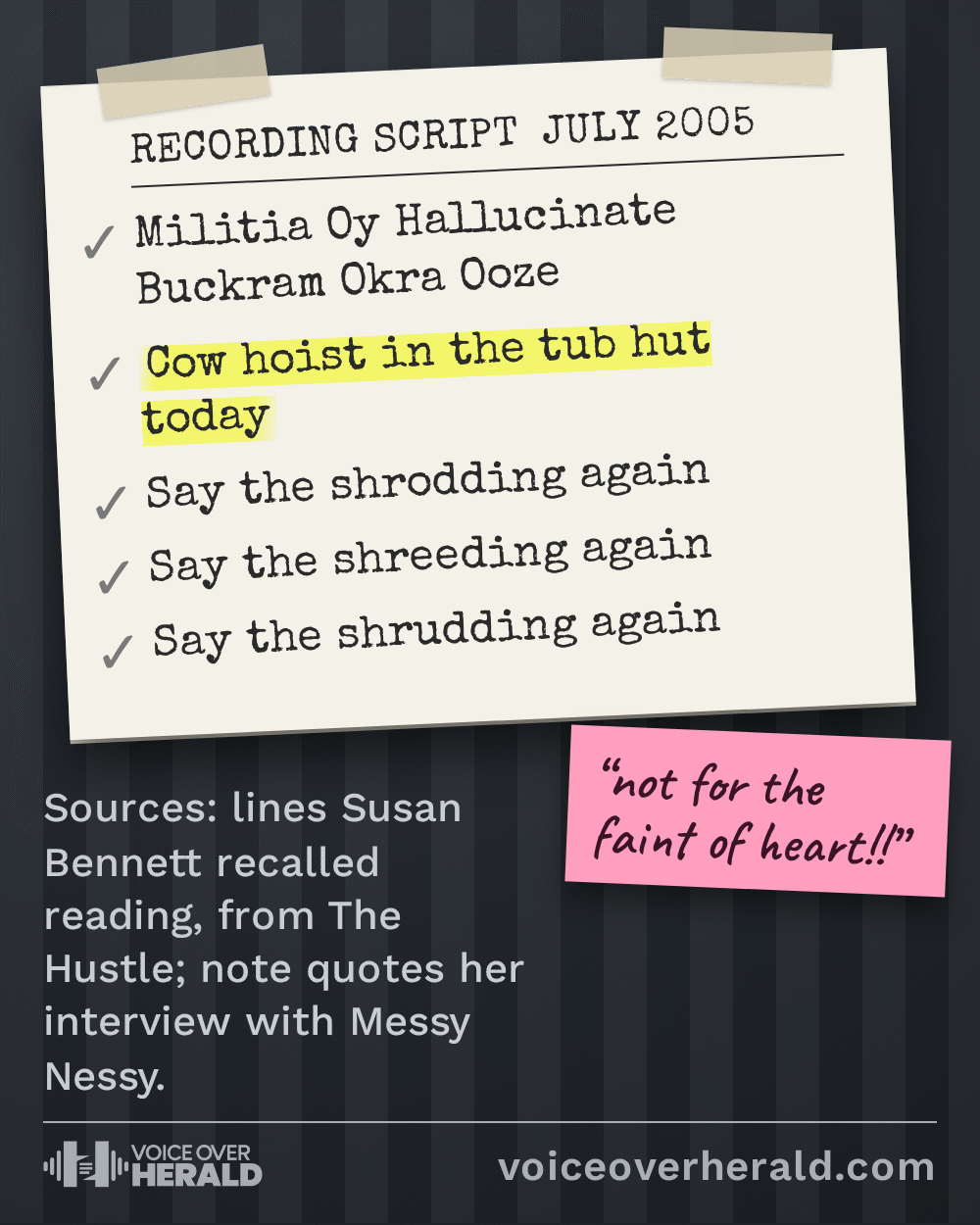
In June 2005 she signed with ScanSoft, a speech software company, and in July she went to work in her own booth. “I recorded four hours a day, five days a week for the month of July,” she told Vox. “That’s a long time to be talking constantly.”
 VoiceEditSuiteThe audio editor that learns how you breathe.Auto Clean Up keeps the best take of every line, cuts false starts and retakes, and quietens breaths the way you would.See how it worksLearns from numbers, never your audio. Never used to train AI.
The scripts were written to capture every sound combination in English, not to mean anything. The hard part was sameness. “These sentences had to be read very, very consistently. They had to have the same pitch, same tone, same pacing,” she said. “It was so tedious and so tough on the vocal cords.” She was paid by the hour, like any other session, and moved on to the next job.
Anyone who’s done long IVR or e-learning days will recognise her coping strategy, and its side effect. “For me, I get extremely bored … So I just take breaks. That’s one of the reasons why Siri might sometimes sound like she has a bit of an attitude,” she told CNN. “Those sounds might have been recorded the last 15 minutes of those four hours.”
“Isn’t this you?”
She didn’t own an iPhone 4S, so she didn’t hear it first. “A colleague e-mailed me [about Siri] and said, ‘Hey, we’ve been playing around with this new Apple phone. Isn’t this you?'” She pulled up Apple’s demo videos online. “Oh, I knew,” she said. “It’s obviously me. It’s my voice.”
It wasn’t a happy surprise at first. “I never worked for Apple. They never contacted me, and I never got paid,” she told The Hustle. “I was kind of appalled when it first came out,” she said, “especially since I didn’t get any kind of compensation for being on millions, and millions, and millions of devices.” Speaking to the newsletter Beck on Tech in 2025, she put it plainly: “I got paid for the actual recordings (an hourly fee), but not for my voice being on millions of iPhones.”
She waited two years before going public, worried about typecasting, the legal side and losing the quiet life voice work allows.
What tipped it was a 2013 video that left some viewers thinking another voice actor was Siri. “It seemed like everyone was clamoring to find out who the real voice behind Siri is, and so I thought, well, you know, what the heck? This is the time,” she told CNN. Looking back, she told The Hustle: “In retrospect, I wish I had ‘come out’ earlier.”
The contract she’d read differently now
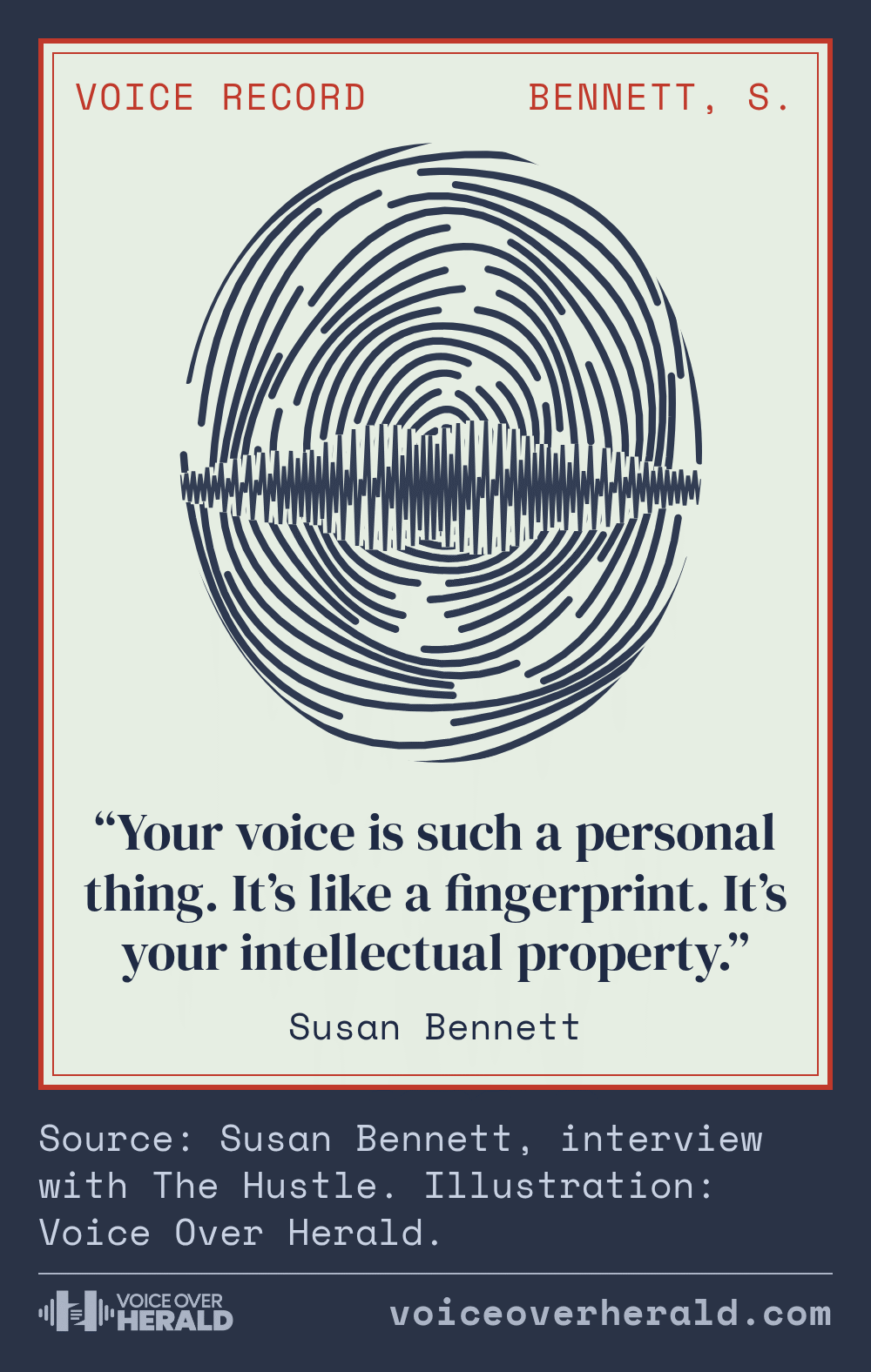
Here’s the part every voice actor should copy into a notebook. “When I signed this contract with ScanSoft, they didn’t say what it was for. I basically just gave them permission to use my voice anywhere,” she told The Hustle. “It was a combination of being misled and being naive. I just never imagined that technology could take my voice and make it say anything.”
She isn’t bitter about it. “I’m not blaming anyone,” she said, adding that “we signed a contract to do the work, but I don’t think we had any clue of the ramifications.” She also says the early Siri voices had no non-disclosure agreements, which is why they could speak up at all, and that the voices that came later are paid to stay anonymous.
Twenty years on, her 2005 sessions look a lot like today’s voice data and AI training jobs: odd scripts, an hourly fee, a vague line about use.
- What is it for? Ask what the recordings will build and where they’ll be heard.
- For how long? Look for a term. “In perpetuity” means forever.
- Can it say new words? A text to speech or AI clause lets your voice say things you never recorded.
- Can you talk about it? Check for a non-disclosure clause before it goes in your bio.
- Is the fee for the session or the use? An hourly session fee and a usage licence are two different things.
After Siri: typecast, then the stage
Being Siri changed her bookings. “I used to do a lot of advertising work, providing all kinds of different voices for radio and TV commercials, but now, after Siri, I’ve been a bit typecast into doing a lot of announcer or IVR (Interactive Voice Response) voices,” she told Messy Nessy in 2020. Her dream role? “A silly character…one with a quirky, cartoony voice!”
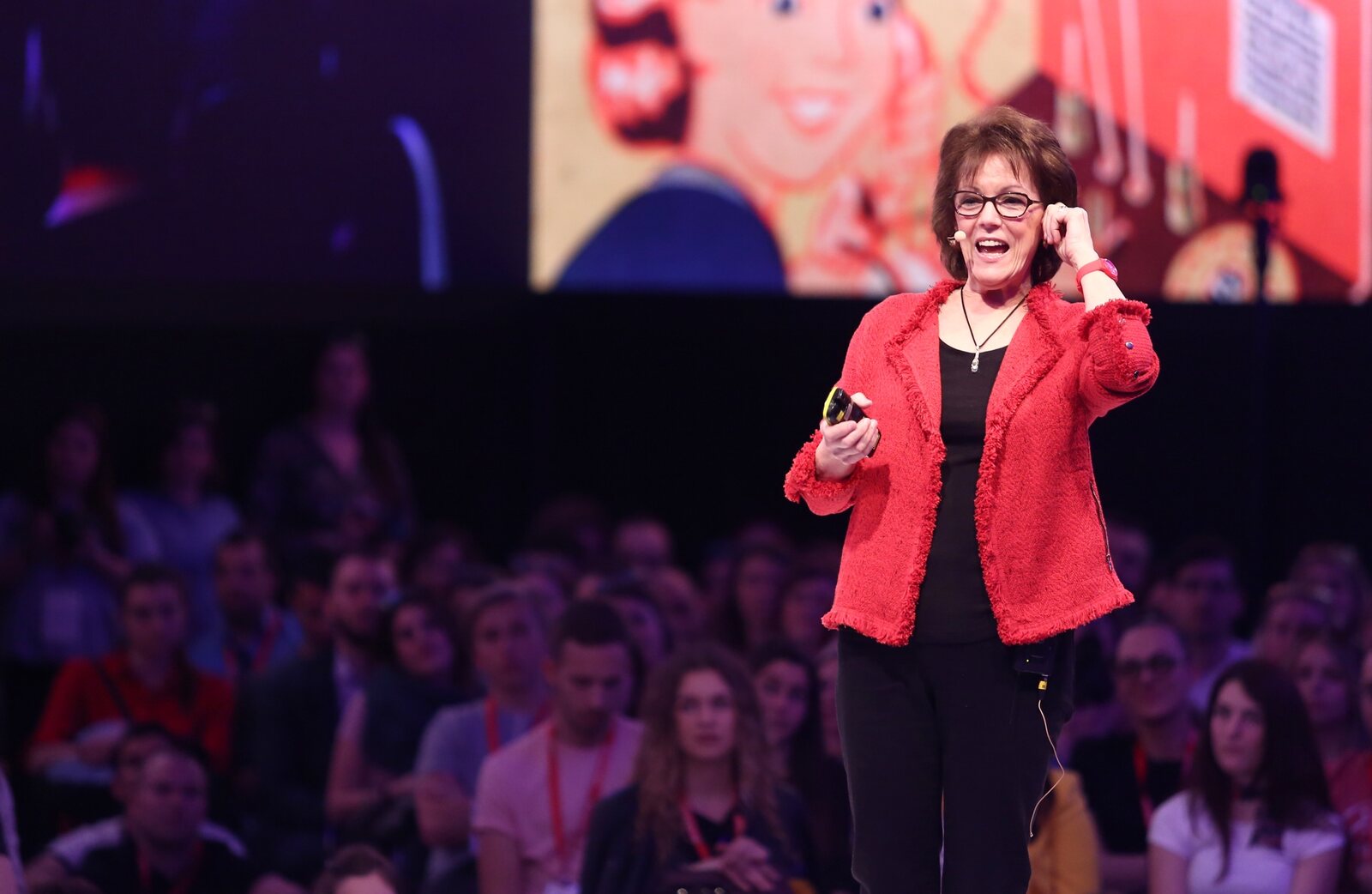
It also opened a door she hadn’t expected. Apple co-founder Steve Wozniak, she writes on her own website, “was a huge inspiration for my speaker career. In fact, he’s the one who encouraged me to pursue it (in 2013).” She now gives keynotes and hosts events, and says most of her work is Siri talks, though she still records voiceovers.
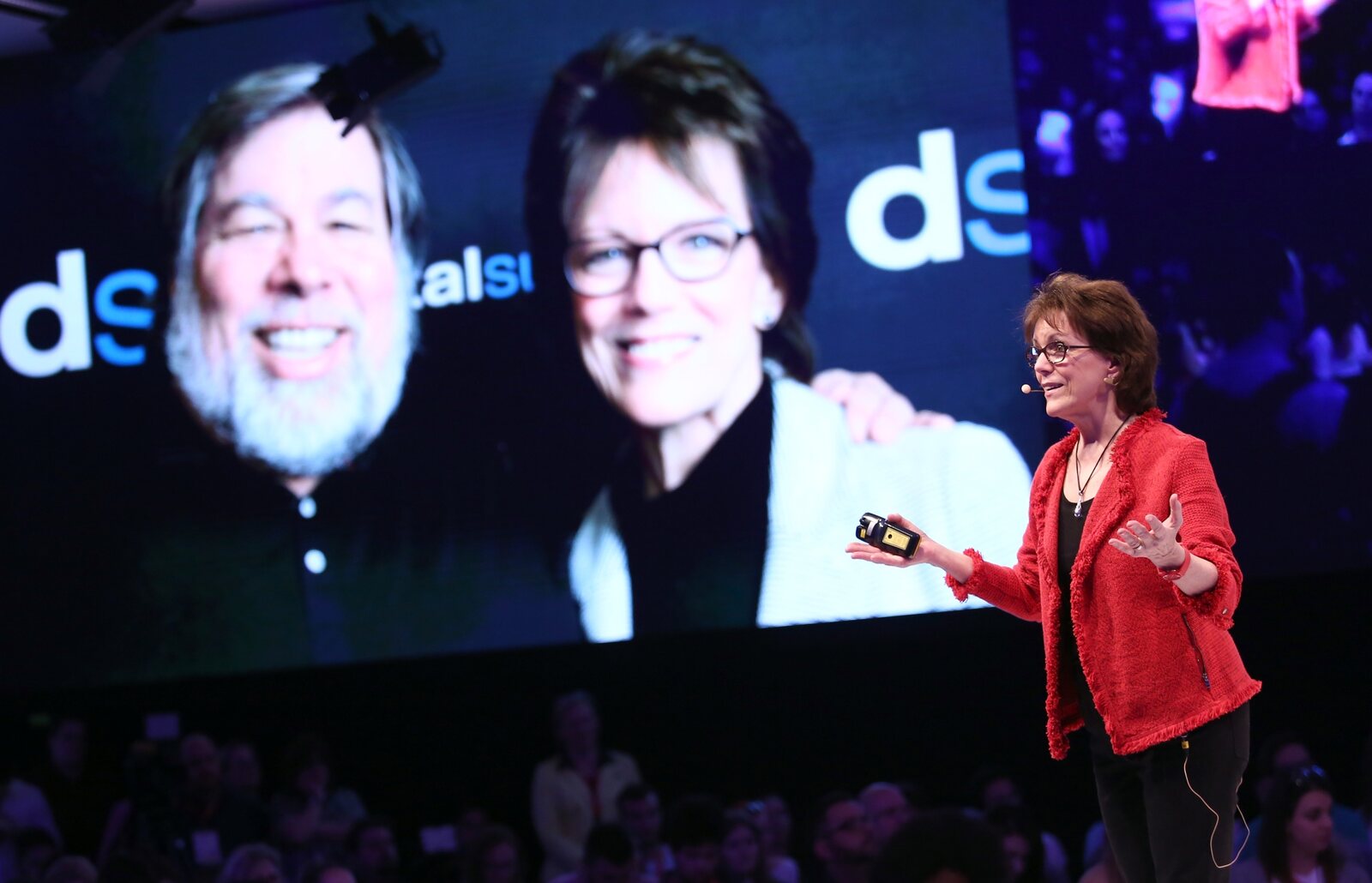
Image: Susan C. Bennett
Apple’s iOS 7 update in September 2013 brought new Siri voices, and she says the voice moved on for good a few versions later. She takes that in her stride. “Today’s Siri is totally different. She’s a millennial,” she told The Hustle. And she has never been tempted to chat with her old self: “I did have Siri on my iPhone but did not speak to myself. I talk to myself enough as it is.”
Her advice if you’re starting out
Ask Bennett how to get into the business and the answer is practical. “You have to be able to read cold, read quickly (so many :60 commercials are really :65 so you have to make it work!), and learn to act with your voice,” she told Messy Nessy. “The way to do that is to take classes, get a voice coach….I even suggest doing improv. Improv helps anybody do any kind of job, because it makes you think on your feet and immediately address a situation.”
For IVR marathons she adds one more warm-up. “As with any other voice job, I do some vocalizing, but for IVR work, which is really long and tedious…you have to prepare mentally.”
And her own summary of the Siri years would fit on a sticky note above any booth mic. “It ended up being a huge life lesson,” she said. “But ultimately, it opened up doors I never would have imagined.”
Sources: CNN, Jessica Ravitz, “I’m the original voice of Siri” (4 October 2013); The Hustle, Zachary Crockett, “A Q+A with Susan Bennett, the original voice of Siri”; Messy Nessy, “20 questions with the real woman who voiced Siri” (12 March 2020); Beck on Tech, “Interview with the Original Voice of Siri” (2025); Vox interview (2015) as reported by iPhone in Canada; susancbennett.com. Images: Susan C. Bennett, Oprah Winfrey Network. Video: Vox.
Lee este artículo en español: Creyó que grababa un menú telefónico. Seis años después, Susan Bennett se escuchó como Siri
Know something about this story, or spotted an error? Tell the newsroom.