Equity Puts the UK’s First Film and TV AI Protections to a Vote. Voiceover Artists Get a Ballot Too
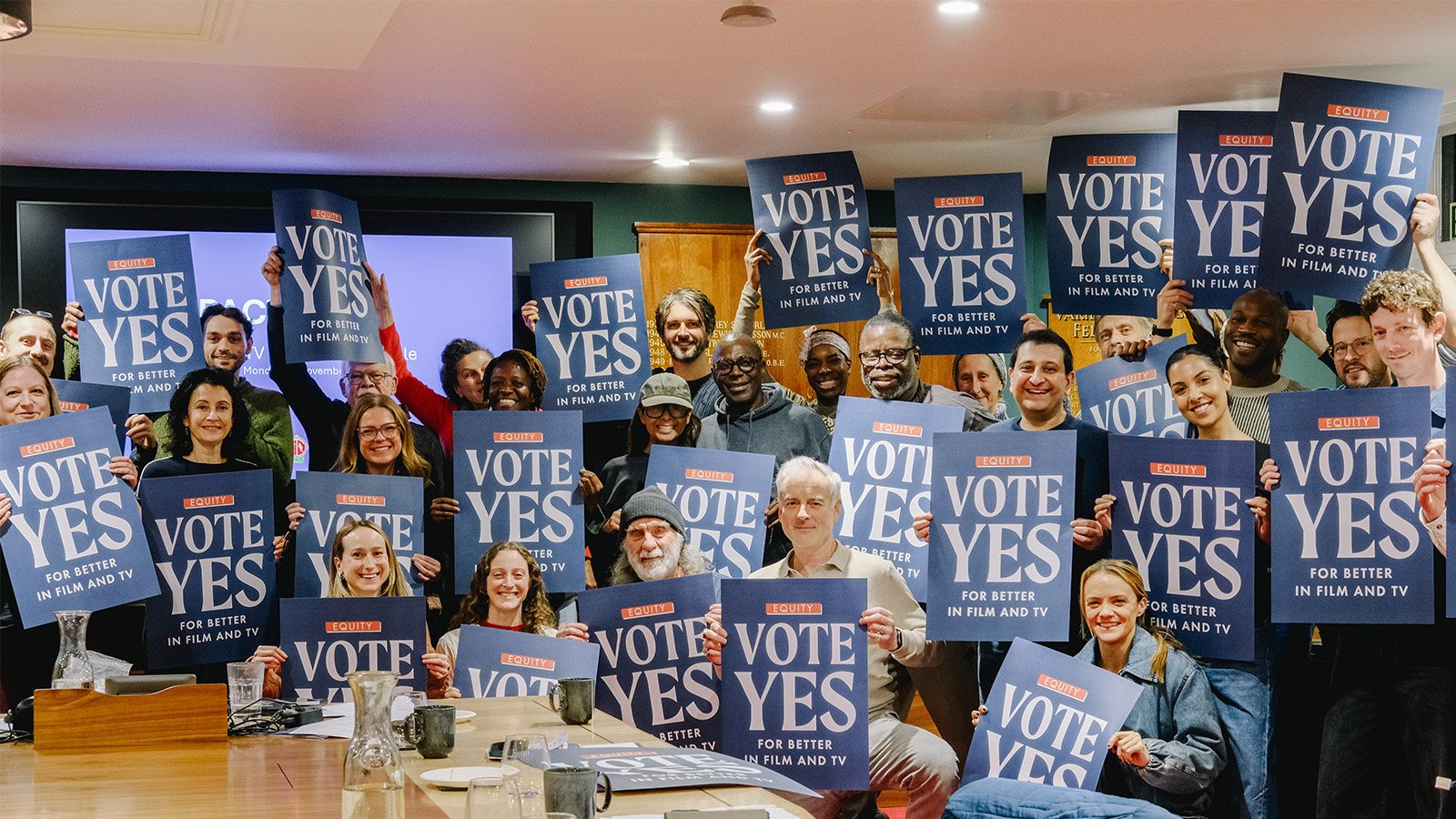
Almost 8,000 performers who work in British film and television can now vote on a three-year deal that Equity says carries the first collective AI protections the UK screen industry has ever had. Voiceover artists are on the list. The ballot opened on Monday 16 November and closes at noon on Monday 30 November.
The union announced the offer on Monday after what it calls a challenging multi-year set of negotiations with Pact, the trade body for independent film and TV producers. The agreement covers featured artists and stunt performers, and it touches almost every part of the job: pay, the fees paid when shows are sold on, self-tapes, AI and conditions on set.
Equity is recommending a yes vote. If members agree, the deal runs from January 2027 to 31 December 2029.
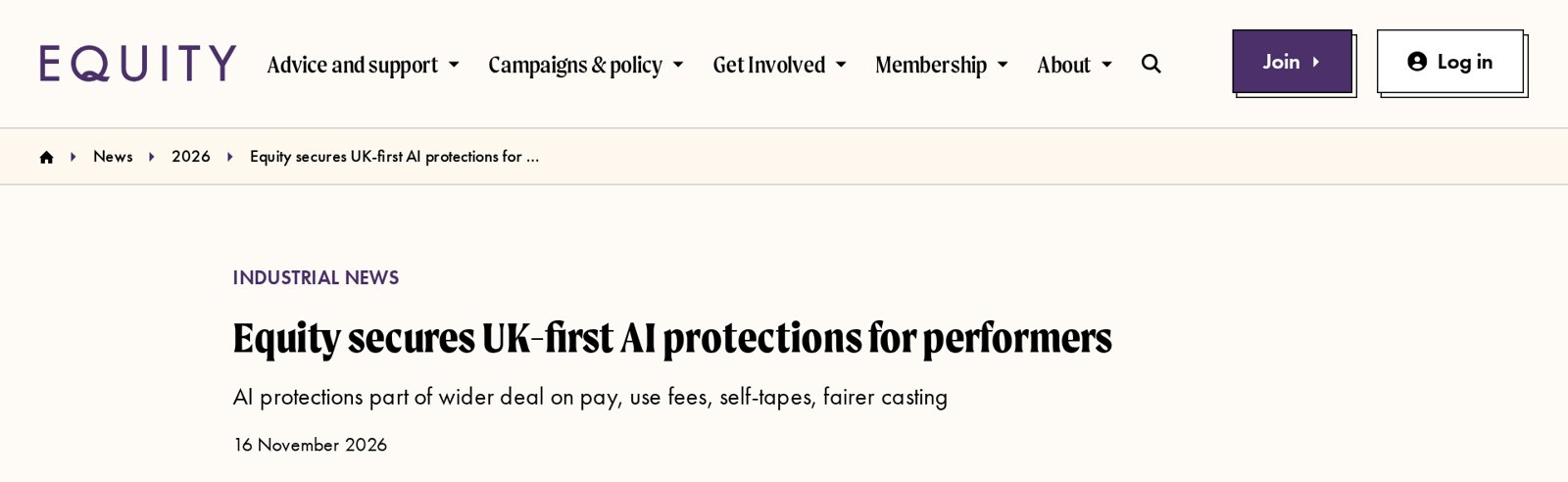
Equity's announcement, as published on equity.org.uk on 16 November 2026. Image: Equity
Equity general secretary Paul W Fleming didn’t hold back. “The result is groundbreaking,” he said. “We’ve achieved the best AI provisions in the business, protecting performers and ensuring that human performance is valued and prioritised across the industry.”
Who gets a vote, and why voice actors should read it
For the first time, Equity is balloting everyone who has worked under either of the two Pact agreements, the Cinema Films Agreement and the TV Agreement, since they were last negotiated in 2021. The union lists the voters as “actors, dancers, stunt performers, stunt coordinators, puppeteers, and voiceover artists” working across film and television.
That matters if you’ve voiced an animated series, a narration or a role in a British feature in the last five years. You may have a vote and not know it. Equity says anyone eligible should already have an email with voting instructions, and that anyone who thinks they’ve been missed can write to productions@equity.org.uk.
- Ballot dates. Open now, closes at 12 noon UK time on 30 November.
- Who votes. Performers on the Pact film and TV agreements since 2021, voiceover artists included.
- AI. Equity says the terms protect a performer’s digital likeness and match the standard set by SAG-AFTRA.
- Self-tapes. At least 72 hours’ notice, six pages at most, no reader required.
- Length. Three years, January 2027 to December 2029.
What the AI terms say, and what we can’t see yet
Here’s the catch for anyone outside the union: the full offer sits behind Equity’s member login, so the exact clauses aren’t public. What Equity has published is the headline. It describes “comprehensive protections for artists over their digital likeness and vital safeguards that protect human creativity.”
On its campaign page the union goes further. It says the improved offer “now meets the global standard set by our sister union SAG-AFTRA.” That’s the American union whose leaders were talking about voice replicas and consent on stage at Web Summit last week.
The AI terms didn’t come easily. Equity says they were “only secured after Equity members voted 99% in favour of taking industrial action and refusing to be scanned on set” in an indicative ballot last December. Its campaign page puts the figure at 99.6%.
Equity calls these the first ever collective AI protections for performers in UK film and television. For voice performers, whose recordings are the easiest thing in the building to copy, a likeness clause that covers the voice as well as the face is the part to look for when the full text reaches members.
Pay, use fees and the 15-year wait
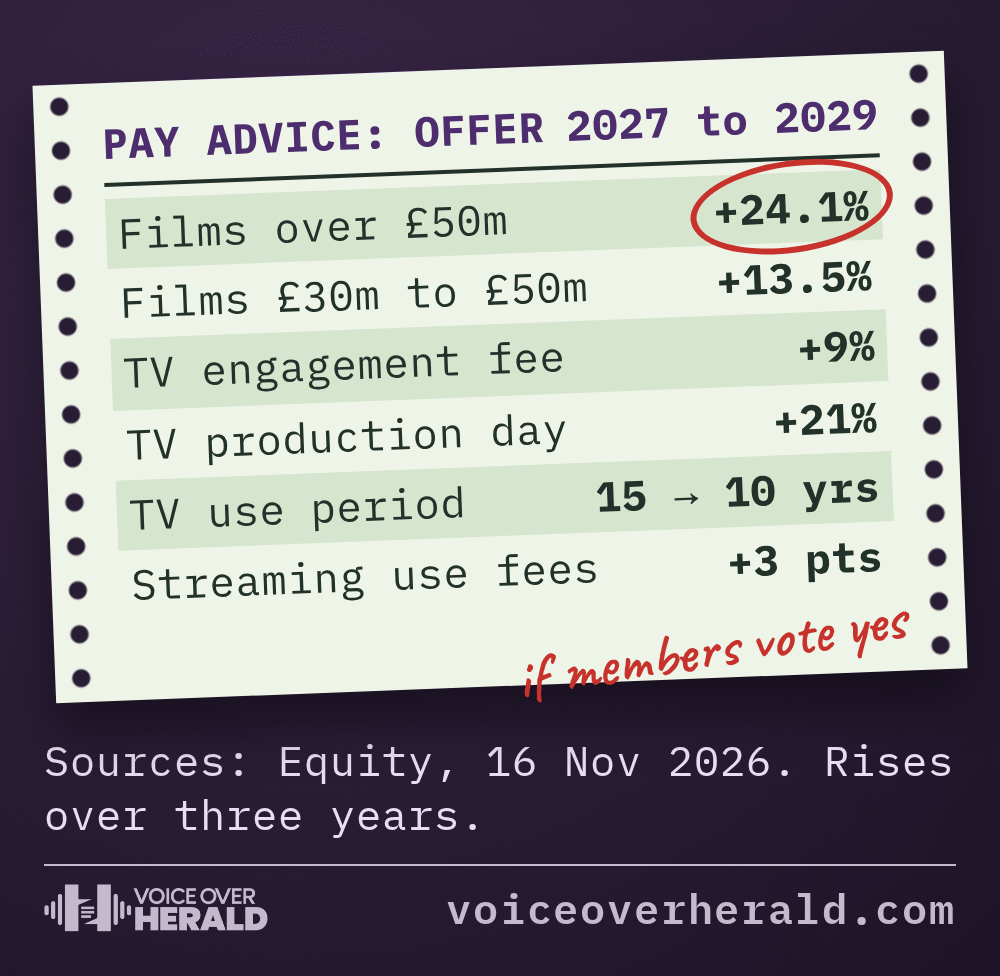
The money is the part most performers will feel first. Minimum fees on films budgeted over £50m rise 24.1% across the three years, with 17% of that in the first year. In television, the deal adds three percentage points to streaming use fees, which Equity says works out at real increases of 16% to 50% depending on how a show is financed.
The quieter change may matter more over a career. Use periods in TV drop from 15 years to 10, so the secondary payments that come when a show is sold on or keeps streaming reach performers sooner. Fleming said it means performers will be “sharing in the success when shows are sold on or continue to be watched years after their first release.”
Self-tapes: 72 hours, six pages, no reader
Anyone who has been sent a self-tape at 6pm with a 10am deadline will read this section twice. Casting directors working under the deal must give at least 72 hours’ notice, not counting weekends and bank holidays, and can ask for six pages at most.
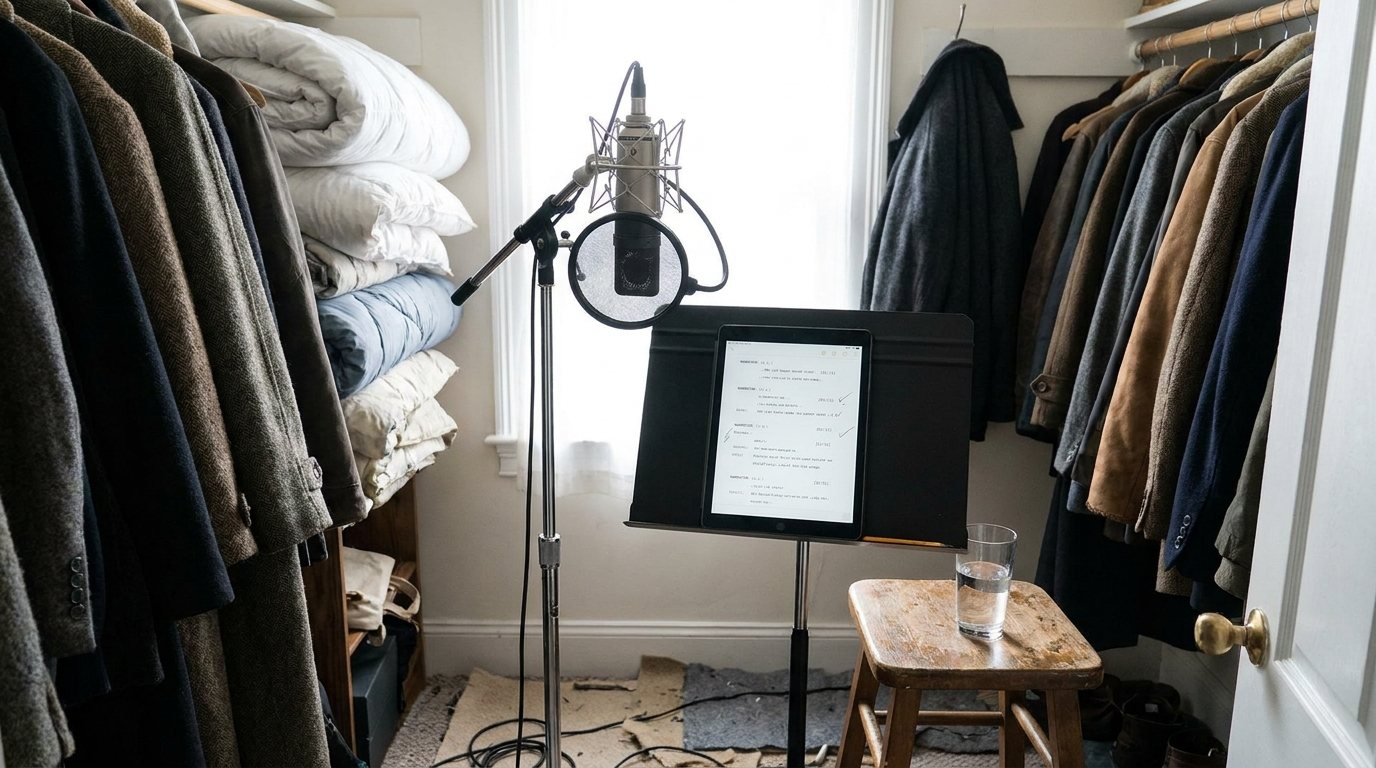
“Equity members told us they were fed up with excessive asks on self-tapes,” Fleming said. The new rules also drop any requirement for a reader, which he called a respectful brief to professionals “often balancing portfolio careers and caring responsibilities alongside auditioning for roles.”
The deal also writes in hair and make-up provision for performers of every ethnicity, a commitment to cast disabled artists in disabled roles, mandatory intimacy coordinators and new bullying and harassment principles.
What happens next
The vote runs for two weeks. If it passes, the new terms start in January. Equity is also renegotiating its separate side letters with Apple, Netflix and Disney+, and says new terms will reach contracts across film and TV over the next few years.
 VoiceEditSuiteIt edits like you would, and it gets better every file.Every fix you make in the editor teaches Auto Clean Up more, so each file comes back sounding like you edited it yourself.See how it worksLearns from numbers, never your audio. Never used to train AI.
For voice actors elsewhere, the vote is worth watching. A yes would put AI consent terms into a British screen contract for the first time, and other unions bargaining with producers will be able to point to it.
Read the union’s own summary of the offer on the Equity website.
Sources: Equity, “Equity secures UK-first AI protections for performers” (16 November 2026); Equity, “PACT: Demand Better in Film and TV” campaign page (November 2026 update). Image: Equity.
Lee este artículo en español: Equity somete a votación las primeras protecciones frente a la IA del cine y la TV británicos. Los locutores también votan
Know something about this story, or spotted an error? Tell the newsroom.