
Geralt’s Polish Voice Is Back After a Stroke. CD Projekt Used AI to Match Him to His 2015 Self
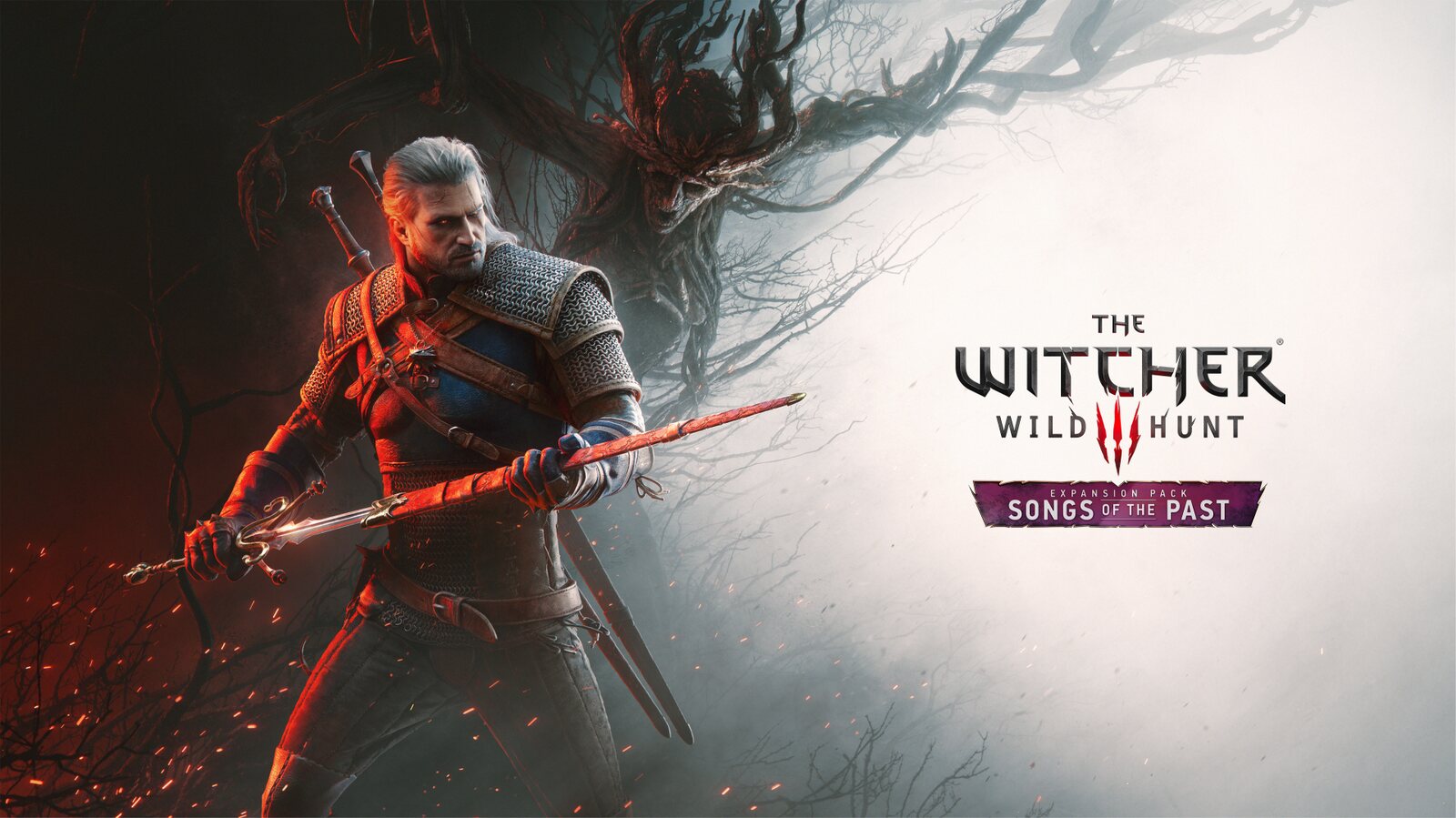
Jacek Rozenek has been Geralt of Rivia in Polish since the very first Witcher game, and he’s back for Songs of the Past, the new Witcher 3 expansion due in 2027. A stroke in 2019 left his voice lower and rougher, so CD Projekt Red is running his new lines through AI to match the Geralt players heard in 2015. He agreed to it. He also says he hasn’t listened to the result.
The studio laid out the whole process to Game File, the games newsletter run by Stephen Totilo, in a story published on 11 November. The short version: Rozenek still performs every new line himself, and the Ukrainian voice company Respeecher then reshapes the sound so it sits next to his decade-old recordings without a jolt.
That last part is the whole problem. Songs of the Past takes place during the main Witcher 3 story, and its new dialogue doesn’t stay politely inside new quests. CD Projekt’s localization producer Mikołaj Szwed told Game File the expansion also adds “reactions, battle cries, one-liners” that play in parts of the map players already know, so a 2026 Geralt could bark a line seconds after a 2014 one.
Hear the voice: Jacek Rozenek, Geralt’s Polish voice, speaks on camera at the end of the official tenth anniversary video, in Polish (from 3:19). Video: The Witcher, on YouTube
Totilo heard Rozenek’s untouched new takes. In PC Gamer’s account of the report, he describes the raw voice as one that “sounds deep and gravelly, noticeably rougher than his recordings for the original game,” while the AI-adjusted version comes much closer to how Rozenek sounded ten years ago.
Ten thousand lines, then a stroke
Rozenek recorded some 10,000 lines for The Witcher 3 in 2014, according to Game File, and stayed on for both expansions, Hearts of Stone in 2015 and Blood and Wine in 2016. Game File says his Polish Geralt won praise that rivaled Doug Cockle’s celebrated English one.
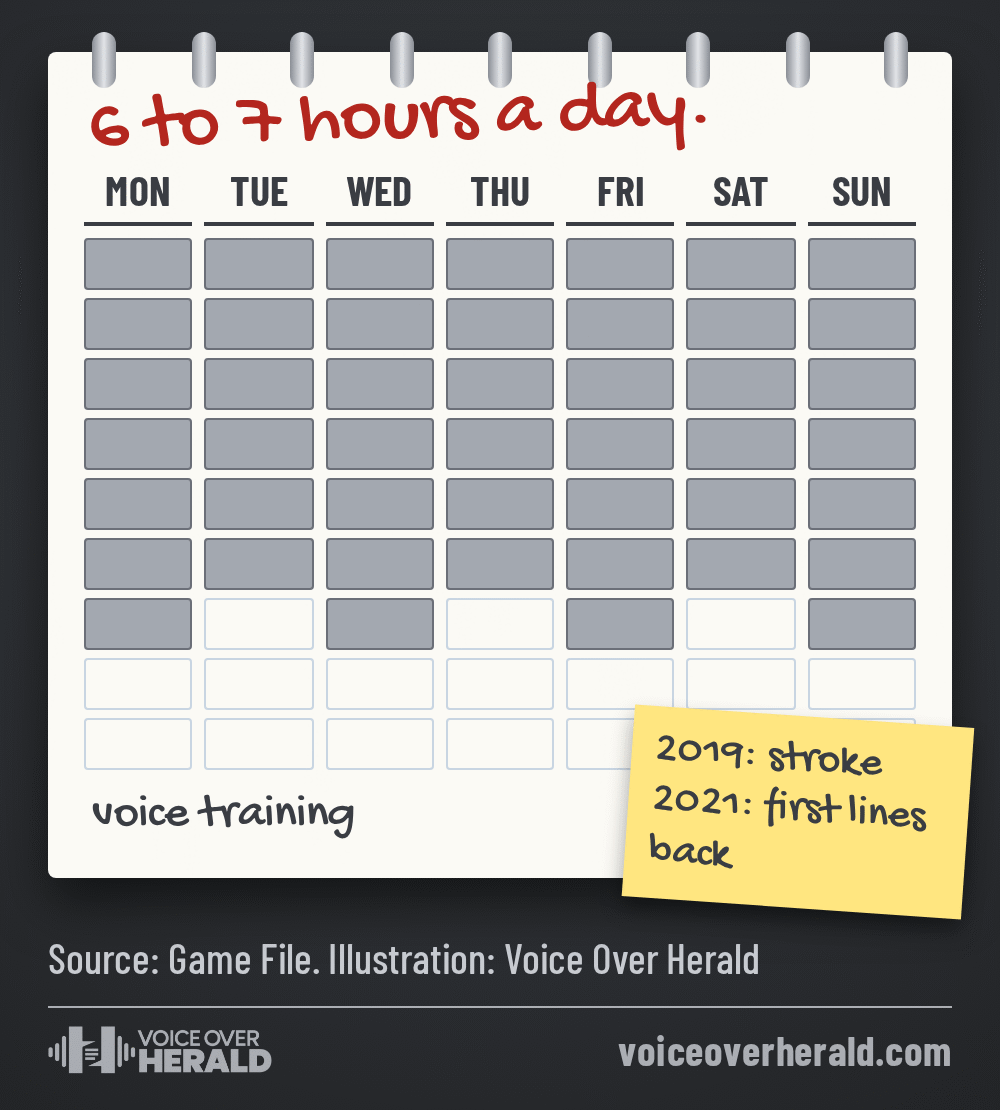
In 2019 he had a stroke. For months he couldn’t speak at all. By 2021 he was well enough to record a handful of lines for a quest in the game’s next-gen update, which came out in 2022, and he told Game File what that cost him: “I was so exhausted after this recording.”
The road back was long. He trained his voice for six or seven hours a day to get it into acting shape again, and he joked that the recovery finally showed him what his character goes through. “Now I can understand what the Witcher’s work actually is,” he said.
The meeting that decided it
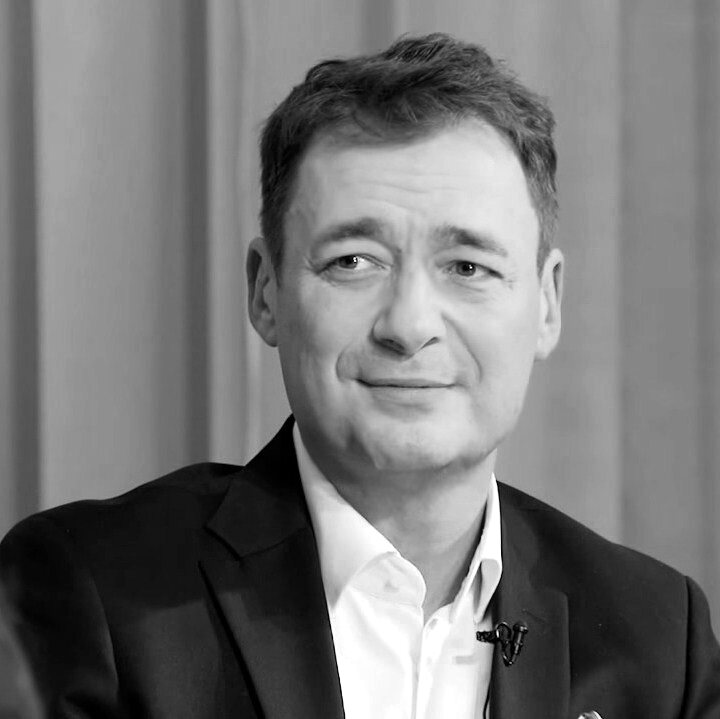
About a year ago, CD Projekt brought Rozenek into the studio before committing to anything. “We invited Jacek to our studios to kind of see how his voice sounds now,” Szwed told Game File. “It was important for us to see how much the voice of Jacek had changed, because of both the time and also because of his condition.”
It had changed. The voice was lower and gruffer, and the team worried players would hear Geralt flip between two different men from one scene to the next. With Rozenek’s blessing, the studio called a company it had worked with once before.
That earlier job was Cyberpunk 2077: Phantom Liberty. Miłogost Reczek, the Polish voice of Viktor Vektor in Cyberpunk and of Vesemir in The Witcher 3, died in 2021, and CD Projekt used Respeecher to recreate his voice for the expansion with his family’s blessing, as PC Gamer noted. This time the actor is alive, in the booth and on board.
“As close as possible to my voice from 12 years ago”
Rozenek sounds settled about it. “The point is that this voice should be as close as possible to my voice from 12 years ago,” he told Game File. “I have great trust…for the creators of this game.”
 VoiceEditSuiteNewAuto Clean Up now learns how you breathe.Learns from numbers, never your audio. Never used to train AI.See how it works
The acting is still his, and he says that part feels fine. “When it comes to the dynamics of the voice, when it comes to the acting aspects, I feel very good, really very good,” he said. “I can play this role. Of course, it’s very good that this voice will be matched.”
Respeecher trained its model on the lines Rozenek recorded for the original game. Dmytro Vasylets, a synthetic speech artist at the company, didn’t pretend it was a button press. “Getting there took dozens of hours, training models, going through the details with the CDPR team, and dealing with AI artifacts that never fully disappear,” he said, in remarks Kotaku carried. “The hardest part was Jacek’s emotional range: the half-tones, shouts, groans, anger, fear and laughter.”
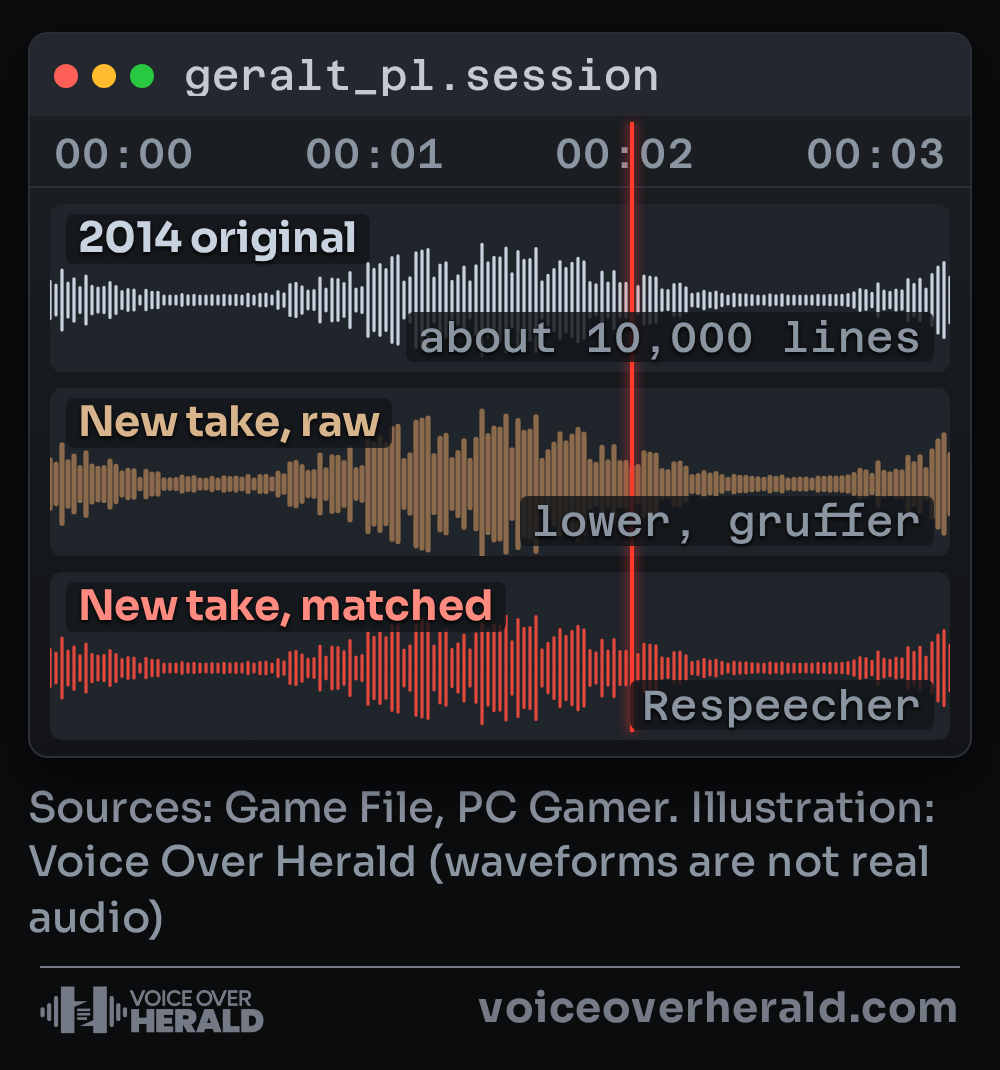
And the man whose voice it is? He hasn’t listened to his AI-matched Geralt, Kotaku reports, and he doesn’t sound in a hurry to.
A special case, not a template
CD Projekt is careful to frame this as a one-off. “As a person working with voice actors over all the regions in the world, this is a big concern,” Szwed said. He added: “I do think this is one of those ways where you can use AI ethically, with consent and also to do something good.”
He also drew two lines. The studio isn’t planning anything similar for Doug Cockle, who voices Geralt in English. And if Rozenek plays an older Geralt in a later game, his voice stays as it is now, because the change suits the character. “It’s more about this specific situation here, where we have both the voice from 12 years ago and from now next to each other,” Szwed said.
It lands in a busy few weeks for voices and AI. SAG-AFTRA members have just ratified animation contracts that stop producers using a digital replica to dub a performance into another language without the actor’s consent, and Jason Momoa’s German voice is suing Netflix after it told him it had trained AI on his voice. The Rozenek case is the rare one where every party, the actor included, says yes in public.
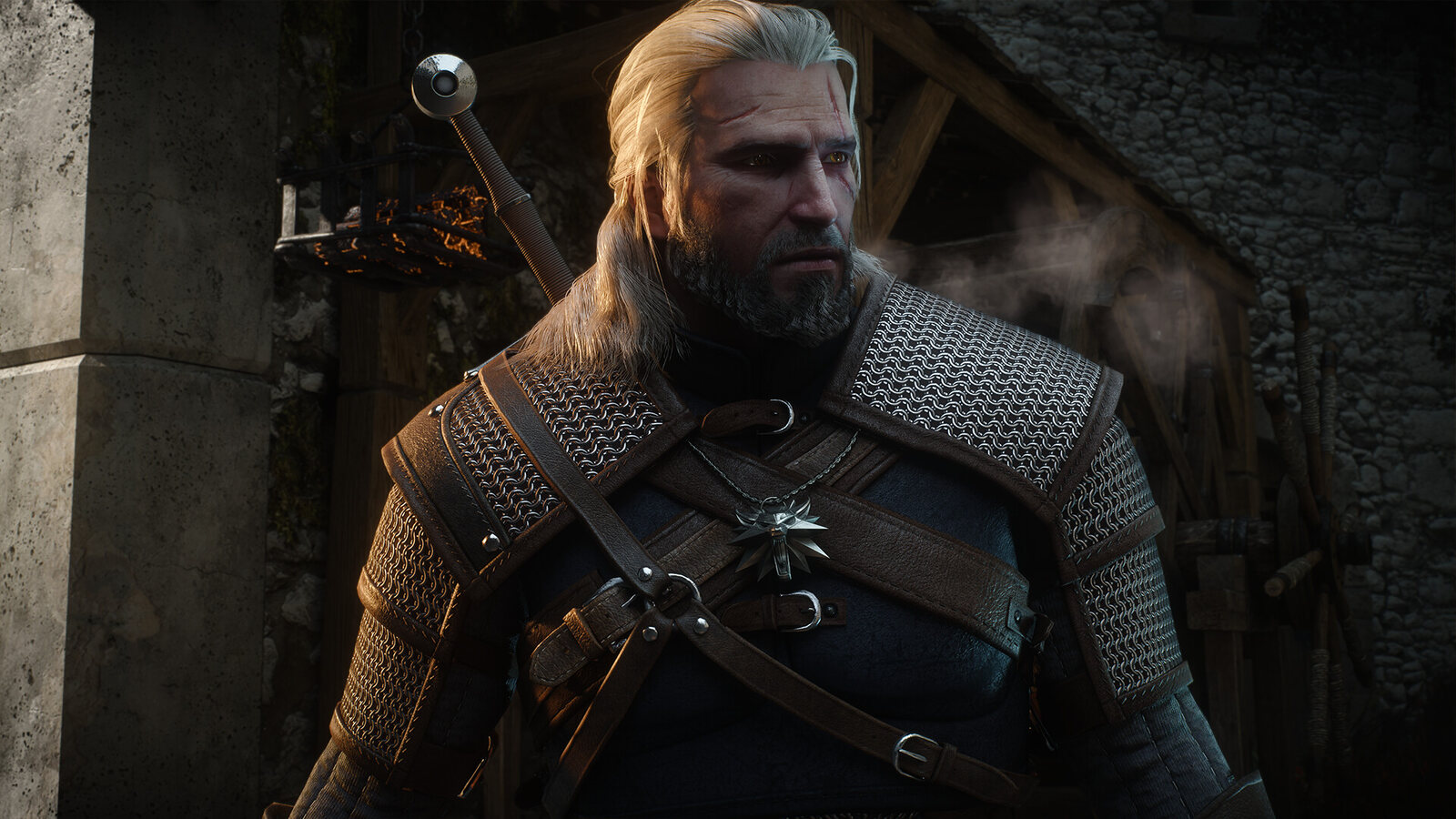
Image: CD PROJEKT RED
Marking the real voice first
Consent works when everyone can tell which recordings are the real ones. That’s the idea behind Voice Lock at The Voice Realm: once a voice actor switches it on, their demos carry an invisible watermark, and each one gets a dated certificate anyone can check online. It doesn’t hunt for clones. It proves which recordings are theirs, which is exactly the question a studio, a fan or a court asks first. The Voice Realm says it’s the world’s first voiceover marketplace to protect voice actors’ demos with an invisible watermark. You can read how it works on the Voice Lock page.
Rozenek’s 2014 recordings did that job for him here. They’re the reference the model learned from, and the yardstick every new line is measured against. Songs of the Past is due in 2027 on PC, PlayStation 5 and Xbox Series X|S, co-developed with Fool’s Theory, and CD Projekt says the fourth mainline Witcher game is set for 2028.
Sources: Game File (Stephen Totilo, 11 November 2026; Jacek Rozenek’s remarks were translated from Polish by Game File), Kotaku, PC Gamer, The Witcher official site (Songs of the Past announcement), The Witcher official YouTube channel. Images: CD PROJEKT RED; photo of Jacek Rozenek by Nowoczesna Firma S.A., CC BY 3.0, via Wikimedia Commons.
Lee este artículo en español: La voz polaca de Geralt vuelve tras un derrame. CD Projekt usó IA para igualarla con la de 2015
Know something about this story, or spotted an error? Tell the newsroom.