
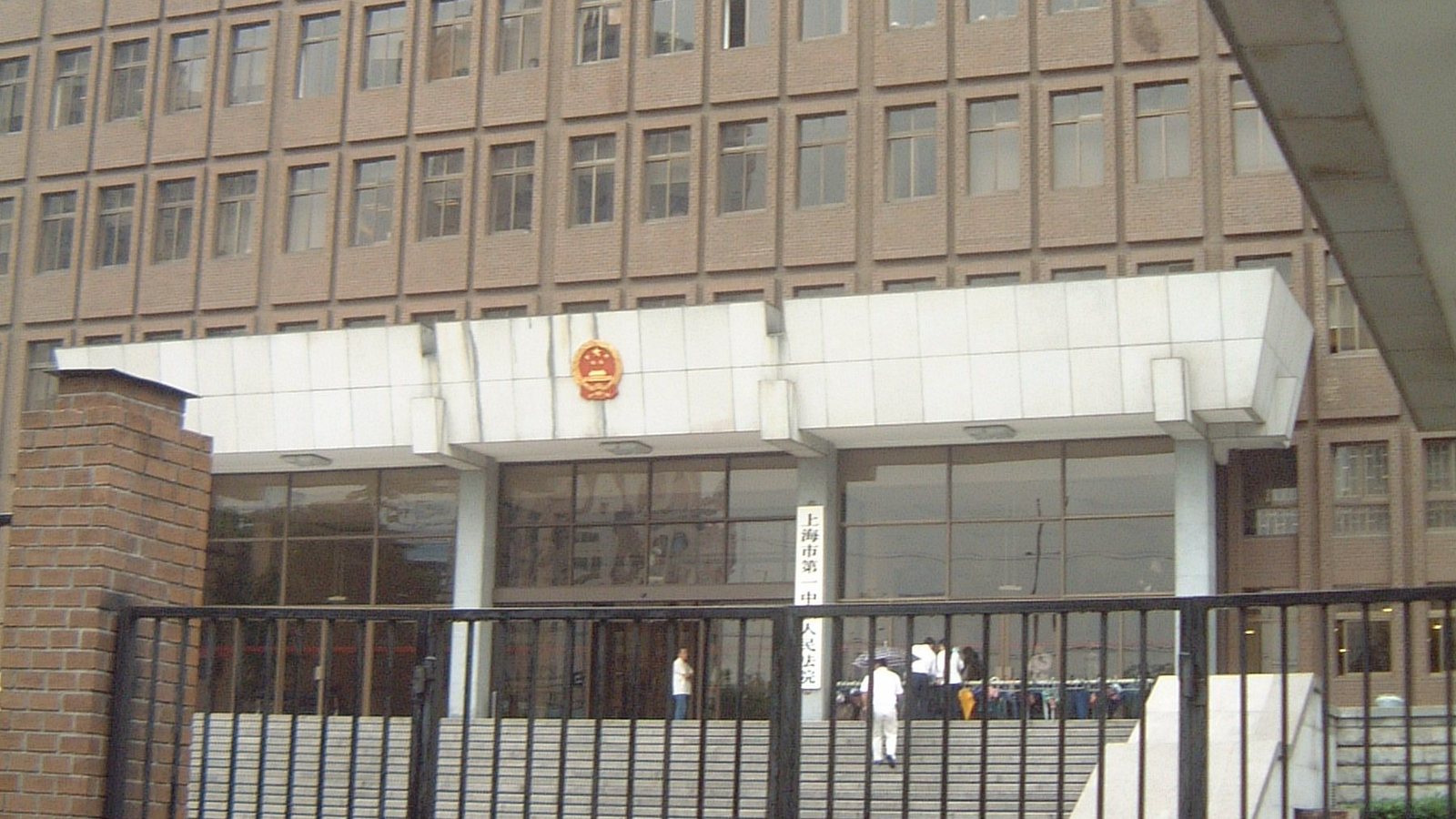
A Shanghai Voice Actress Beat an AI Clone of Her Voice. The Company Couldn’t Say Where It Came From
A voice actress in Shanghai heard a company’s online promotion speaking in what sounded like her voice. She had never worked for the company. On September 29, Shanghai’s No. 1 Intermediate People’s Court ruled in her favour on appeal and upheld 50,000 yuan in damages. The bigger news is how she won: the company said it couldn’t tell where its AI voice came from, and the court made that the company’s problem, not hers.
The court calls it Shanghai’s first case over a person’s voice rights and AI-synthesised speech. It came one day before a Tokyo court ruled in Kenjiro Tsuda’s case against TikTok.
A friend heard her voice in an ad
The plaintiff is identified only as Ms. Wang. According to the court’s account, carried by Southern Metropolis Daily and others, she is a real-name-verified voice actor on an app, where she records voice work, posts it and gets paid for it.
In January 2025 a friend told her that a business, named in the judgment only as Company A, seemed to be using her voice in an online campaign to sign up new users. Wang listened, concluded the voice was an AI copy of hers, had the audio notarised to preserve it as evidence and sued. She said she had never worked with Company A or given it any permission. She asked the court to stop the use and award her 300,000 yuan.
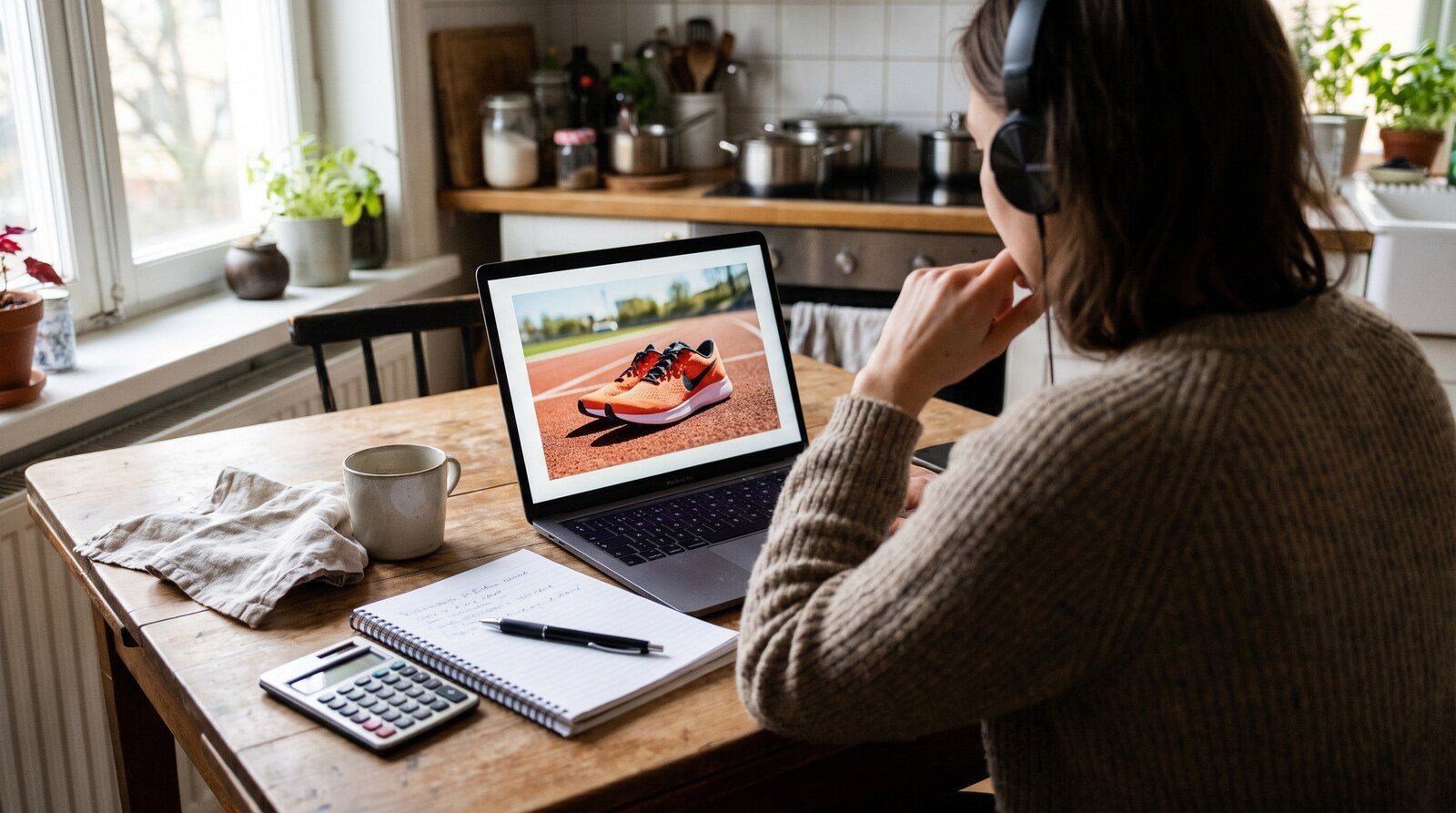
Wang listened to the campaign herself. The woman pictured is not Ms. Wang.
Company A admitted the audio came from its own AI. But it said it couldn’t confirm what material had been fed into the system, because the employee who handled it had left, and that it had never known Wang was a voice actor or used her voice.
Twenty-four out of twenty-eight
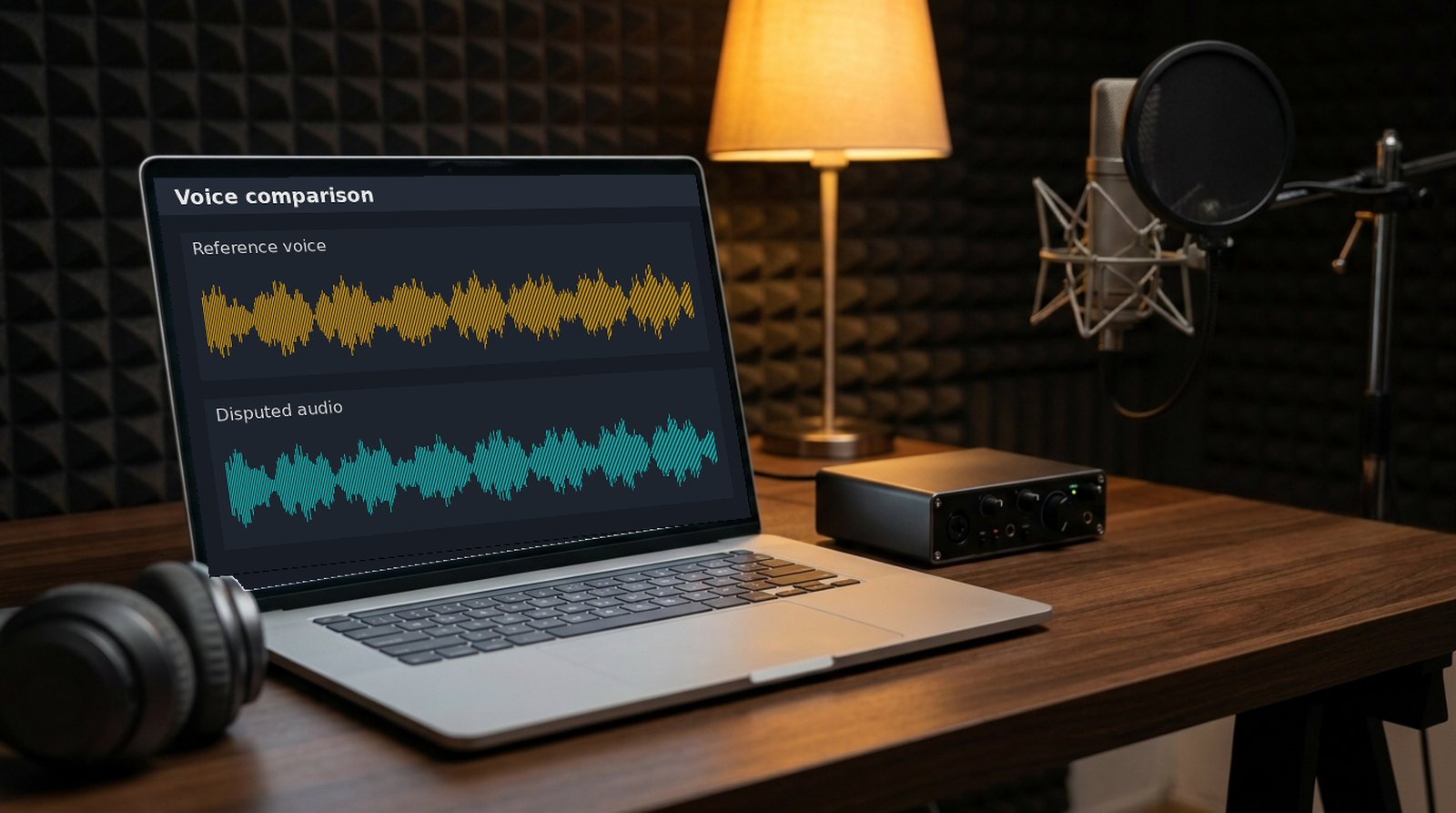
Wang answered with acoustics. She had a forensic lab compare the notarised audio with a sample of her voice recorded on the spot. The report measured 28 formant indicators, the resonances that give a voice its colour. Twenty-four of them deviated by less than 10 percent, and 16 by less than 5.36 percent. Overall, the parts rated similar or highly similar came to 90 percent.
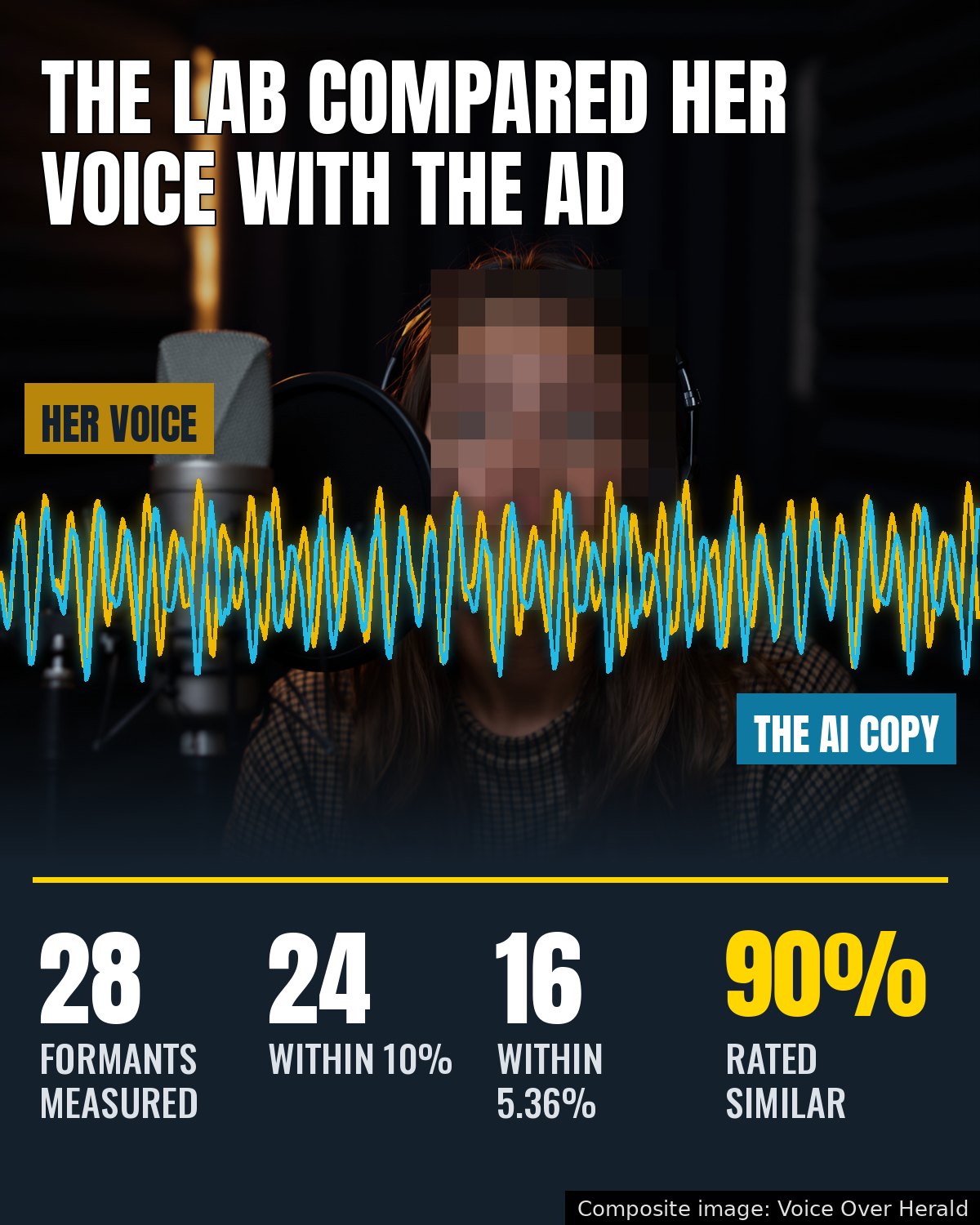
The comparison in figures. The woman pictured is not Ms. Wang. Composite image: Voice Over Herald
The court of first instance found that Company A had infringed her rights with an AI-generated voice and caused her economic loss, and awarded 50,000 yuan. Both sides appealed. The No. 1 Intermediate Court dismissed both appeals and upheld the judgment.
Its central finding, translated from the court’s statement:
“Using a natural person’s voice as training material without their consent, imitating that person’s timbre, intonation and pronunciation style to generate a synthetic voice that can identify that person, should be found to infringe that person’s voice rights.”
Shanghai No. 1 Intermediate People’s Court, September 2026
“No matter what algorithmic path”
Wu Dan, a senior judge in the court’s case-filing division, put the principle plainly: “As long as an AI-synthesised voice can identify a specific natural person, no matter what algorithmic path generated it, unauthorised use may constitute an infringement of voice rights.”
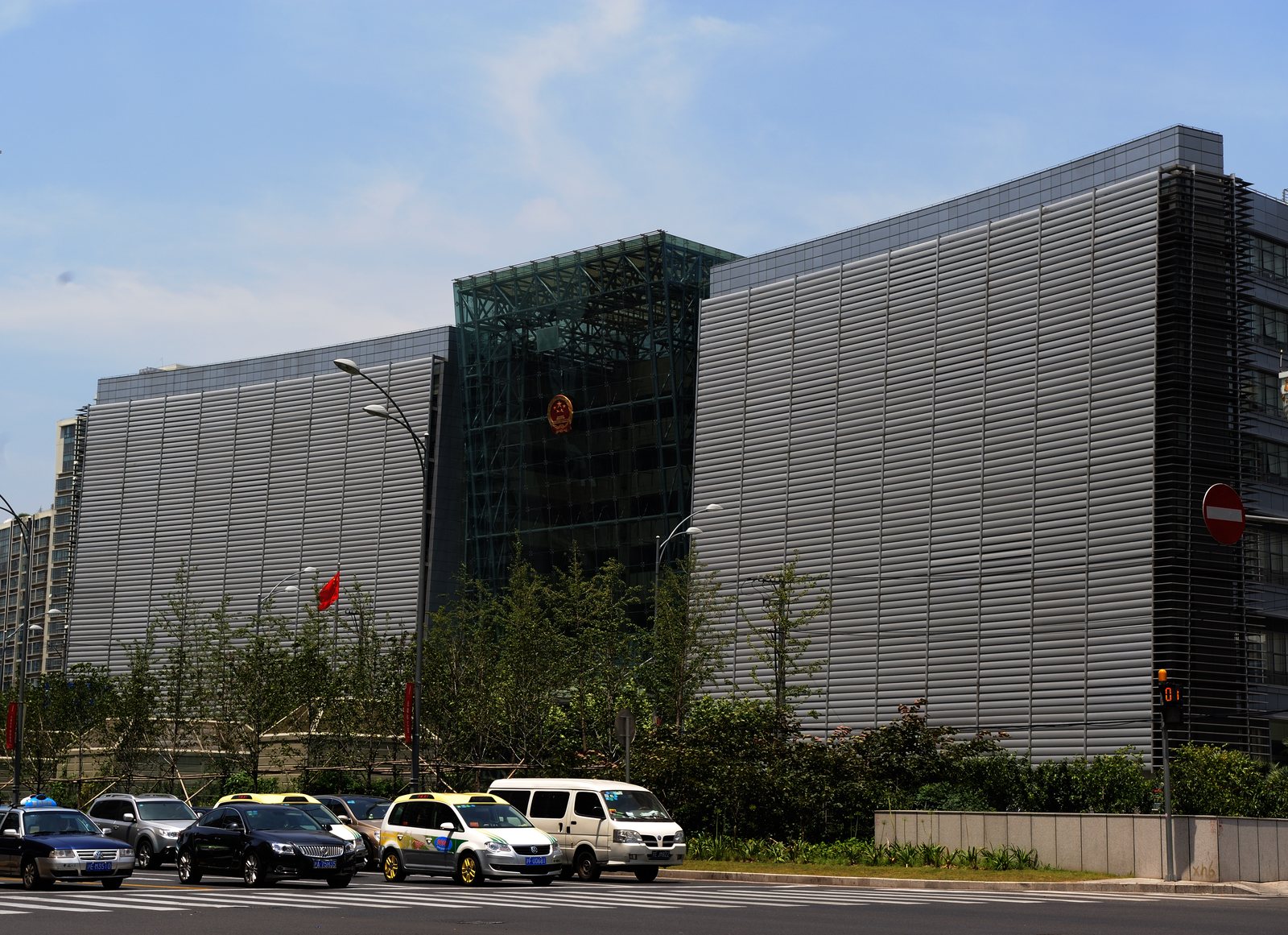
The Shanghai High People's Court, which published the announcement of the ruling. Photo: Pyzhou, GFDL, via Wikimedia Commons
 VoiceEditSuiteStart with a free studio analysis.Then every session cleaned for $15 a month, launch price until Oct 31.Show me more
For voice actors, the important part is the evidence. An English-language analysis on China IP Law Update explains that Wang only had to show two things: a plausible way the company could have got her voice, since her work was publicly posted, and a synthetic voice similar enough that ordinary listeners would link the two. After that, the company, which alone controls its training data and logs, had to prove its material was lawful. Saying the records left with an employee didn’t count.
In the analysis’s words, “the legal question is not how the training or generation process works technically, but whether the personality interest embodied in the voice has been appropriated in a recognizable way.”
Why the damages were small
Wang asked for 300,000 yuan and got a sixth of that. China IP Law Update reports that, with no comparable licensing fee to go on, the court weighed how long and how widely the voice was used. The synthetic voice served briefly as a process or notification prompt rather than a core asset, and Wang’s public profile was modest, so the award stayed at 50,000 yuan.
The same analysis adds a caution: “this case has not been marked as typical or guiding at the time of writing and therefore may have minimal precedential value.” Even so, the court tied its reasoning to Article 4 of the Supreme People’s Court’s opinions on AI disputes, issued on September 7, which say that using a person’s voice as training material without consent to generate a recognisable synthetic voice infringes their voice rights.
A cloning market in plain sight
The case lands in a market where cloning a voice is cheap and quick. In April, Southern Metropolis Daily reporters tested the AI platform ViiTor AI and found that uploading three seconds of someone’s voice was enough to clone it in minutes and make it say anything. Clips of Lü Yanting, who voices the title character in the hit animated film Ne Zha 2, sat in the platform’s public voice library, already used by more than 10,000 people.
A seller of cheap cloning services on a second-hand trading site told the paper bluntly: “If you’re asking, yes, it infringes.” After the reports ran, the paper says, regulators in several regions made AI misuse a priority, and ViiTor AI removed its direct upload option.
Three courts, three answers
Voice Over Herald has followed a run of these cases in the past week. In Shanghai’s Pudong district, a court made an AI app that sold copies of 63 Genshin Impact character voices pay the game studio, under unfair competition law, while the actors behind those voices weren’t parties. In Tokyo on September 30, a court said a voice carries publicity rights but dismissed Kenjiro Tsuda’s claim against TikTok because the videos were already gone.
Wang’s case is the one where the performer herself walked away with a judgment. She isn’t famous, and her damages reflect that. But the rule she won doesn’t depend on fame: if a clone sounds like you and the company can’t show where it got your voice, the court presumes it got it from you.
Sources: Southern Metropolis Daily (via NetEase); Sina Tech; China IP Law Update; Seoul Economic Daily. Quotations from Chinese sources are translated by Voice Over Herald. Hero photo: CyberCop, CC BY 3.0, via Wikimedia Commons. Shanghai High People’s Court photo: Pyzhou, GFDL, via Wikimedia Commons. Laptop picture and lab comparison picture: Composite image: Voice Over Herald.
Lee este artículo en español: Una actriz de voz de Shanghái le ganó a un clon de su voz hecho con IA. La empresa no supo decir de dónde salió
Know something about this story, or spotted an error? Tell the newsroom.