

SAG-AFTRA’s New Deal Lets Indie Games Hire Union Voices for Pitch Demos. The Pitch Fee Has No Minimum
SAG-AFTRA has a new contract for the voice work that happens before a game exists. Its Pre-Funding Pitch Interactive Media Agreement, announced on 5 November, lets small developers hire union voice and motion performers for the demos, trailers and vertical slices they show investors. There’s a catch for actors: on the pitch itself, there’s no minimum fee.
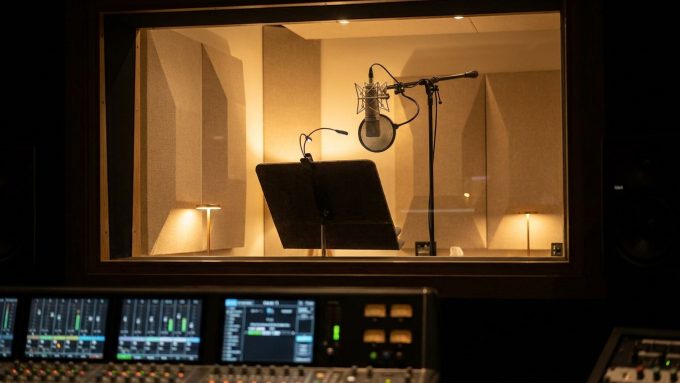
Most indie games that get funded start as something to show. A playable slice, a trailer, a sizzle reel cut together to get a publisher or investor to say yes. Those pitches often need a voice, and plenty of working voice actors have recorded one: a few lines for a hero, a narrator over a teaser, a villain who may or may not survive into the real game.
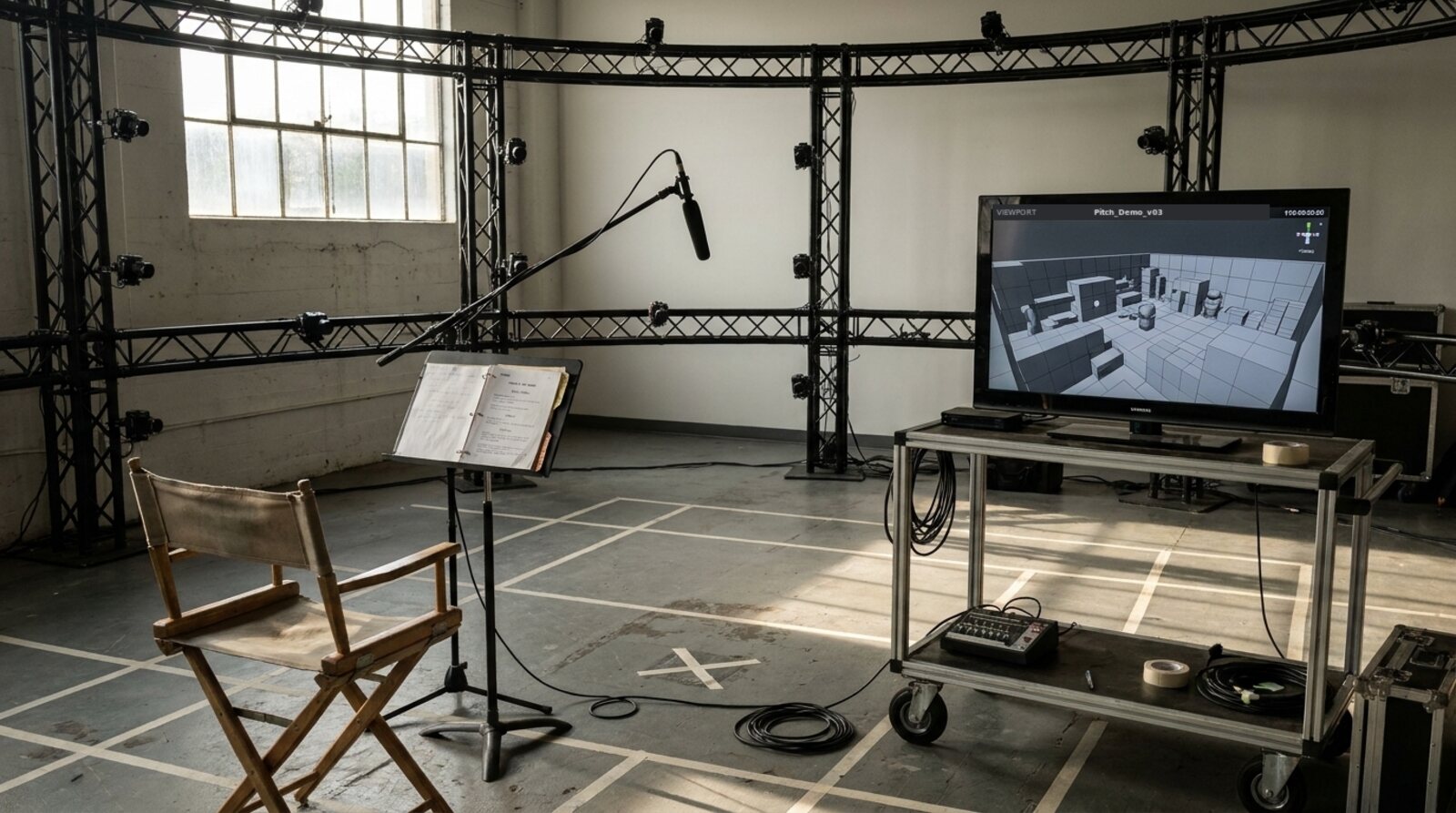
The union now has a contract built for exactly that job. SAG-AFTRA says the agreement is “designed for videogame developers creating interactive pitch projects,” and it covers trailers, teasers, demos, vertical slices, playable prototypes and sizzle reels made “for the exclusive purpose of soliciting production funding for prospective projects,” according to the union’s announcement as reported by This Week in Video Games.
“This agreement allows developers to up their game by bringing in professional voice and motion performance talent earlier in the process to create a higher-quality product, with the goal of capturing both imaginations and funding,” SAG-AFTRA president Sean Astin said.
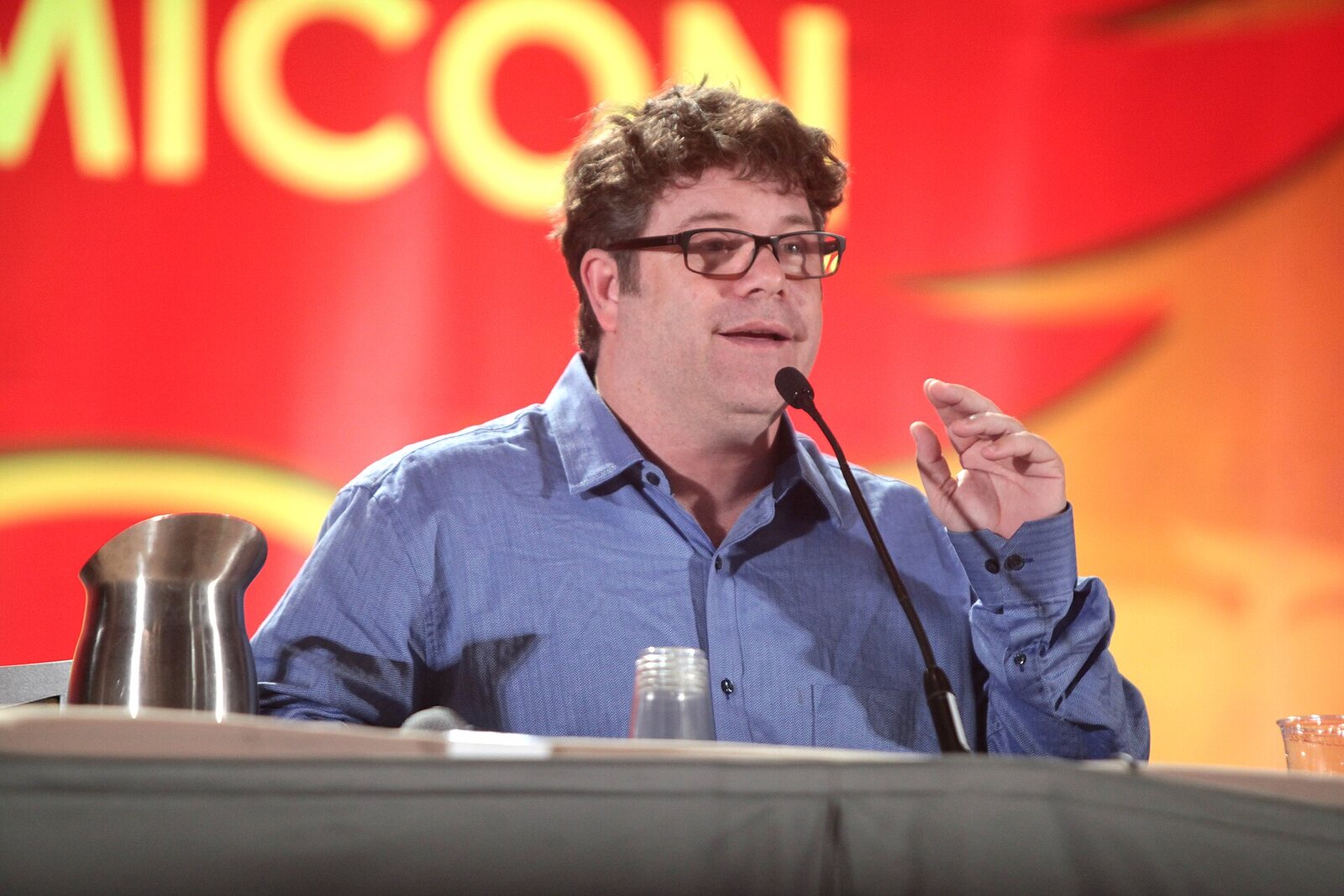
Sean Astin, SAG-AFTRA president, at Phoenix Comicon in 2016. Photo: Gage Skidmore, CC BY-SA 2.0, via Wikimedia Commons
Duncan Crabtree-Ireland, the union’s national executive director and chief executive, said the agreement “streamlines the hiring of professional union talent,” which can give developers “that extra edge to get the backing they need in an extremely competitive industry.”
Who gets to use it
This isn’t a contract for any studio with a demo. The rules are tight, and they’re written to keep a pitch a pitch.
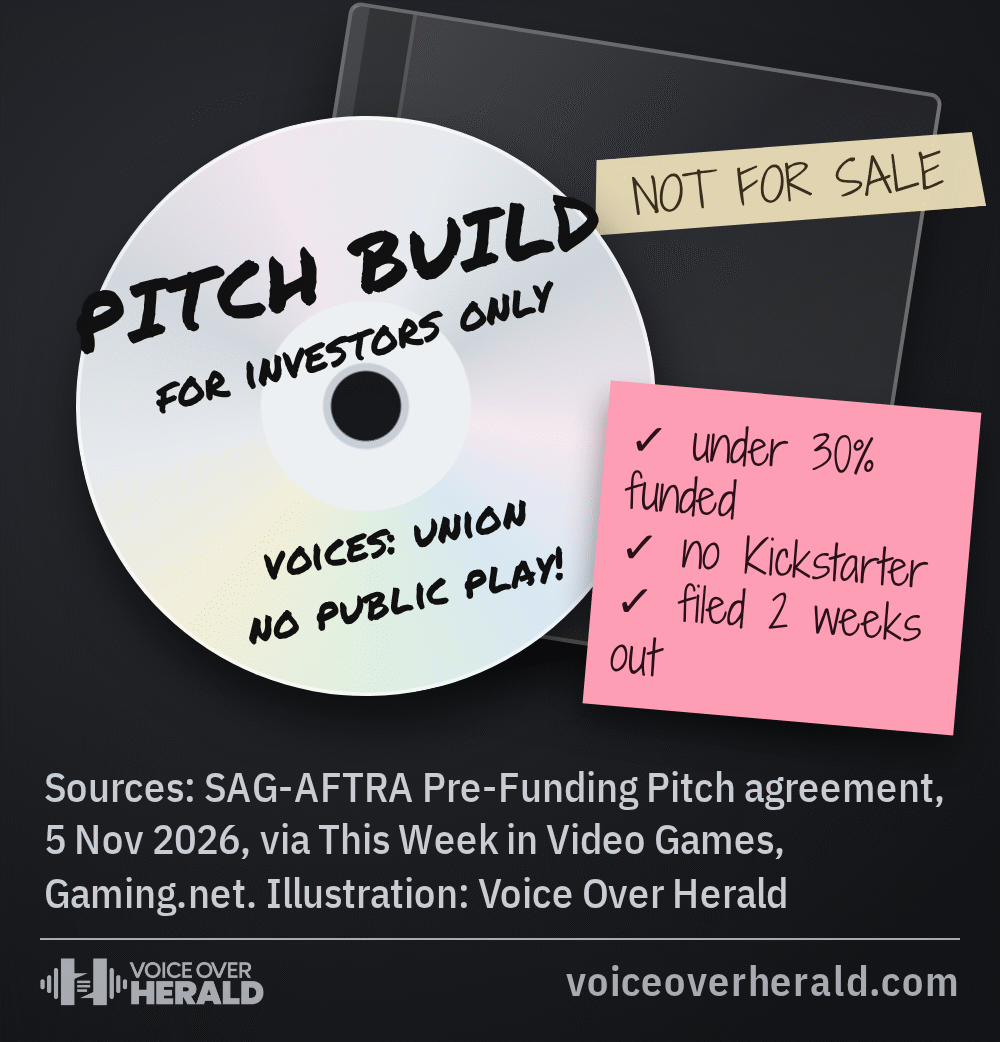
A project can’t have more than 30% of its initial production funding secured. The pitch must not “provide the experience or impression of a complete interactive project,” and it can’t be commercially released or made available for the public to watch or play. Anything put out as part of a crowdfunding campaign, a Kickstarter for instance, is out, although the union says crowdfunding waiver terms can be discussed.
Gaming.net, which went through the terms in detail, lists more exclusions. Milestone funding sits outside the agreement. A producer that’s owned by a publisher, already has a standing publishing deal, or gets production money through another agreement or affiliation can’t use it. Neither can a project that promotes a product or service that isn’t interactive, so a playable advert for something else doesn’t qualify.
Projects that meet some of the conditions but not all can ask SAG-AFTRA for a waiver. Approval covers only the one named pitch, not a developer’s next project, and the union decides who qualifies.
The fee is whatever you agree
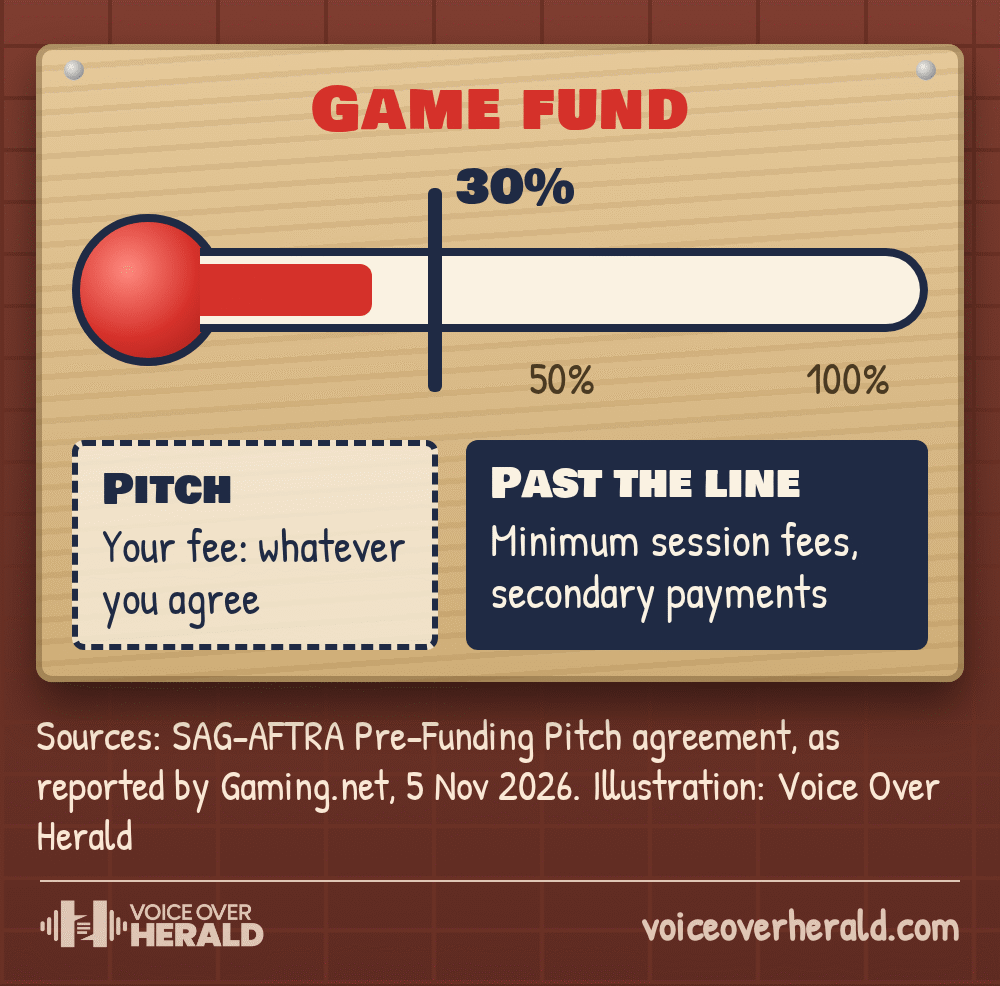
Here’s the part working voice actors will read twice. For the pitch session, the fee is negotiated between the performer and the producer, and the agreement sets no minimum employment terms, Gaming.net reports. There’s no scale rate on the recording that might get a game made.

 VoiceEditSuiteNewThe audio editor that learns how you breathe.Learns from numbers, never your audio. Never used to train AI.See how it works
The developer does still have to pay health and retirement contributions on whatever fee is agreed. And for actors who aren’t union members yet, there’s a line worth knowing: work on a pitch under this agreement doesn’t count towards SAG-AFTRA membership eligibility.
The protections arrive later, and two things set them off. If the pitch raises enough money that funding goes past 30% of the planned game’s budget, the union’s independent interactive terms kick in at the right budget tier, with minimum session fees, secondary payments and health and retirement contributions. Whatever the performer was already paid can be credited against scale.
The second trigger matters more for voice actors. If any of a performer’s pitch material ends up in the finished game, the full terms apply to it, minimums and secondary payments included. A cheap demo line can’t quietly become a shipped line at demo money.
Before the money
Fee agreed between you and the developer, with no minimum. Health and retirement contributions still paid. Nonmember work doesn’t count towards joining.
Funded, or your lines ship
Once funding passes 30% of the budget, or your pitch recording goes into the game, the independent interactive terms apply: minimum session fees, secondary payments and contributions.
The paperwork that protects the performer
A developer has to send the signed agreement to SAG-AFTRA at least two weeks before recording, and name every professional performer on the pitch, plus those already known for the full game. The union can ask for a final cost report with supporting documents to check that a project really qualifies.
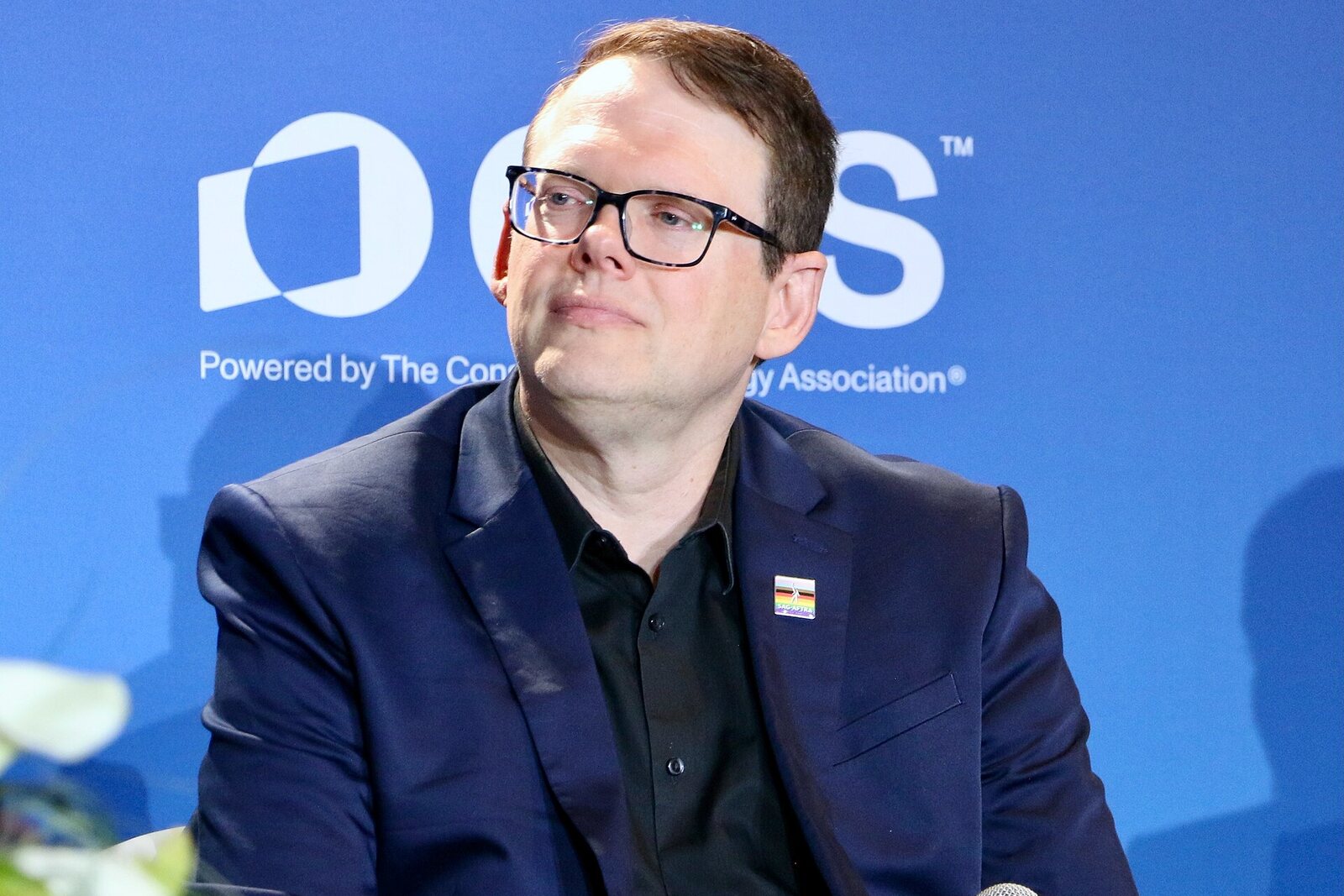
Duncan Crabtree-Ireland, SAG-AFTRA's national executive director, at CES 2025. Photo: Xuthoria, CC BY-SA 4.0, via Wikimedia Commons
If a producer misrepresents something material, eligibility can be taken away retroactively, and a producer that loses eligibility is bound to the union’s independent interactive agreement or its tiered-budget version instead. In plain terms, a developer who claims to be unfunded and isn’t ends up owing full-contract terms.
Performers authorise the use of their name, image, likeness, voice and performance only within what the agreement covers. Motion performers get extra cover for stunts and hazardous work: advance notice to the union, a stunt coordinator on hand, the performer’s written consent before work starts, and a conversation about the physical demands at the audition.
Why it arrives now
The pitch agreement comes a little over a year after SAG-AFTRA’s video game performers approved the Interactive Media Agreement, ending an 11-month strike and three years of bargaining, with protections on AI use among the gains, as This Week in Video Games notes. That deal covers the big publishers. This one is aimed at the other end of the industry: two or three people with a prototype and a pitch meeting.
For those teams, a professional voice can be the difference between a demo that feels like a game and one that feels like a tech test. For performers, it’s a contract where there often wasn’t one, with real teeth if the project takes off. It’s also a session where the number on the invoice is entirely down to the actor’s own negotiating. Voice Over Herald has covered what to watch in the clauses that decide what happens to your voice after the session, and they apply here too.
Before saying yes to a pitch, it’s worth asking how much funding the project already has, getting the developer to confirm the agreement has gone to the union, and keeping a copy of what was recorded. If those lines turn up in a shipped game, the contract says they’re owed full terms.
It’s been a busy autumn for SAG-AFTRA contracts. At the end of October its animation performers ratified the TV animation deal that puts consent around AI dubbing.
Sources: SAG-AFTRA announcement of 5 November 2026, as reported by This Week in Video Games (Maddie Agne, 6 November 2026) and Gaming.net (5 November 2026), which carried Sean Astin’s statement in full and detailed the eligibility, pay and protection terms. Photos: Gage Skidmore and Xuthoria, via Wikimedia Commons.
Lee este artículo en español: El nuevo acuerdo de SAG-AFTRA deja a los juegos independientes contratar voces sindicales para demos de pitch. La tarifa no tiene mínimo
Know something about this story, or spotted an error? Tell the newsroom.