

Ocarina of Time Finally Has Voices. Nintendo Has Not Named One Actor
For twenty eight years, the most famous voice in Ocarina of Time was a fairy shouting two words at you. In November, the whole game talks. Nintendo announced full voice acting for the Switch 2 remake at its Zelda 40th Anniversary Direct on September 8, and last week players listening closely to the footage worked out that Navi does not sound the way she used to. What nobody can tell you, three weeks after the reveal and six weeks before launch, is the name of a single person who recorded any of it.
A silent game learns to talk
The original 1998 game had almost no speech in it. Link grunted, Navi chirped for attention, and everyone else spoke in text boxes. The remake changes that. As Shacknews reported from the Direct, Nintendo said voice acting “will be limited to cutscenes”, and Link keeps his “yelps and shouts rather than words and sentences.” Saria was heard speaking to Link about leaving the forest. Ganondorf turned up with a voice in the trailer. The game arrives on November 5, with Zelda themed hardware a week earlier.
That is a bigger change than it sounds. Adding performance to a game people have replayed for a quarter of a century means every line carries a reading somebody chose. Timing, breath, how much of Ganondorf’s menace is in the throat. This is craft work, done by professionals, on one of the most scrutinised pieces of software ever made. And it is being delivered anonymously.
The fairy nobody will claim
On September 22, Brent Koepp reported for Vice that Navi’s English voice has been replaced, while the Japanese audio sounds closer to the 1998 original. Kaori Mizuhashi voiced Navi in the original. Fans comparing the two tracks think Mizuhashi is back for the Japanese version, but that is an inference from listening, not a confirmation.
Nintendo has said nothing. Vice notes that the company “has not given an official reason for the change” and “has not confirmed who voices Navi in either version of the remake.” Players have filled the silence themselves. “Definitely switching to Japanese for voice acting and Navi. It fits far better,” one wrote. Another was blunter: “I think the Japanese one honestly sounds better than the OG, the English one sounds worse than both though.”
Read that second comment again, but as a voice actor. Somebody did that job. Somebody sat in a booth and made a series of choices about a character with a reputation for being annoying, in a language where the reference performance is twenty eight years old and beloved. They are being reviewed in public, and they cannot answer, because no one has said who they are. If the performance lands, they get no credit for it. If it does not, they get the criticism anyway, just without a name attached.
Nintendo can do this properly. It did, last week
Fire Emblem: Fortune’s Weave
English cast released before launch through Nintendo’s own app, more than sixty characters, actors free to announce their own roles.
Ocarina of Time
Full voiced cutscenes announced on September 8. No cast list, no confirmation of a single performer, six weeks out from release.
This is what makes the silence hard to defend. A week after the Zelda Direct, Nintendo rolled out the English cast for another Switch 2 title in an orderly, generous way. Liam Doolan reported for Nintendo Life on September 15 that Fire Emblem: Fortune’s Weave had named its cast: Zeno Robinson as Cai, Xander Mobus as Dietrich, Cassandra Lee Morris doubling as Fortuna and Sothis, with J. Michael Tatum, Aleks Le and Amelia Tyler among a list running past sixty characters.
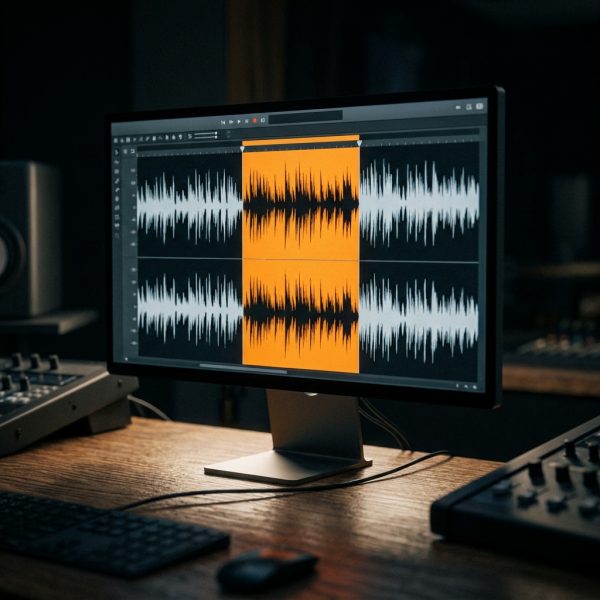
 VoiceEditSuiteRaw take in. Clean take out.
Better still, the company did it in a way that let the performers speak for themselves. Nintendo had been “sharing these updates on the Nintendo Today! app, with many of the cast also making their own announcements on social media.” That is the whole ask, and it costs nothing. An actor who can point at a role can use it. A reel, an agent conversation, a convention booking, the next audition: all of it runs on being able to say what you did.
So Nintendo knows how. It chose differently for Ocarina of Time. The most plausible reason is that the company is protecting reveals in a 40th anniversary campaign, and cast names would spoil which characters appear and how much they say. That is a real commercial consideration. It is also a decision that puts a marketing calendar ahead of a performer’s ability to claim their own work, and it is worth saying so out loud.
Why credits are a working condition
Game credits have been an argument in this industry for years, and it is never really about vanity. Credit is the mechanism that turns a job into a career. Casting directors check what you have done. Agents pitch on it. Rates move on it. In a market where a client can now generate a passable read from a text box, the things a human performer has that a model does not are a track record and a reputation, and both of those are built out of named work.
There is a second reason it matters more in 2026 than it did in 2016. When a performance is unattributed, there is nothing on the public record separating a person from a synthetic voice. A cast list is a small, boring, powerful statement that a human being was in the room. Every game that ships without one makes it slightly easier for the next one to ship with nobody in the room at all, and for nobody to notice.
None of this is a scandal. Nintendo has broken no rule, and there is still time: credits appear at the end of the game, and cast reveals often land in the fortnight before release. But the pattern is worth watching, because the company has now demonstrated both behaviours inside eight days. One title’s cast got to celebrate in public. The other’s is still waiting for permission.
For a sense of what that permission is worth, our interview coverage of Patricia Summersett’s decade as Princess Zelda is a useful companion. She was cast without being told the role, learned what it was at the first session, and has spent ten years building a career on a character she is publicly, unambiguously known for. That last part is not a bonus. It is the job.
Sources: Vice, Brent Koepp, September 22, 2026; Shacknews, Donovan Erskine, September 8, 2026; Nintendo Life, Liam Doolan, September 15, 2026; Wikipedia. Nintendo has made no statement on the casting and did not respond to the reports cited here.
Lee este artículo en español: Ocarina of Time por fin tiene voces. Nintendo no ha nombrado a un solo actor
Know something about this story, or spotted an error? Tell the newsroom.