

A Peruvian Voice Actor Is Dubbing The Lion King Into Quechua, With His Son as Simba. Now He Needs Disney’s Yes
In the Peruvian Andes, plenty of children grow up watching Hollywood films in Spanish they can’t fully follow. Fernando Valencia, a voice actor from Cusco, started dubbing scenes into Quechua from a makeshift home studio, with his young son voicing Simba. Now he’s trying to dub all of The Lion King, and a documentary about him, Runa Simi, has just opened in Los Angeles.
For many kids in remote Andean towns, movies arrive as bootleg DVDs, dubbed into Spanish or left in English with Spanish subtitles. A lot of those children only fully understand Quechua, the Indigenous language spoken by around 10 million people across several South American countries, according to the Los Angeles Times, which profiled Valencia on Sunday 9 November.
Valencia grew up partly in the Andean town of Huanimpampa. He’s a voice actor, a radio host and a single father, and he speaks Quechua, Spanish and English. He told the Los Angeles Times, speaking in Spanish, why he started: “I thought, ‘I’d love to give this group of kids a chance to watch at least a little bit of these movies in their own language.’ And I didn’t want to only do a literal translation but make the extra effort to provide a proper dub with lip-sync where the characters’ voices sound exactly the way they should.”
Any dubbing actor will recognise that last part. Reading a translation over a picture is one job. Matching mouths, breaths and character is a much harder one.
Hear him make the call
The official trailer for Runa Simi opens with Valencia on the phone to The Walt Disney Company, introducing himself as a caller from Cusco with a project to dub a Disney film into a language that’s never had a dubbed version. He’s put through to the legal department.
Hear the voice: Fernando Valencia calls Disney a couple of seconds in, then directs his son in Quechua and Spanish from about 1:20. Video: Runa Simi, official trailer, on YouTube
His first dubs became known as the Quechua Clips: scenes from The Lion King, Star Wars: The Empire Strikes Back and Ice Age, recorded in a makeshift studio at home. When the videos went viral and local news picked them up, institutions started asking whether he’d dubbed any of those films in full. He hadn’t. So he decided to try, starting with the one that meant the most to him.
A home booth and a teenage Simba
The cast came from close to home. In the original clips, his young son Dylan voiced Simba, while Valencia took on Timon and Pumbaa himself. Filmmaker Augusto Zegarra, who spent years following the pair for Runa Simi, told the Los Angeles Times he was surprised to learn Valencia had made the dubs entirely on his own, with only his son as an ally.
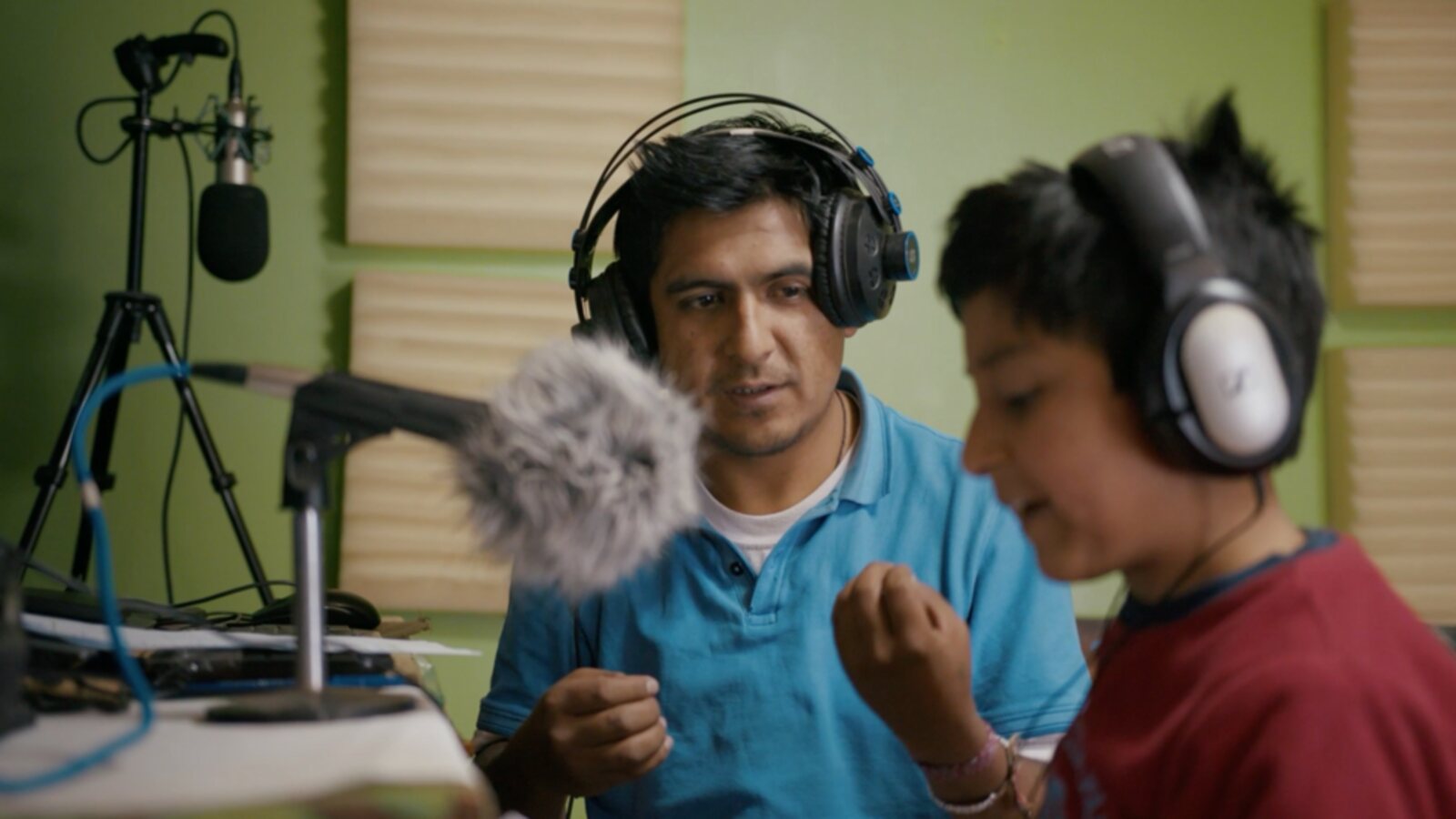
The trailer shows what that looks like in practice: two pairs of headphones, a fluffy windshield on a desk mic, a script in Dylan’s hand and a father who is also the director. After one take, Valencia tells him, in a line subtitled in the film, “That’s good, but you sound like a teenage Simba.”
It wasn’t easy for Dylan either. Now 14, he told Democracy Now! in August that Quechua barely features in his schooling. “There’s like one hour a week of Quechua [in school], so it is very hard to actually learn it,” he said. Dubbing sessions with his father were where much of it stuck.
Why The Lion King
Valencia could have picked any film. He considered a Star Wars title, but felt The Lion King, with its cycle of life and closeness to nature, would mean more to people in the countryside. It was also the first movie he ever watched all the way through as a child, on a black and white television, with commercials, on a broadcast channel.
He sees his own language in the plot, too. “We see a character who is banished, who lives on the margins, and who eventually must return to where he belongs,” he told the Los Angeles Times.
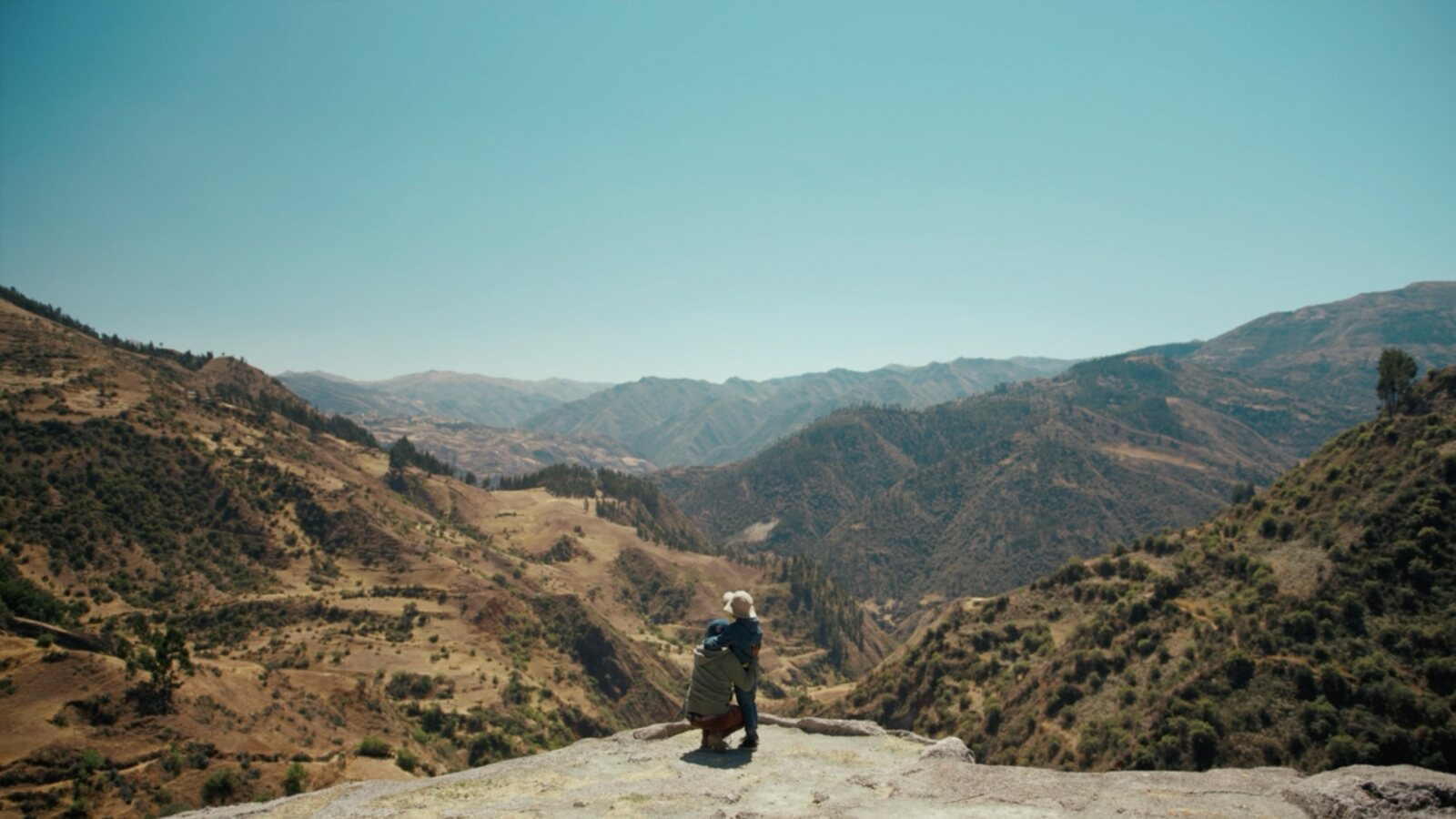
The Andes in Runa Simi. Image: Runa Simi / Estudio Alaska 88
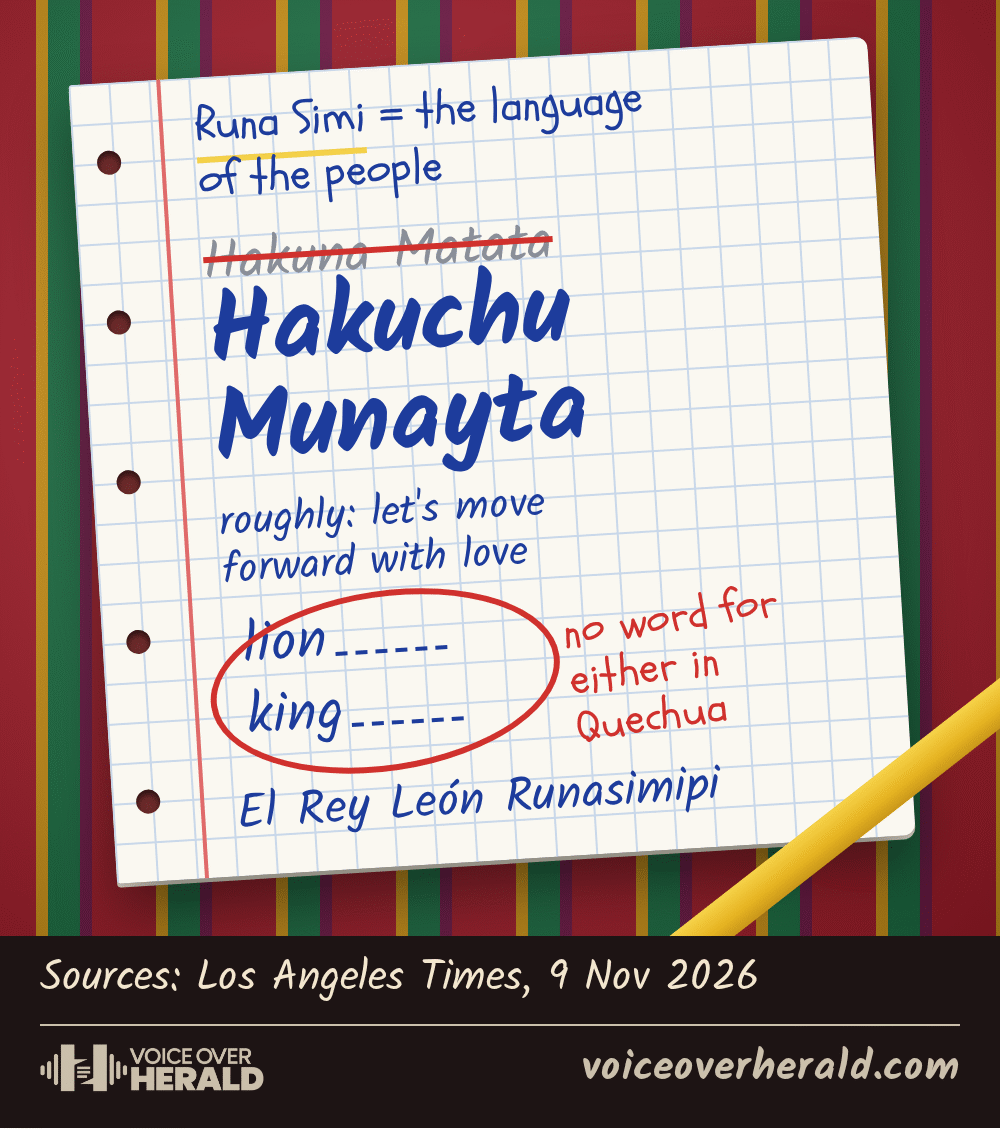
Then there were the translation problems. Quechua has no word for “lion” or “king”, because neither existed in the world of its earliest speakers. So his version keeps the Spanish title: El Rey León Runasimipi, “The Lion King” in Quechua. The film’s most famous song needed the same care. “Hakuna Matata” became “Hakuchu Munayta”, which roughly means “let’s move forward with love.” Runa Simi, the documentary’s title, is what Quechua speakers call their own language. It translates as “language of the people.”
The wall every unofficial dub hits
Here’s the catch for anyone dubbing a film they don’t own. Runa Simi can screen commercially in the United States under the fair use doctrine, which covers the documentary’s use of images from The Lion King. Internationally it doesn’t have that permission, the Los Angeles Times reports, which is why the film hasn’t had a commercial theatrical release in Peru, even though Zegarra and Valencia have already dubbed the documentary itself into Quechua.
 VoiceEditSuiteHome Studio AnalysisHow your room really sounds, measured.Reverb, noise floor and hum measured. Free.See how it works
Zegarra still hopes to reach someone at Disney, about the documentary and about Valencia’s Quechua version of the film. “From the start, we knew it would be difficult, but the world has also been getting smaller thanks to social media,” he said.
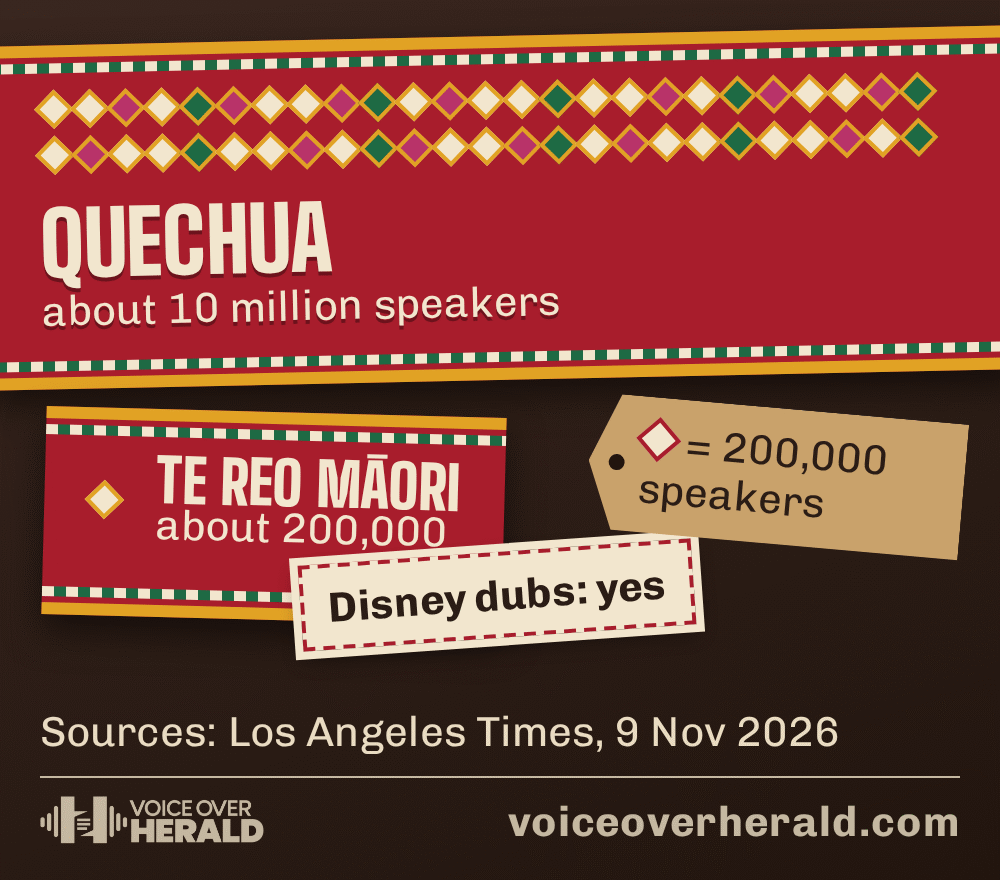
There is a precedent he points to. Tweedie Waititi, sister of the director Taika Waititi, has partnered with Disney to dub several titles into te reo Māori, a language with about 200,000 speakers. Zegarra’s argument is simple: if a language that size gets a dub, a language with tens of times as many speakers deserves a hearing. Peter and Benjamin Bratt, whose mother is an Indigenous activist of Quechua descent, have joined the film as executive producers.
Speaking to Democracy Now!, Valencia put it in a sentence: “It’s 10 million people speaking Quechua. And I say, ‘Why not?'”
Bringing Quechua out, not Hollywood in
Some people tell him that putting a Disney film into Quechua is bringing outside culture into Indigenous communities. He thinks it works the other way round. “But I’m not bringing them here. I am bringing the Quechua outside,” he told Democracy Now! The more places the language turns up, including pop culture, the harder it is to push aside.
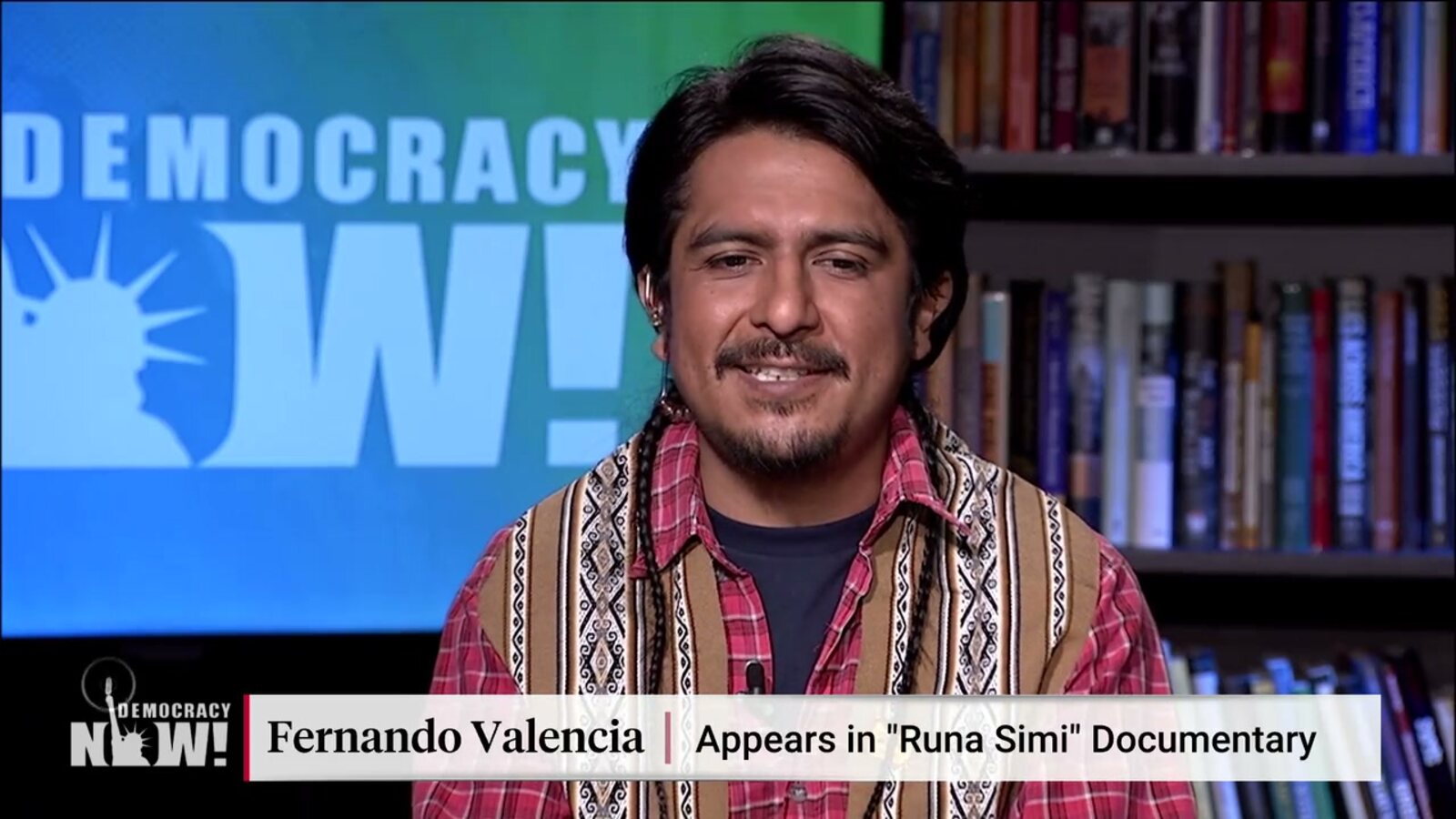
Fernando Valencia on Democracy Now!, August 2026. Image: Democracy Now!
Valencia also told the Los Angeles Times that he was the one making choices in the film, not just its subject. “This is not a film where an outsider observes an Indigenous individual as an object of research with admiration, pity or any other emotion,” he said.
The payoff, so far, is the screenings. He has shown his work to children and adults in their own communities who had never watched a movie in their native language before, and their reactions are a big part of why he keeps going. The documentary is playing now at the Laemmle Monica Film Center in Santa Monica, after premiering at the Tribeca Film Festival in 2025.
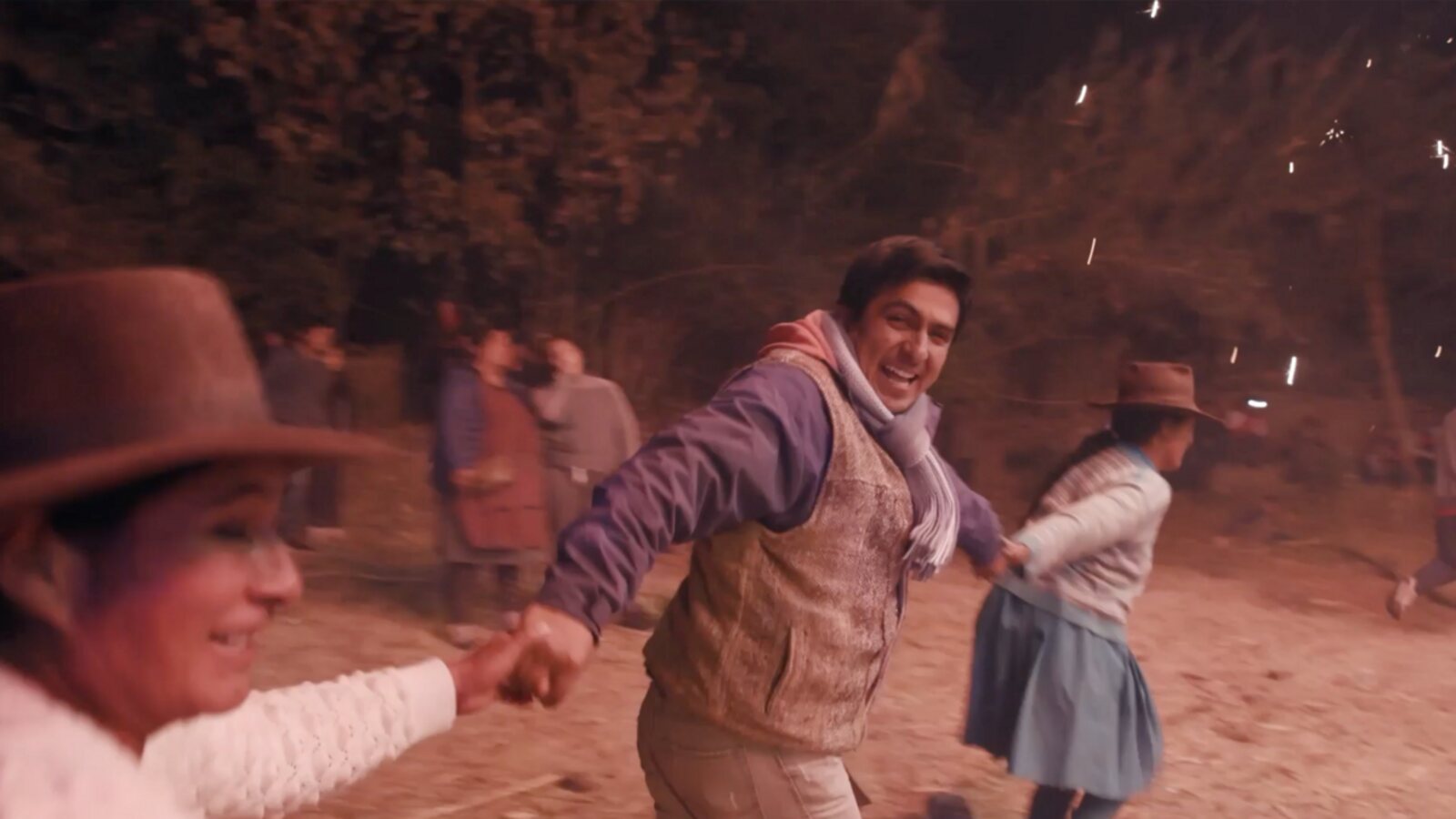
A night fiesta in Runa Simi. Image: Runa Simi / Estudio Alaska 88
What working voices can take from it
Most voice actors will never phone Disney’s switchboard from the Andes, but the lessons travel. A language you speak fluently is a real asset, and some languages are badly served by the big studios. Dubbing is acting, not reading, and he directed for it. And a home studio, however makeshift, is enough to make work people share.
It’s also a lesson in rights. His clips went viral and opened doors, but the full film can’t be shown everywhere without the rights holder’s yes. For now, that yes is the one line Fernando Valencia still hasn’t recorded.
Sources: Los Angeles Times (De Los), 9 November 2026; Democracy Now!, 28 August 2026; Runa Simi official trailer; Tribeca Film Festival film page. Quotations from Fernando Valencia in the Los Angeles Times were given in Spanish and translated by that newspaper. Images: Runa Simi / Estudio Alaska 88; Democracy Now!
Lee este artículo en español: Un actor de voz peruano dobla El Rey León al quechua, con su hijo como Simba. Ahora necesita el sí de Disney
Know something about this story, or spotted an error? Tell the newsroom.