



ElevenLabs Doubled Its Value in Seven Months. The Money Is in Voices That Answer the Phone
ElevenLabs is now valued at $22 billion, twice what it was worth in February. The growth isn’t coming from audiobooks or ads. It’s coming from AI agents that answer the phone, and that’s the corner of the voice business where a lot of steady, unglamorous work has always lived.
The London voice AI company said on September 30 that it had closed a $300 million employee tender offer at a $22 billion valuation, double the $11 billion set at its Series D round in February. Wellington and T. Rowe Price led it. EQT, Goldman Sachs, Singapore’s GIC, the Ontario Teachers’ Pension Plan, Sapphire Ventures and BDT & MSD bought in for the first time, alongside existing backers including Andreessen Horowitz and Lightspeed.
A tender offer isn’t a fundraise. Staff and early shareholders sell some of their stock to new investors, so nobody is handing the company fresh cash. What it does is put a price on the business, and that price has doubled in about seven months.
Where the money is coming from
ElevenLabs is best known to voice actors for cloning and text to speech. Two days before the tender news it launched Eleven v4, which Voice Over Herald covered when it started cloning voices from 10 seconds of audio. But the company’s own announcement puts the growth somewhere else.
Enterprise customers now account for 55% of its revenue, it says, driven by ElevenAgents, its platform for conversational agents. Those agents handle more than 15 million conversations a week, three times the level in February, and their annual recurring revenue has also more than tripled. The company lists what they do: “handling refunds and exchanges, renewing insurance policies, upgrading phone plans, booking healthcare appointments, and accessing public services.”
Its technology, ElevenLabs says, runs in daily operations at five of the world’s ten largest tech companies, five of the ten largest insurers and four of the ten largest telecoms.
“AI should interact with people the way we interact with each other,” said Mati Staniszewski, the company’s cofounder and CEO. “We’re already seeing rapid adoption of expressive voice agents by enterprises and governments, who are deploying them in service of consumers and citizens.”
Emma Norchet of T. Rowe Price said the company’s grip on research, product and deployment “has proved an important structural advantage,” adding: “The team is able to make improvements at every layer of the stack, allowing them to execute at high velocity and deliver immediate value for its enterprise clients.”
Why phone work is voice work
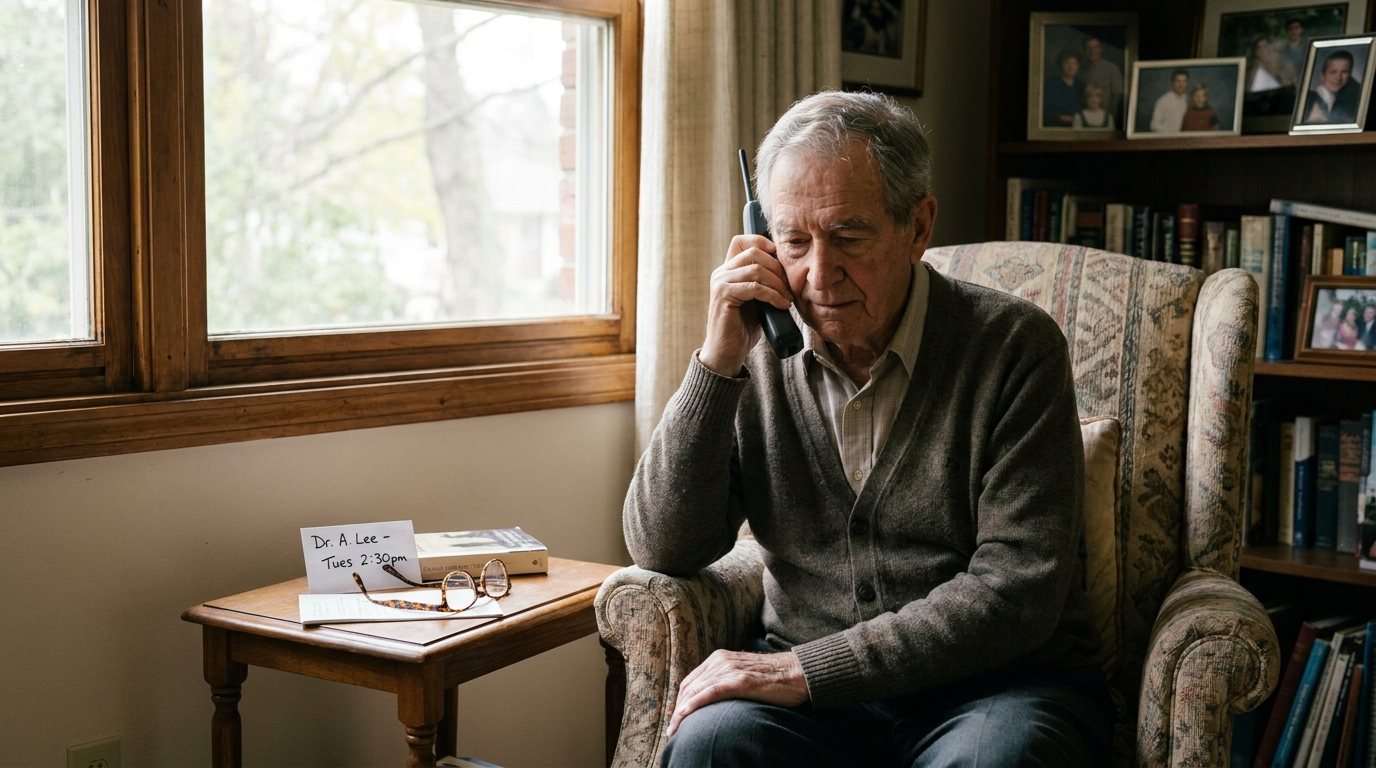
For anyone who records for a living, that list reads like a job board. Phone menus, on-hold messages, appointment reminders and the friendly line that says your call is important have kept a lot of working voice actors busy between bigger bookings. They’re rarely glamorous and they’re usually repeat business.
An AI agent doesn’t replace a recorded menu line for line. It replaces the menu, and often the person at the end of it too. ElevenLabs says an analysis of its customers found voice agents resolve issues 31% faster than chat agents on average, and that the number of companies running support across several channels on its platform has doubled since February.
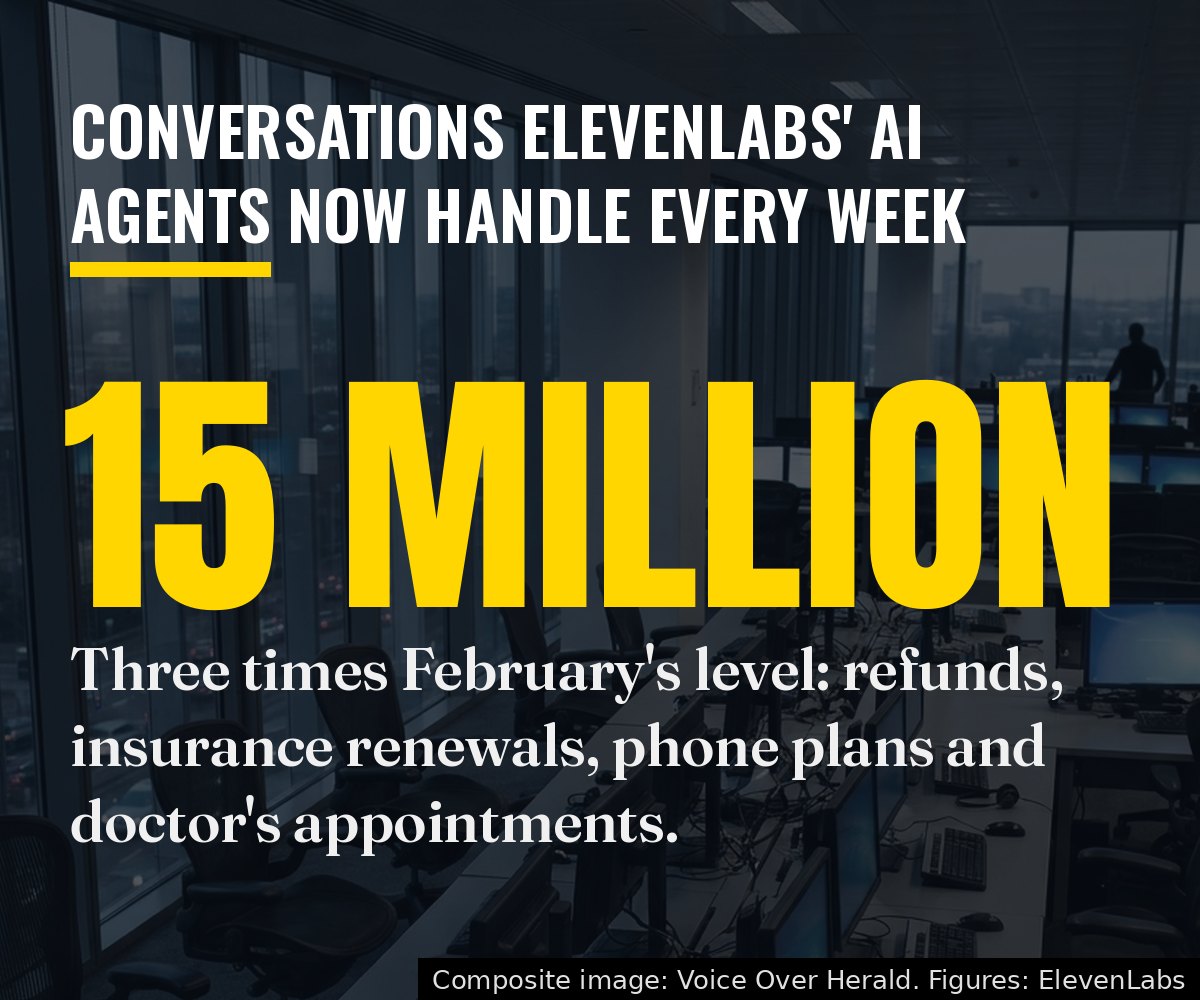
Composite image: Voice Over Herald. Figures: ElevenLabs
None of that tells us how much recorded phone work has gone. ElevenLabs hasn’t said, and nobody else has measured it. What the company has said is that the conversations growing fastest on its platform are the ones that used to start with a human voice saying “press one.”
What the voice owners have earned
ElevenLabs does pay voices. Its Voice Marketplace lets people license a professional clone of their voice, set which uses are allowed, choose a price tier and give up to two years’ notice before pulling it. In May the company said creators on the marketplace had earned more than $22 million in total, up from $11 million in November 2025, spread across more than 10,400 people. The company says independent authors now make full-length audiobooks with marketplace voices for under $100 in credits.
 VoiceEditSuiteTrim it, clean it, deliver it. One pass.
The two figures share their digits and almost nothing else. The marketplace has paid voice owners about a thousandth of what the company is now valued at, across all of its history.
Some of those owners are doing well, and they say so. Jessica Anne Bogart, a voice actor who joined under her own name, has earned more from the marketplace than from the previous five years of her acting career combined, according to the company. “This isn’t a threat to the craft. It’s an expansion of it,” she said in ElevenLabs’ May post about creator earnings.
Others are on the buying side. Brad Barlow, a program director and on-air host at an Idaho radio station, uses marketplace voices for commercials, promos and station IDs instead of one station voice. “For people like me who don’t have a staff, who are doing it by themselves, now we can make our stuff sound just as cool, just as big time, just as legit,” he said. Station imaging used to be a booking.
The other side of the ledger
Voice actors outside the US and Europe have been blunter. “These jobs are being annihilated by AI,” Ganessh Divekar, general secretary of the Association of Voice Artists of India and the Hindi voice of Pedro Pascal in the Marvel franchise, told Rest of World in April. “Earlier, I was a voice; now, I have to say I’m a human voice to distinguish myself from AI.”
In the UK, the Save Our Voices Now campaign wants the law to treat a person’s voice as their property. Its open letter, signed by more than 80 performers including Nicola Coughlan, Matt Lucas and Hugh Bonneville, draws the line carefully: “We are not opposed to artificial intelligence. We are opposed to theft.” Its parliamentary petition is still open and hasn’t yet reached the 10,000 signatures that would require a government response.
Japan, meanwhile, has started answering the question in court. On September 30 a Tokyo court ruled that a voice is protected by publicity rights, even as Kenjiro Tsuda’s claim against TikTok was dismissed because the videos were already gone.
Mostly not. ElevenLabs says 55% of its revenue now comes from businesses, led by agents that handle customer calls and chats.
Yes. On the Voice Marketplace you choose the allowed uses, a price tier and a notice period of up to two years, and you can remove the voice later.
Nobody has published numbers. The company says its agents now handle refunds, renewals and bookings, the calls that used to start with a recorded menu.
The $22 billion figure says investors believe people will happily talk to machines that sound like people. The open question for working voice actors is how many of those machines will sound like someone who was asked, and paid.
Sources: ElevenLabs (September 30 announcement and May 2026 marketplace post); Reuters via Investing.com; Digital Music News; Rest of World; Martin Cid Magazine; UK Parliament petitions site. Big-number picture: Composite image: Voice Over Herald.
Lee este artículo en español: ElevenLabs duplicó su valor en siete meses. El dinero está en las voces que contestan el teléfono
Know something about this story, or spotted an error? Tell the newsroom.