
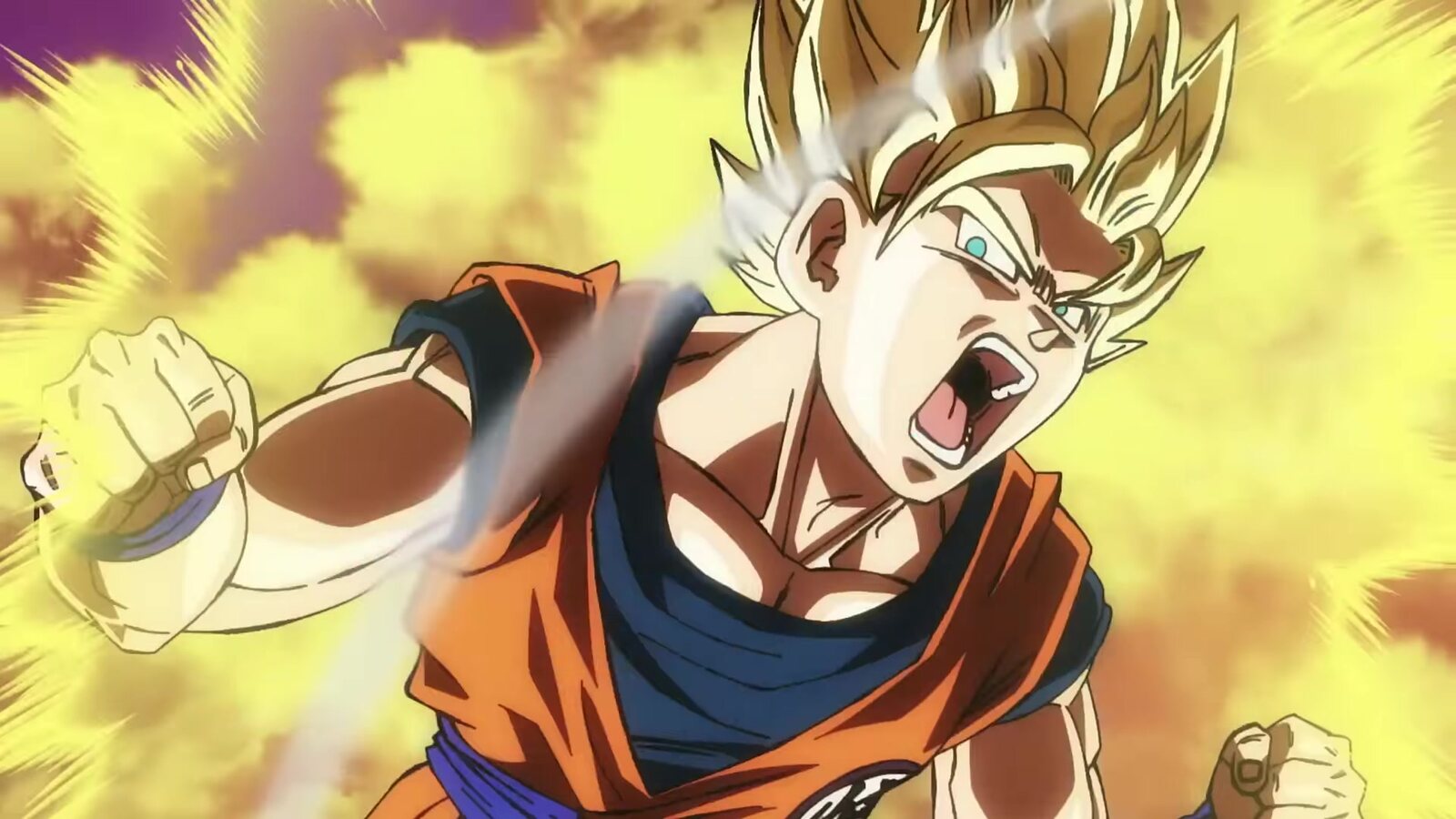
Japan’s Actors Union Publishes Its First AI Voice Rules. Goku’s Voice Says Use Without Permission Leaves Her ‘Disillusioned’
Japan’s performers have written the rulebook themselves. On Thursday the Japan Actors Union, which speaks for about 2,600 actors and voice performers, published its first guidelines on generative AI and voices. Masako Nozawa, the Japanese voice of Goku, sent a video message to the Tokyo press conference to say why they were needed.
The guidelines are voluntary. Japan has no law that treats a voice as something its owner controls, and the union says so plainly. What it has done is write down what a studio, an app or a fan with a voice model should have to do before touching a performer’s voice, in the hope that the industry adopts it and lawmakers follow.
Union officials sat at the table in Tokyo, among them executive director Bin Shimada, the Japanese voice of Broly, and Yuko Sasaki. Nozawa, a vice chair of the union, joined by video. The event was covered by NHK and Japanese entertainment outlets the same afternoon.
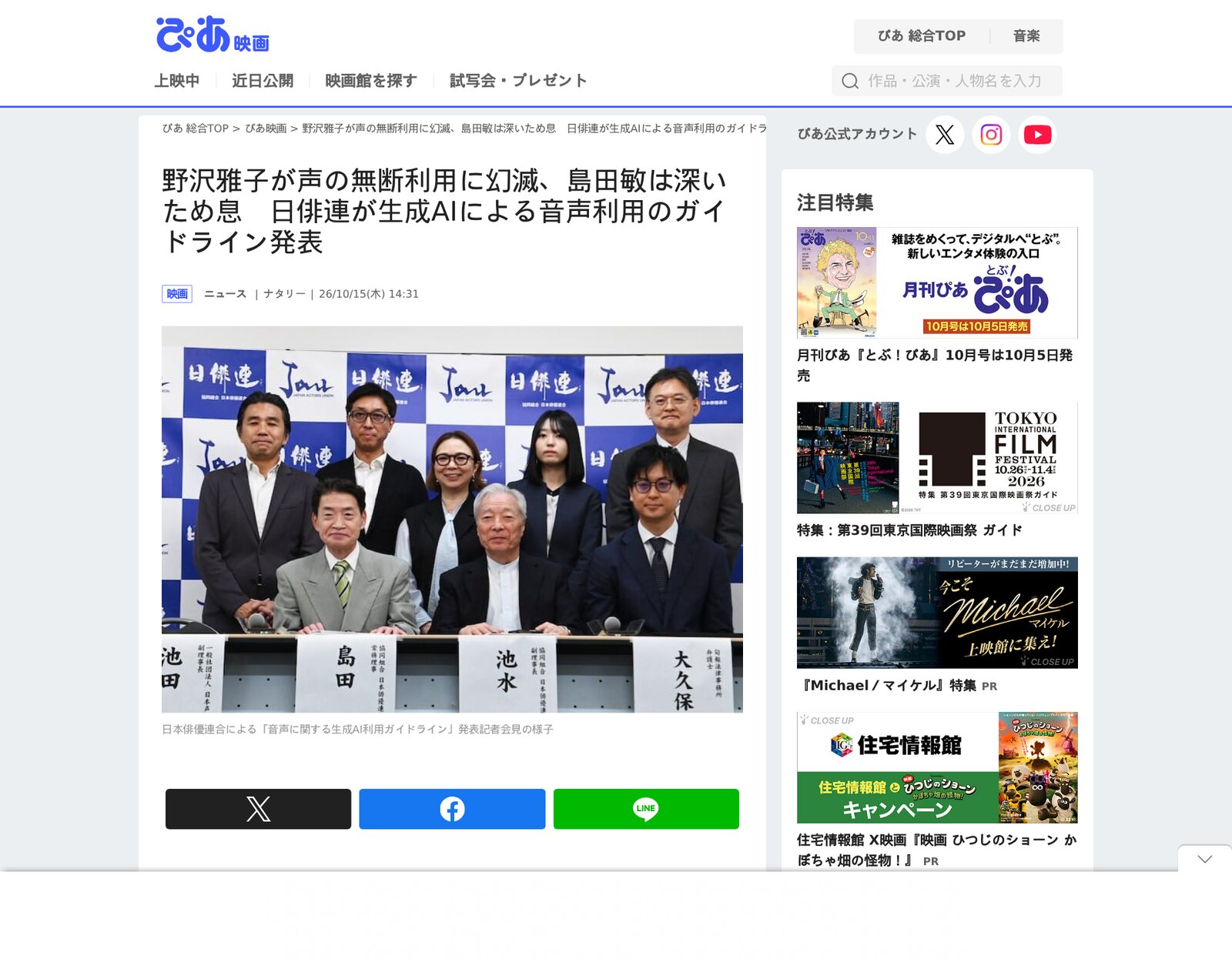
Image: Natalie, on Pia Eiga. Screenshot taken 16 October 2026.
Goku’s voice says she is “a little disillusioned”
Nozawa, 89, began her message with praise. “AI’s progress is amazing,” she said, in the Japanese text reported by Pia Eiga from Natalie’s coverage. “Things I dreamed about as a child keep becoming real.” Then came the turn: “But our voices being used without permission? That leaves me a little disillusioned.”
 VoiceEditSuiteNewThe audio editor that learns how you breathe.Learns from numbers, never your audio. Never used to train AI.See how it works
NHK interviewed her the same day, and Dexerto’s English version of the remarks is blunter. It has her saying an AI copy of her voice has “no heart”, and that using it without asking is “unforgivable” and “the same as theft”. Translations of the NHK interview differ from outlet to outlet, so treat those words as Dexerto’s rendering. Dexerto adds that she is not against the technology itself, only against people who use performers’ voices without permission.
Shimada described the other side of it. He said he was stunned the first time he heard an AI copy of a character he plays singing a song the real voice never sang. “When I first heard it, I was stunned. A deep sigh escaped me,” he told the room, according to Natalie. He has no objection to private fun. “Enjoying it on your own is fine,” he said. “But words a performer never spoke and songs a performer never sang end up on the internet without the performer knowing.”
- Who. The Japan Actors Union, about 2,600 members, announced the guidelines in Tokyo on 15 October 2026.
- Voluntary. They are industry rules, not law, and the union is asking Japan to write a “voice right” into statute.
- Four themes. Permission, pay, other languages and the voices of people who have died.
- No AI dubbing. AI should not replace actors in dubbing for films or dramas.
- Ask again. If a use runs past the end of a contract, the performer is asked a second time.
The four rules, in plain words
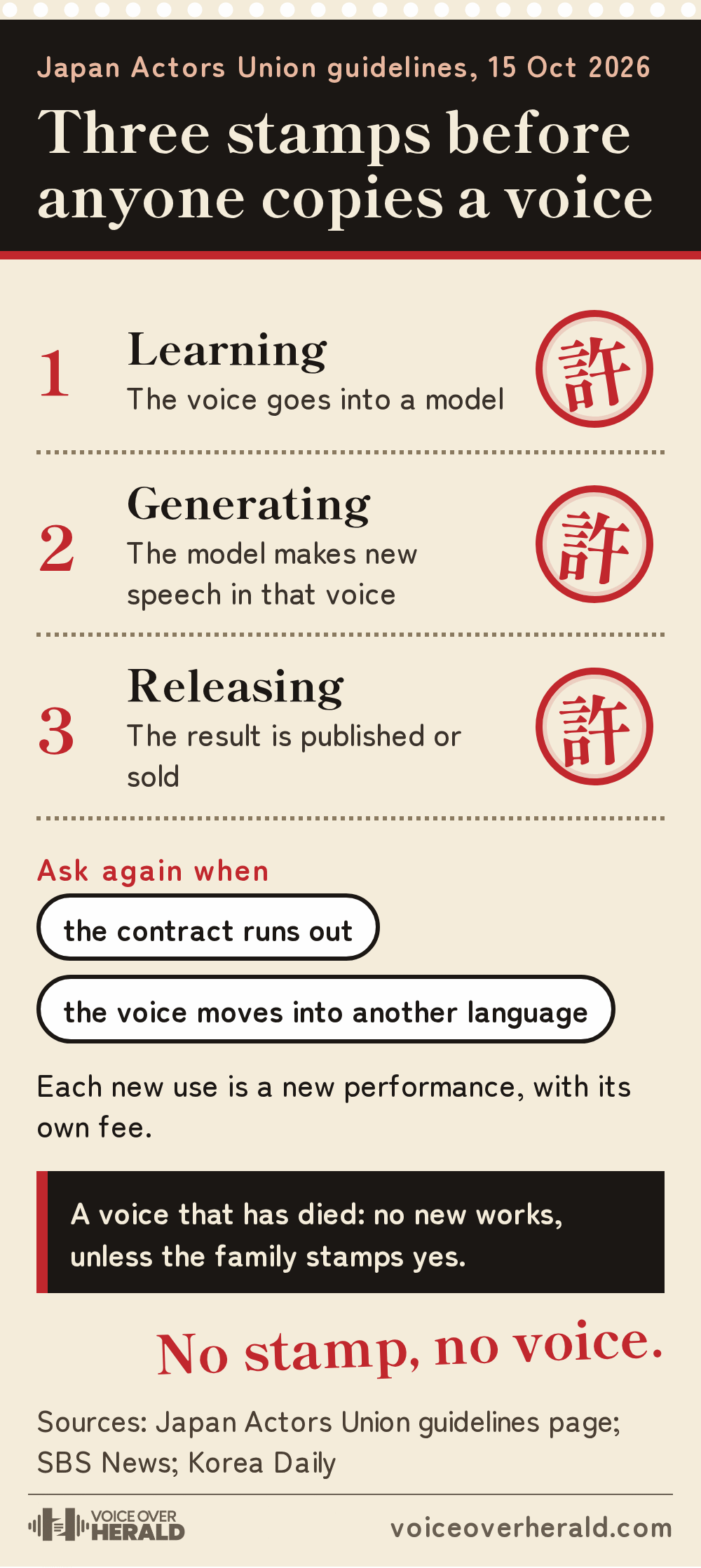
The first rule is permission. At every stage, the person whose voice it is must be told what the voice is for and must say yes in advance. The union’s own page puts it as a requirement to state the purpose and get prior consent “at any stage”, and it names the stages: learning, when a voice is fed to a model; generation, when a model reproduces the sound; and public use. SBS News adds that continued use after a contract expires needs fresh consent.
The second is pay. The union’s position is that a generated voice counts as a new performance, so the performer should be paid for it according to how it is used. Korea Daily’s summary adds that the rules aim to stop one recording session being reused again and again across projects.
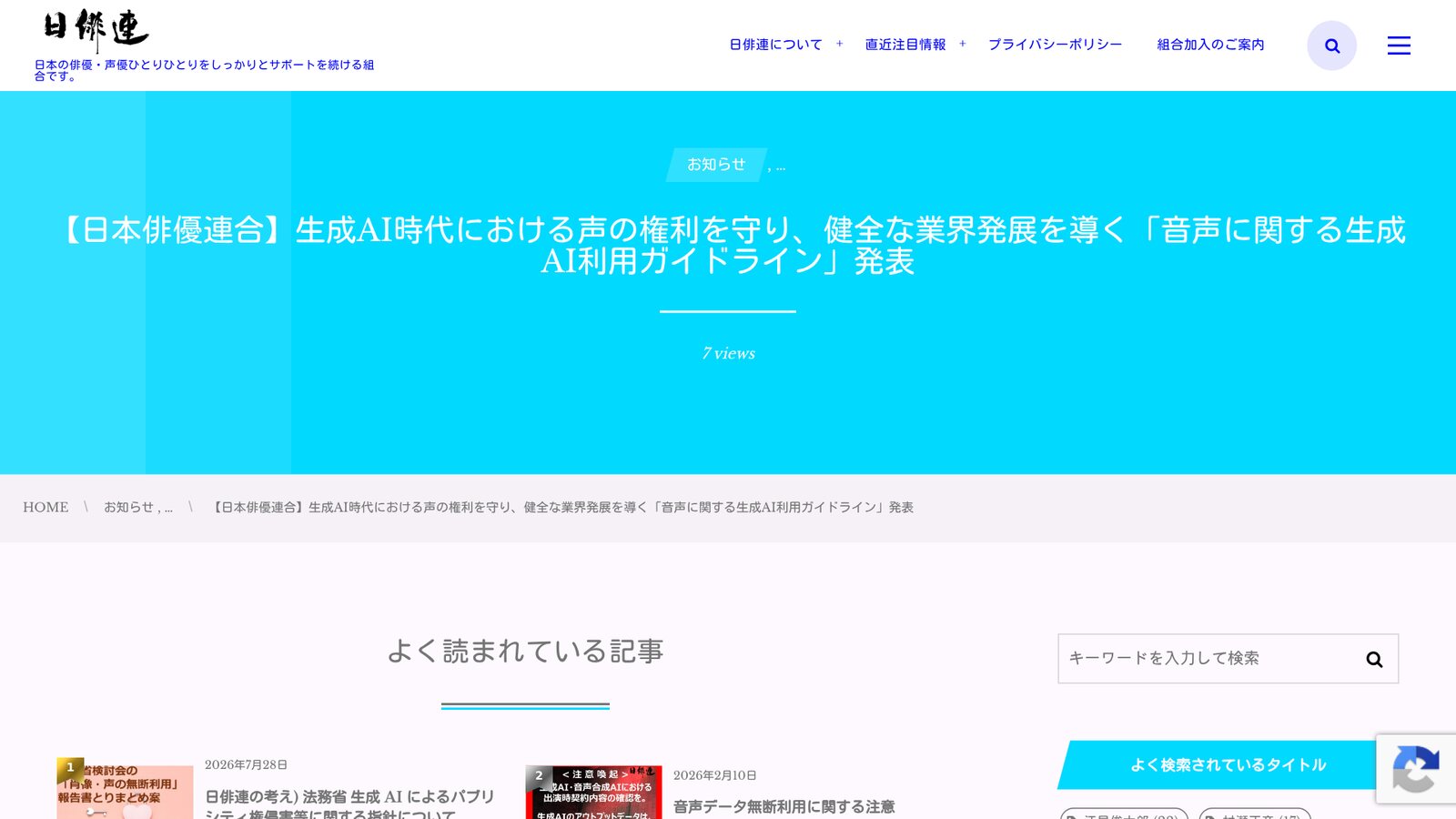
Image: Japan Actors Union website. Screenshot taken 16 October 2026.
The third is language. Using AI to translate or dub a performance into another language needs its own permission and its own fee. For a country whose anime is dubbed around the world, that is a pointed rule: a model can now make a voice speak a language the actor never recorded.
The fourth is the dead. In principle, the voices of deceased performers should not go into new works. The exception is permission from the bereaved family. Alongside the four themes, the guidelines say AI should not replace voice actors in dubbing for films or dramas.
Why the union moved now
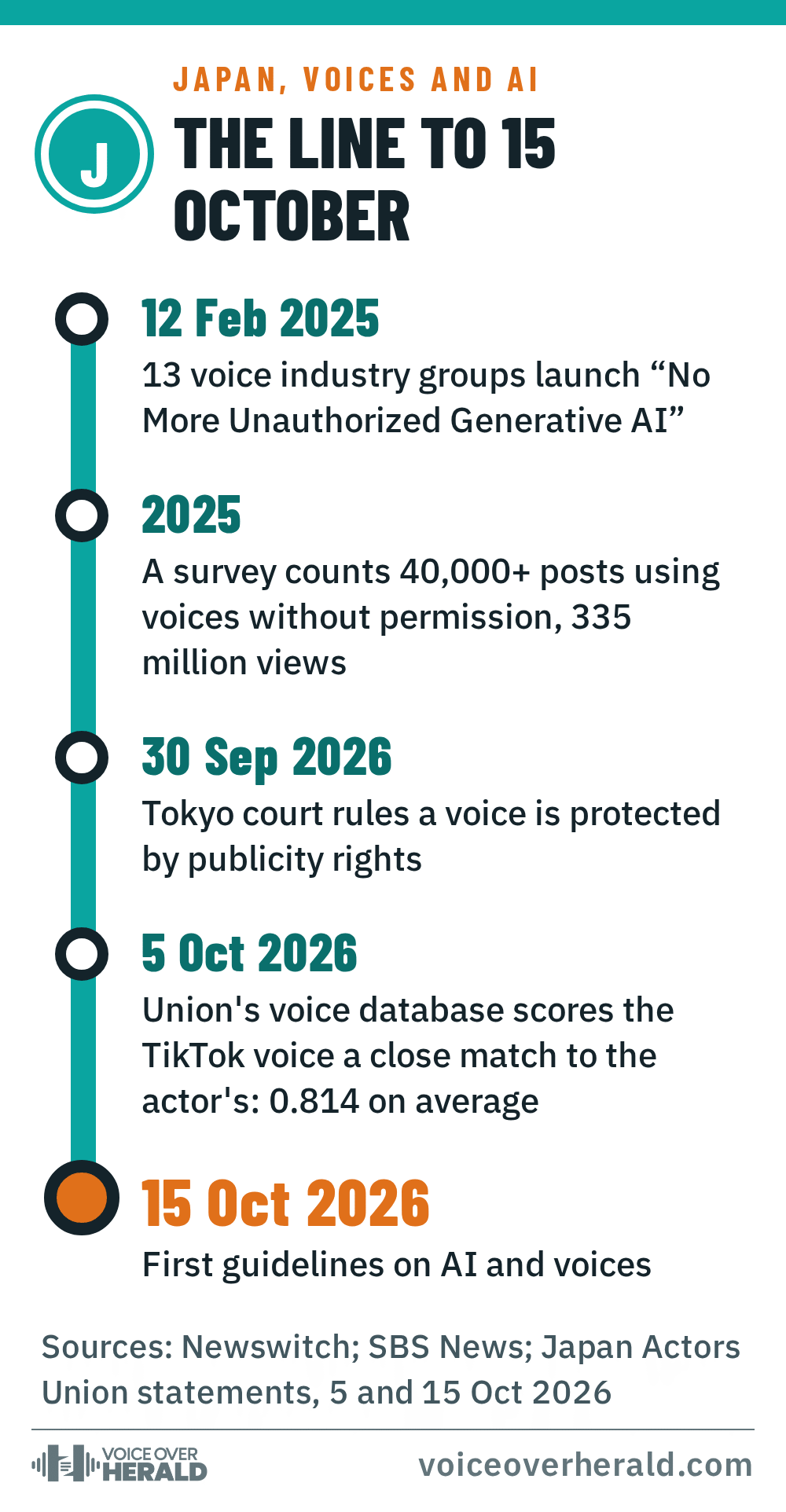
The timing is not an accident. On 30 September a Tokyo court ruled that a voice is protected under publicity rights, in a case brought by voice actor Kenjiro Tsuda against TikTok. He still lost his request for deletion, because the videos were already gone, as Voice Over Herald reported at the time. Five days later the union issued its own statement on the case and said its voice database had found a close match between the TikTok voice and Tsuda’s.
Others had asked for rules before. In February 2025, 13 organisations in Japan’s voice industry launched a “No More Unauthorized Generative AI” campaign. One of its voices, Katsuaki Ikeda of the Voice Actor Business Council, told Newswitch: “We’re not excluding generative AI, but exploring how to coexist with it.” NHK calls the October document the first guideline in Japan on AI use of voices, and it is the first time those demands have been laid out as step-by-step conditions.
What it cannot do yet
The limits are plain. Nobody has to follow the guidelines, and the union has no way to make anyone. A report syndicated on Yahoo points out that AI voice tools work across borders, so a rule written in Tokyo does not bind an app built somewhere else. Japan still has no statute on voice, which is why the union ends its page by calling for a legal “voice right”.
Sasaki’s line explains why the document reads the way it does. It is not a ban. It is a list of conditions, backed by a request for a law. Online in Japan, the reaction mixed serious talk about voice rights with jokes in Goku’s style, a small reminder of how quickly a famous voice can be picked up, with or without a model.
For anyone who works with voices, the list doubles as a checklist for a contract. What is the voice for? Who gets it? For how long? In which languages? And how much for each use? A union has now put those five questions in writing.
Sources: Japan Actors Union (nippairen.com), guideline announcement of 15 Oct 2026 and statement on the Tsuda ruling of 5 Oct 2026; Pia Eiga carrying Natalie’s report, 15 Oct 2026; NHK, 15 Oct 2026; Dexerto, 15 Oct 2026; SBS News; Korea Daily; Newswitch, 12 Feb 2025. Quotations from Japanese-language sources are translated by Voice Over Herald. Images: Toei Animation (Dragon Ball Super: Beerus trailer), Natalie, Japan Actors Union.
Lee este artículo en español: El Sindicato de Actores de Japón publica sus primeras reglas para voces con IA. La voz de Goku dice que usarla sin permiso la 'desilusiona'
Know something about this story, or spotted an error? Tell the newsroom.