
Meryl Streep Is Aslan. Greta Gerwig’s Reason Is a Lesson for Every Voice Actor
Meryl Streep is the voice of Aslan. After seventeen months of reports, first looks and fan arguments, Greta Gerwig confirmed it this week in an Empire cover story, and she explained the choice in language that any working voice actor should read twice. It reads like a casting brief.
What was announced
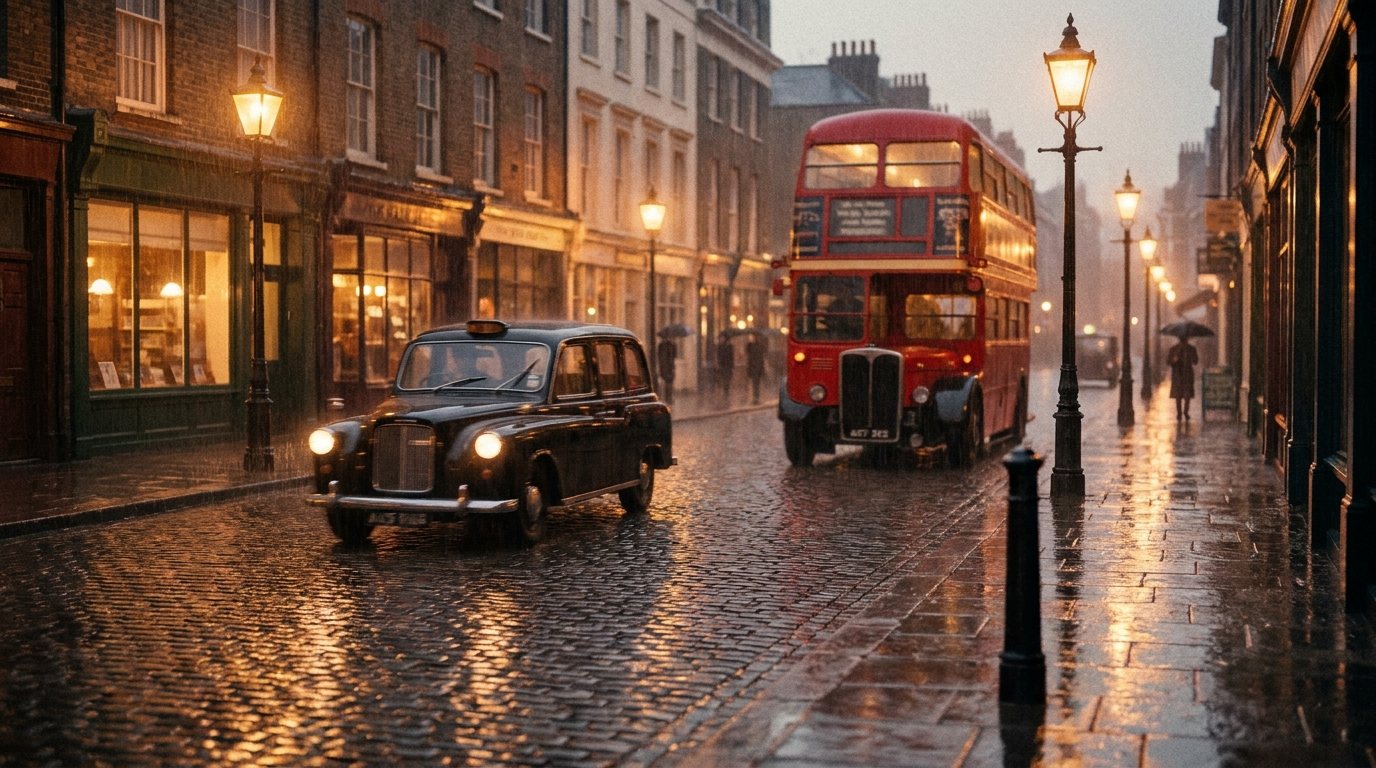
Narnia: The Magician’s Nephew is Gerwig’s adaptation of the first book, chronologically, in C.S. Lewis’s series. It arrives in cinemas, including IMAX, on February 12, 2027, and comes to Netflix on April 2, 2027. Gerwig has moved the story to the 1950s. The cast includes Daniel Craig as Uncle Andrew, Emma Mackey as the White Witch, Carey Mulligan, Ciarán Hinds, and newcomers David McKenna and Beatrice Campbell as Digory and Polly. Mark Ronson and Andrew Wyatt, Gerwig’s Barbie composers, are writing the music. Filming ran in London from August 2025 to January 2026.
 VoiceEditSuiteTrim it, clean it, deliver it. One pass.
Streep’s involvement was first reported by Deadline in April 2025, as “in talks”. Empire’s November issue, on newsstands September 24 and online since September 17, is the first time Gerwig has confirmed it and said why. Empire also carries the first image of the lion: a design with one orange eye and one blue, and red-striped markings, which the magazine says is a nod to one of Gerwig’s inspirations for the film, David Bowie.
What Gerwig said
Asked why Streep, Gerwig gave Empire a description of the voice she was after, not the name. It’s worth quoting in full.
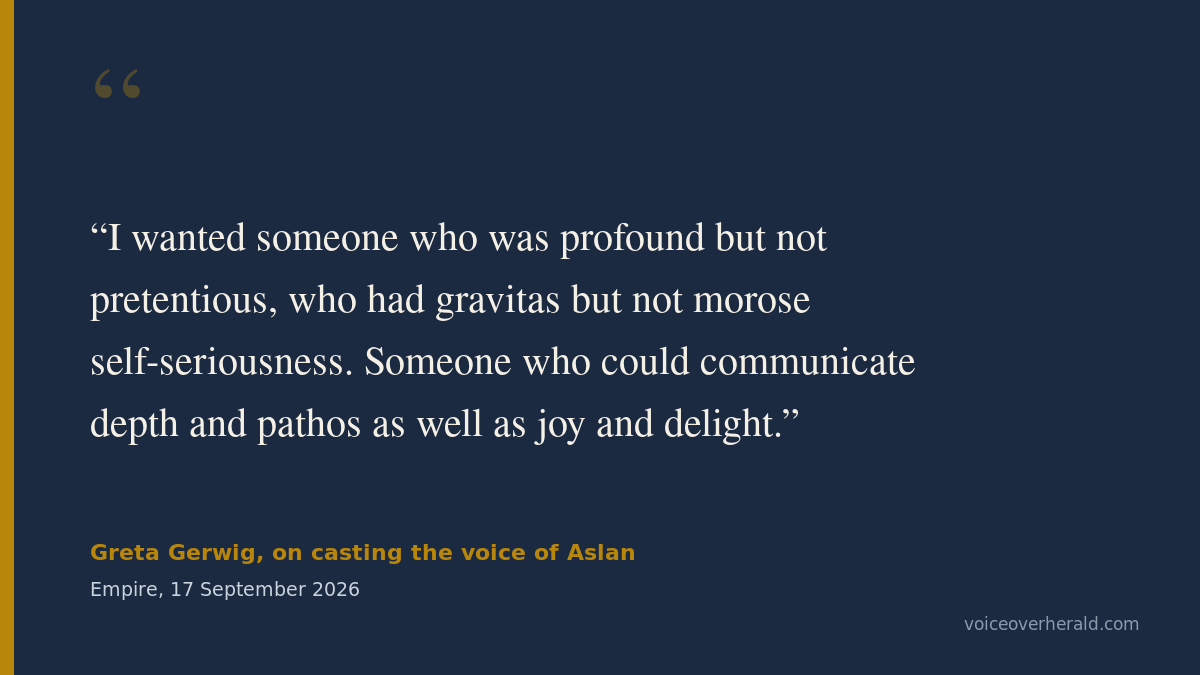
“I wanted someone who was profound but not pretentious, who had gravitas but not morose self-seriousness. Someone who could communicate depth and pathos as well as joy and delight,” she told Empire. And then the harder requirement: “I wanted someone who was older than 70, so there was a wisdom of experience, but who also had the capacity of fresh wonder, like a child. And also to be one of the greatest actors to ever do it. That list is not a long one.”
Notice what is missing from that. Nothing about a deep voice. Nothing about a lion. Nothing about gender. The whole brief is about holding two opposite qualities in one voice at the same time: weight without heaviness, depth alongside delight, experience alongside wonder.
The reaction
Aslan has been male in all seven books and was voiced by Liam Neeson in the three Walden Media films between 2005 and 2010, so a woman in the role was always going to divide the audience. It has. The comment threads at NarniaWeb, the largest fan community, run from delight to outright opposition, with the objections landing on three things: the voice being a woman’s, the androgynous look of the design, and the distance from the books.
What’s notable for anyone who works in voice is that the arguments are all about identity and fidelity, and none of them is about whether Streep can do the job. That part, nobody is disputing.
The question working voice actors will ask
Every time a film star is cast in a voice role, the same conversation starts in the voice over world: is this a performance decision or a marketing one? Andrea Romano, who voice directed Batman: The Animated Series, Animaniacs and Avatar: The Last Airbender, gave the most honest answer we know of in a 2024 interview with Backstage:
“There is a huge demand by producers and studios to use celebrities, [but] I always was of the mind that the best actor for the role should be the one who is cast. And I will fight for the rank-and-file voice actor over the celebrity every time, unless the celebrity is truly qualified to do it.”
Both halves of that apply here. The demand is real: a Streep credit sells a February release in a way an unknown voice cannot, and Netflix is giving this film seven weeks in cinemas and IMAX before it streams, far longer than it usually allows. And the qualification is real too. Gerwig’s own list of requirements, someone over 70 with that particular mix of gravitas and lightness who is also among the best actors alive, is short by design, and a rank-and-file voice actor was never on it. This is the case Romano allows for.
Why the brief matters more than the name

Here’s the useful part for the rest of us. Gerwig’s description is exactly how good directors talk about voices, and almost never how casting notices are written. A notice says “warm, authoritative, 50s to 60s”. A director says “gravitas but not morose self-seriousness”. The first is a category. The second is a performance.
If you read auditions for a living, that gap is where you win or lose. When a brief says “authoritative”, most people play weight and lose the lightness. When it says “warm”, most people play soft and lose the spine. The reads that get shortlisted tend to be the ones that hold both at once, which is precisely what Gerwig says she was listening for. Streep’s casting is a celebrity story on the surface. Underneath, it’s a very clear statement of what a director means by “the right voice”, from one of the few directors who gets to say so on a magazine cover.
Romano’s advice to actors without a famous name, from the same Backstage interview, is the practical version: “the key is in your demo reel: Make sure it’s not overproduced. I don’t want to hear what your voice sounds like sped up or pitched or slowed down or reverbed. I want to hear what you do with your voice.”
What happens next
Empire’s full feature is in the November 2026 issue. The film opens February 12, 2027 in cinemas and on Netflix from April 2, a seven-week theatrical window that is unusual for Netflix. Whether that model holds for a second film will depend on how this one does, and a fair amount of that will ride on a voice.
Sources: Empire (Ben Travis, 17 September 2026); NarniaWeb; Backstage (Rafael Motamayor, 10 July 2024); Deadline, 3 April 2025.