
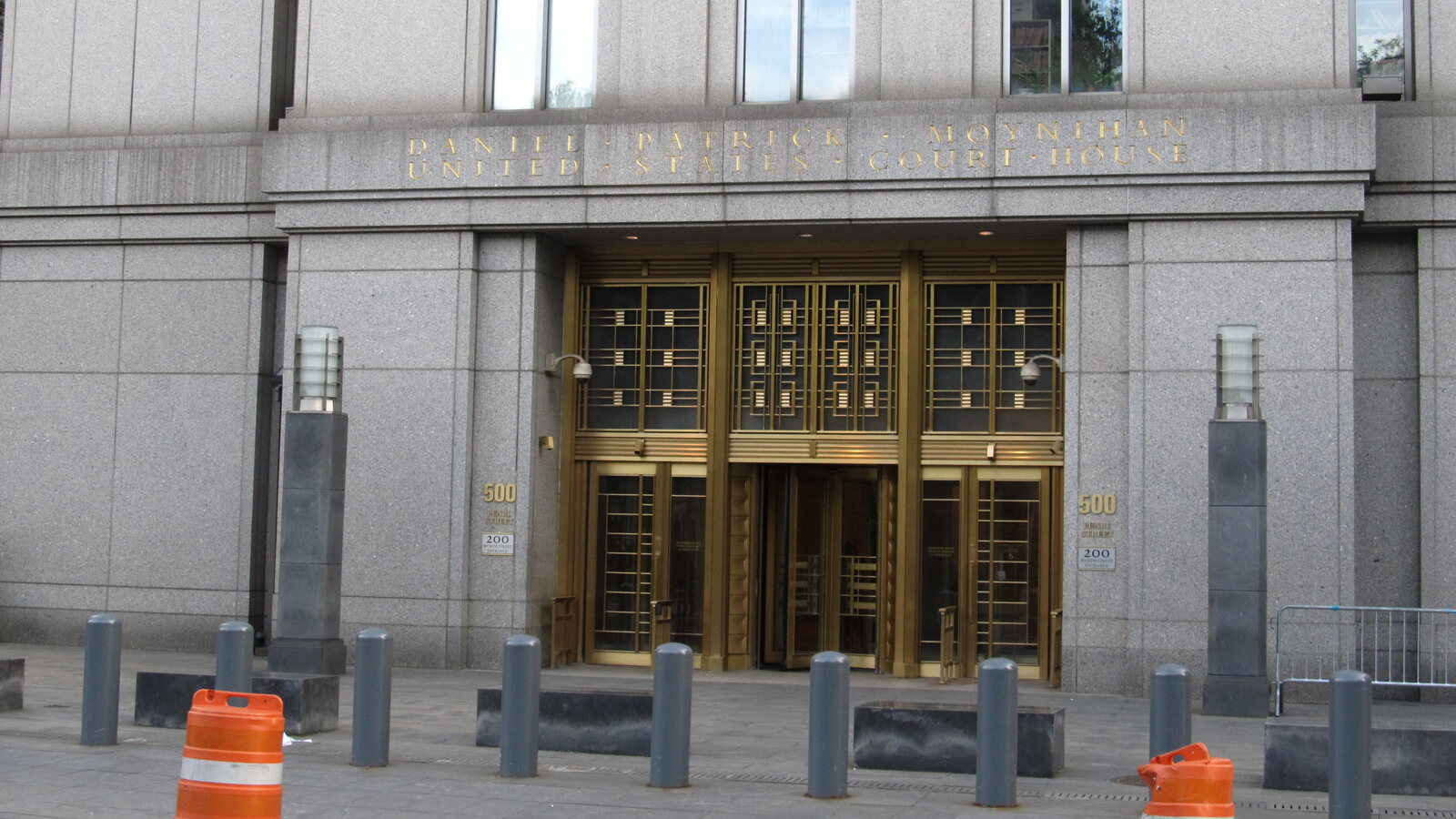
Voice Actors Losing Work to AI Are Now Part of the OpenAI Copyright Fight. Four Unions Want the Judge to Hear Them
Four entertainment unions have asked a federal judge in New York to hear from the people behind the work before deciding whether AI companies can train on it for free. Their proposed brief in the OpenAI copyright case names voice actors as workers already losing jobs, and leans on a survey of more than a thousand of them.
On Thursday, 29 October, SAG-AFTRA, the American Federation of Musicians and both branches of the Writers Guild of America filed a motion for leave to submit a friend-of-the-court brief in In re OpenAI, Inc., Copyright Infringement Litigation, the consolidated case in the Southern District of New York before Judge Sidney H. Stein. The 34-page brief backs the plaintiffs, a long list of newspapers and authors, and asks the court to reject any rule that treats AI training as fair use across the board.
It’s still a proposed brief. The court has to grant the unions permission before it formally joins the record. But the argument is already public, and for once a filing in a fight about newspapers and novels stops to talk about the people in the booth.
The paragraph that matters most to anyone with a home studio sits on page 19 of the brief. It ties synthetic voices directly to lost bookings, and it brings in the fast-growing world of app-based vertical dramas.
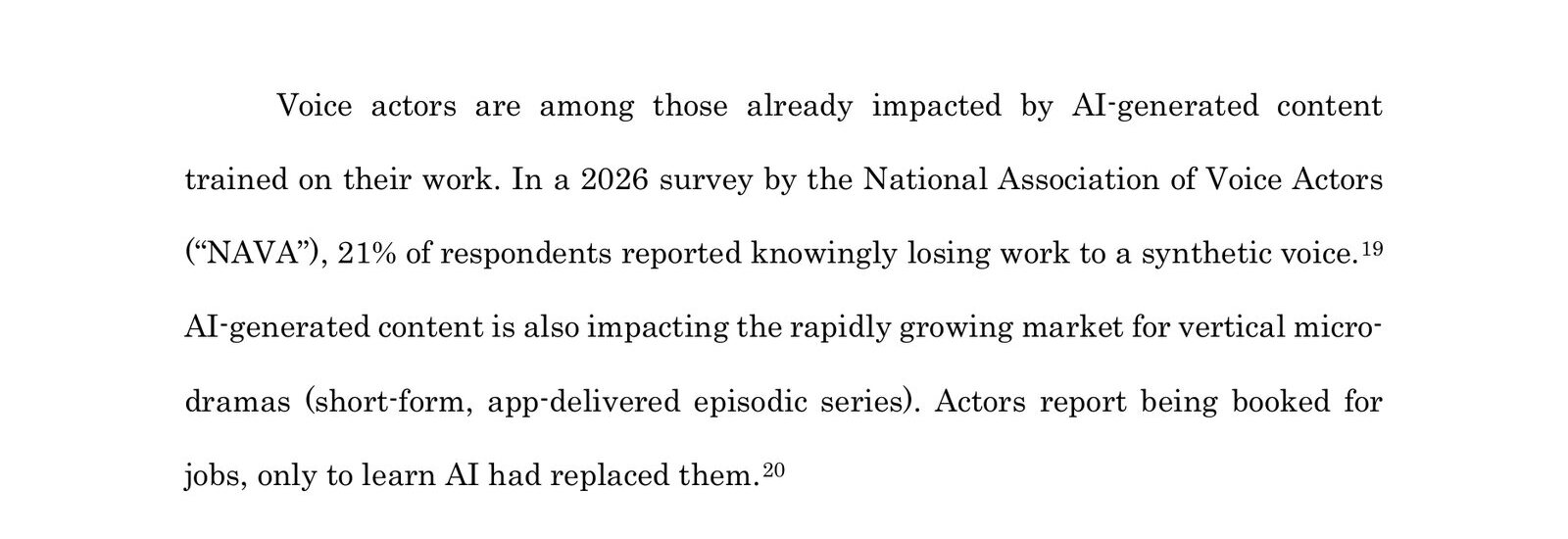
Page 19 of the proposed brief, filed 29 October 2026. Image: In re OpenAI, Dkt. 2332, via CourtListener
The survey behind the number
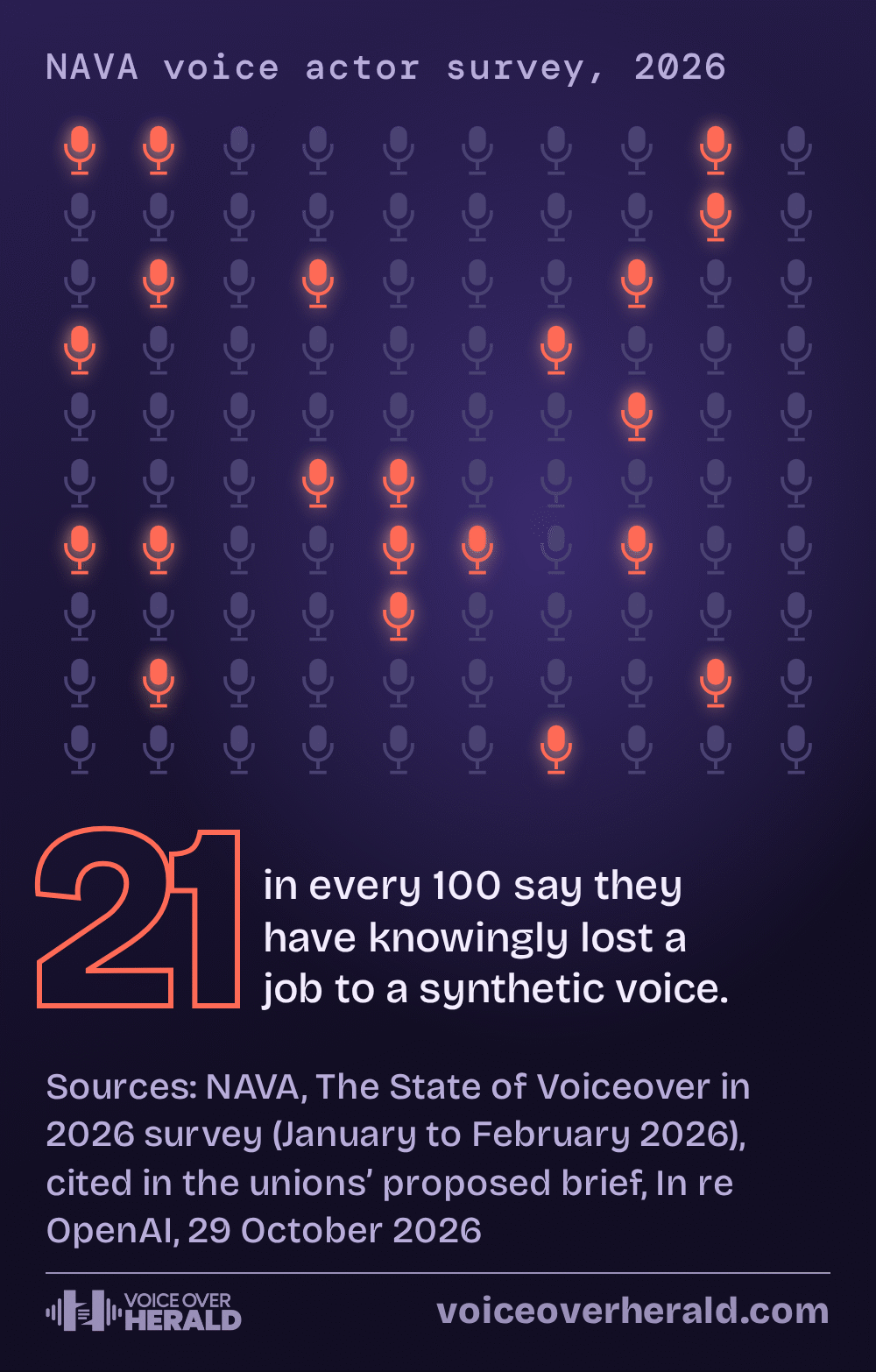
The 21 percent on page 19 comes from the National Association of Voice Actors. NAVA’s State of Voiceover in 2026 survey ran from 22 January to 22 February and collected 1,379 responses, according to NAVA’s own results page, which says the survey was spread through social media, voiceover groups on Facebook and NAVA’s contact list. Asked “Have you ever knowingly lost a job to a synthetic voice?”, 21 percent said yes.
The same section of the survey shows how few voice actors have gone the other way. Only 13 percent said they had willingly agreed to let a third party make a synthetic version of their voice. Yet 53 percent said they’d be open to having one ethically created in the future. The brief adds in a footnote that “94% of respondents indicated they had not made a synthetic version of their voice,” with industry impact, the lack of laws on AI and consent among the top reasons.
NAVA's survey page, screenshot taken 1 November 2026. Image: NAVA
Alongside NAVA, the brief points to vertical micro-dramas, the short episodic series sold through phone apps. “Actors report being booked for jobs, only to learn AI had replaced them,” it says, citing a June report in Business Insider.
What the unions are actually asking for
Fair use is the part of US copyright law that lets someone use protected work without permission in some circumstances, judged case by case on things like the purpose of the use and its effect on the market for the original. OpenAI and Microsoft argue that training their models falls inside it. The unions say no blanket answer is possible.
 VoiceEditSuiteNewAuto Clean Up now learns you.Learns from numbers, never your audio. Never used to train AI.See how it works
“The harms of unlicensed training fall not just on companies like the News Plaintiffs, but on the countless professionals behind the work,” the brief says. It calls the dispute “no more than an ordinary copyright case,” borrowing the phrase from a September ruling by the federal appeals court in Philadelphia, and warns that treating all training as fair use would “effect a potentially enormous transfer of value from the creators and owners of copyrighted works to the commercial entities that seek to exploit them.”
The case itself is huge. As Deadline reported, it consolidates suits against OpenAI from The New York Times, other newspapers and The Intercept with claims from authors including Ta-Nehisi Coates, Michael Connelly and Jodi Picoult. The unions’ members aren’t plaintiffs. Their point is that whatever the judge decides about training will reach far beyond the works in this courtroom, “including to those on which the Unions’ members build their livelihoods.”
Describing what performers bring to that work, the brief gives voice actors their own line: they “develop the technique to sustain characters, creatures, and combat sounds through hours of recording.”
Why the bargaining table is in a copyright brief
The unions also argue that a market for training licences already exists, because they’ve been bargaining over it. AI was a central issue in the 2023 strikes by SAG-AFTRA and the WGA, and the brief says the deals that ended them set “minimum compensation terms” for members’ digital replicas and guardrails around fully synthetic characters.
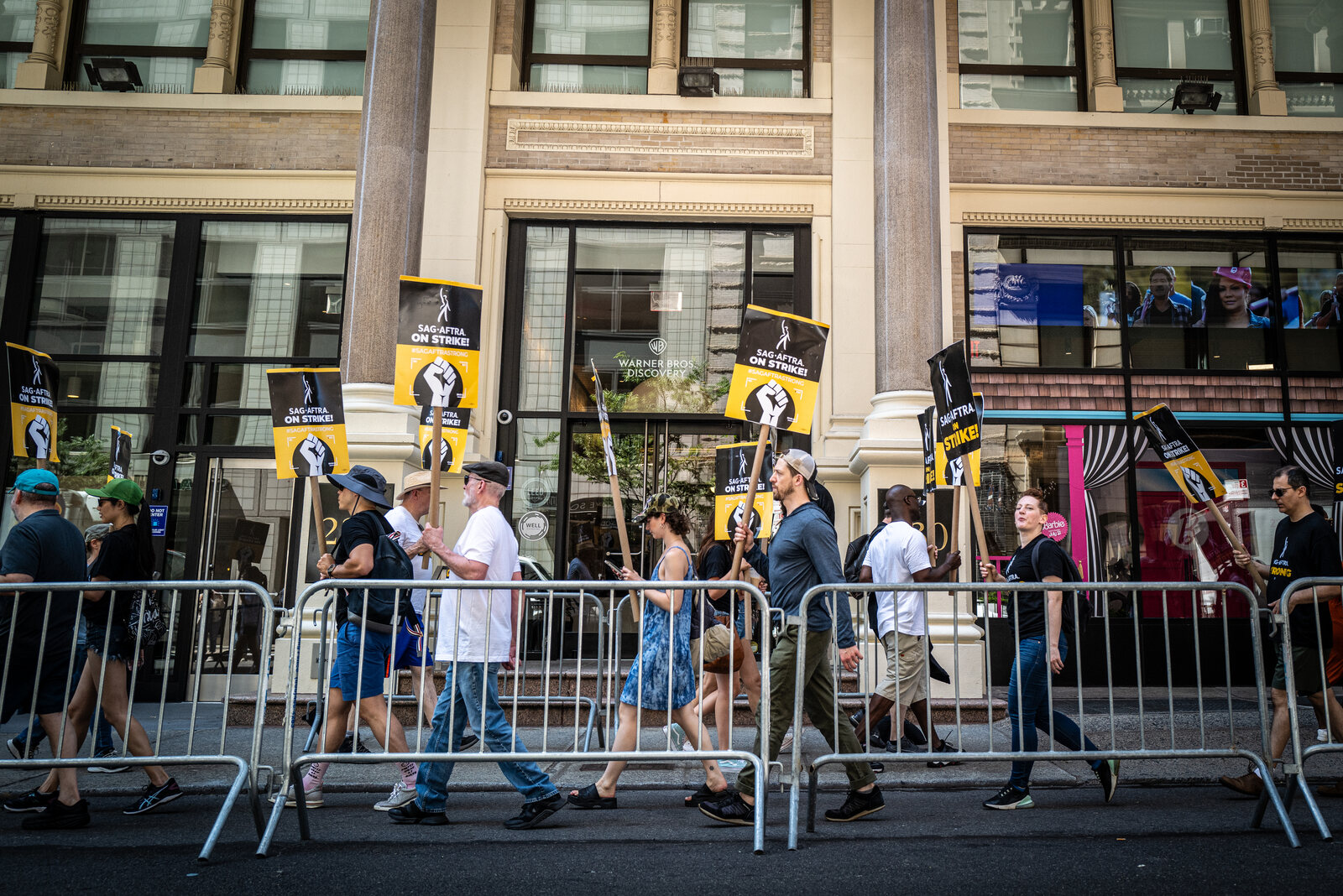
SAG-AFTRA picket outside Warner Bros. Discovery in New York, 31 July 2023. Photo: Phil Roeder via Wikimedia Commons, CC BY 2.0
The 2026 contracts went further. According to the brief, they include “a notice-and-bargaining right for third-party licenses of covered work to train public-facing, commercially-available generative AI systems.” Voice Over Herald has reported on the same thread running through the TV animation deal SAG-AFTRA members ratified this week.
That’s where the unions put their sharpest warning. “These negotiated provisions presuppose that training on covered work is a use that can be licensed and that the people whose work is used have a stake in the terms,” the brief reads. “A ruling here that training is categorically fair use would render moot the terms the Unions and the industry agreed to at the bargaining table.”
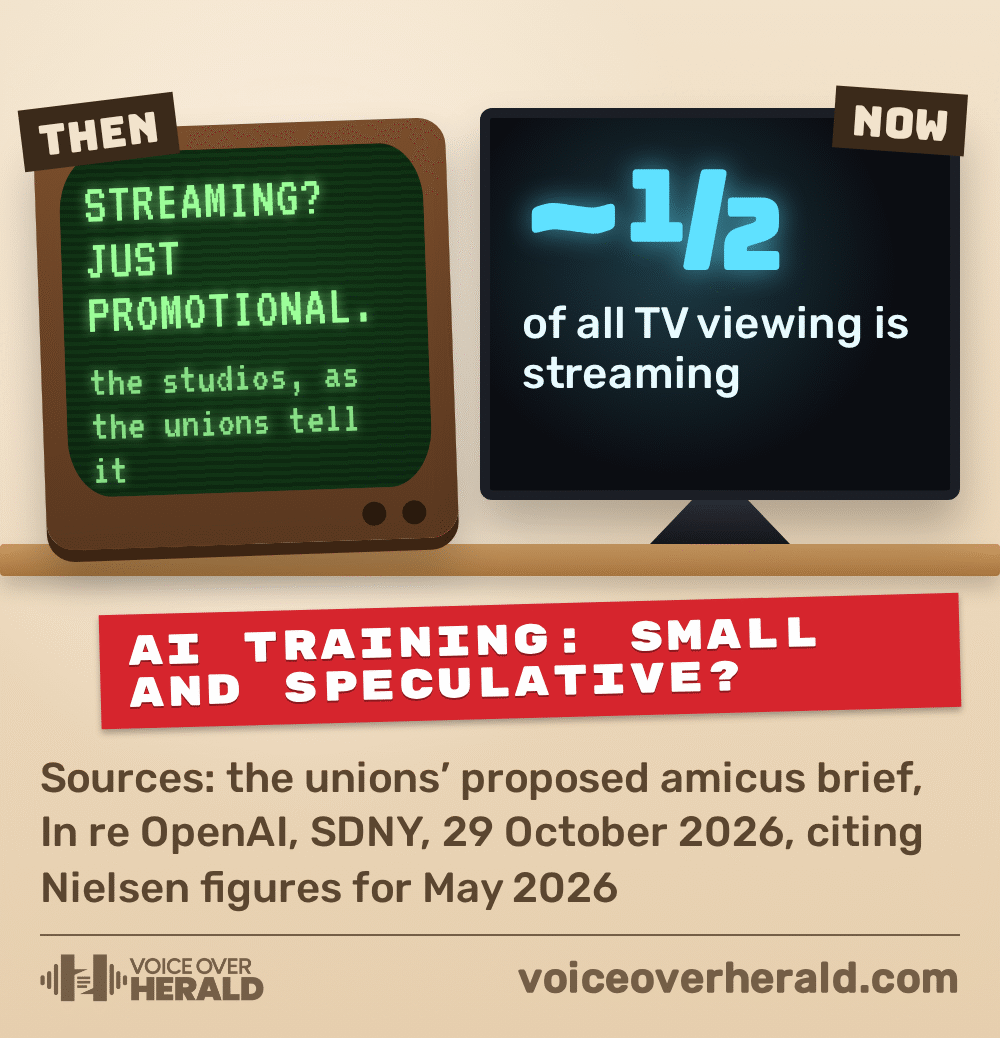
The brief also reaches back to an earlier fight. When studios first put shows online, it says, they “insisted that streaming was just promotional.” The unions treated it as a new market anyway, and streaming pay is now a key part of members’ compensation. Training data, the brief argues, “might currently look small and speculative, but it is already developing.”
What it means if you voice for a living
Most voiceover work isn’t union work, and most of it is recorded for a client who owns the finished file. So this case won’t hand anyone a royalty for a corporate narration that ended up in a dataset. What it could decide is whether that recording is free raw material by default, or something an AI company has to license from whoever holds the rights.
The brief is blunt about where recordings go once they leave the studio. “When AI developers transfer datasets containing the Unions’ members’ work, voices, and likenesses to each other, they do so without the consent, compensation, credit, or control that are central to the Unions’ bargaining on AI,” it says, adding that such trades “evade the Unions’ negotiated terms, even if the dataset originated with a signatory.”
For non-union voice actors, the practical lesson is the same one this year keeps teaching. The contract is where your voice is protected or given away. NAVA publishes an AI rider for exactly that reason, and Equity’s warning last week about a game casting that wanted voices for AI training showed how often the training clause turns up in ordinary jobs.
What happens next
Judge Stein first has to decide whether to accept the brief. The fair use questions themselves are being fought out in the parties’ own court papers, and the brief answers points OpenAI and Microsoft have made there. OpenAI has argued that ChatGPT can let “novice writers or individuals who may never attempt to write a book” compete in the book market. Microsoft’s papers say that each time new technology arrived, “the rights owners adapted, and our world was richer for it.”
The unions’ reply is that adapting is exactly what they’ve done, at the bargaining table, every time. You can read the full proposed brief on CourtListener. NAVA’s survey results are on NAVA’s website.
Sources: Proposed brief of SAG-AFTRA, AFM, WGA West and WGA East as amici curiae, and notice of motion for leave to file, In re OpenAI, Inc., Copyright Infringement Litigation, No. 25-md-3143 (S.D.N.Y.), Dkt. 2332, filed 29 October 2026; Deadline (Katie Campione); NAVA, The State of Voiceover in 2026 survey, results pages viewed 1 November 2026. Main image: Ken Lund via Wikimedia Commons, CC BY-SA 2.0.
Lee este artículo en español: Los actores de voz que pierden trabajo frente a la IA llegan a la pelea de derechos de autor contra OpenAI. Cuatro sindicatos quieren que el juez los escuche
Know something about this story, or spotted an error? Tell the newsroom.