
Aoashi’s Voice Cast Recorded the Match Shouts Separately. None of Them Were Ad-Libbed
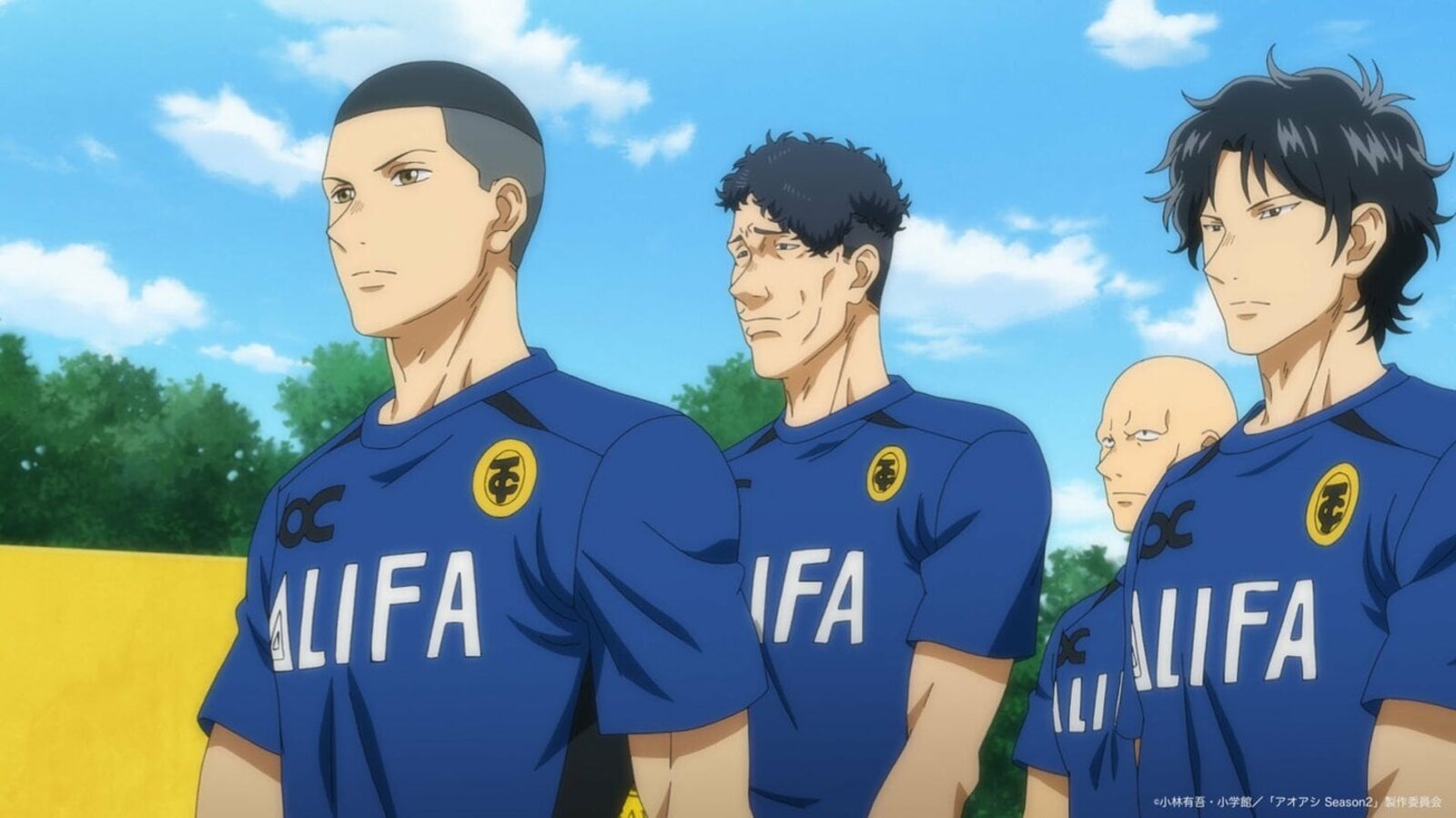
Aoashi Season 2 is a month into its run on NHK E-Tele, and three of its A team voices have explained what a football anime asks of the people in the booth. Junya Enoki, Koki Uchiyama and Kazuyuki Okitsu told ABEMA’s Anime Freaks that the breathing, the shouts across the pitch and even the feints were recorded separately, that none of those calls were ad-libbed, and that a recording session works a lot like a passing move.
The second season of the anime based on Yugo Kobayashi’s manga began on Sunday 4 October and airs every Sunday at 5 p.m. Japan time. It follows Ashito Aoi, voiced by Koki Osuzu, after his promotion to the A team of Tokyo City Esperion’s youth set-up, where the players are better and the pace is faster. Season 1 aired from April to September 2022.
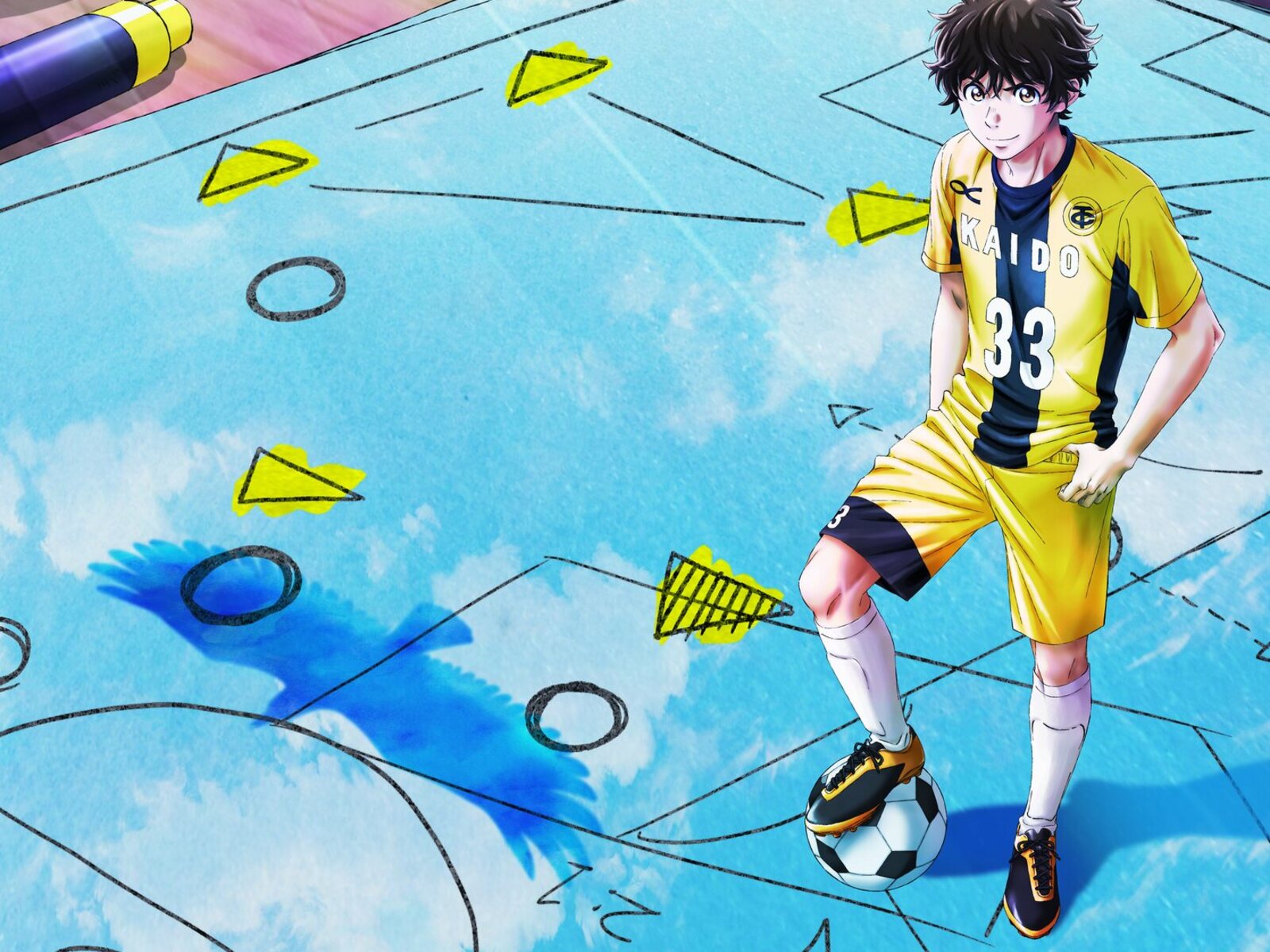
Image: Yugo Kobayashi, Shogakukan / Aoashi Season 2 Project, Season 2 teaser visual
For a two-part interview published on 1 November, ABEMA spoke to Enoki, who voices Yuma Motoki, Uchiyama, who voices Yoichi Kiriki, and Okitsu, who voices Kenta Yoshitsune. All three characters play for the A team, and all three actors had something to say about the unglamorous sounds that make a match feel real.
From small groups to a packed studio
Season 1 was recorded during the pandemic, with the cast split into small groups. Season 2 brought everyone back into the same room, opposition included.
“The studio was packed,” Okitsu said. “During Season 1, because of the pandemic, we recorded in small groups. This time, both teams, including the opposing side, finally got together to record, but then it was a struggle because there were so many people (laughs).” He thinks it paid off: “Still, I think that recording together made it easier for us to picture what kind of person each of us is, compared with Season 1.”
Enoki put it more simply. “Everyone gets along well, so I think the teamwork is really good,” he said. “We often record by team, but the Esperion team has been having fun recording, and it reminds me that recording together is just better.”
For voice actors who mostly record alone at home, that’s worth sitting with. A lot of the energy in an ensemble scene comes from hearing the person next to you react, and Okitsu’s point is that the cast learned who their teammates were by standing beside them.
The sounds nobody writes headlines about
Uchiyama didn’t appear in Season 1, and he said Season 2 reminded him how demanding sports anime can be. “The recording sessions did have a really good atmosphere, but it made me realize for the first time in a while how tough voice acting for a sports anime is,” he said.
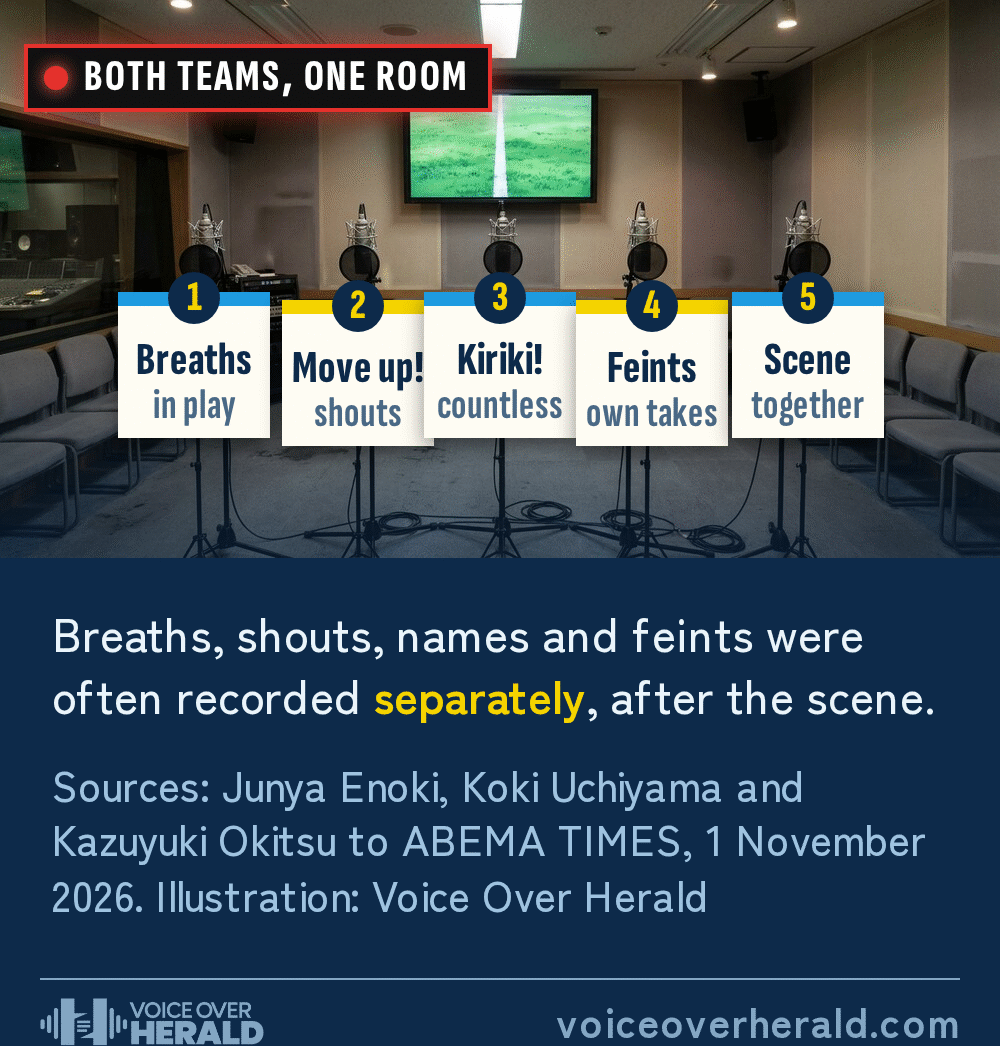
The reason is everything that isn’t a line of dialogue. “As with other sports anime, there are a lot of audio elements besides lines, such as the breathing during play,” Uchiyama explained. “Some parts can be recorded all at once, but for others we say, ‘Let’s record this separately later,’ and the workload keeps growing.”
The shouts players throw at each other during a match were their own job. “We also record in-match shouts like ‘Move up!’ separately, and that was quite a lot of work,” Enoki said. “I feel like I said ‘Kiriki!’ countless times.”
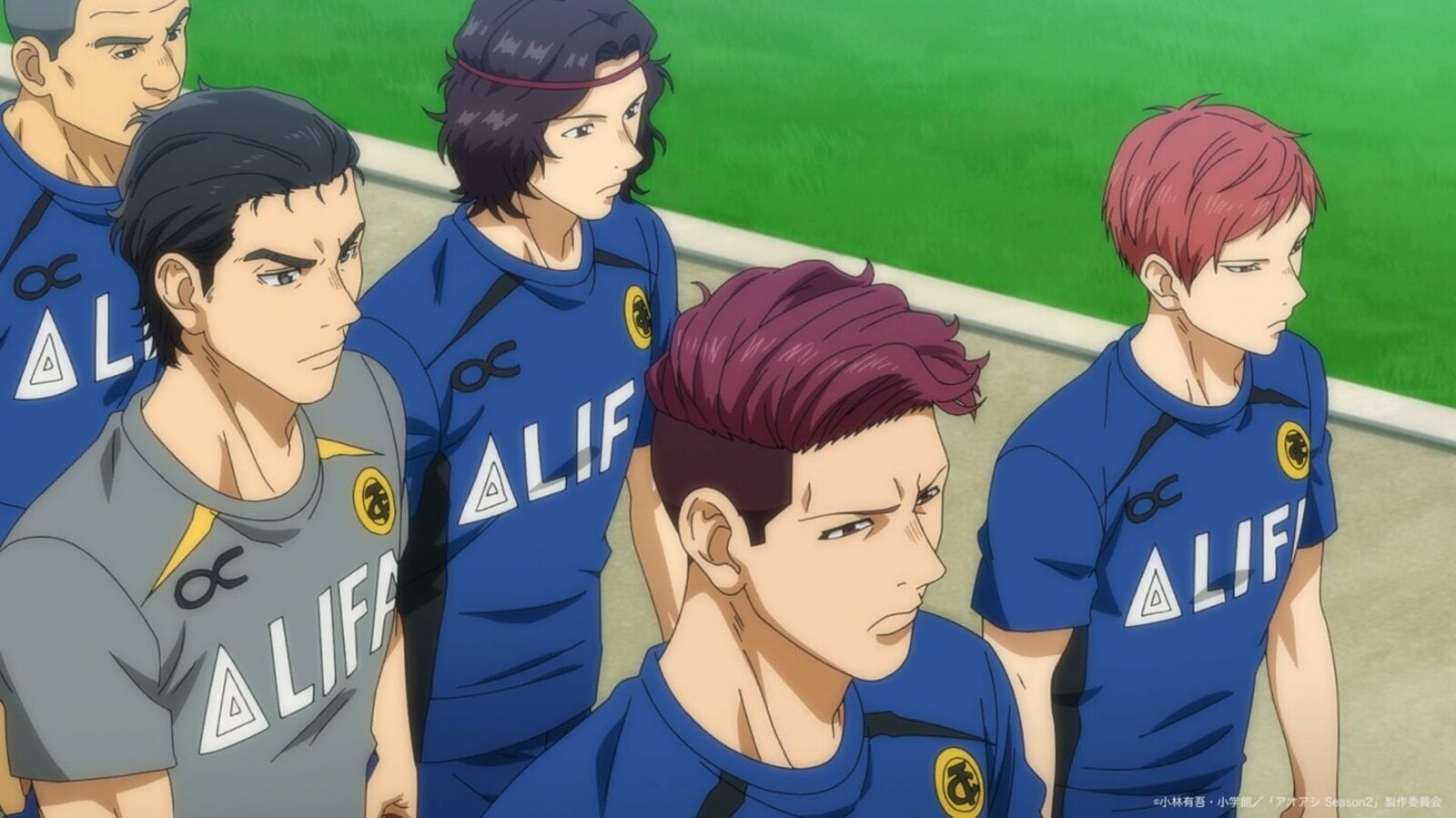
Image: Yugo Kobayashi, Shogakukan / Aoashi Season 2 Project
Those calls are a kind of walla, the background voices that fill a crowd or a pitch, except each one belongs to a named player. Uchiyama said the cast often doesn’t know where any of it will land: “We don’t know where in the finished anime they’ll be used, but that’s unique to sports anime.”
Shouts written for each position
If you’ve ever been told to just ad-lib some crowd noise, this part is the surprise. On Aoashi, nobody improvised the calls. “What’s more, they weren’t ad-libs. Those lines were prepared in advance too,” Enoki said. “I could shout something like ‘Wide!’ if I wanted to, but depending on the position, a player wouldn’t say it.”
Okitsu said the writing was built so the sound never contradicts the picture. “It came across that the lines were carefully designed so that they never misrepresent the situation in the game,” he said. “Who has the ball, and who is the ball going to? There are feints too, but we recorded the lines separately for those.”
That’s a useful lesson for anyone booked for group work on a sports title, a game or a commercial. Know where your character is on the field and what they can see, and your background lines will sound like football rather than noise.
Playing a character who won’t speak clearly
Okitsu’s own character makes the job harder still. “In the finished footage, I think you’ll hear lines like these coming from all over the place, but Yoshitsune is a character who doesn’t speak clearly, and he says some rather odd things (laughs),” he said.
He described the balancing act in the first part of the interview. “He says things nobody can understand or stops partway through a sentence, and I struggled quite a bit with that in Season 1 too,” Okitsu said. “Respecting the character, I thought about whether he should say it in a slightly odd way or whether it’s better not to say it clearly, and I performed with that in mind. It’s possible that none of it was used (laughs).”
It’s a familiar problem in any booth: a mumble still has to be a choice, and the actor has to commit to it knowing the mix might bury it.
Voice recording as a passing game
In the second part of the interview, ABEMA asked whether the cast could relate to the “playing while thinking” at the heart of Aoashi. Uchiyama said communication beyond your own lines matters. “Voice recording is basically something everyone does together, so it isn’t something one person can complete alone,” he said. “Expressing your own lines accurately matters, but communication becomes important outside of your own lines.”

 VoiceEditSuiteNewThe audio editor that learns how you breathe.Learns from numbers, never your audio. Never used to train AI.See how it works
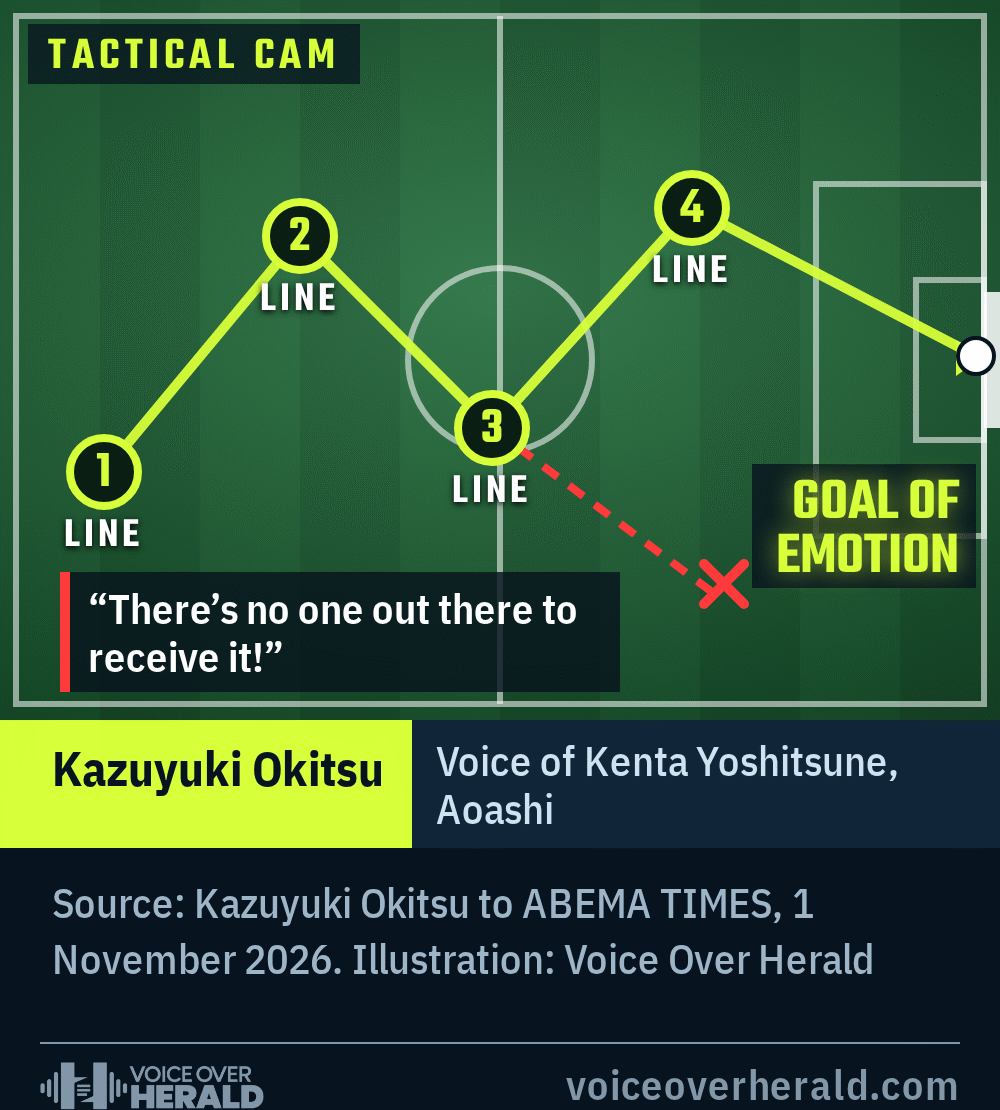
Okitsu turned it into a football move. “I think our goal is for what we want the work to be, as a whole, to reach viewers as emotion,” he said. “We keep passing the ball through the accumulation of one line after another and score the goal of emotion, but if we overdo it and get a ‘There’s no one out there to receive it!’ moment, the goal doesn’t happen.”
Enoki tied it back to the show’s theme of instinct. “When you do something deliberately, it tends to show, or it can come across as contrived, so I can relate to the idea of thinking while also trying not to think,” he said.
And Okitsu said the clock is the same in both worlds. “Just as there’s no time to consult or put things into words while playing soccer, time is limited in voice recording too. We move on our own instincts, and that leads to the goal,” he said. “In the sense of working toward a shared aim, I think soccer and voice recording are the same.”
Where to watch
Aoashi Season 2 airs on NHK E-Tele every Sunday at 5 p.m. Japan time. The manga ran in Shogakukan’s Weekly Big Comic Spirits from 2015 and finished with its 40th volume in August 2025, with more than 25 million copies in circulation, according to ABEMA.
The next time a sports anime’s crowd scene sounds right, there’s a fair chance someone in a packed studio shouted a name a few hundred times to get it there.
Sources: ABEMA TIMES / Anime Freaks, “Aoashi Interview: Junya Enoki, Koki Uchiyama, and Kazuyuki Okitsu on the Challenges Unique to Voice Acting for a Soccer Anime” and “Aoashi Cast Junya Enoki, Koki Uchiyama, and Kazuyuki Okitsu on What Voice Acting and Soccer Have in Common, and Acting for the Times” (interviews by kato, 1 November 2026); ABEMA TIMES / Anime Freaks, “TV Anime Aoashi Season 2 Broadcast Start Confirmed for October 4!” (13 March 2026). Quotations are from ABEMA’s English edition. Main image: Yugo Kobayashi, Shogakukan / Aoashi Season 2 Project.
Lee este artículo en español: Las voces de Aoashi grabaron aparte los gritos del partido. Ninguno fue improvisado
Know something about this story, or spotted an error? Tell the newsroom.