A Hijacked Podcast Kept Publishing in Its Host’s Cloned Voice. Here’s How to Lock Down Yours
A podcast that went quiet in 2021 came back this year with new episodes its host never made, and the show that investigated it says the voice on them was his, cloned with AI. This week, an industry investigation found more than 1,700 copied shows on a single podcast host. If you voice for a living and run a show, a demo feed or an audiobook sampler, here’s what happened and what to lock down this week.
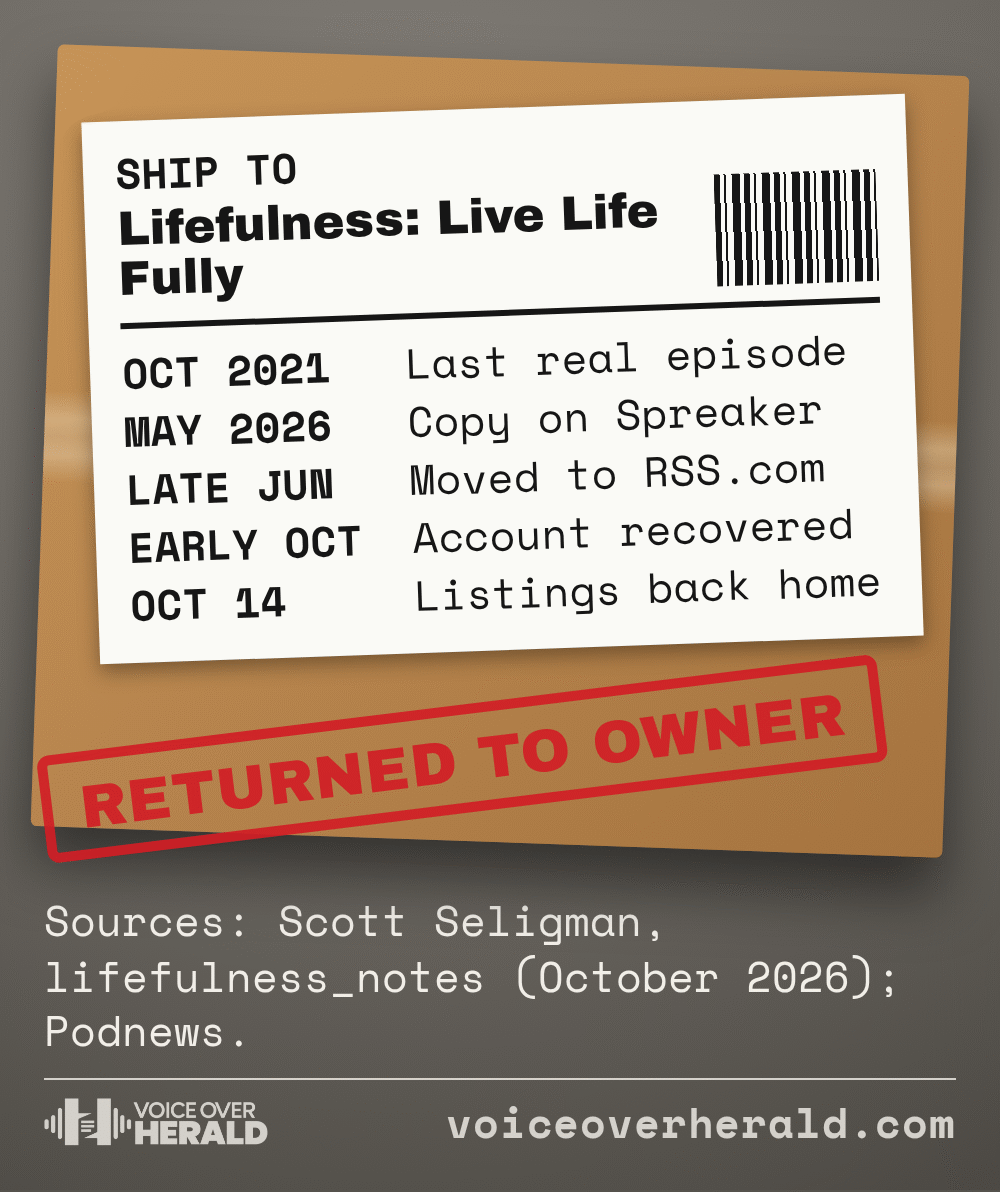
Sanderson Jones made a podcast called Lifefulness: Live Life Fully. Its last real episode went out on October 14, 2021. Then, in May 2026, new episodes started arriving in his subscribers’ apps under a new name, Life Full On, carrying on the old numbering as if nothing had happened.
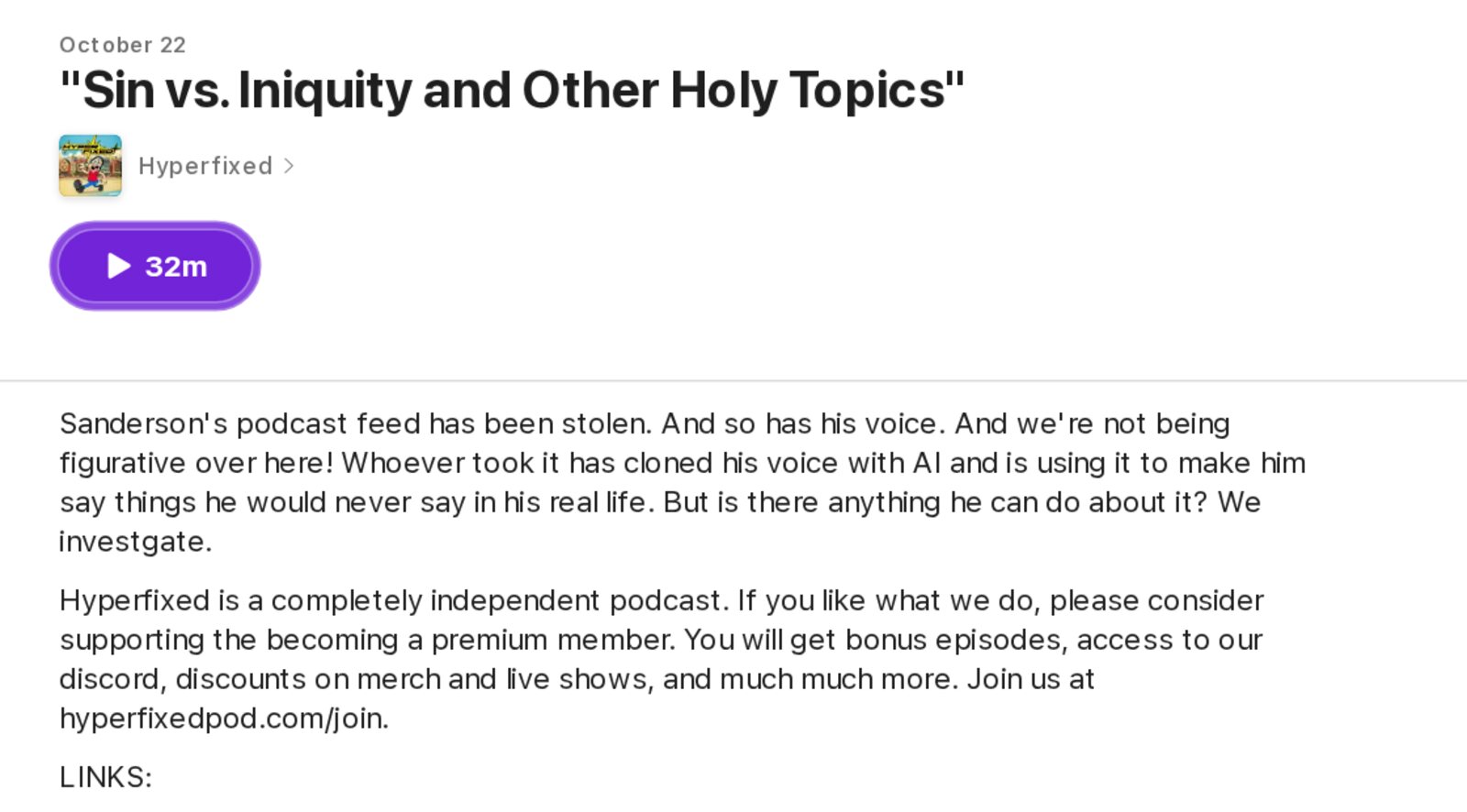
The Radiotopia show Hyperfixed, hosted by Alex Goldman, took the case on in an episode released on October 22. Its description doesn’t mince words: “Sanderson’s podcast feed has been stolen. And so has his voice.” It goes on: “Whoever took it has cloned his voice with AI and is using it to make him say things he would never say in his real life.”
The trade newsletter Podnews followed up on October 26. It reports that the show had been moved to the host RSS.com, where it earned $1,293, and that after Hyperfixed got involved, RSS.com paid that money to Jones and helped move the podcast back to him. Podnews notes that its own editor is an adviser to RSS.com.
What the new episodes actually were
The most detailed account comes from Scott Seligman, whose notes on the case are linked from the Hyperfixed episode page. He tracked the copy across two hosts. It first appeared on Spreaker, four days before the first new episode. In late June the whole thing moved to RSS.com in a single upload that took three and a half minutes.
 VoiceEditSuiteRevision CheckerThe real cost of a script change.Counts what you'll really re-record, then prices it.See how it works
The content was borrowed too. Seligman found that the first three “new” episodes were reworded versions of episodes of an unrelated show, Therapy in a Nutshell, and that later ones were cut down, reworded versions of old sermons by Myles Munroe and Joshua Selman. One of them even credited Selman in its own description.
He’s careful about the voice. Of those first three episodes, he writes that the narrator is clearly not the other show’s host, Emma McAdam, and adds: “I couldn’t tell whether the narrator is a real person or a computer-generated voice.” So the cloning claim rests on Hyperfixed‘s reporting, and Seligman’s audio checks didn’t settle it either way.
As of October 14, Seligman writes, Apple Podcasts and Spotify are back on Jones’s original show.
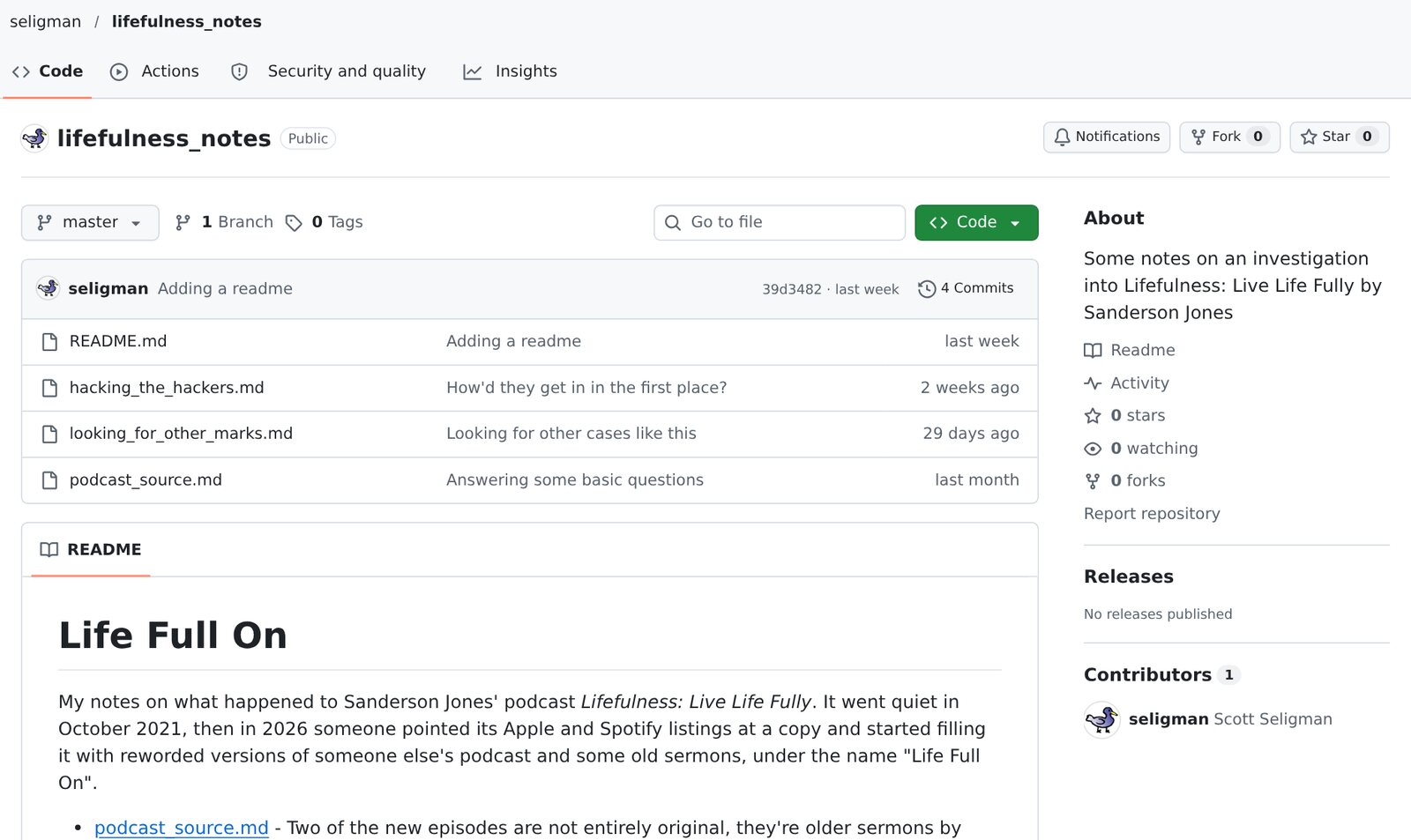
Scott Seligman's notes on GitHub. Screenshot, October 30, 2026
Copying a show takes minutes. Taking its listeners takes a login
The detail that matters most for anyone with a feed is how the takeover worked. Seligman, who says he went through about 352,000 podcast feeds and found no second case like it, puts it plainly in his notes: “Copying the old episodes to a new host didn’t take any special access, anyone can import a public feed. Pointing the show’s existing Apple Podcasts and Spotify listings at the copy did.”
He says he was told that Acast’s support team identified a different email address as the one that took over Jones’s account, but that nobody yet knows how they got in. His best guess is a redirect set from inside that account, which would have moved Apple and Spotify in one go.
Why bother with a dead show? Seligman’s answer is that it still has followers whose apps grab anything new in the feed, its old episodes can carry ads, and “Nobody’s checking it every week, so they could expect a head start.” The hijackers had it for about four months.
More than 1,700 copies on one host
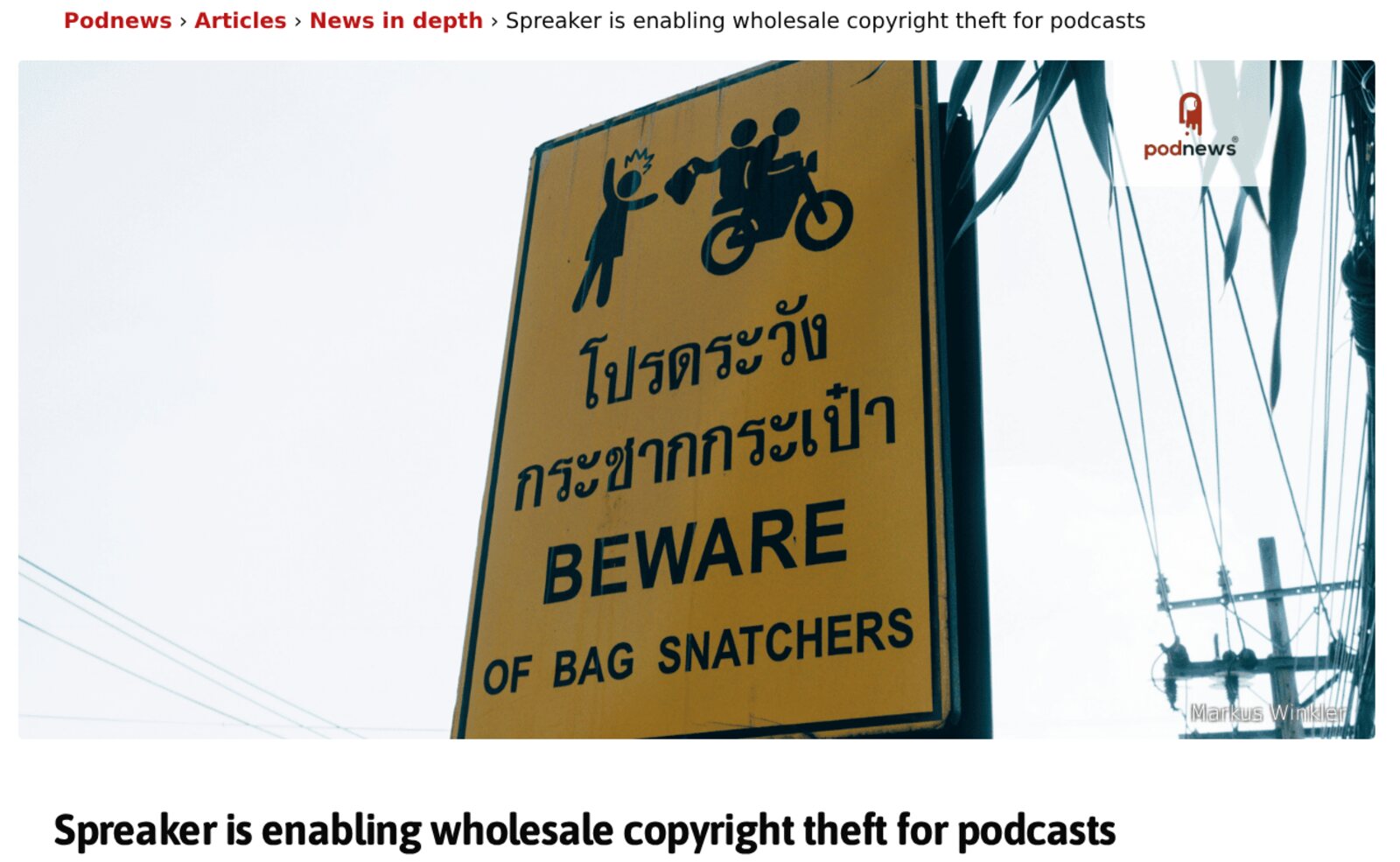
On October 27, Podnews editor James Cridland published an investigation into Spreaker, the iHeart-owned podcast host. Podnews says it copied its own daily show into Spreaker on a free account in minutes, simply by pasting in the RSS feed address, with no check that it owned the show. The import tool can also check every hour for new episodes, keeping a copy up to date automatically.
It then applied to put ads in the copy, under a title clearly marked “Test”. By 10.30am central European time, Podnews says, it had been approved. Spreaker’s terms let it keep up to 41% of the ad revenue.
Screenshot: Podnews, October 30, 2026. Photo on the page: Markus Winkler
Using the free Podcast Index database, Podnews counted 1,778 shows that had been copied into Spreaker and listed in Apple Podcasts alongside the originals, including copies of Crime Junkie, Hidden Brain and The Rest Is Politics. A play of a copy doesn’t count toward the real show’s downloads, and the ads in it don’t pay the real publisher.
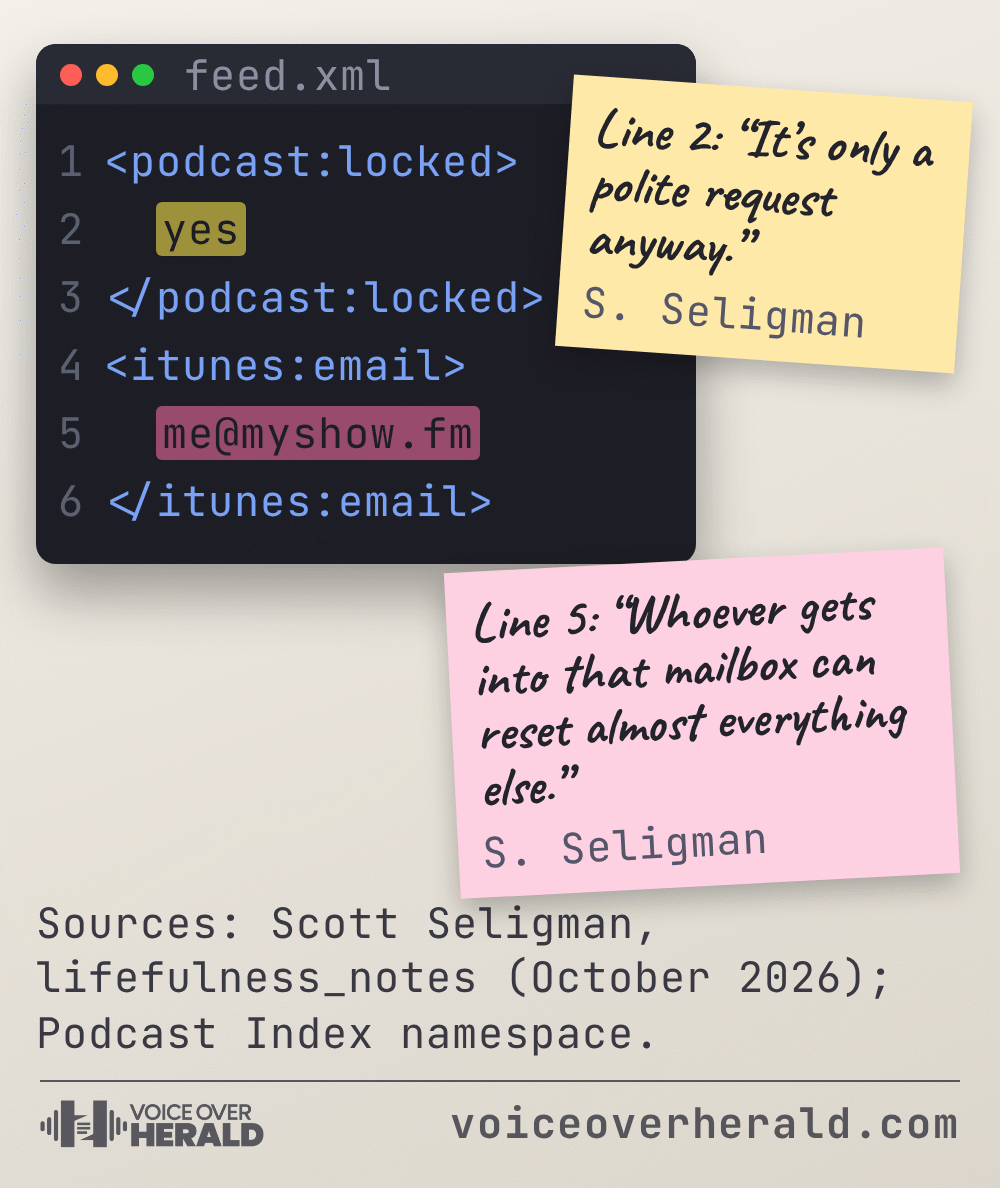
Spreaker didn’t answer Podnews’s questions, but sent a statement: “Spreaker does not encourage or condone the uploading of content by anyone who doesn’t have the rights to it.” It added: “We take appropriate actions whenever a violation of our terms of service is found. We also honor the podcast:locked tag in our RSS importer.” Podnews points out that Spreaker itself doesn’t appear to let its own users add that tag to their shows, and discloses that Spreaker is one of its corporate supporters.
Five days to the charts
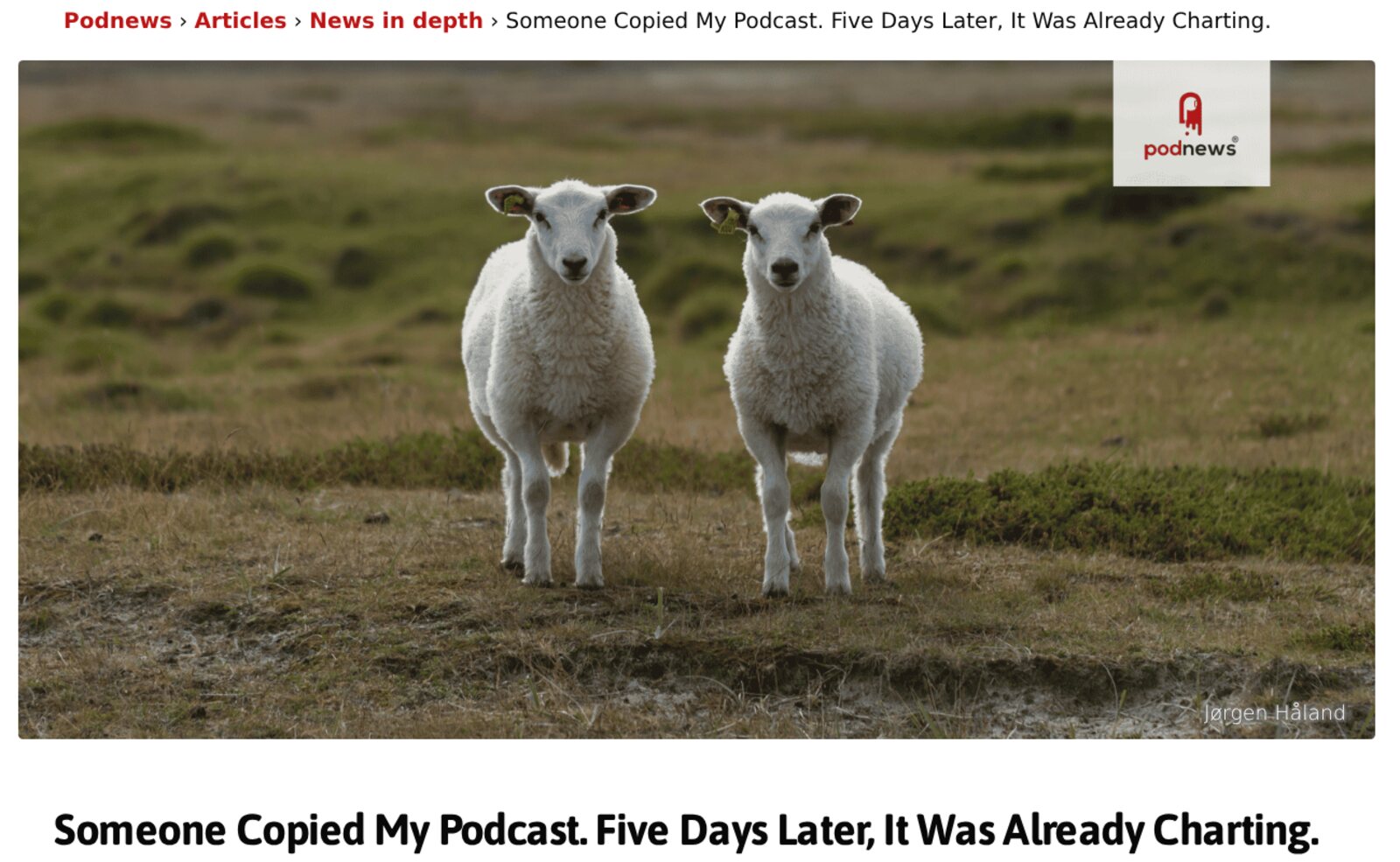
Lisa Lacy, host of Notes From the Edge on the Gamut network, wrote for Podnews the same day about finding a copy of her show, more than 150 episodes of it, artwork and all, under a publisher she didn’t recognize. Within about five days it had reached number 121 on Apple’s US Personal Journals chart. Her real show was number 1.
Gamut filed complaints and a major listing came down within about 24 hours, she writes, but other directories still had to be chased. Her worry is for everyone without a network behind them: “But what about the independent podcaster recording in a spare bedroom?”
Screenshot: Podnews, October 30, 2026. Photo on the page: Jørgen Håland
Plenty of voice actors are exactly that podcaster. Many run a show about the craft, publish demos or audiobook samples through a feed, or host a podcast for a client. A public feed exists so apps can fetch your audio freely, and as both cases show, so can anyone else. Lacy’s line sums it up: “Podcasting is built on making our voices accessible. But accessibility should never be mistaken for permission.”
What to lock down this week
These steps come from Lacy’s piece and Seligman’s notes, and between them they cover the two different ways in: copying your feed, and taking over your account.
- Lock the inbox. Use a unique password and two-step login on the email account behind your podcast, and on your host and Spotify if they offer it.
- Block claims. In Apple Podcasts Connect, turn on “Don’t allow show to be claimed.”
- Lock the feed. Ask your host about Feed Lock or the podcast:locked tag, and switch it on.
- Search for yourself. Look for your artwork, episodes and descriptions under other publishers, and check that your Apple and Spotify listings still point at your own feed.
- Keep evidence, then report. Save screenshots, links, feed addresses and dates, and go to the abuse or copyright team of the host carrying the copy first.
One limit is worth knowing first. The podcast:locked tag tells other hosts not to import your feed, but Seligman found it in none of the roughly 9,800 Acast feeds he checked, and calls it “only a polite request anyway.” RSS.com, he notes, turns it on by default. Lacy still recommends it, as one layer among several.
Sanderson Jones has his show back, and the money the copy earned. It took a podcast that went digging and a researcher’s long notes to get there. If your own show has gone quiet, the cheapest protection is still the simplest one: every so often, open Apple Podcasts and Spotify and check that your listings point where you think they do.
Sources: Hyperfixed, “Sin vs. Iniquity and Other Holy Topics” (October 22, 2026); Scott Seligman, lifefulness_notes on GitHub (October 2026); Podnews, “The cloned podcast that carried on publishing” (October 26, 2026); James Cridland, Podnews, “Spreaker is enabling wholesale copyright theft for podcasts” (October 27, 2026); Lisa Lacy, Podnews, “Someone Copied My Podcast. Five Days Later, It Was Already Charting.” (October 27, 2026); Podcast Index, podcast:locked tag specification. Main image: screenshot of the Hyperfixed episode on Apple Podcasts, October 30, 2026.
Lee este artículo en español: Secuestraron un pódcast y siguió publicando con la voz clonada de su conductor. Así puedes proteger el tuyo
Know something about this story, or spotted an error? Tell the newsroom.