



Google’s Genie 4 Makes Up Its Characters’ Voices as You Play. Neither It Nor Block’s Dessa Says Whose Speech They Learned From
Two of the biggest names in tech showed off talking machines in the same week. Google DeepMind’s Genie 4, announced on Tuesday, builds a world you can walk through and makes up its characters’ voices as you go. Block’s Dessa, unveiled the Friday before, holds a spoken conversation, laughs and all, without ever turning your words into text. Both are impressive. Neither announcement says whose voices taught them to speak, and that’s the part working voice actors should be asking about.
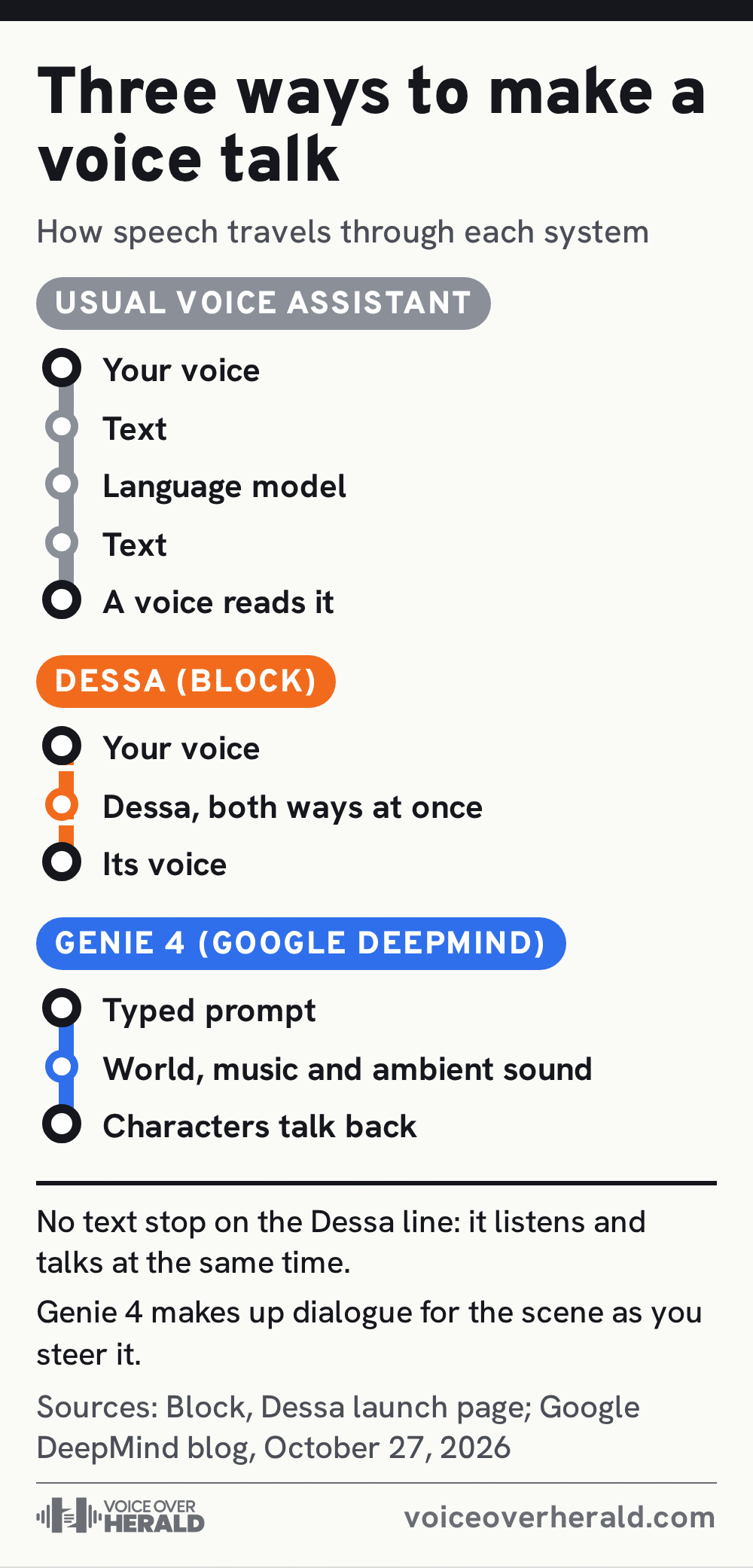
Genie 4 is what Google calls a world model: type a scene and it generates a place you can move around in, in real time, and keeps generating it as you steer. The new version adds sound. Block’s Dessa is a speech-to-speech model, built by a small research team inside Jack Dorsey’s payments company, that listens and talks at the same time, the way people do on the phone.
Neither is a voice over tool, and neither is open to the public yet. But they point at the same thing: synthetic speech that’s made on the spot, for characters and conversations nobody scripted or cast.
Genie 4 voices the extras for you
Google’s own post is clear about where it thinks the big step is. “Genie 4 is our first real-time world model to generate audio natively,” the DeepMind blog says. “Every world carries the ambient sound of its setting, from wind in the trees to waves crashing at the beach.” Then it goes further: “The true frontier, however, is human speech. Genie 4 introduces interactive dialogue that adapts on the fly.”
In practice, that means generated people who talk. “Characters converse and react to your inputs or events in the world, all in real-time,” DeepMind writes. In one of its demo clips, a user types “He announces the next departure” and a station inspector on a mountain platform does just that. In another, a wand turns a cat into a vintage radio, and the next prompt has the radio play music.
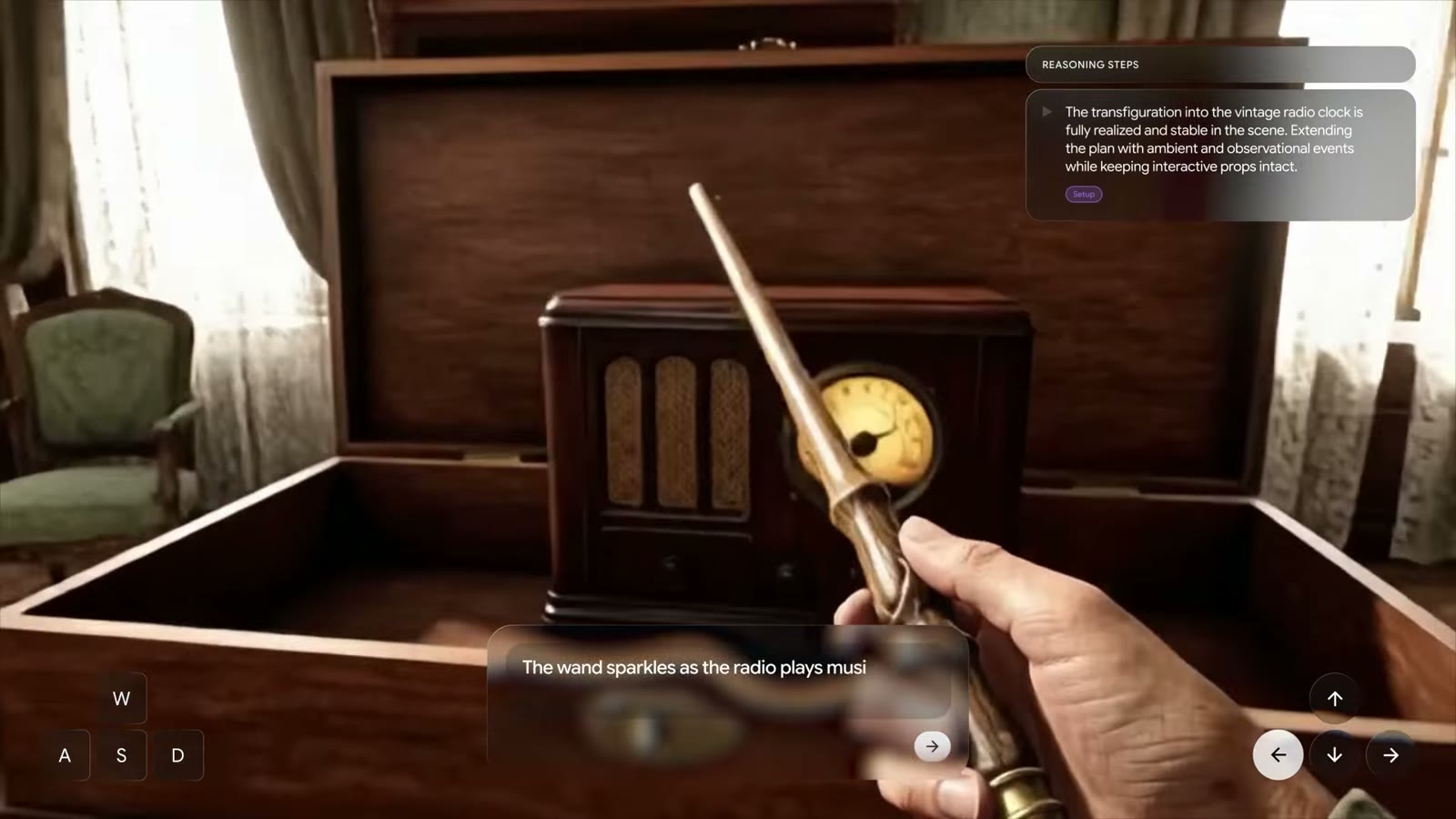
A Genie 4 demo: a typed prompt asks for the radio to play music. Image: Google DeepMind
Google’s announcement on its main blog names the industries it has in mind, including “filmmaking, journalism, gaming, and manufacturing.” For now, it’s going to “a limited group of trusted testers,” and Google says it’s “coming soon to Google AI Ultra subscribers in Project Genie and early access partners in the Gemini API and AI Studio.”
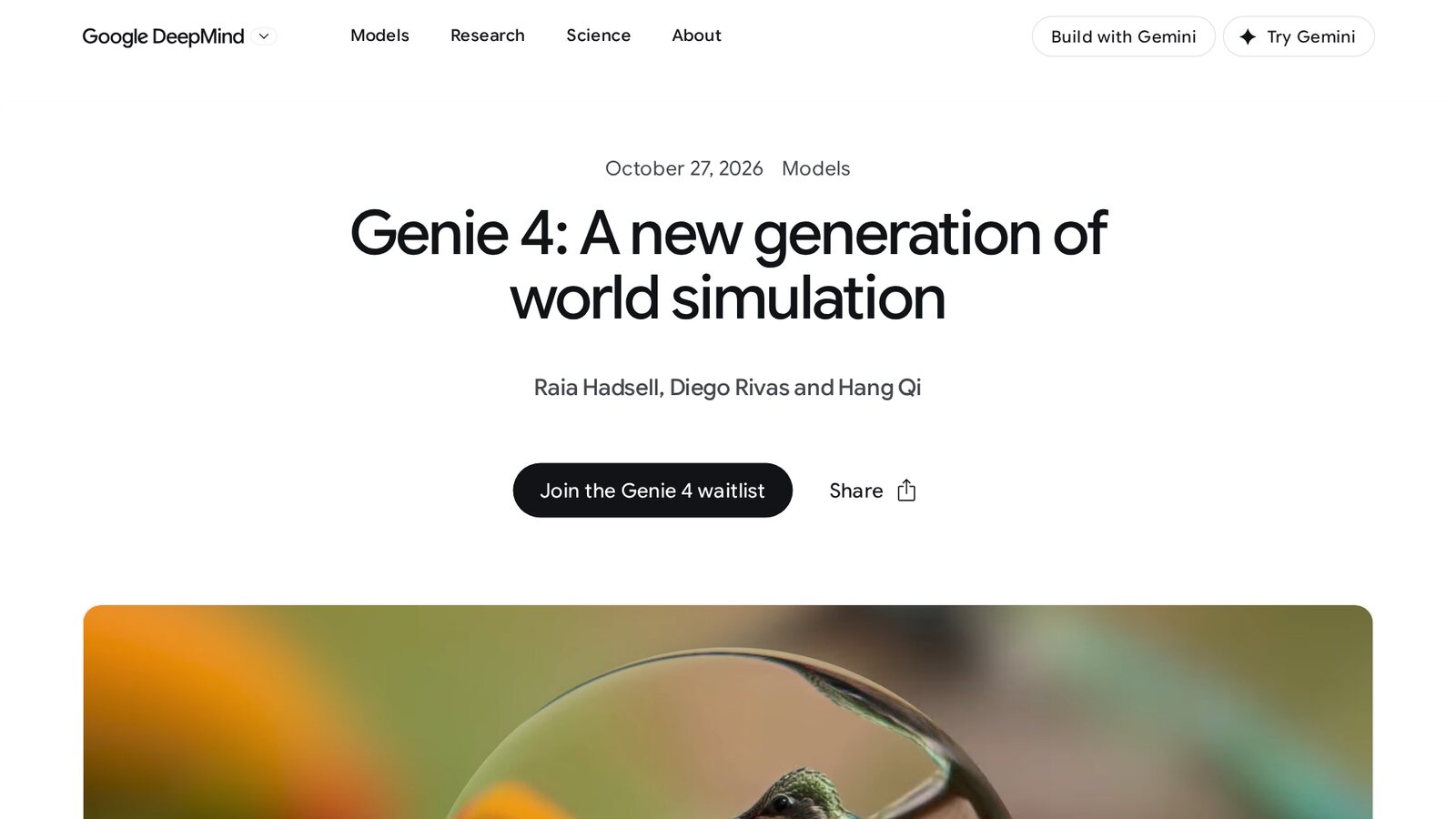
Google DeepMind's Genie 4 announcement, October 27, 2026. Image: Google DeepMind
It isn’t perfect yet. Gizmodo noted that the model “still occasionally struggles to maintain visual consistency and audio accuracy, particularly when simulations get longer and more complex.”
Dessa learned to talk by listening
Block’s pitch for Dessa starts with a complaint about today’s voice assistants. “Interacting with current voice AI can just plain suck,” its launch page says. “It turns your voice into text and throws away an incredible amount of information text alone can’t carry.”
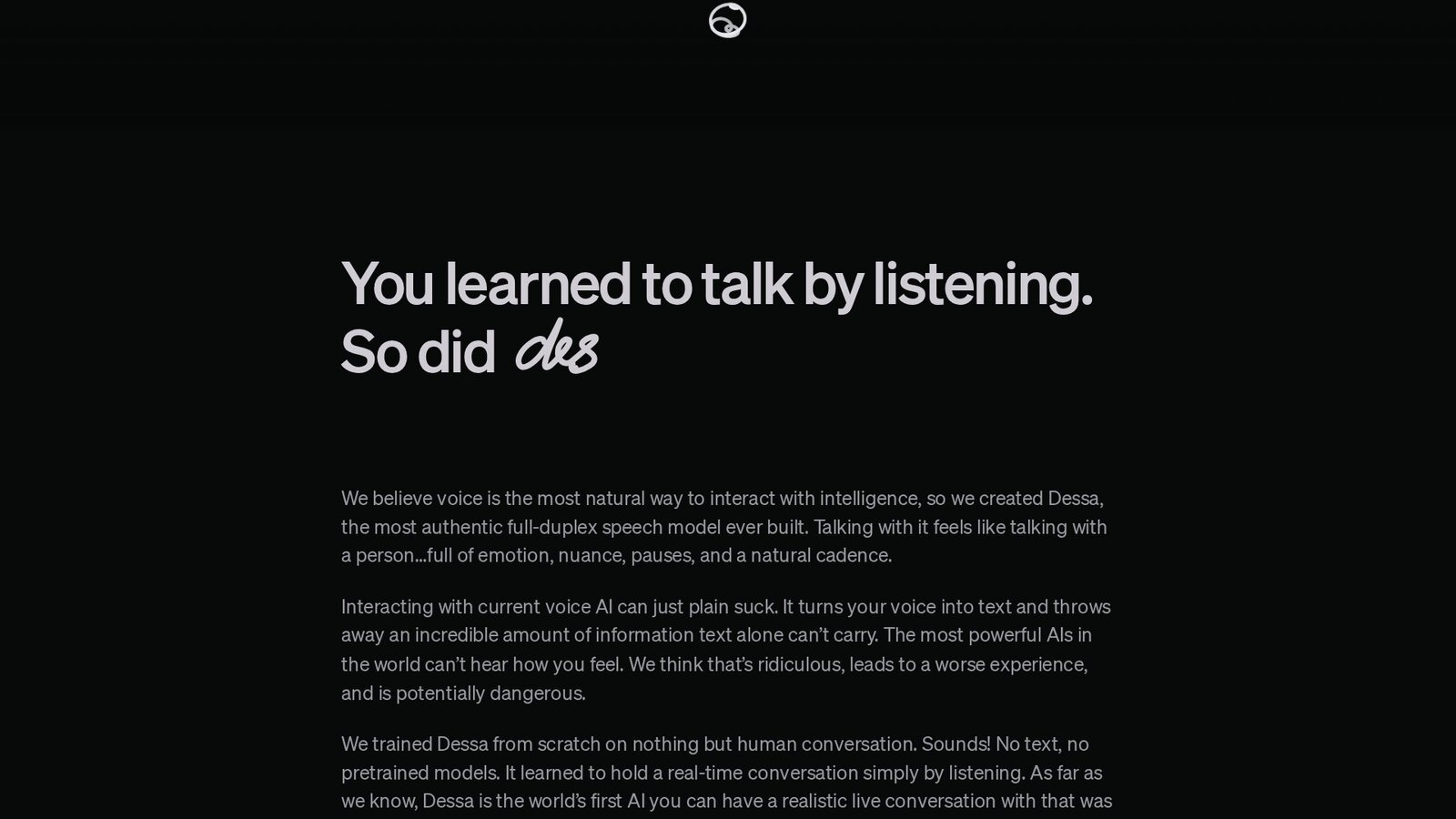
Block's launch page for Dessa. Image: Block
Dessa skips the text step that most voice AI leans on. “We trained Dessa from scratch on nothing but human conversation. Sounds! No text, no pretrained models,” Block says, and it claims the result “feels like talking with a person… full of emotion, nuance, pauses, and a natural cadence.”
The lab behind it is led by Ragavan Thurairatnam and grew out of Dessa, a Toronto deep learning startup, according to Crypto Briefing, which also reported that the model runs on a MacBook Pro with an M4 Max chip. TechCrunch said there’s “no public access to Dessa at the moment.” Block is “giving a small group of AI safety researchers early access to find the risks we haven’t anticipated,” it says, and anyone else can join a waitlist. Crypto Briefing pointed out that the demo clips were picked and published by Block, with no independent test so far.
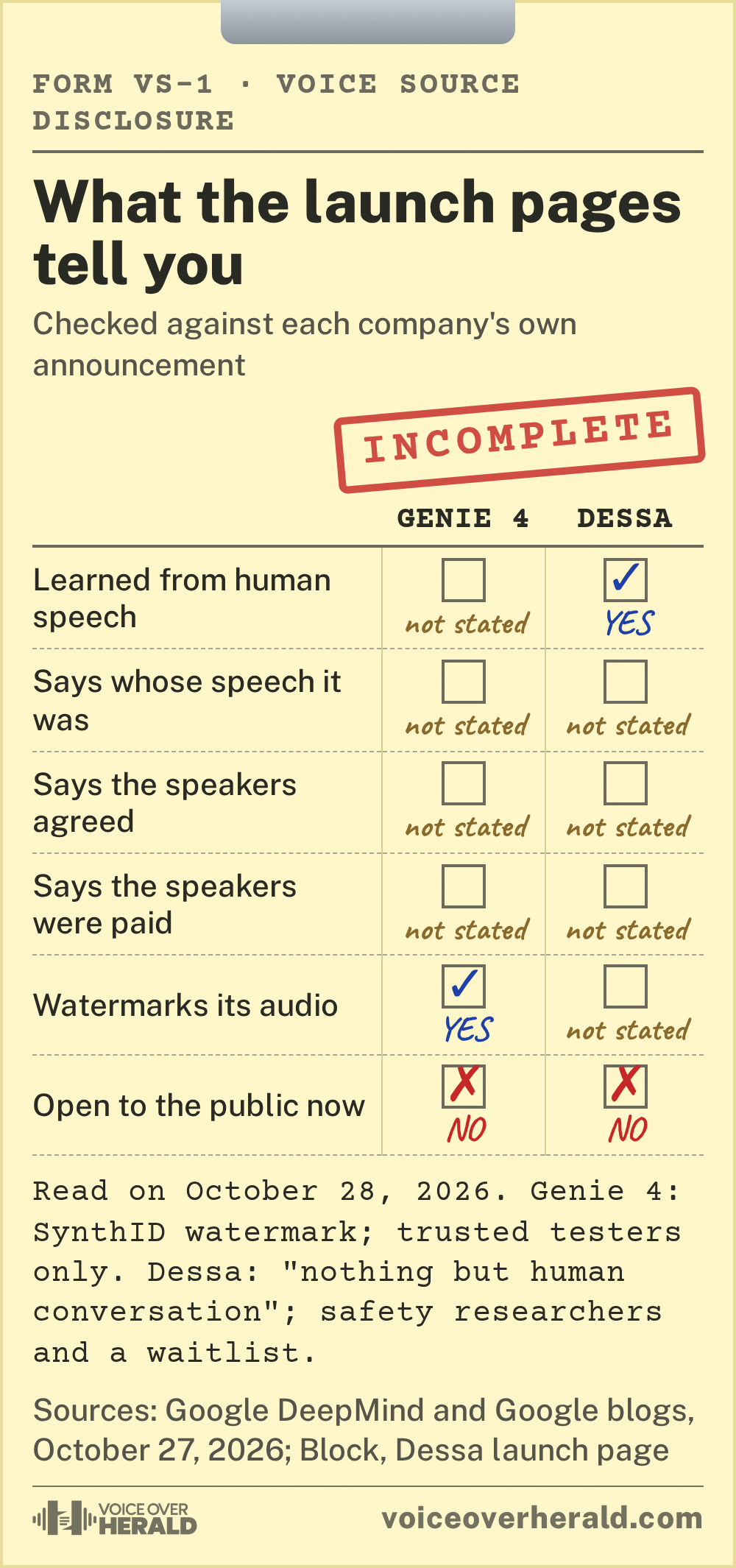
The question both launches leave open
Here’s what Voice Over Herald couldn’t find in either announcement when we read them on October 28: where the speech came from. Block says Dessa learned from “nothing but human conversation” but doesn’t say whose conversations, how they were collected, or whether the people in them agreed or were paid. Google’s two Genie 4 posts describe characters who talk but don’t say what voices the model learned from. TechCrunch’s report on Dessa doesn’t include them either.
That matters because a model that can voice any character on request is, by design, doing the job a casting call used to fill. If the people whose voices trained it were actors, that’s their work in the machine. If they were members of the public, that’s a different question about consent. Either way, the answer should be on the launch page, and it isn’t.
Google does say one thing that helps listeners. “All video and audio generated by Genie 4 will include SynthID, our imperceptible digital watermarking technology that helps identify AI-generated content,” its post says. A hidden watermark won’t tell you whose voice a character is built on, but it does mean the audio can be flagged as machine made.
Block says its safety work is still early. The page invites outside researchers to look for risks, which is a fair start for a model that can sound this human. It just doesn’t cover the people the model learned to sound like.
What working voice actors can do this week
None of this changes a booking today. But three things happening this week are about exactly these questions.
 VoiceEditSuiteKnow what to charge before you reply.Rate Calculator works out project type, usage and add-ons, then writes a quote email with low, mid and high pricing you can send straight away.See how it worksYour recordings are never used to train AI.
SAG-AFTRA members working under the TV animation contract have until 5 p.m. Pacific on Thursday to vote on a deal that, as Voice Over Herald reported, says an AI replica can’t dub a performer into another language without their yes. In the UK, Equity has already warned members about a game casting that wanted voices for AI training, forever, and that kind of clause is the one to look for in any contract this year.
And on Sunday, November 1, the National Association of Voice Actors is running a panel called Creators in the Age of AI at LA Comic Con, at 11 a.m. Pacific in Room 308AB. NAVA president Tim Friedlander, vice president Carin Gilfry and voice actor Cissy Jones are on it with writer David S. Goyer and storyboard artist Sam Tung. According to the program listing carried by Temple of Geek, they’ll talk about “how creators can protect themselves from AI misuse…discuss new legislation and court rulings which positively affect artists.” If you’re there, it’s a good room to ask whose voices are inside the next Genie.
Sources: Google DeepMind blog and Google blog (October 27, 2026); Block, Dessa launch page; TechCrunch (October 24, 2026); Crypto Briefing (October 23, 2026); Gizmodo (October 27, 2026); Temple of Geek (October 26, 2026). Images: Google DeepMind (demo frames and announcement page) and Block (launch page).
Lee este artículo en español: Genie 4, de Google, inventa las voces de sus personajes mientras juegas. Ni él ni Dessa, de Block, dicen de quién aprendieron a hablar
Know something about this story, or spotted an error? Tell the newsroom.