

Opinion: Google Says It Hired an Actor. If That Actor Is You, Read the Contract Twice
The most important voice in the David Greene case hasn’t said a word. Google says the male voice in its AI podcast tool came from a professional actor it hired. Whoever that actor is, their sessions now sit at the centre of somebody else’s lawsuit, and I doubt that was in the job description. If you record voices for AI products, this case is about you too.
Voice Over Herald reported on Thursday that a California judge has signalled Greene’s case against Google can go on. Greene, the former Morning Edition host, says the male voice in NotebookLM’s Audio Overviews sounds like him. Google calls the claims baseless and says it hired an actor and built the voice around him. Nothing has been proved either way, and I won’t pretend to know who’s right.
But I’ve read the court’s tentative ruling, and one line in it should make every working voice actor put the kettle on and sit down.
“The complaint identifies no Hedwig”
The ruling leans on an old case. In 1988, Ford’s advertising agency hired a singer called Ula Hedwig and told her to “sound as much as possible like the Bette Midler record.” Midler sued. The appeals court said California’s publicity statute didn’t help her, because “the voice they used was Hedwig’s, not hers.” She still won on a different claim, but the point stuck: the hired singer was a real person with her own voice, and that mattered.
On October 21, Judge Shella Deen of Santa Clara County Superior Court tentatively overruled Google’s demurrer to every one of Greene’s claims. On the Midler point she wrote: “The complaint identifies no Hedwig.” And then the line I can’t stop thinking about: “As described and alleged in the complaint, an AI model has no voice of its own and produces sound from its training data.”
She’s describing allegations, not finding facts. Still, look at what that framing does to the hired actor. In 1988 the hired singer was the voice. In an AI case, the hired actor is one ingredient in a recipe they never get to taste.
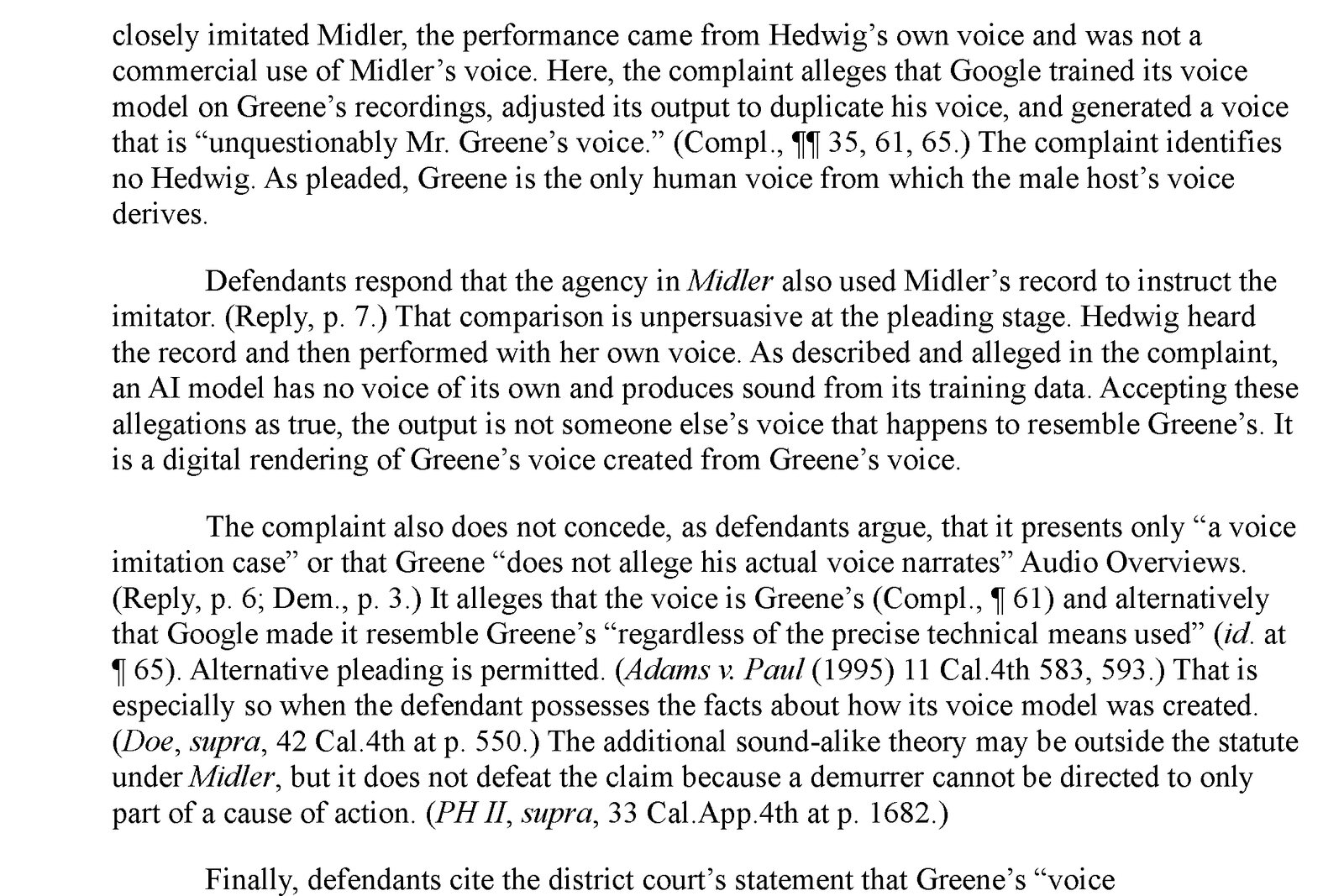
Part of the tentative ruling in Greene v. Google, Department 8, dated October 21, 2026, screenshot taken October 23, 2026. Image: Superior Court of California, County of Santa Clara
And if this case reaches the evidence stage, as Voice Over Herald noted, the hired actor’s recordings are among the things that would finally be tested. You read some scripts for a fair day rate, and two years later lawyers are holding your takes up to the light.
Paid once, working forever
This is where it stops being a celebrity story. Plenty of AI voice work has nothing to do with famous hosts. It’s for people like you and me: text-to-speech voices, e-learning narrators, dataset sessions, the friendly assistant inside an app. Often it’s a session fee, then a voice that never stops working.
Your synthetic voice doesn’t take weekends. It doesn’t get a cold. It will read a refund policy at 3 a.m. on Christmas morning in a cheerful mid-Atlantic tone while you’re asleep, and it won’t send you a single cent for the overtime.
The National Association of Voice Actors puts the question better than I can. Before you audition for anything with an AI component, its guidance says, ask yourself: “Is the compensation for this job enough to offset future lost work & income for the rest of my career?” It’s a brutal sum. Do it anyway, because you can bet the other side has.
About the known universe
NAVA’s guidance also quotes a phrase you’ve probably signed without blinking: “In perpetuity throughout the known universe.” Its verdict is blunt: that wording “robs you of any potential future earnings.”
I’ll admit the phrase makes me laugh. Somewhere a lawyer is genuinely worried about the Martian e-learning market. But the joke’s on us if we sign it for a single day rate. A start date and an end date mean you get to talk again when the term runs out, and talking again is how working actors get paid properly.
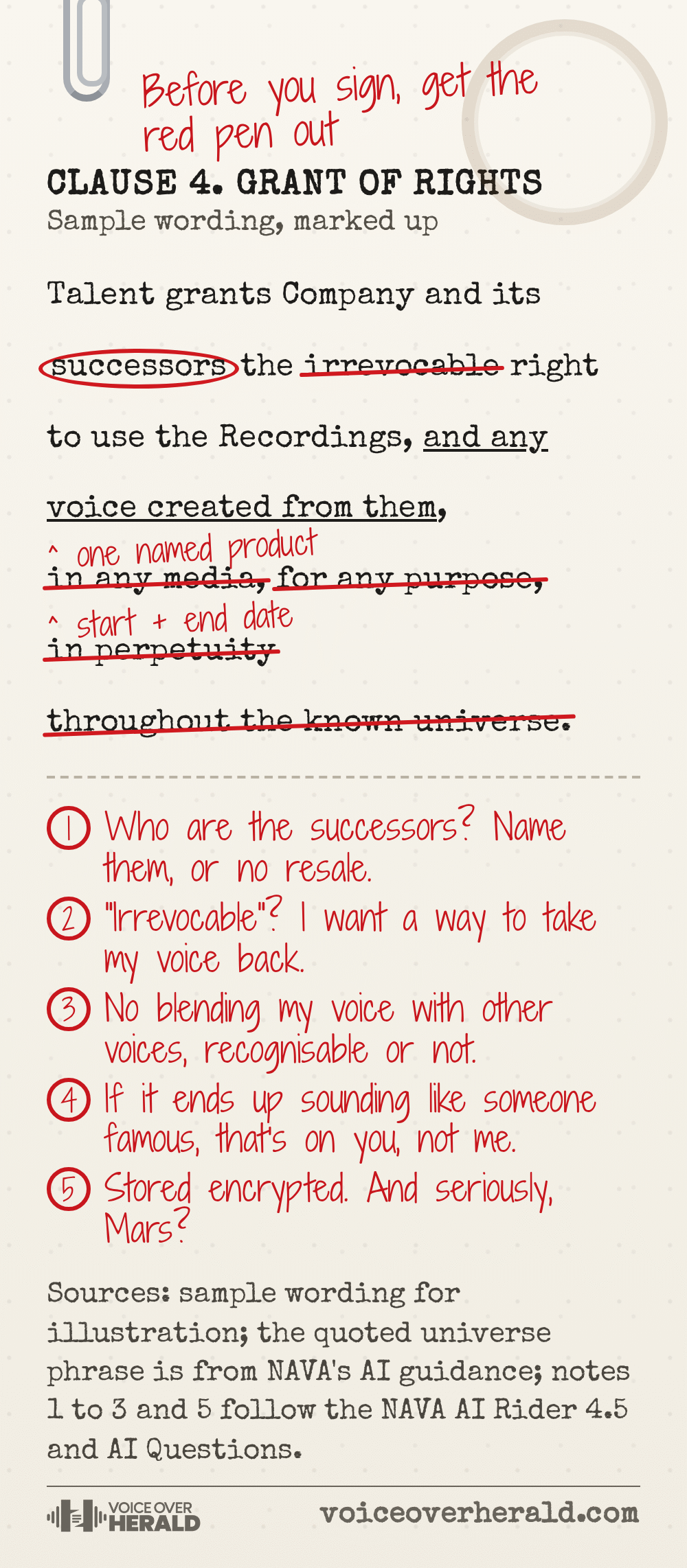
The clause I’d watch hardest after this case is the one about blending. NAVA’s free AI rider says the client shall not create “a blended or composite voice where the generated voice contains data from Talent even if the generated voice is not recognizable as the Talent.” Read that next to the Greene case. A voice built from your sessions can be tuned, mixed and nudged until it sounds like somebody else entirely, and you won’t be in the room when it happens.
So add one question NAVA’s rider doesn’t spell out. If the finished voice is ever said to sound like someone famous, who carries that problem? It should be the company that tuned it, in writing, before you record a word. Not the actor who read the scripts.
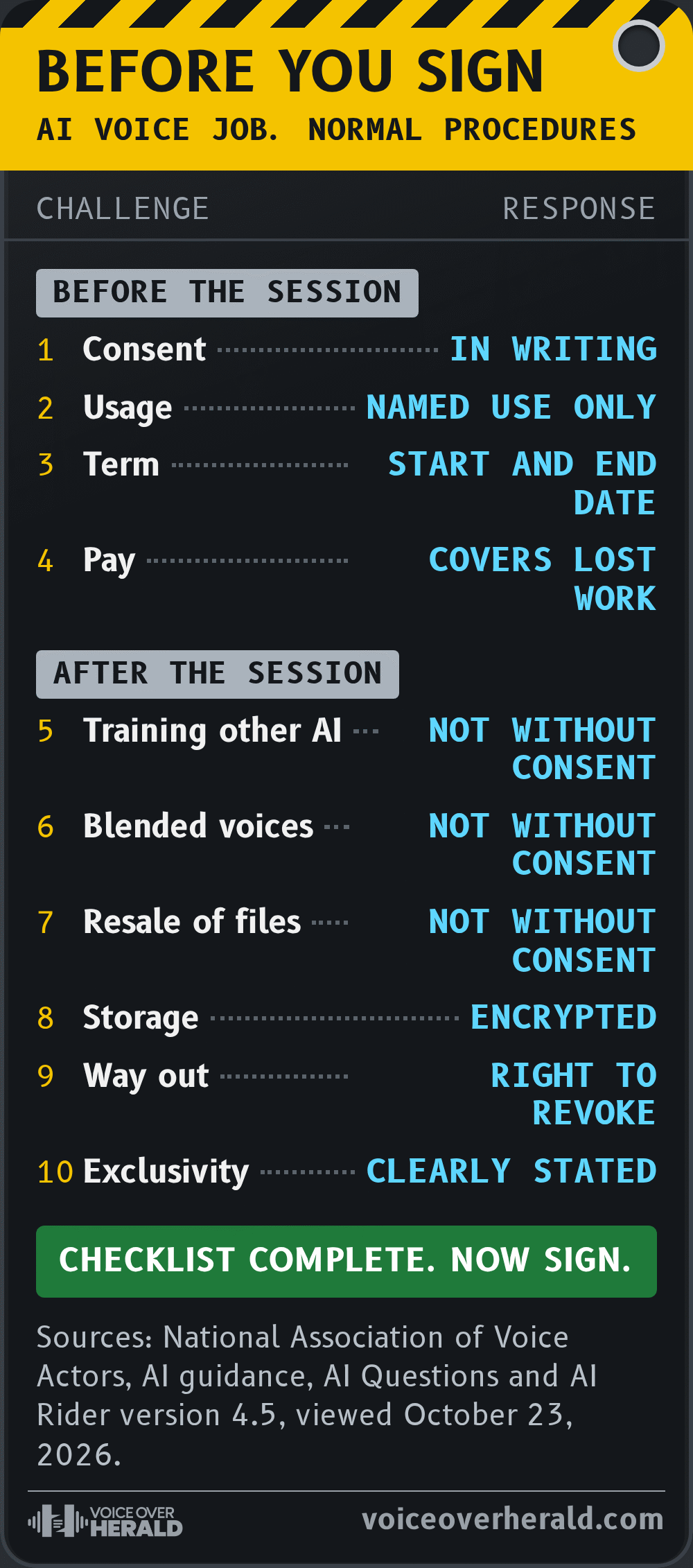
Before you sign anything
I’m not telling anyone to turn this work down. AI voice jobs pay real bills. I’m saying the contract is the whole job now. The session is the easy bit.
California is moving too. The ruling notes that on September 30 the Governor signed Senate Bill 1111, which adds digital replicas to the state’s voice and likeness statute from January 1, 2027. That helps. It doesn’t write your contract for you.
NAVA publishes its AI rider for free, in English and Spanish, and it says plainly that it’s not legal advice, so get an agent or a lawyer to read anything big. Its rider is mostly built to keep your ordinary recordings out of AI. For a job that is AI, its list of questions for technology clients is the better tool, down to the last one: can you take your voice back later?
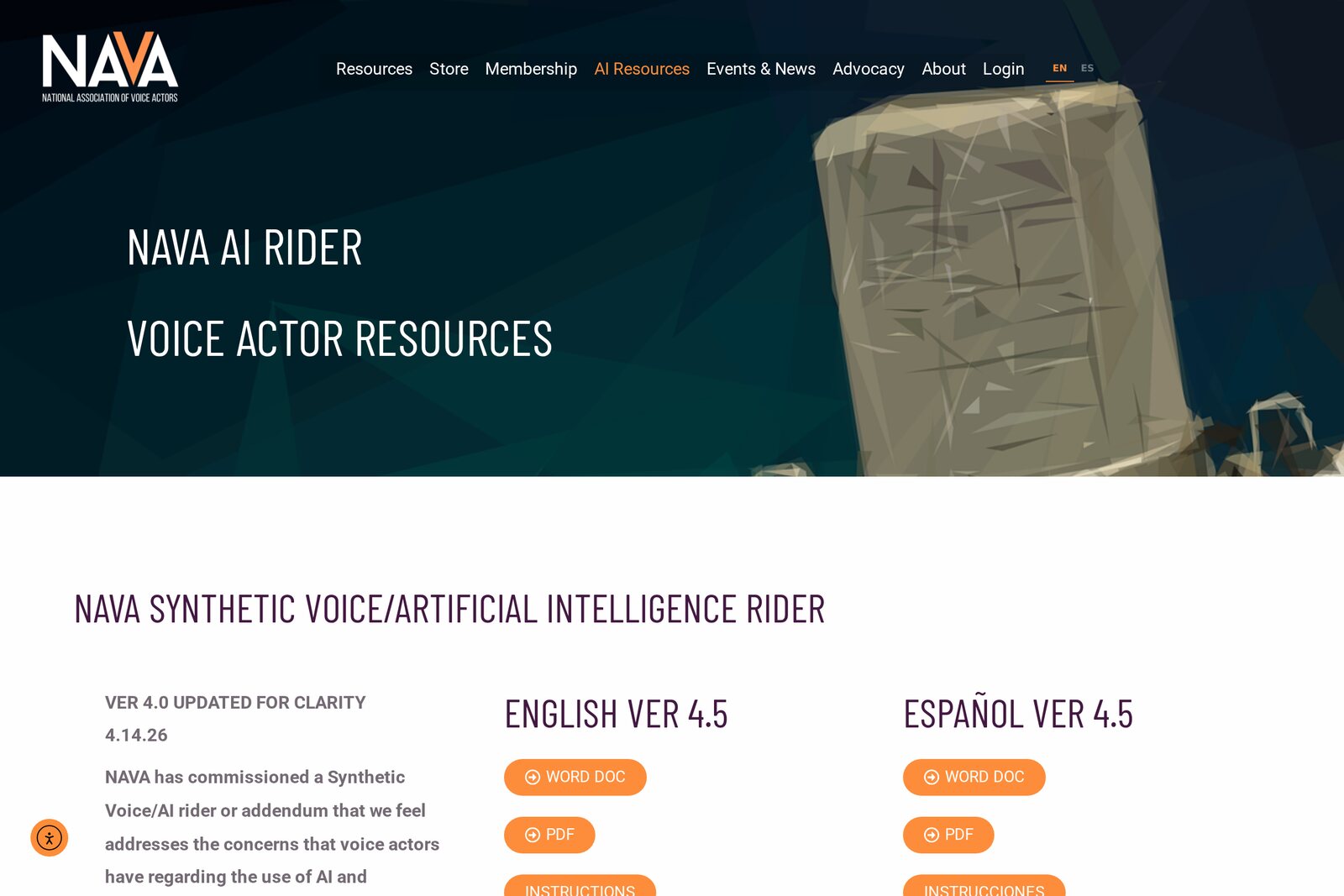
NAVA's AI rider page, screenshot taken October 23, 2026. Image: National Association of Voice Actors
The actor behind Google’s voice hasn’t been named, and I hope they’re doing fine. But I’d love every voice actor reading this to make sure that if their voice ever ends up in a courtroom, the contract in their drawer says exactly what they agreed to. And nothing about Mars.
 VoiceEditSuiteNewIt edits like you would, and it gets better every file.Learns from numbers, never your audio. Never used to train AI.See how it works
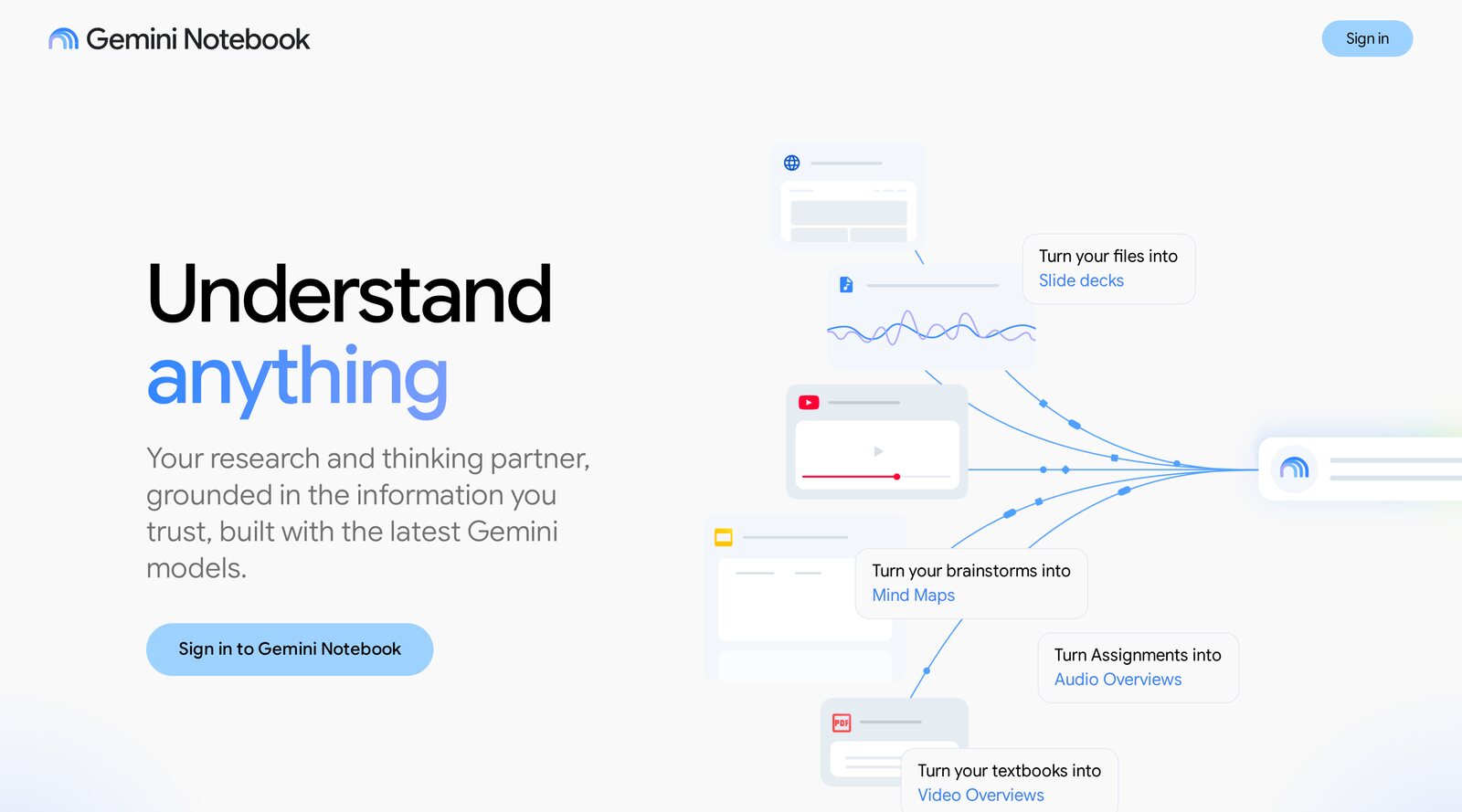
This is an opinion piece. Sources: Superior Court of California, County of Santa Clara, Department 8, tentative ruling in Greene v. Google LLC, case 26CV485291 (October 21, 2026); Voice Over Herald’s report on the case (October 22, 2026); NPR, Morning Edition (February 17, 2026); National Association of Voice Actors, AI guidance, AI Questions and AI Rider version 4.5 (viewed October 23, 2026); Gemini Notebook website (viewed October 23, 2026). Main image: screenshot of the Gemini Notebook home page at Google’s NotebookLM address, taken October 23, 2026.
Lee este artículo en español: Opinión: Google dice que contrató a un actor. Si ese actor eres tú, lee el contrato dos veces
Know something about this story, or spotted an error? Tell the newsroom.