


Audible Wants Every Book as an Audiobook in Every Language. Half of Its Listeners Would Try an AI Narrator, and Most Still Follow a Human One
Audible used the Frankfurt Book Fair this week to put a number on something narrators have been arguing about for two years. In a survey of 18,000 listeners across 11 countries, half said they’d be open to trying an AI-narrated audiobook. In the same survey, nearly two thirds said they go looking for more books by a narrator they like.
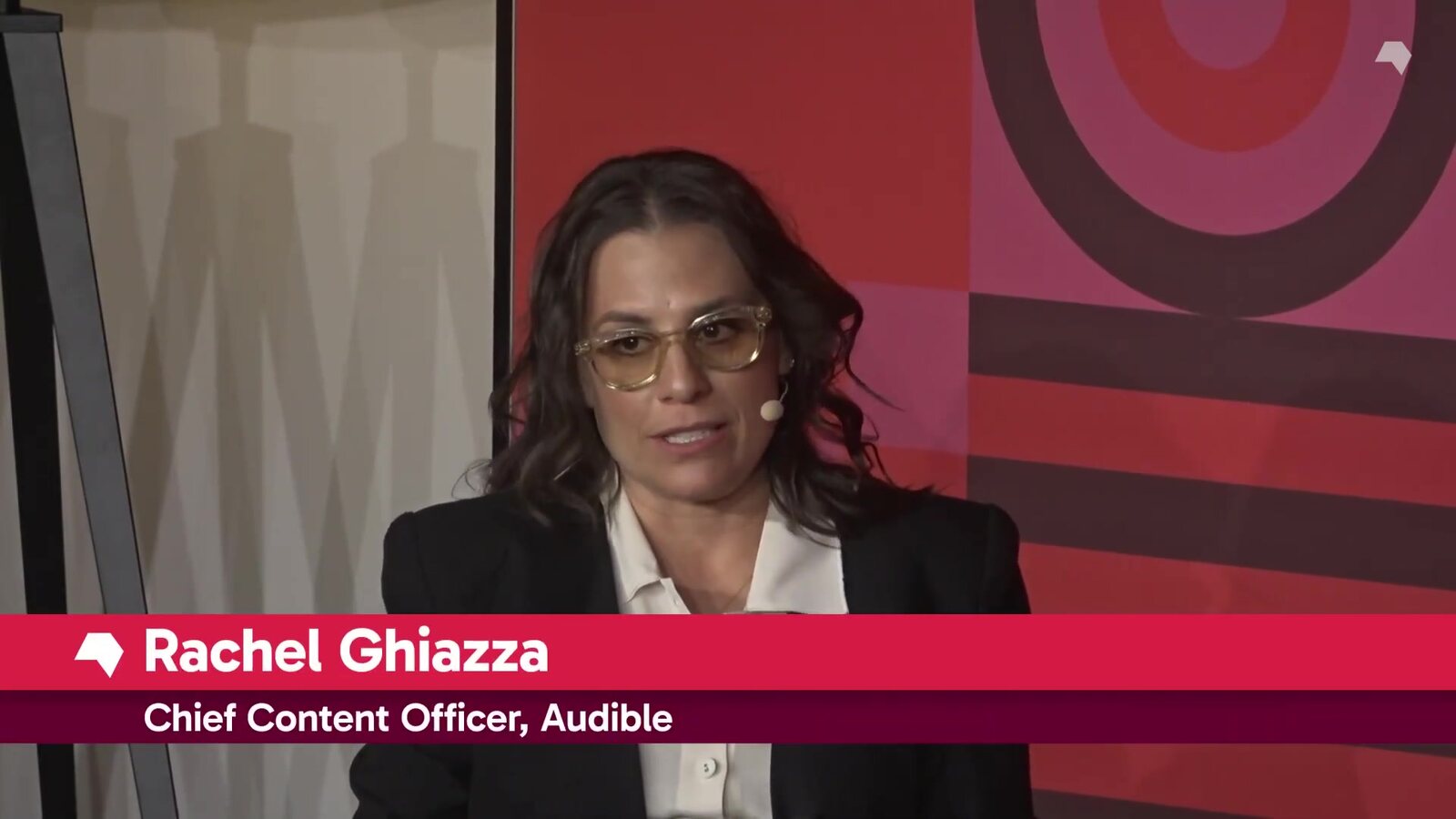
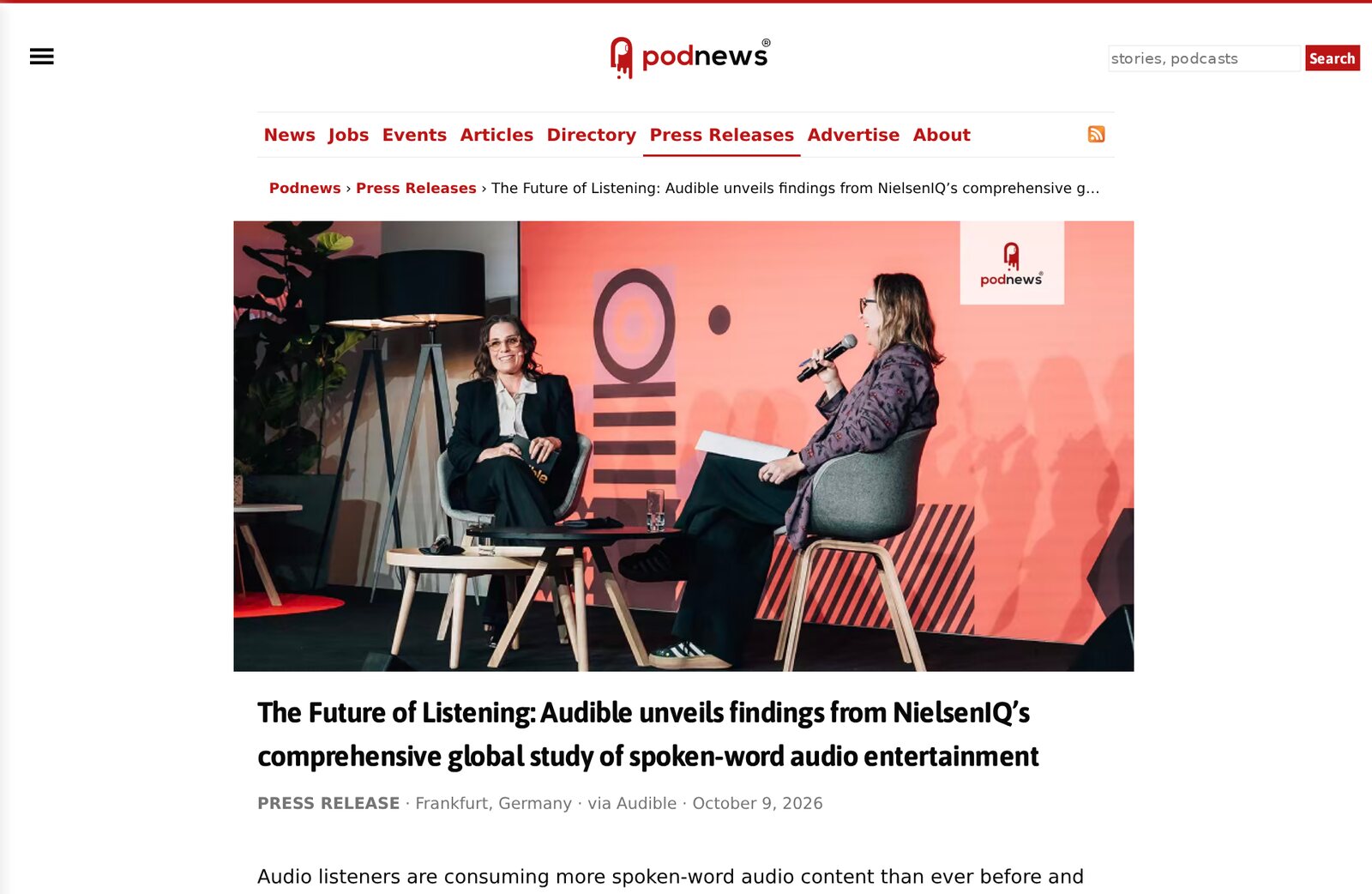
Both numbers come from The Future of Listening, a study NielsenIQ ran for Audible and that Audible’s chief content officer, Rachel Ghiazza, presented on stage at the fair on Thursday. Around it she stacked a set of announcements: five new countries next year, the Read and Listen feature in seven more markets, a household plan, a business programme, and a stated goal that “every book is an audiobook in every language.”
The numbers Audible brought to Frankfurt
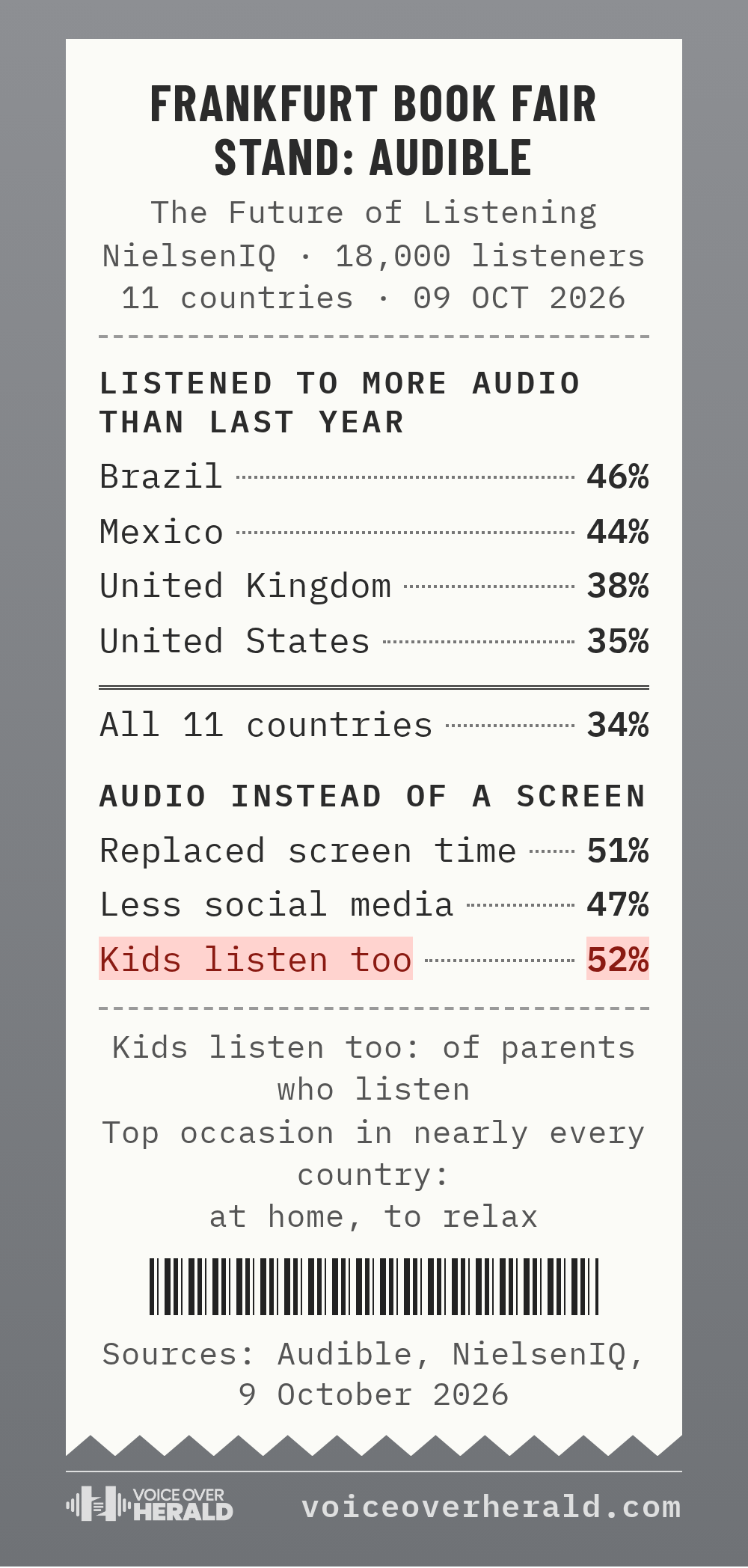
The survey covered audiobooks, podcasts and scripted and unscripted audio series, and polled listeners in Australia, Brazil, Canada, France, Germany, Italy, Japan, Mexico, Spain, the UK and the US. Its headline finding is growth: 34 per cent of listeners said they listened to more audio in the last twelve months than the year before, and the figure is highest in the two Latin American markets.
The study also frames audio as an escape from screens. Just over half of listeners said audio has helped them “intentionally replace screen-time entertainment,” and 47 per cent credited it with cutting their social media use. Parents named “screen-free entertainment” as the number one reason they encourage their children to listen.
Ghiazza’s own line on the results, in the release that went out from Frankfurt, was this: “What’s particularly striking about this research is the scale and momentum of audio’s growth. Audio is continuing to play a growing, evolving role in people’s lives.”
Narrators still sell books
The part of the study that matters most to working narrators is the question of how listeners choose. Genre is the single biggest factor in every country, topic comes second everywhere, and the narrator is third, with 65 per cent of listeners saying they seek out more books by a narrator they like.
Audible’s own write-up puts it in publishers’ terms: “Narrators, in turn, help attract audiences for authors and publishers.” Ghiazza told Publishing Perspectives she thinks of genre “more as a concept of fandom,” which is roughly how narrator loyalty works too. A listener who follows a voice from one series to the next is a fan, and the survey says that’s most of them.
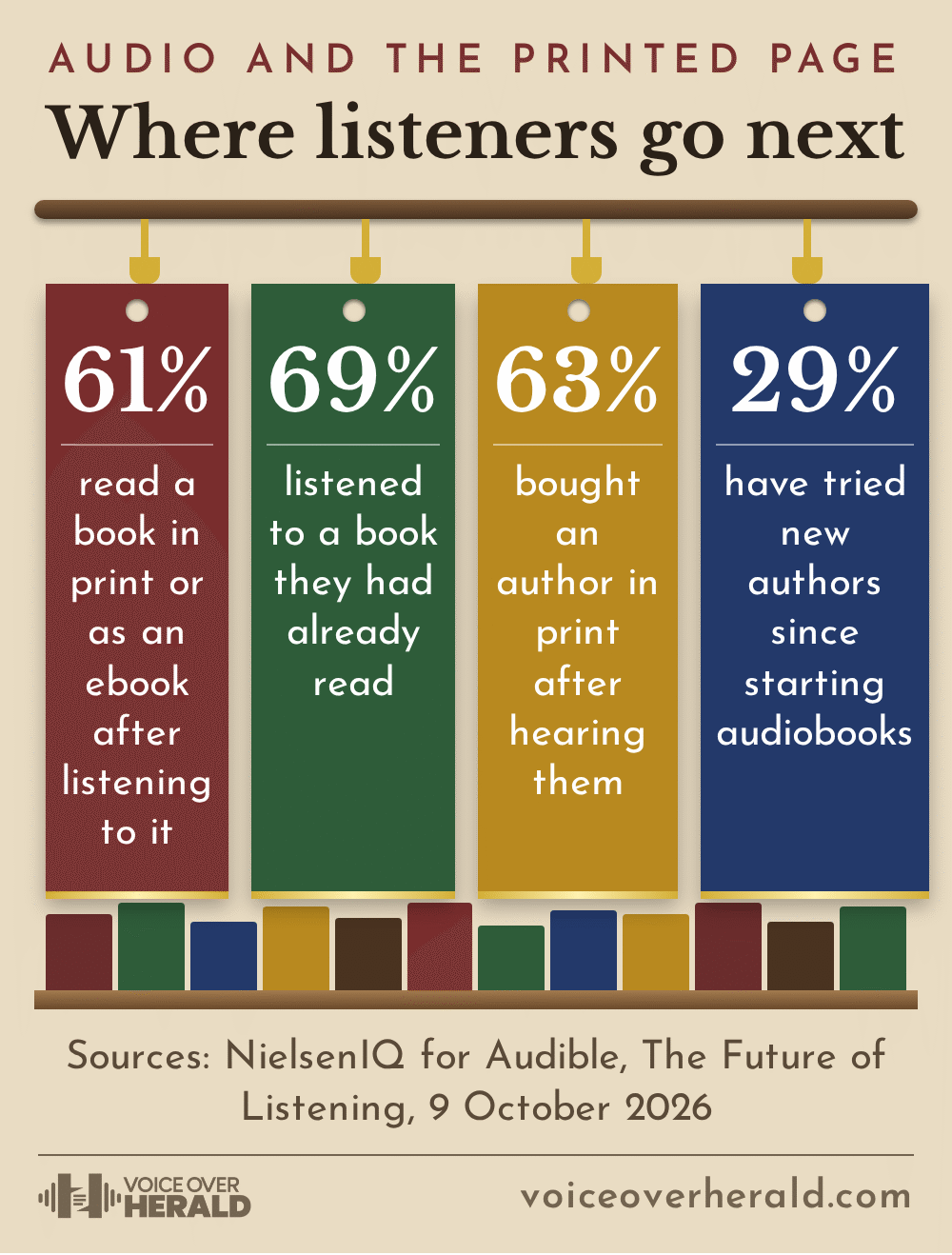
The study also pushes back on the idea that audio eats print. Most listeners said they’d read a book in print or as an ebook after hearing it, and most had bought an author’s print titles after discovering them in audio. “Audiobooks are not competitive to other formats,” Ghiazza said in presenting the findings.
Half would try an AI narrator
Then the other number. Fifty per cent of respondents said they were now open to listening to or trying AI-narrated content. Germany was the least open at 42 per cent, Japan the most at 66. In most countries listeners were most open to AI narration for fiction; Germany and Japan preferred it for non-fiction.
Ghiazza didn’t present this as a replacement plan. Eric Dupuy, reporting for Publishing Perspectives, wrote that she “called it ‘an and strategy’: human performers remain, and production savings are meant to fund more titles.” She added: “Quality and transparency are critically important.”
Her message to publishers who are still hesitant was less gentle. “The time isn’t coming to do this,” she said, “the time is now.” Dupuy also noted the obvious caveat: a stated openness to AI is not purchasing behaviour, and Audible has not detailed the survey’s methodology.
 VoiceEditSuiteRaw take in. Clean take out.
Ed Nawotka at Publishers Weekly got more detail on where the AI goes. Audible “expects to use AI tools across the entire production process,” including an internal tool for setting up narrator productions that, in Ghiazza’s words, “breaks down the book, it defines the character, it gives you the background,” and handles scheduling. Productions, she said, will range from high-end multicast titles like Harry Potter to niche or long-form works that “maybe don’t need the same production quality.” Romance listeners, she said, “just want volume.”
That is the sentence to read twice. The tiers are being drawn now, and the question for a narrator is which tier a given book lands in, and who decides.
Every book, every language
Audible already offers more than 1.5 million titles. “Audio is the fastest-growing format in publishing, but the potential is so much higher,” Ghiazza told Publishers Weekly, and the goal, she said, is that “every book is an audiobook in every language.”
The expansion to get there is concrete. Audible will launch localised services in Indonesia, South Korea, Denmark, Norway and Finland in 2027, on top of the 11 marketplaces it announced at the London Book Fair in March. Read and Listen, which pairs an ebook with its audiobook in one app, is coming to Canada, France, Spain, Italy, Brazil, Japan and India, starting with English and German titles and adding local languages in 2027.

Audible for Business, already rolling out in the US, lets companies offer the catalogue as a staff benefit and lets publishers and authors distribute their own titles in bulk for book tours and launches. A household plan is coming, and Audible says it will look at bundling memberships as add-ons to subscriptions people already pay for. In Brazil, one of its newest markets, Audible says total listening time grew 73 per cent in the last year.
For narrators in Spanish, Portuguese, Korean, Indonesian and the Nordic languages, every one of those launches is a market that will need voices. The open question, after Thursday, is how many of those voices will be recorded in a booth.
- The narrator is the third filter. Only genre and topic rank higher in how listeners choose a title, and 65 per cent follow a narrator from book to book.
- Half will try AI. 50 per cent are open to AI narration, from 42 per cent in Germany to 66 per cent in Japan.
- Fiction first. Most countries are most open to AI in fiction. Germany and Japan prefer it in non-fiction.
- Tiers are being drawn. Multicast productions at one end, the listening that “just wants volume” at the other.
- The audience is growing. A third of listeners heard more audio than a year ago, and the fastest growth is in Brazil and Mexico.
What it means for the people behind the microphone
Read together, the two survey numbers describe a market that is splitting rather than vanishing. Narrator loyalty is real and measured, and it sits one place behind genre in how people choose. Openness to AI is real too, and it clusters in fiction, in Japan, and in the kind of high-volume listening Ghiazza described.
Ghiazza’s “and strategy” is the honest version of where the big platforms are. The premium productions keep human casts; the long tail gets whatever is cheapest that listeners will accept. The survey is Audible’s evidence that listeners will accept more than publishers assumed, and the “quality and transparency” line is the company’s acknowledgement that they still want to know what they’re hearing.
The Frankfurt session itself is online, filmed by the fair. Ghiazza is interviewed by Erin L. Cox, the publisher of Publishing Perspectives, and the survey slides are on screen behind them.
Sources: Audible press release “The Future of Listening” (9 October 2026, carried by Podnews), Audible’s newsroom post on the NielsenIQ data, Publishers Weekly, Publishing Perspectives, Advanced Television, Good e-Reader, Frankfurter Buchmesse (session video). Hero image: frame from the Frankfurter Buchmesse session video. Screenshot: Podnews.
Lee este artículo en español: Audible quiere cada libro como audiolibro en cada idioma. La mitad de sus oyentes probaría un narrador de IA, y la mayoría sigue a uno humano
Know something about this story, or spotted an error? Tell the newsroom.