

Fish Audio’s New AI Voice Takes Direction Like an Actor. Voice Actors Who Found Their Clones There Say Removal Isn’t Erasure
Fish Audio’s new text-to-speech model takes stage directions in plain words, plays up to 16 characters in one scene and is free to download for most small studios. It arrives four months after Britain’s actors’ union demanded the same company take down cloned voices of its members, and a French voice-over artist kept finding new copies of hers into August.
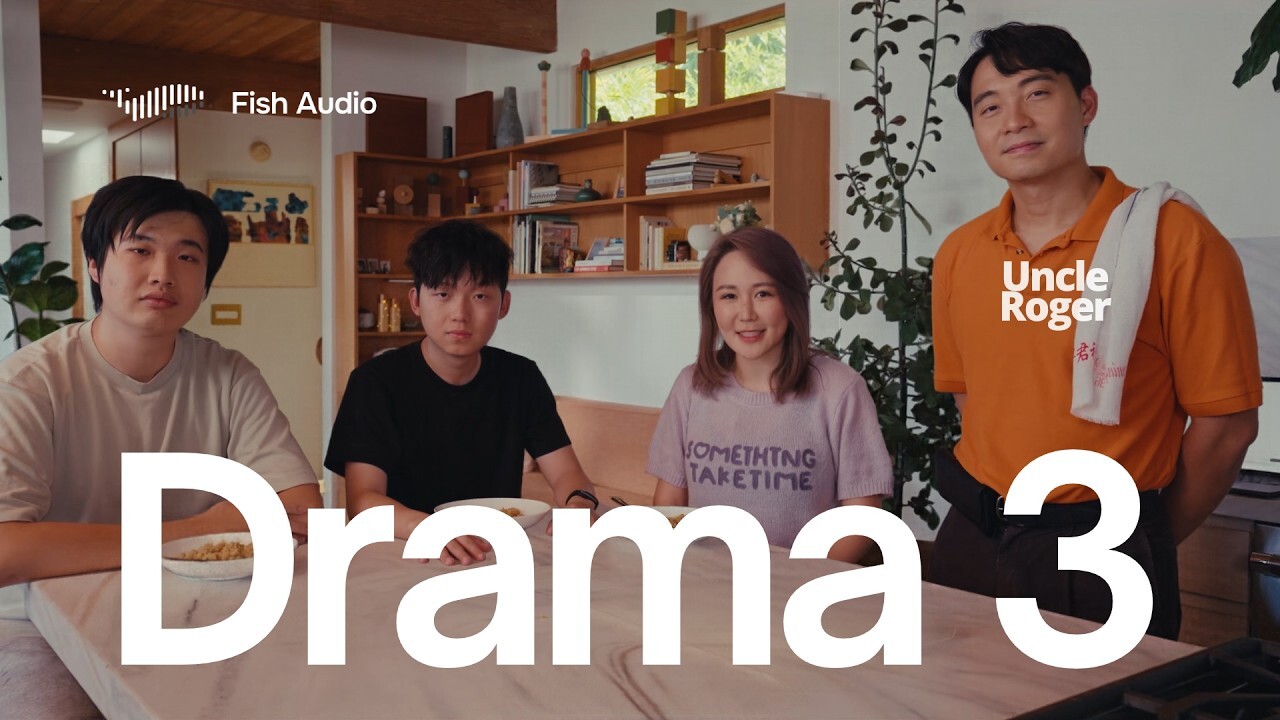
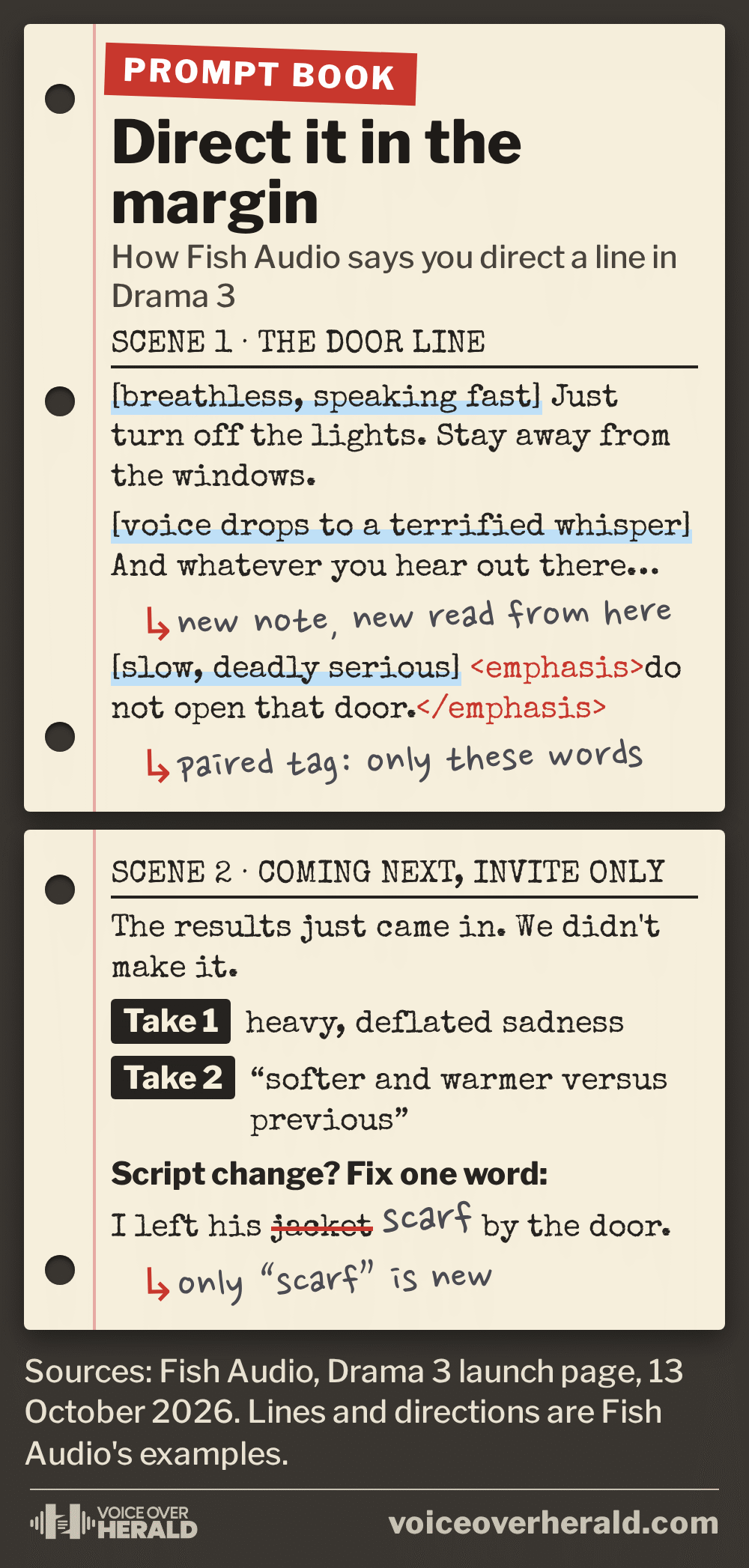
On 13 October, the Palo Alto voice AI company Fish Audio released Drama 3, a model its chief executive calls “our most emotive and controllable model yet.” The pitch isn’t a nicer voice. It’s a voice you can direct. You write the direction in square brackets in front of a line, “written the way you’d say it to an actor,” and the model plays it.
For people who do that job for a living, it lands awkwardly. The same platform spent the summer answering voice actors who found AI copies of themselves in its public library.
What Drama 3 actually does
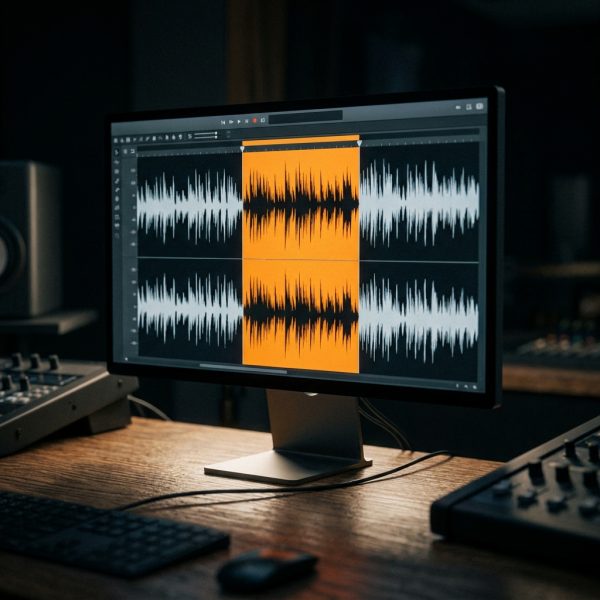
A line marked [barely holding it together, forcing a smile] comes out shaky and bright at once. A [shaky breath] lands exactly where it’s typed. Wrap a few words in a whisper tag and only those words drop. New direction halfway through a line changes the read from that point on. The direction doesn’t even have to match the line’s language: the company says Drama 3 speaks 83 languages and you can “write the direction in whatever language you think in.”
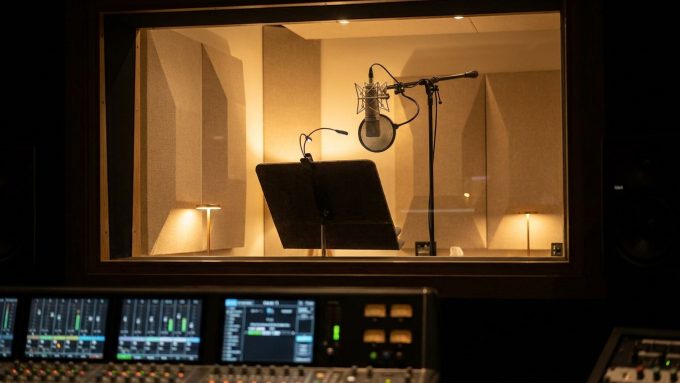
Its Hugging Face page adds the part anyone who voices characters will notice: speaker tags let one text carry up to 16 characters, so a whole scene comes back in one pass. Fish Audio says it’s built for “audiobooks, audio drama, game and animation dialogue, and short video.” That’s a list of jobs working voice actors book every week.
“Voice AI has gotten very good at generating speech. The next step is directing a performance,” said Rissa Cao, the company’s co-founder and chief executive, in the launch announcement. She said that “matters most in long-form projects like audiobooks and multilingual dubbing, where one wrong word shouldn’t mean regenerating a whole chapter.”
The launch video stars the comedian Uncle Roger, who directs “an AI clone of his own voice, made and used with his permission,” as the company puts it. Voice actors will read that permission line twice.
Free to download, with one rule about real voices
Drama 3 is released as open weights. Anyone can download it and run it on their own machines. Under the new Fish Audio Community License it’s free for research, and free for commercial use if a company and its affiliates make less than US$500,000 a year. Bigger firms, and anyone who wants to resell it as a voice cloning service, need a paid licence. When Voice Over Herald checked the model’s page on 20 October, it showed 11,795 downloads in the last month.
The licence has a clear line on consent. In Fish Audio’s words: “The license also bans cloning a real person’s voice without their consent.”
The catch is who enforces that. When Fish Audio raised a US$52 million seed round in July, TechTimes pointed out that its open model, once downloaded, “operates entirely outside the company’s reach.” A takedown request can pull a voice off fish.audio. It can’t reach a copy running on somebody’s own computer.
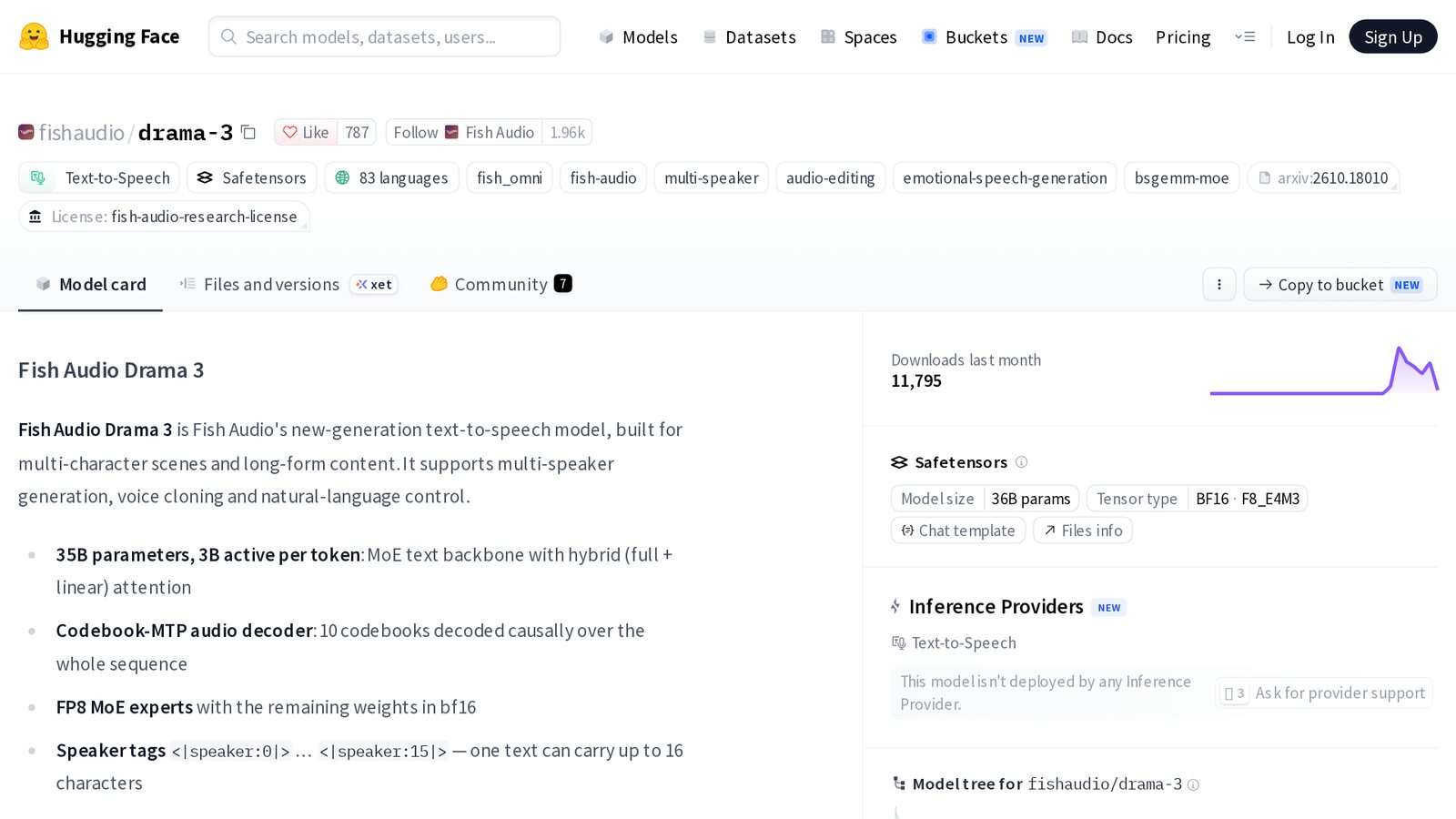
Image: Hugging Face, screenshot of the Drama 3 model page, 20 October 2026
The voice actors who got there first
On 22 May, Equity’s industrial official Shannon Sailing wrote to Fish Audio on behalf of 22 members who’d found their voices “being misused and offered as an AI voice model on the platform without their consent.” The union published the letter on 3 June, after it said it hadn’t had a reply.
Its first demand: “Immediate removal of all unauthorised cloned voices and related datasets.” It also asked who else had received the models. “A person’s voice constitutes personal data where an individual is identifiable from it,” Equity wrote, pointing to UK data protection law.
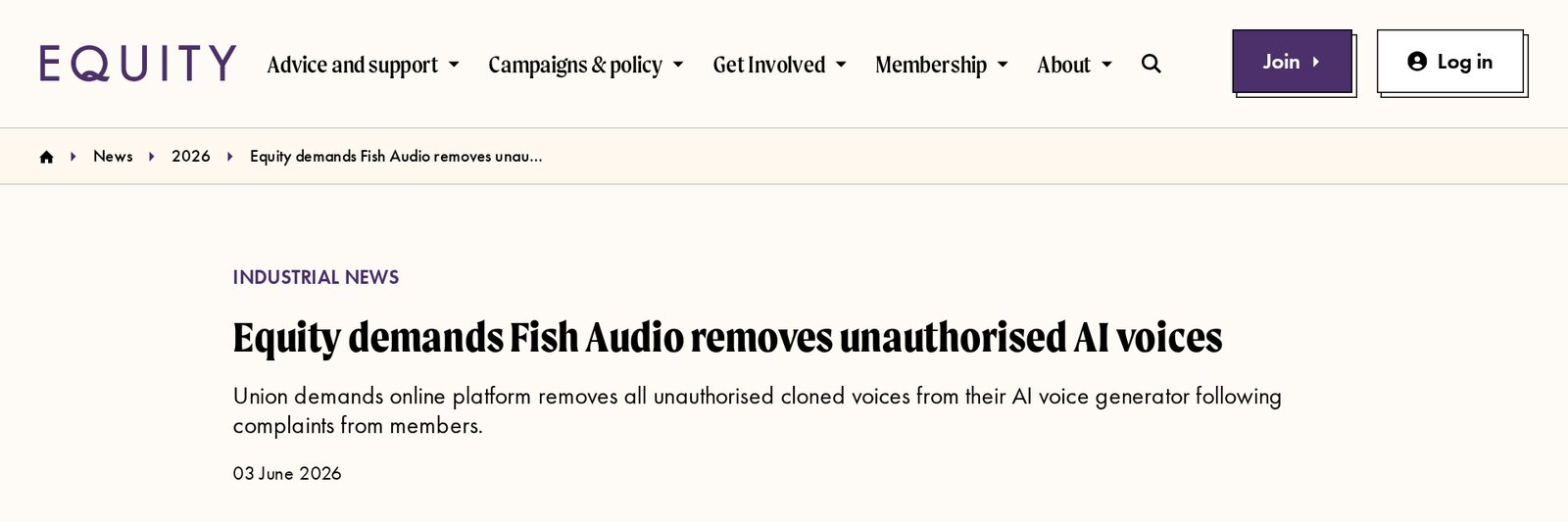
Image: Equity, screenshot of its 3 June 2026 statement, taken 20 October 2026
In Bristol, voice-over artist Faye Dicker found her cloned voice had been downloaded more than 900 times before she knew it existed, according to TechTimes, citing a BBC Bristol report.
 VoiceEditSuiteNewIt edits like you would, and it gets better every file.Learns from numbers, never your audio. Never used to train AI.See how it works
The most detailed account comes from Estelle Hubert, a French voice-over artist who works from her home studio. In May, a UK agent’s post tipped her off. She found herself on two accounts, one of which “had literally named the clone after me.” The anonymous one had already been used for more than 250 generations. Then she found her daughter Florine’s voice under a pseudonym, “with almost 14,000 generations.”
“What is disturbing is seeing your voice on a self service shelf, ready to say anything to anyone, without a single person ever asking me,” she wrote. Her best guess at how it happened will sound familiar to anyone with a website: “I work from public demos, which is most likely how the clone was built in the first place.”
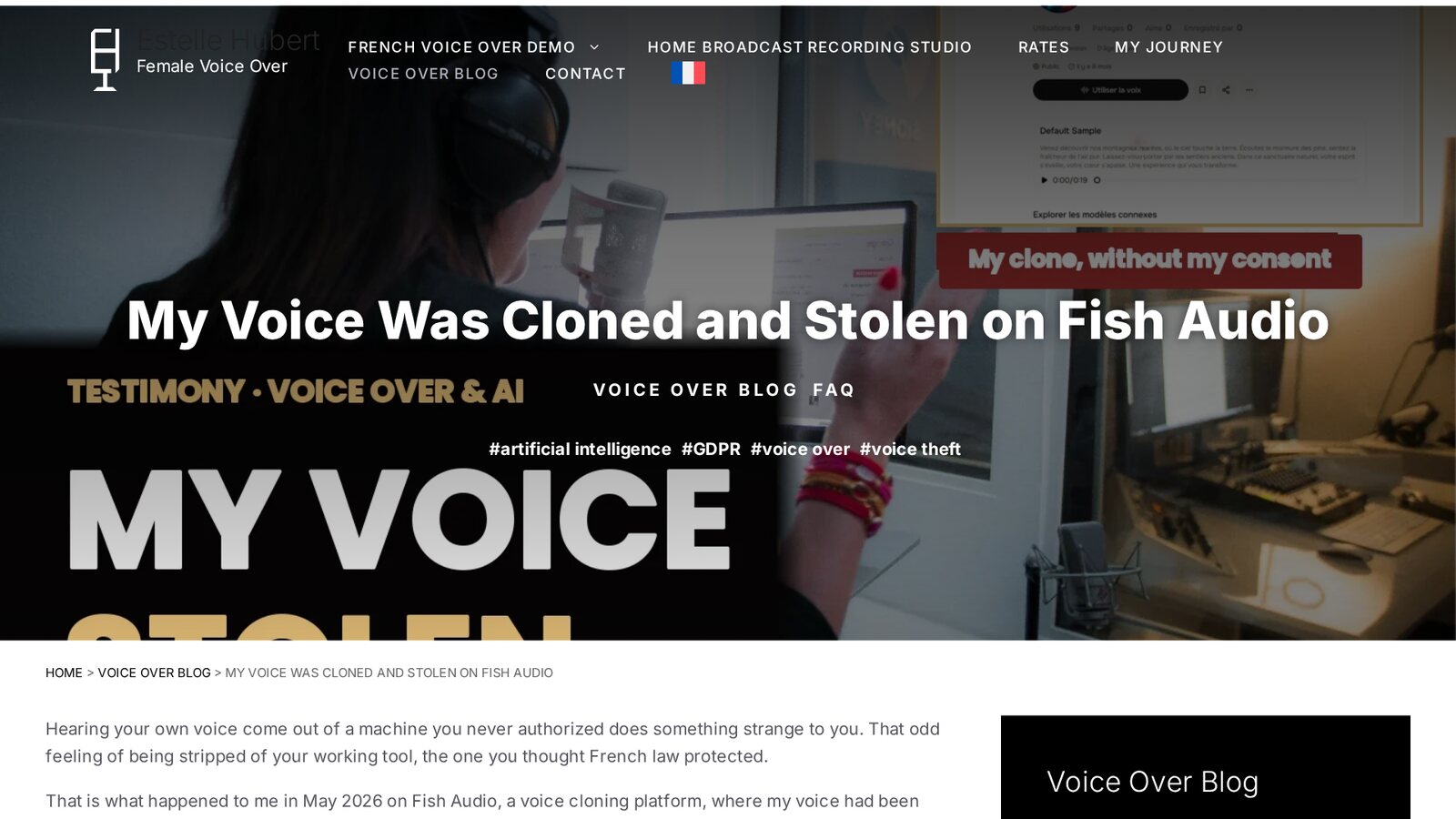
Image: estellehubert.com, screenshot 20 October 2026
Removed isn’t the same as erased
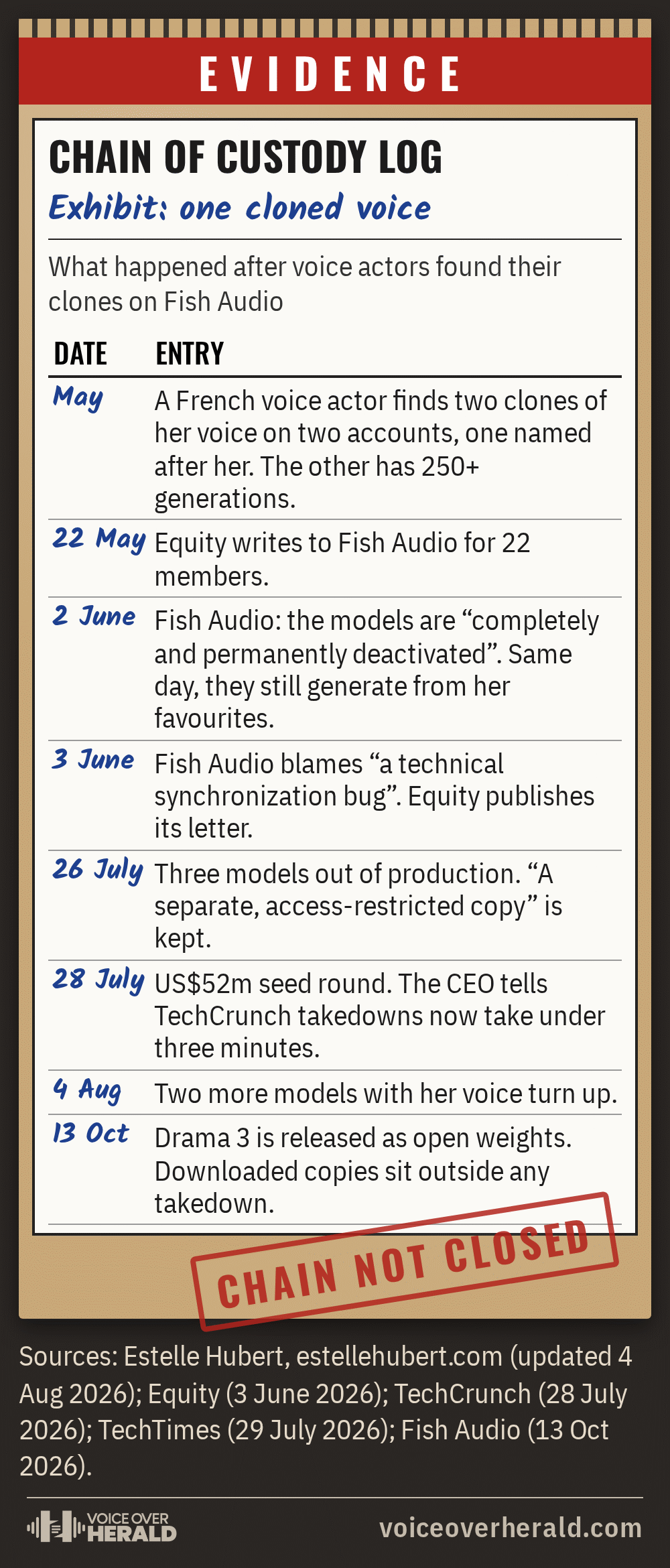
Hubert got the listings taken down in under a day, once she used the platform’s “Copyright complaint” form instead of a plain email. Then she asked for full deletion. On 2 June, she says, Fish Audio told her in writing that each model was “completely and permanently deactivated” and “entirely non-functional system-wide.”
That same day she tested it from her own account. Her voice and her daughter’s were still generating audio from her saved favourites. The next day the company blamed “a technical synchronization bug that caused certain bookmarked links to temporarily bypass the deactivation protocol” and said it had fixed it.
The lesson, she wrote, is that “their word is worth nothing until it is verified, and cutting access is still not erasing.” On 26 July, she says, Fish Audio confirmed the three models and their training audio were out of its production systems, but kept “a separate, access-restricted copy” for legal purposes and wouldn’t name the users behind them. On 4 August she found two more models using her voice.
Fish Audio has said the process is faster now. Cao told TechCrunch in July that creators can send a short voice sample or a contract proving a voice is theirs, and it’ll be off the platform in under three minutes. One of the company’s own investors, Osuke Honda of Coreline Ventures, put the challenge plainly in the same piece: “consent, transparency, and attribution must be built into the product rather than treated as afterthoughts.”
What working voice actors can do now
Nobody’s replacing a good session with [warm, a little tired] just yet. But the tool that copies a voice and the tool that performs it are now the same tool, and it’s free for anyone under the licence limit.
Hubert’s advice is practical. Search the big voice libraries, and not only for your name: “Many clones carry none, or hide under a pseudonym.” Her most used clone didn’t carry her name either. Keep dated screenshots and audio, and test again after every promise. In Britain, Equity says it’ll keep pursuing cases for members. In the EU, she points to the GDPR right to erasure, which goes further than a takedown.
She also thinks voice actors shouldn’t be doing this alone. “As long as we stay isolated, we will report our clones one by one while the platforms churn out a thousand more,” she wrote.
Sources: Fish Audio, Drama 3 launch announcement (13 October 2026) and the Drama 3 model page on Hugging Face (checked 20 October 2026); Equity, letter to Fish Audio (3 June 2026); Estelle Hubert, “My Voice Was Cloned and Stolen on Fish Audio” (updated 4 August 2026); TechCrunch (28 July 2026); TechTimes (29 July 2026). Hero image: Fish Audio.
Lee este artículo en español: La nueva voz de IA de Fish Audio se dirige como a un actor. Los locutores que encontraron sus clones allí dicen que retirar no es borrar
Know something about this story, or spotted an error? Tell the newsroom.