


Liam Neeson’s Spanish Voice Got an Extortion Call. He Answered With a Line From Taken
Gerardo Reyero has spent decades as the Latin American Spanish voice of Liam Neeson, Frieza and V. In an interview published today, ahead of Cali Pop Festival in Colombia, he tells how a scam caller hung up on Bryan Mills, and shares the slightly embarrassing warm-up he does every morning.
The call came over breakfast. Reyero was at his mother’s house with his mother and his sister when the phone rang. He told El País of Cali that his mother answered and went pale, pleading with the caller: “Sir, why are you telling me this? No, sir, please…” His sister took the phone and started crying too.
Then he took it. The man on the line told him: “I’m telling your sister I’m going to kill you all, I know who you are, where you live, and if you don’t give me this much money…” Reyero calls it “the classic extortion.”
“The first thing that occurred to me was to put on Liam Neeson’s voice and say the line from Taken: ‘I don’t know who you are…'” he said. “He didn’t let me finish the sentence. Halfway through he hung up on me and never called again. So yes, it worked.”
He had a backup ready. He says he could have gone after the caller as Frieza instead, the Dragon Ball Z villain he has voiced for years, “but Neeson’s worked perfectly.”
Villains, presidents and generals
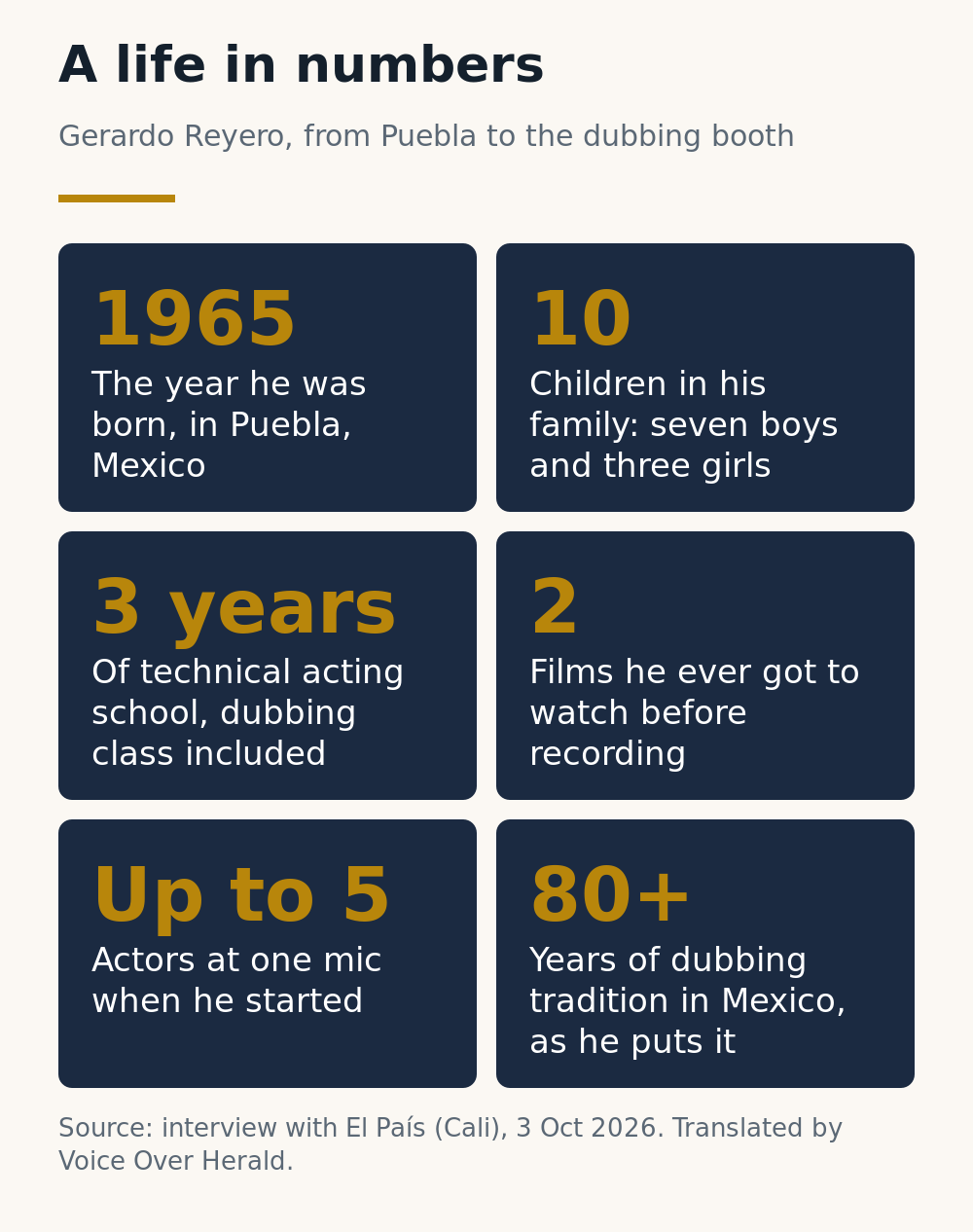
Reyero was born in 1965 in Puebla, one of ten children in what El País describes as a large and humble family. As a boy he played with action figures and gave each one its own voice. “I think I was born with that thing of imagination, which is basic, it’s the tool an actor needs,” he said. “An actor who has no imagination is no good for this.”

He first trained as a primary school teacher, found theatre at teacher training college and told his father he’d finish the degree “out of discipline” but wanted to act. His father, he says, was a little disappointed. His parents couldn’t afford to support him when he left for Mexico City. “I don’t need your money, just send me your blessing,” he told them.
His dubbing teacher, the late Jorge Sánchez Fogarty, saw him in a theatre exam and told him he had a voice that could work, but that he needed to learn to sync, following the movement of the original actors’ lips. On his first day in the workshop he was already dubbing. “You see? You either bring this with you or you don’t,” Fogarty told him. “It’s called rhythm.”
Fogarty also called his casting years before it happened. “You have a very strong voice, so they’re always going to give you the villains, the presidents of countries, the generals or the superheroes,” Reyero remembers him saying. His first role was a villain in La superabuela, a series that, he says, only aired in Colombia.
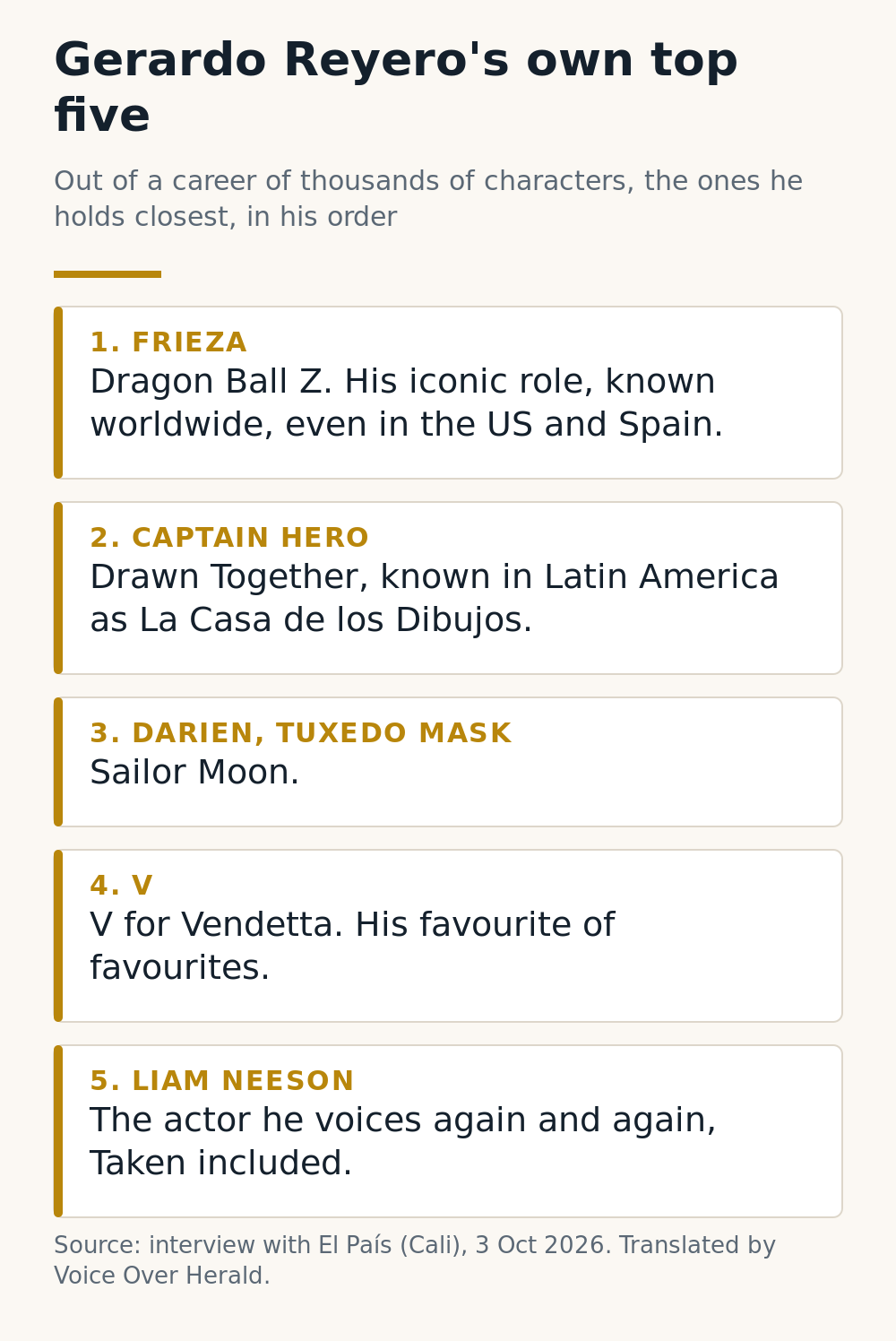
El País puts his career at around 30,000 characters. Picking favourites is hard, he says, “because they’re all like your children,” and the ones he loves aren’t always the ones the public chooses. Frieza is number one, his “iconic character, the best known worldwide.” His favourite of favourites sits further down his list.
Not an impression
The Neeson voice isn’t Reyero’s natural sound, and he’s firm that it isn’t an impression either. “I’ve never been an impressionist; those who do it have my respect, but in dubbing the important thing is to know your own voice, because it’s your work tool,” he said. “We don’t imitate the original actor. What we do is make him speak in Spanish, giving him an identity.”
To match Neeson on screen he moves his voice somewhere else: “speak with more air, use a more nasal tone and speak softly to get that characteristic tone of his.” Then he adds the line every voice actor should keep on a sticky note: “We place the voice for the character, but the essence is still ours.”
He doesn’t get Neeson automatically. On some films, he says, the studio decides the actor has always been his and hands him the part. On others he’s told to audition against “two or three colleagues who have also played him, to see who suits this specific film best.”
 VoiceEditSuitePro audio tools built for working voice actors.Auto Clean UpACX Audiobook PrepAudition Director
Preparation is rarer than fans might think. In his whole career, he says, only two films were shown to him ahead of the session because of how technically hard they were: The Mask and V for Vendetta. For Jim Carrey’s oversized false teeth he used no prosthetic at all, just a changed mouth position and the trick of “imagining that you have those big teeth.”
The warm-up that looks a little mad
“I look crazy,” he admits, “because in the mornings we always have to do warm-up exercises.” First, “even though it looks very ugly,” he sticks his tongue out as far as it will go and moves it around to warm the muscles of the throat and face. Then comes “at least about five little minutes making sounds with the letter ‘U’,” which warms the vocal cords and gets them vibrating. “It’s like the warm-up of people who go running.”
He believes that routine is why his voice hasn’t changed drastically over the years. “The voice keeps changing because it’s a muscle, but if you keep working it, you keep it well and toned, just like an older person who has exercised all their life.”
His other rule is about temperature. “If you’re going to drink something cold, drink cold the whole time. If it’s hot, hot the whole time,” he said. Mixing an iced drink with a hot coffee, he says, inflames the cords “because they are a muscle.” He also wraps up when he steps out of a studio into cold air. It’s a routine anyone with a booth at home can borrow tomorrow morning, minus the embarrassment.
From paper stands to screens
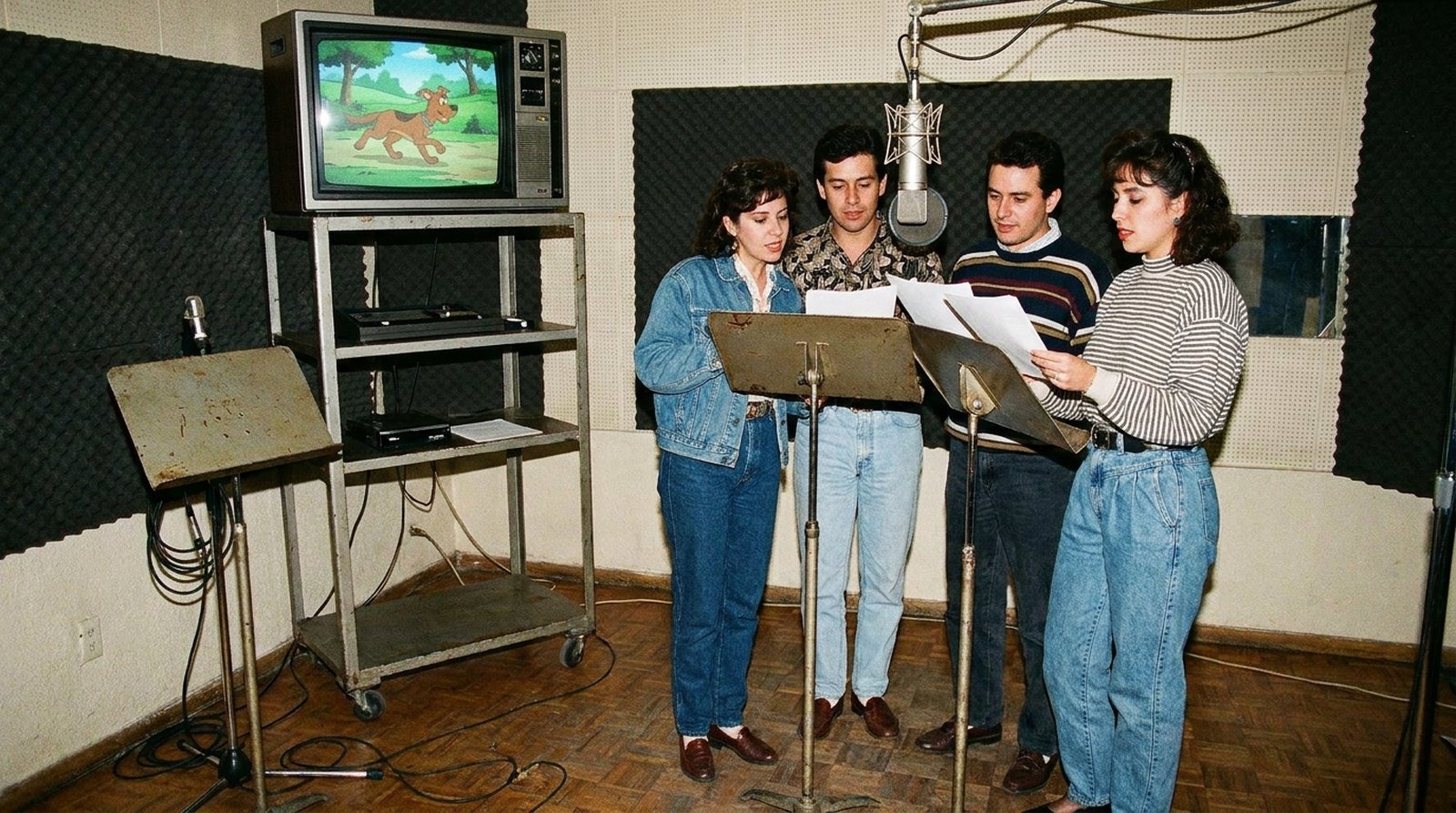
The booth has changed around him. “When I started in this, we used big music stands with paper scripts and recorded up to five actors at the same time in front of the microphone,” he said. “If one made a mistake, everything had to be repeated.”
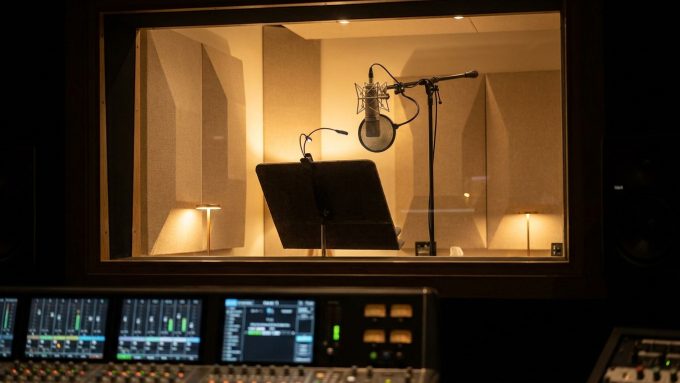
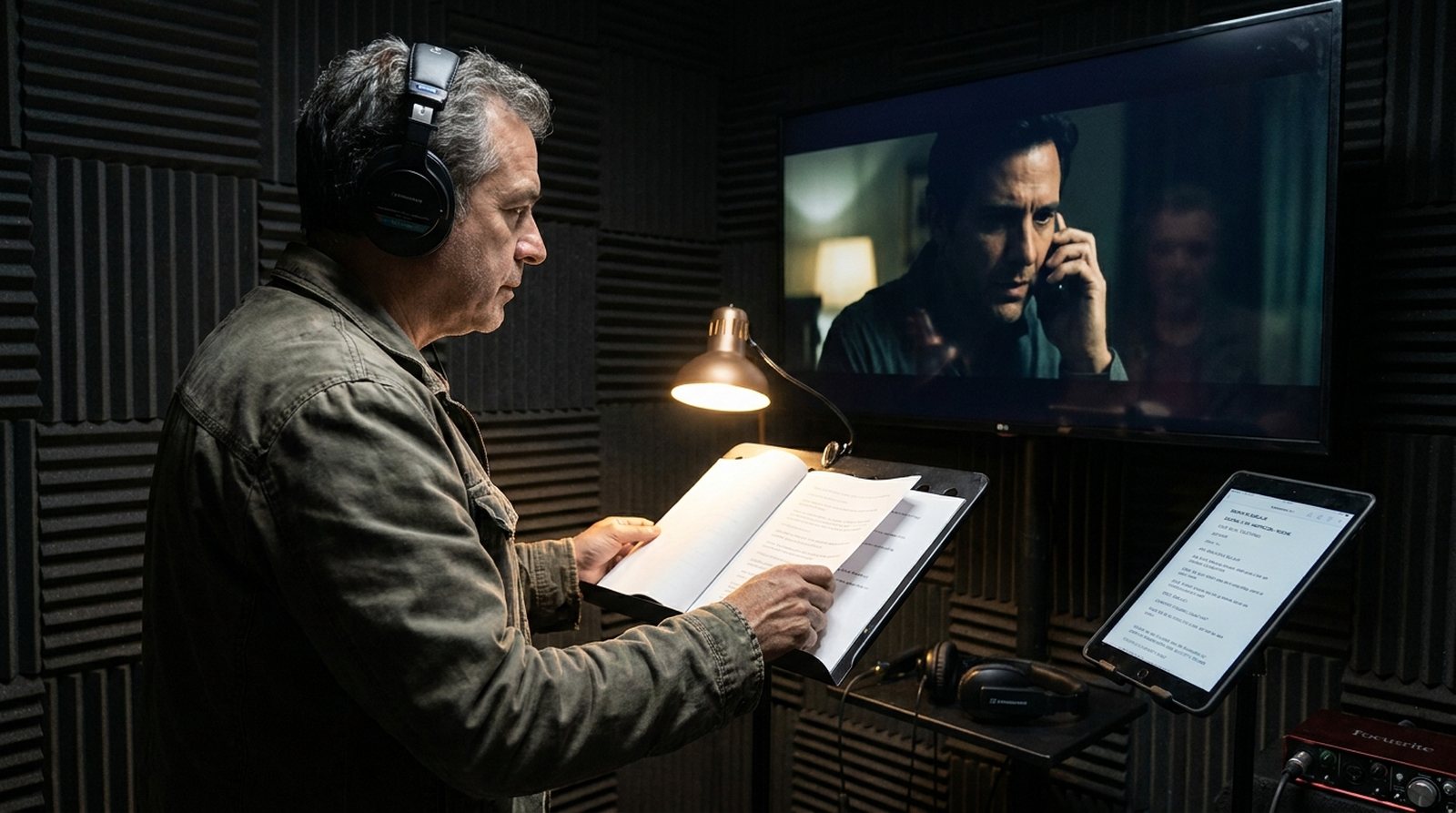
Now, he says, “you arrive at a fully acoustic booth with a microphone, headphones and a screen,” with the video on the screen and the text beside it. Mexico’s industry, in his telling, rests on “a tradition of more than 80 years” and a training that makes its actors fast. “We rehearse the scene once and record it immediately,” he said. “There’s no room to say, ‘Today I don’t have good diction’ or ‘I feel sluggish.’ It’s work that takes a lot of precision.”
He has a plain definition of the famous neutral Spanish that Latin American dubbing is known for. “The so-called neutral language is nothing more than pronouncing all the letters,” he said, adding that it matches how people speak in central Mexico, so it isn’t something he practises.
And he says the job’s old invisibility is gone. “Social media took all of us dubbing actors out of anonymity,” he said. “Before, we were the eternal unknowns, buried in a recording studio.” These days people recognise him in the street, often not by his face but “as soon as we start talking.”
Reyero is a guest at Cali Pop Festival on October 3 and 4 at the Auditorio Lumen Gentium of the Universidad Católica in Cali. If anyone in the queue asks for the Taken line, he has a fresh story to go with it.
Sources: interview with Gerardo Reyero by Isabel Peláez, El País (Cali), 3 October 2026. Quotations from Spanish are translated by Voice Over Herald.
Lee este artículo en español: La voz de Liam Neeson en español recibió una llamada de extorsión. Respondió con una frase de Búsqueda Implacable
Know something about this story, or spotted an error? Tell the newsroom.