
Ten Seconds of Old Audio Can Rebuild a Lost Voice. A 30-Year Sports Journalist Scored His a Solid Nine
A Brisbane company says ten seconds of old audio, from a home video or a voicemail, is now enough to rebuild a voice lost to surgery. It has just raised A$5 million to take the idea further. One of the first people to hear the result was a man who talked for a living.
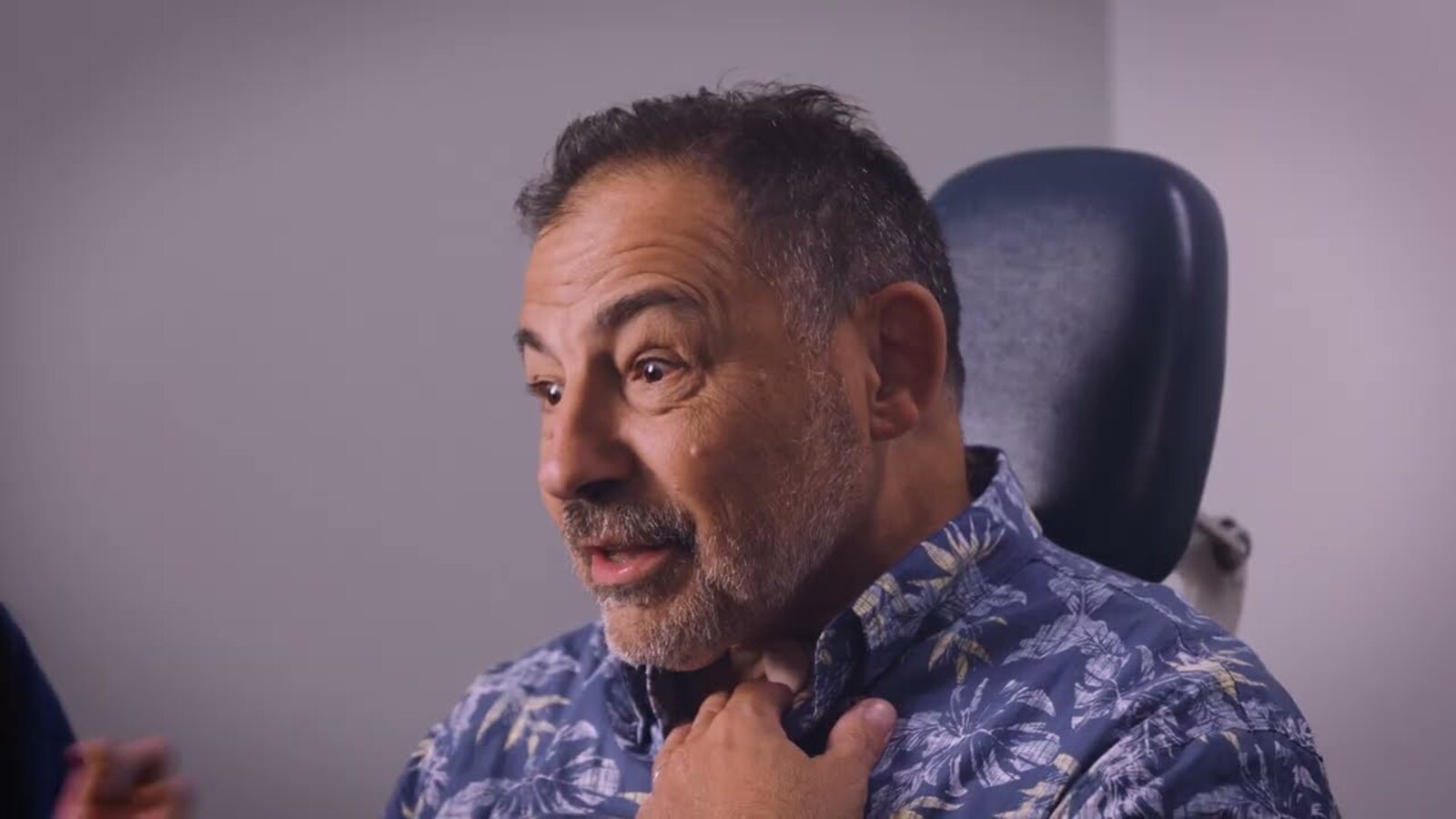
Steven Navaroli spent 30 years as a local sports journalist in south central Pennsylvania. Then, a year before the camera rolled at Greater Baltimore Medical Center, surgeons removed his larynx. In a film published by Laronix, the company behind the technology, he sits in a big blue clinic chair with an electronic device against his throat. He says, in its flat buzz, “I’m doing great. It’s summertime, that’s what I love.”
A moment later the software says it back, in the voice he used to have. A clinician asks what he thinks. “I just cussed under my breath, because that was amazing,” he answers. Then: “I may tear up, to be honest.”
Hear the voice: Steven Navaroli before his operation, then through his device, then rebuilt by AI. Video: Laronix, on YouTube
There’s a detail in that clip any voice actor will catch. “This is how I remember your voice right before your surgery,” the clinician tells him. “You drag some of your words out, like how a real broadcaster would do.” So they try a proper read. Navaroli delivers a line about the Dodgers’ payroll and his terrible Detroit Tigers, the software repeats it, and the drag is there.
Laronix announced the new money on Monday. The round was oversubscribed and backed by the Australian deep tech fund Seefeld Investors and Singapore’s 12 Ventures, according to Business News Australia. Smaller backers include Dr Elaine Saunders and Dr Peter Blamey, who founded a hearing aid company together.
From 5,000 phrases to one old voicemail
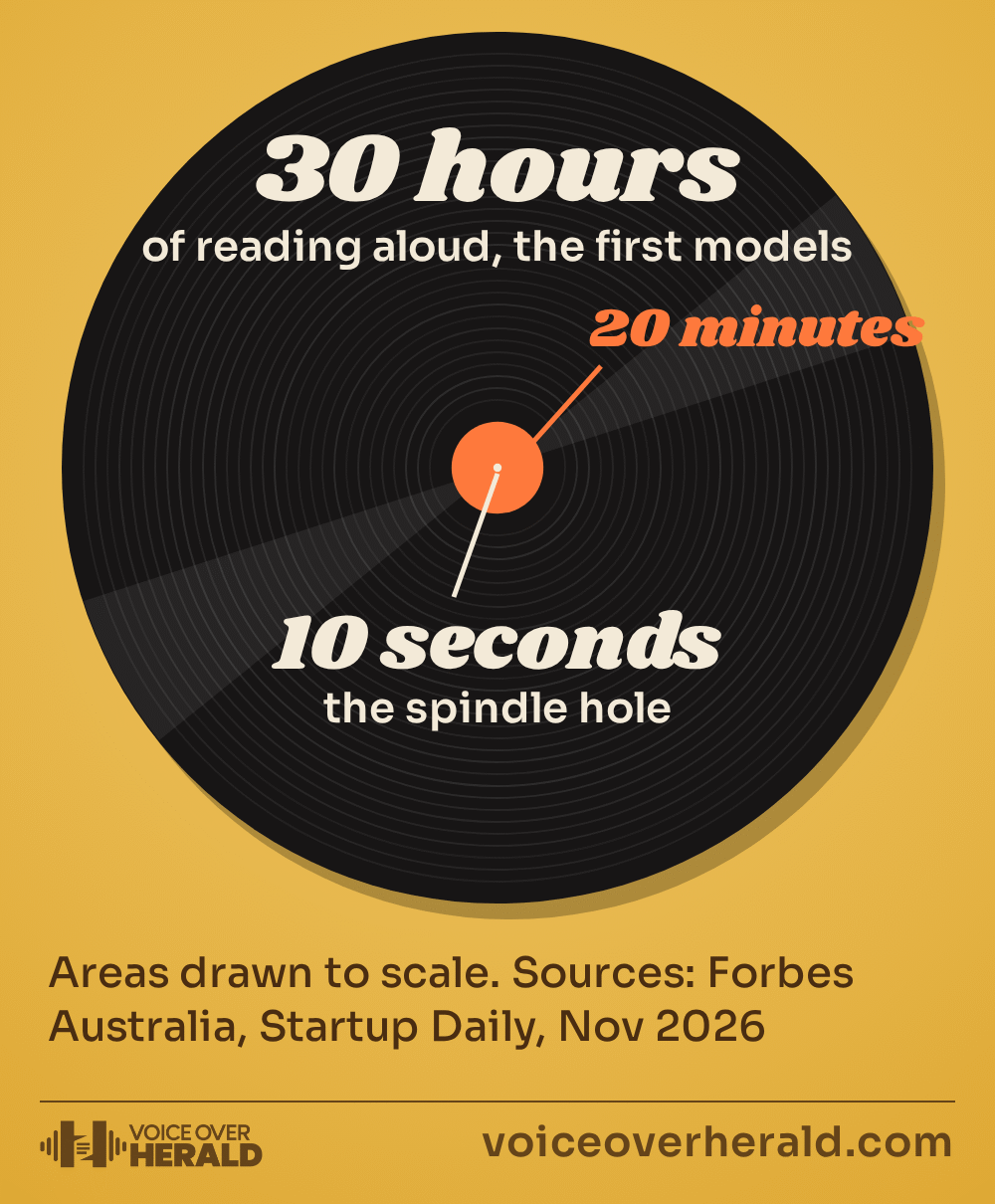
Voice banking, the practice of recording yourself before an illness takes your speech, has always asked a lot of people at the worst time of their lives. Laronix’s own early models were no different. Forbes Australia reports that they were trained on about 66 patients, and that each of them spent up to 30 hours recording around 5,000 phrases.
The team got that down to about 20 minutes. Then, after a place on Google’s startup accelerator in Australia last year, it got it down to ten seconds. “We realised that there are more efficient ways of training the models,” co-founder Dr Mousa Ahmadi told Forbes Australia.
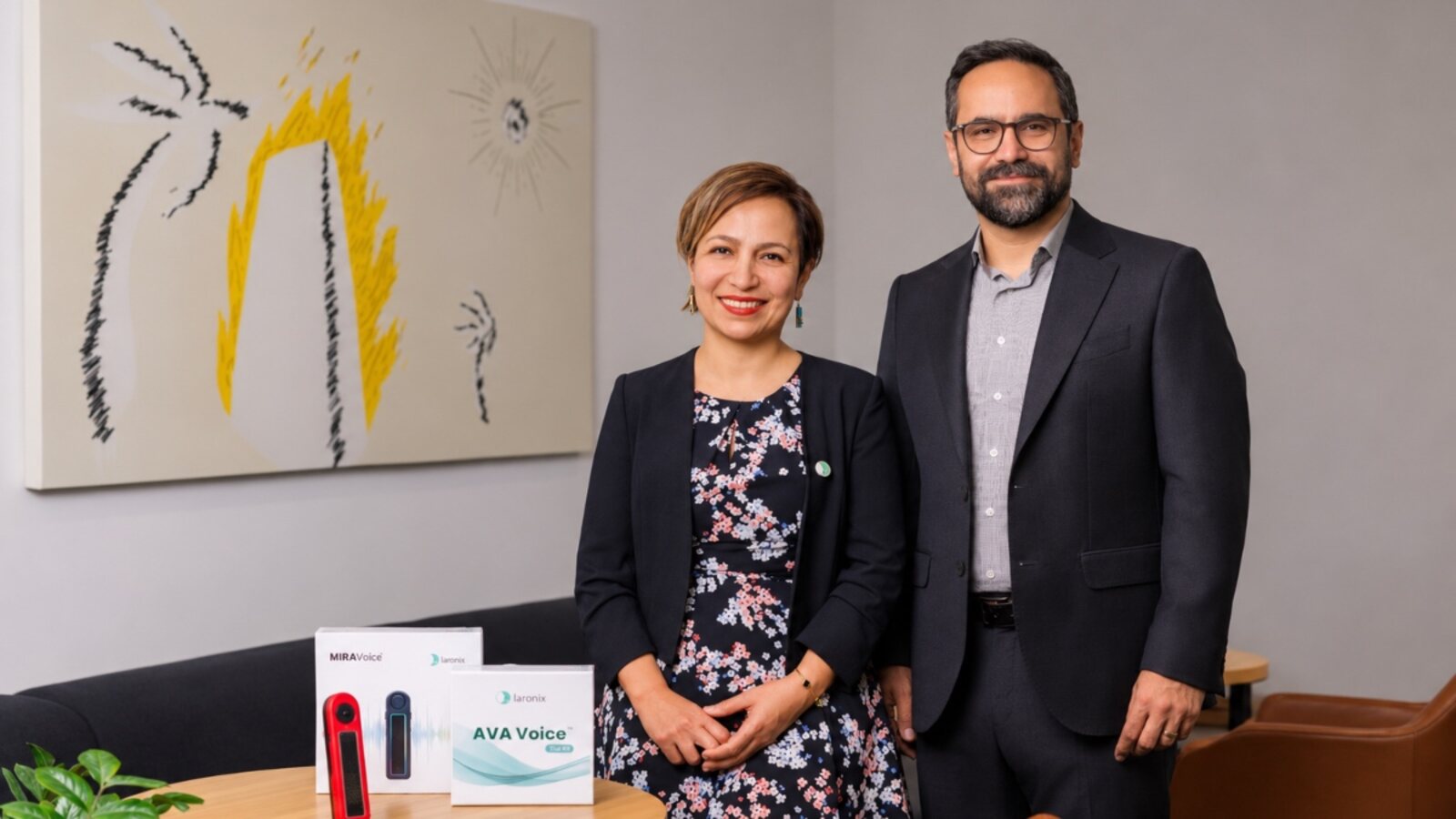
Laronix founders Farzaneh and Mousa Ahmadi. Image: Laronix
Ten seconds changes who can be helped. Nobody has to have planned ahead. Dynamic Business reports that a snippet of family video or a message left on a phone will do, and that the software is meant to keep a person’s accent and tone along with the sound of the voice itself.
The company’s numbers need a little care. It says the AI has been piloted with more than 50 patients and clinicians in ten hospitals across Australia and the US. Forbes Australia puts the current group at 120 patients. Either way it’s still a trial, and the claim to be first in the world with it is Laronix’s own.
How you speak without vocal cords
Most people who lose their larynx are offered an electrolarynx, the handheld buzzer that has been standard since the 1950s. Dr Farzaneh Ahmadi, who runs Laronix with Mousa, her brother, wanted something better and spent years failing to find it. Her breakthrough was old footage on YouTube of a man speaking through a tube powered by his own breath, a design about 100 years old. “He sounded fantastic,” she said.
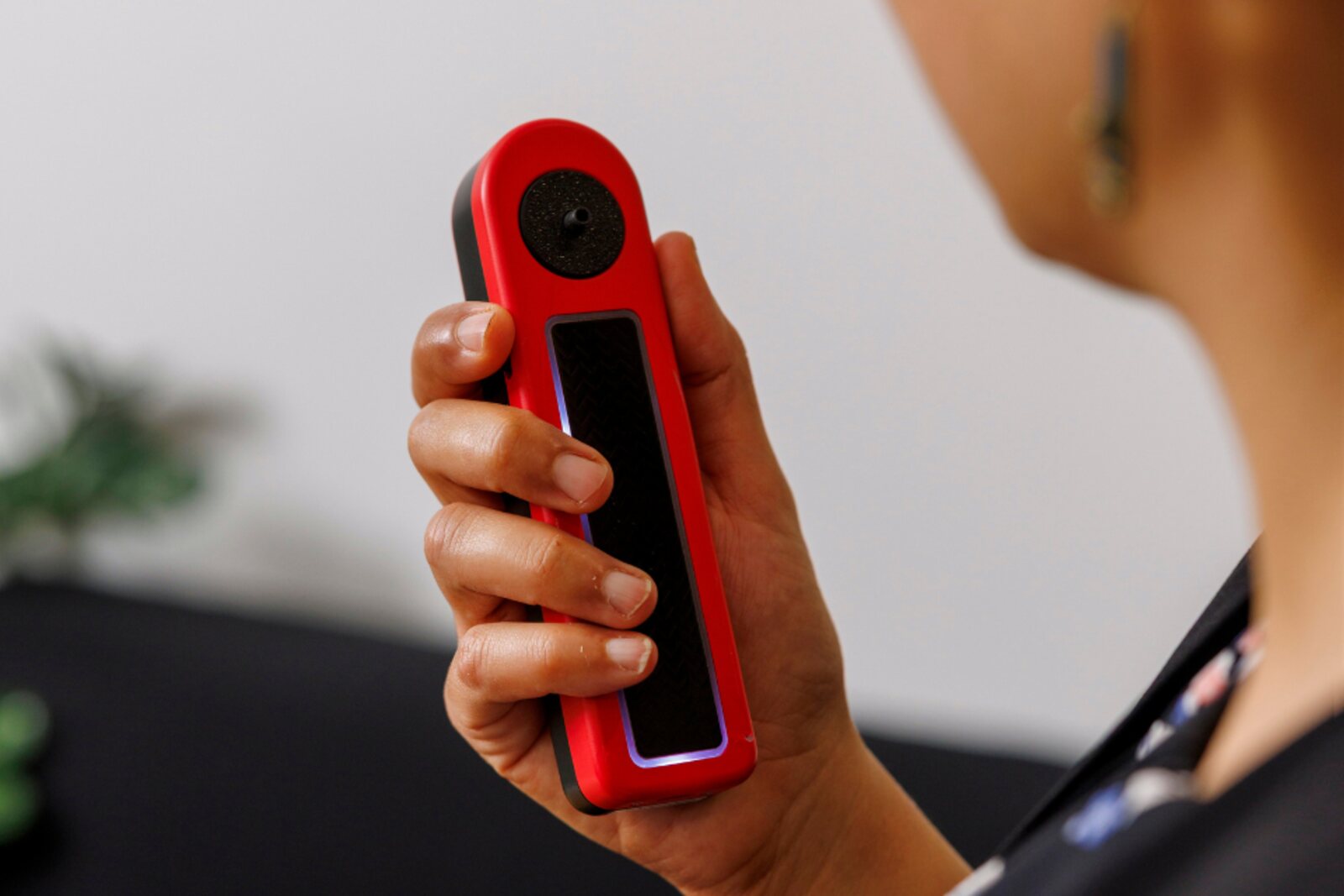
The AVA Voice unit. Image: Laronix
Laronix’s first product, AVA Voice, borrows that idea. A handheld unit makes a humming vibration, a small tube carries it into the mouth, and the lips and tongue do the rest. Pitch can move, so people can sing and laugh. Around 350 people use it, Forbes Australia says. The AI sits on top, turning what comes out into the voice that person had before.
A second device called MIRA Voice, due in 2027, is also aimed at patients who lose their speech for only a few weeks in intensive care.
It started with a singer
Performers are all through this story. About 15 years ago, while she was doing her doctorate in Singapore, Farzaneh Ahmadi got an email from a singer about to have his larynx removed. “My voice is my life,” he wrote. “Can you help?” She couldn’t. “For a couple of nights, I couldn’t sleep and it became an obsession,” she told Forbes Australia.
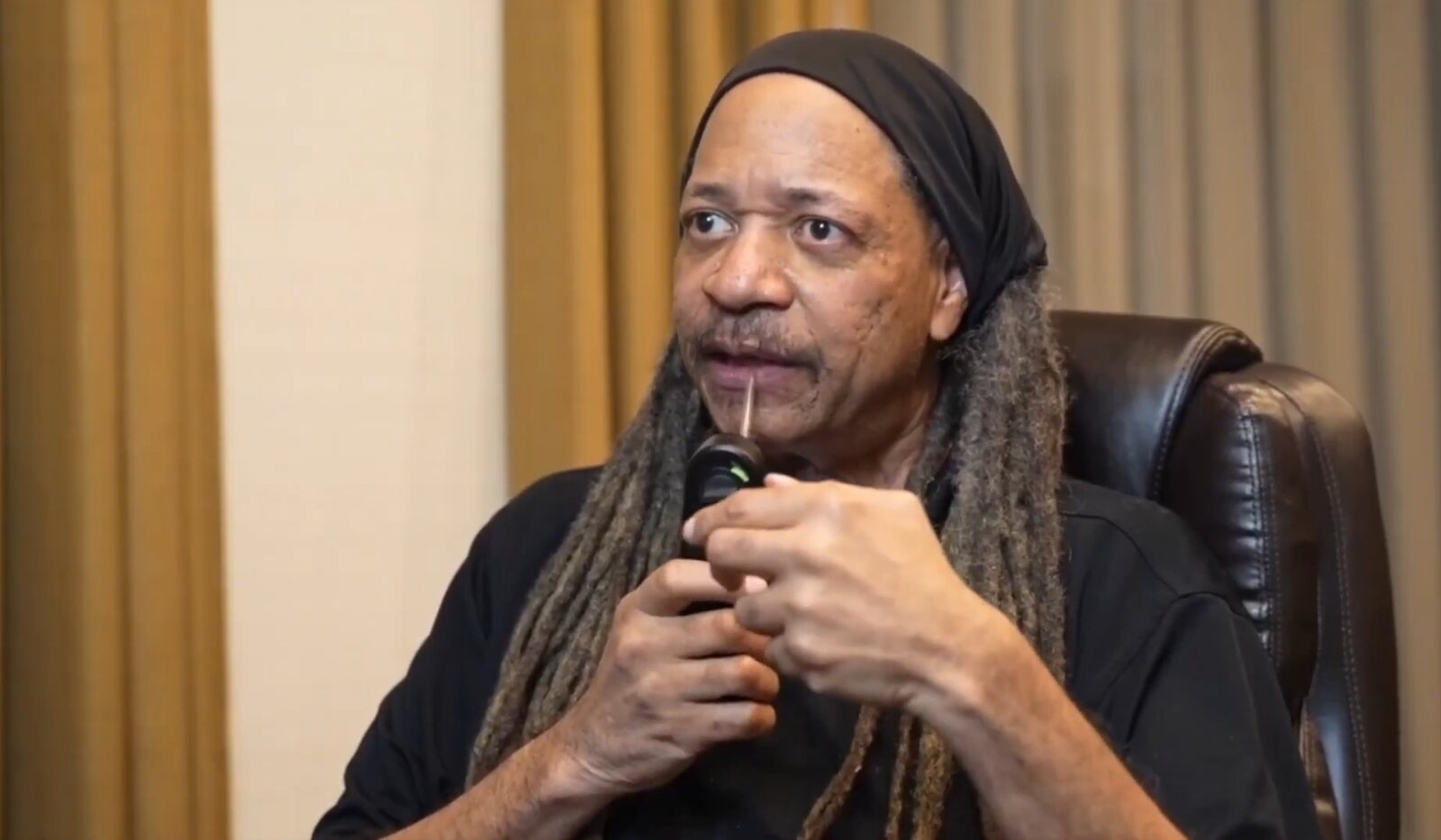
A musician speaking with AVA Voice. Image: Laronix
Her brother says some patients have waited decades. “We had one patient who did not have a voice for 40 years,” he said. “And the first thing they want to say is ‘I love you’.”
In another Laronix film, shot at a clinic in Broken Arrow, Oklahoma, a Vietnam veteran named Luis hears his rebuilt voice for the first time and can’t finish his sentence. He’s later asked to mark it out of ten for how well it matches the original.

Navaroli was the tougher judge of the two. “On a scale of 1 to 10, how close that is to my original voice, that is a solid nine,” he said. Thirty years of hearing yourself on tape will do that.
What voice actors should take from it
The first lesson is cheerful, and it costs nothing. You already own a better voice bank than almost anyone alive. Keep the raw takes, not only the finished spots: unprocessed, dated, backed up in two places, with a few minutes of you just talking. A compressed car ad with music under it is not how your family knows you. Put a note with the files saying who may use them and for what.
 VoiceEditSuiteAuto Clean Up now learns how you breathe.A 30-second setup teaches it your breath, and you can teach it any breath it misses.See how it worksLearns from numbers, never your audio. Never used to train AI.
The second is less comfortable. A tool that can rebuild a voice from ten seconds for a grateful patient shows how little a stranger needs too. Every public demo is longer than that. In this case the patient is in the room, asks for it, and is the one who speaks. Consent is the whole difference between the two.
It’s also why proving which recordings are yours has become a job of its own. The Voice Realm says it’s the world’s first voiceover marketplace to protect voice actors’ demos with an invisible watermark. Once a voice actor switches on Voice Lock, the demos carry a mark and a dated certificate anyone can check online. It doesn’t detect clones. It shows which recordings came from you.
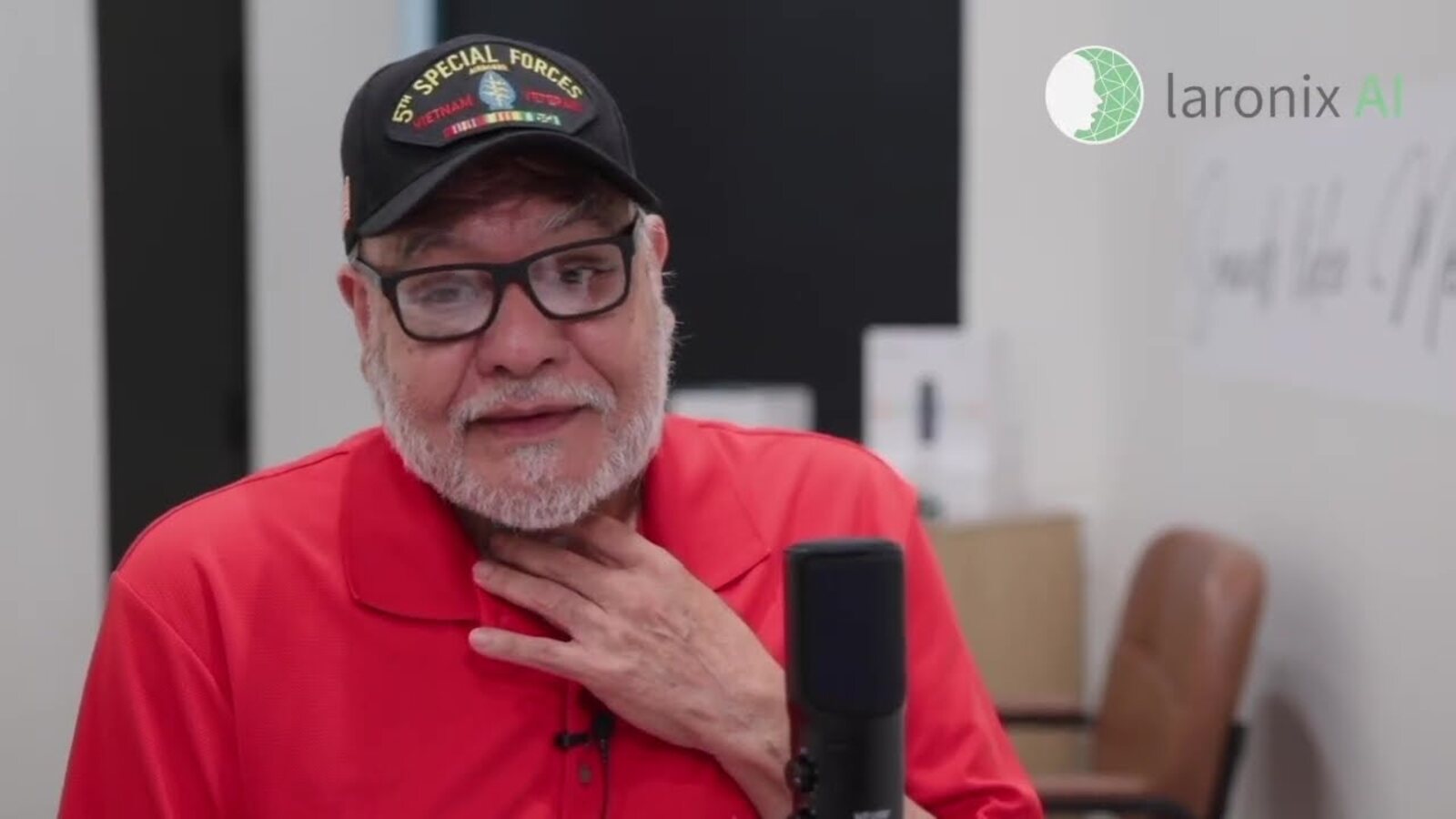
Luis using his rebuilt voice in real time. Image: Laronix
Laronix says the money will pay for expansion in Australia, the US and Europe and for next year’s launches. The announcements call all this voice restoration. Watch Navaroli lean into a baseball line he’s said a thousand times, and it looks more like a man getting his job back for a minute.
Sources: Laronix videos filmed at GBMC and Advanced ENT (quotations transcribed by Voice Over Herald); Forbes Australia, 22 November 2026; Business News Australia and Startup Daily, 23 November 2026; Dynamic Business, 24 November 2026. Main image: Laronix.
Lee este artículo en español: Diez segundos de audio viejo pueden reconstruir una voz perdida. Un periodista deportivo le dio a la suya un nueve sólido
Know something about this story, or spotted an error? Tell the newsroom.