
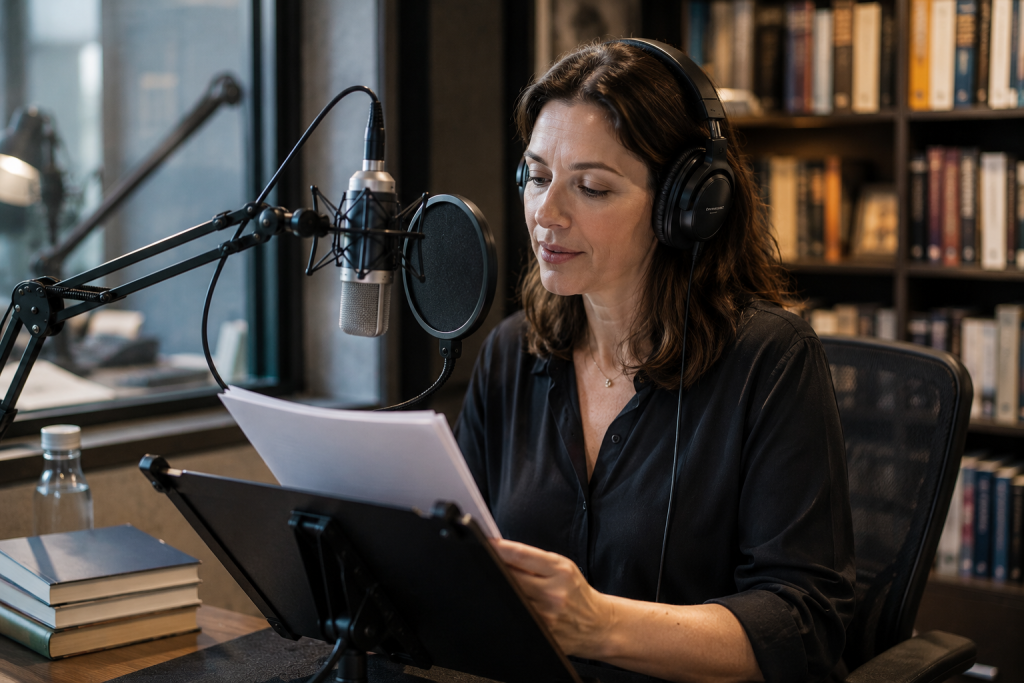
For years, audiobook narration occupied a relatively small corner of the voice-over industry. Commercial advertising attracted much of the attention, while animation and gaming were often viewed as the most desirable specialties. Audiobooks, by comparison, were frequently treated as a niche discipline requiring patience, stamina, and a willingness to spend long hours in the recording booth.
That perception no longer reflects reality.
Audiobooks have become one of the fastest-growing sectors in spoken-word media, creating opportunities for narrators, producers, editors, and publishers alike. As consumer listening habits continue to evolve, demand for professional narration is growing alongside the broader shift toward digital audio. For voice actors looking to diversify their income streams and build long-term careers, the audiobook market deserves serious consideration.
Audio Consumption Has Become Mainstream
The rise of audiobooks is closely tied to a larger change in how people consume information and entertainment. Listening is no longer limited to radio broadcasts or music streaming. Podcasts, audiobooks, online courses, and digital learning platforms have become part of everyday life, allowing people to engage with content while commuting, exercising, travelling, working, or completing household tasks.
According to Edison Research, online audio listening and podcast consumption reached record highs in its most recent Infinite Dial study. The findings suggest consumers are dedicating more time than ever to spoken-word content, creating favourable conditions for continued audiobook growth.
This trend matters because audiobook adoption rarely occurs in isolation. People who regularly consume podcasts and other forms of digital audio are often more receptive to audiobooks as well. As audio becomes an increasingly common part of daily routines, publishers and producers are finding new opportunities to reach audiences who may not have traditionally engaged with books.
A Market That Continues to Grow
The audiobook sector has experienced steady growth for more than a decade, and recent figures indicate the market still has significant room to expand.
According to Publishers Weekly, audiobook sales reached approximately $2.22 billion in 2024, representing a 13 percent increase over the previous year. Nearly all of that growth came from digital audiobook sales, reinforcing the industry’s ongoing transition toward on-demand listening.
For voice actors, these numbers represent more than publishing statistics. They reflect a broader shift in consumer behaviour. Increasingly, listeners view audiobooks not as an alternative to reading, but as an equally valuable way to experience books. Many people now move seamlessly between print, e-books, and audiobooks depending on their schedules, preferences, and lifestyles.
As audience habits continue to evolve, demand for high-quality narration remains a critical part of the industry’s growth.
Narrators Are Becoming Part of the Product
One of the most distinctive aspects of audiobook production is the influence of the narrator. In traditional publishing, readers focus primarily on the author. Audiobooks operate differently.
Listeners frequently discuss narrators in reviews, recommendations, social media conversations, and online communities. Some consumers actively seek out books narrated by specific performers regardless of the author or genre. In many cases, a narrator’s reputation can influence purchasing decisions just as strongly as the book itself.
A skilled narrator can elevate a story through pacing, character development, emotional nuance, and performance choices that keep listeners engaged for ten, fifteen, or even twenty hours. That level of influence is relatively uncommon in publishing and helps explain why many publishers continue investing in professional narration despite advances in synthetic voice technology.
Rather than simply delivering words, narrators actively shape the listening experience and become an important part of the product itself.
Spotify’s Entry Changed the Conversation
For many years, Audible dominated discussions surrounding audiobook distribution. That dynamic shifted when Spotify expanded aggressively into the category and began positioning audiobooks as a key part of its content strategy.
According to Axios, Spotify is now paying audiobook publishers hundreds of millions of dollars annually and has significantly expanded the number of audiobook titles available to subscribers. The company’s investment reflects growing confidence in spoken-word content as a major area of future growth.
The implications extend well beyond competition between platforms. Greater distribution typically leads to greater visibility, which in turn drives consumer adoption. As more listeners discover audiobooks through mainstream platforms, demand for audiobook production continues to increase. For voice actors, that growth ultimately creates additional opportunities for narration work.
Why Human Narrators Still Matter
Artificial intelligence remains one of the most discussed topics in the voice-over industry, and audiobooks are no exception. Several companies now offer AI-generated narration capable of producing spoken content quickly and at relatively low cost. Some publishers have experimented with synthetic voices, particularly for back-catalog titles and lower-budget projects.
Despite these developments, premium audiobook productions continue to rely heavily on human performers.
The reason is straightforward. Narration involves far more than reading text aloud. Professional narrators manage pacing, emotion, character development, tension, humour, and storytelling rhythm, all of which influence how listeners connect with a book.
Different genres require different performance approaches. A thriller depends on suspense. A memoir benefits from authenticity. A romance often relies on emotional nuance and chemistry. While synthetic voice technology continues to improve, many publishers remain convinced that audiences can still distinguish between generated speech and genuine performance.
For now, human narration remains the standard for high-profile releases and premium audiobook productions.
The Future of Audiobook Narration
As the audiobook market expands, specialization is becoming increasingly valuable. Narrators who establish expertise within specific genres often develop loyal audiences and long-term relationships with publishers.
Romance listeners frequently follow favourite narrators across multiple authors. Mystery and thriller audiences often recognise established voices within the genre, while fantasy publishers regularly seek performers capable of handling large casts of characters and complex world-building.
This specialization benefits both publishers and performers. Publishers gain consistency and audience familiarity, while narrators gain opportunities for repeat business and long-term career growth. Over time, a narrator’s reputation can become a meaningful factor in a book’s commercial success.
Long-Form Storytelling Requires Different Skills
Many newcomers assume audiobook narration is simply an extension of commercial voice-over work. Experienced narrators often disagree.
A thirty-second advertisement and a fifteen-hour audiobook require fundamentally different skill sets. Commercial work typically emphasises persuasion, energy, and concise messaging, while audiobook narration demands endurance, consistency, and storytelling control across extended recording sessions.
Narrators must maintain vocal continuity over days or even weeks of production. Character voices must remain recognisable, emotional moments must feel authentic, and the overall performance must sustain listener engagement from beginning to end.
The challenge is both technical and artistic. Success requires far more than having a pleasant voice. It requires the ability to maintain a compelling performance over many hours while preserving clarity, consistency, and emotional credibility throughout the project.
What Comes Next
The audiobook market continues to evolve rapidly. Streaming platforms are investing heavily in spoken-word content, publishers are expanding their audio catalogues, and consumers are spending more time listening than ever before. At the same time, emerging technologies are reshaping production workflows and creating new conversations about the role of synthetic narration.
Despite these changes, the foundation of the industry remains remarkably consistent. People connect with stories, and audiobooks simply provide another way to experience them.
As the market continues to grow, professional narrators remain at the centre of that experience. For voice actors willing to master the craft of long-form storytelling, the audiobook sector may offer some of the most promising opportunities in the industry today.


